
Hagia Sophia Tickets | Book Now & Get Upto 30% Off
Book Now
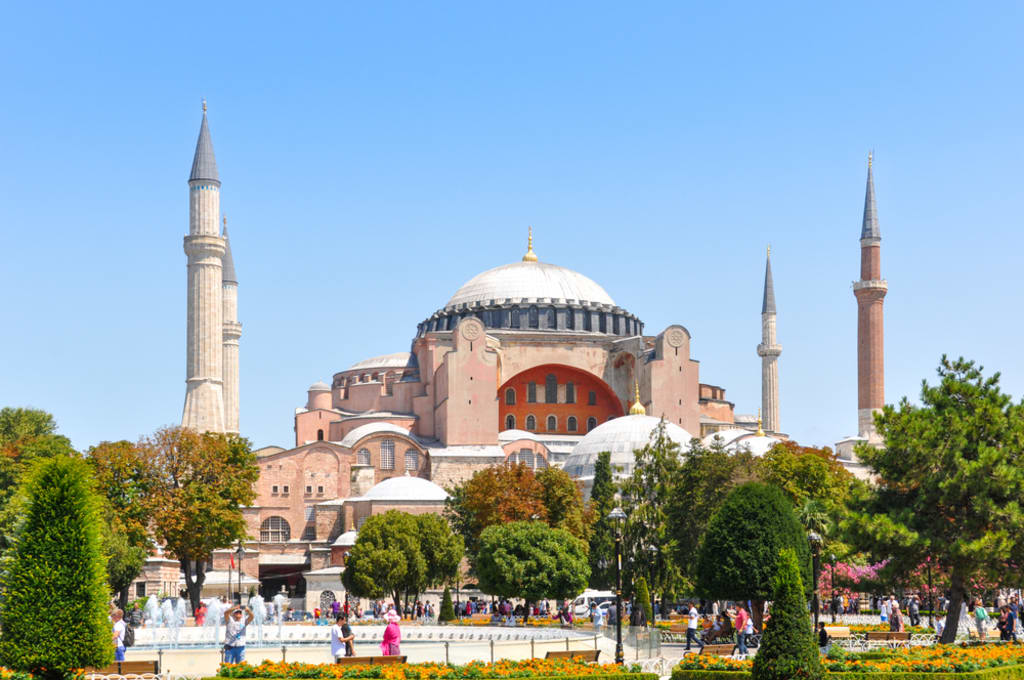
Hagia Sophia Tickets | Book & explore timeless beauty & rich culture of Istanbul. Embark on a journey through centuries of cultural heritage !!
Hagia Sophia: A Masterpiece of History and Architecture
Hagia Sophia, also known as Ayasofya or the Church of Holy Wisdom, is one of the most iconic and historically significant landmarks in the world. Located in Istanbul, Turkey, this architectural marvel has witnessed the rise and fall of empires and served as a symbol of religious and cultural transformation.
Historical Background:
The origins of Hagia Sophia date back to the 4th century when it was originally built as a cathedral by the Roman Emperor Constantius II in 360 AD. However, the original structure was destroyed by riots, and a second church was constructed in 415 AD. Unfortunately, this church was also destroyed during the Nika Revolt in 532 AD.
The current Hagia Sophia that stands today was commissioned by Emperor Justinian I and designed by architects Anthemius of Tralles and Isidore of Miletus. Construction began in 532 AD and was completed in an astonishingly short time of five years, with the church being consecrated on December 27, 537 AD.
Byzantine Era:
During the Byzantine era, Hagia Sophia served as the principal cathedral of the Eastern Orthodox Church and was considered the pinnacle of Byzantine architecture. The immense dome, with a diameter of 31 meters (102 feet), was a revolutionary engineering achievement at the time, inspiring awe and wonder in all who beheld it. The interior was adorned with exquisite mosaics, rich marble, and ornate decorations, all reflecting the opulence and grandeur of the Byzantine Empire.
For nearly a thousand years, Hagia Sophia remained a prominent symbol of Christian faith and the Eastern Roman Empire. It hosted important religious ceremonies, coronations, and other significant events, solidifying its position as the spiritual and political center of Constantinople (present-day Istanbul).
Ottoman Era:
In 1453, the Byzantine Empire fell to the Ottomans, and Hagia Sophia underwent a transformative change. Sultan Mehmed II, the conqueror of Constantinople, converted the cathedral into a mosque as a gesture of his victory. Islamic architectural elements, such as minarets and mihrabs, were added to the structure. The mosaics depicting Christian figures were covered or removed, and the building's interior underwent modifications to accommodate Islamic worship.
Under Ottoman rule, Hagia Sophia continued to hold immense significance as a symbol of the Ottoman Empire's power and Islam's ascendancy. It remained a functioning mosque for centuries, with successive sultans contributing to its upkeep and expansion.
Modern Era:
In the early 20th century, following the collapse of the Ottoman Empire, Turkey underwent significant political and social reforms. In 1935, under the direction of Mustafa Kemal Atatürk, the founder of modern Turkey, Hagia Sophia was secularized and converted into a museum. This decision was aimed at transforming the building into a symbol of unity and secularism, representing the diverse historical and cultural heritage of the region.
As a museum, Hagia Sophia became a major tourist attraction, drawing visitors from around the world to admire its unique blend of Byzantine and Ottoman architecture and art. The building's historical and architectural significance was further recognized when UNESCO designated it as a World Heritage Site in 1985.
Recent Developments:
On July 10, 2020, in a highly controversial move, Turkish President Recep Tayyip Erdoğan signed a decree that converted Hagia Sophia back into a mosque. The decision sparked widespread international debate and reactions, with concerns raised over the potential impact on its status as a symbol of secularism and interfaith dialogue.
Despite the change in its official status, Hagia Sophia continues to welcome visitors of all faiths, though the shift has raised questions about the preservation of its historical and religious heritage.
Architectural Marvel:
The architectural brilliance of Hagia Sophia lies in its impressive dome, which rests on pendentives, allowing the weight of the massive structure to distribute evenly. The vast interior space creates a sense of openness and light, as sunlight streams through the numerous windows, creating an ethereal ambiance.
The mosaics that once adorned the walls and ceilings depicted biblical scenes and portraits of emperors and saints, providing insight into the artistic and religious expressions of the time. While some mosaics have been lost or damaged over the centuries, efforts have been made to preserve and restore those that remain.
Legacy and Impact:
Hagia Sophia's enduring legacy lies in its ability to bridge multiple civilizations, cultures, and religions throughout its storied history. From its origins as a Christian cathedral to its transformation into a mosque and later a museum, Hagia Sophia stands as a testament to the diverse and intertwined narratives of humanity.
As a symbol of architectural innovation and cultural exchange, Hagia Sophia continues to inspire awe and admiration in those who visit, leaving a lasting impression on the world as a masterpiece of history and architecture.
About the Creator
Keep reading
More stories from Pictures 121 and writers in History and other communities.
Hagia Sophia Highlights
The Hagia Sophia Museum, located in the heart of Istanbul, Turkey, stands as a living testament to the grandeur of architectural mastery and the enduring cultural significance that transcends time. With a history spanning over 1,500 years, this iconic marvel has witnessed the rise and fall of empires, religious transformations, and the evolution of civilizations.
By Pictures 1212 years ago in History
Chinese Water Torture
Since the dawn of history, human beings have inflicted unimaginable suffering upon one another. Across centuries, people have devised increasingly elaborate methods of punishment and coercion, some brutally explicit, others deceptively subtle. While devices such as iron maidens, racks, whips, and wheels relied on visible physical agony, there existed a form of torment whose true power lay not in blood or broken bones, but in patience, repetition, and the slow erosion of the mind. This method came to be known as Chinese water torture.
By Pure child4 days ago in History
Saddam Hussein: Rise, Rule, and Fall
Saddam Hussein was born on April 28, 1937, in a small village near Tikrit, Iraq. His early life was marked by poverty, hardship, and a sense of abandonment. His father died before he was born, and his mother remarried soon after. Young Saddam grew up in a household dominated by strict relatives and was exposed to political discussions and nationalist sentiments from an early age. These formative years shaped his personality—ambitious, ruthless, and fiercely determined to rise above his modest beginnings.
By The best writer 4 days ago in History



Comments
There are no comments for this story
Be the first to respond and start the conversation.