
Gregor MacGregor’s Poyais: The Mirage That Fooled a Nation
The Snowy Streets of London and a Con That Shook an Empire

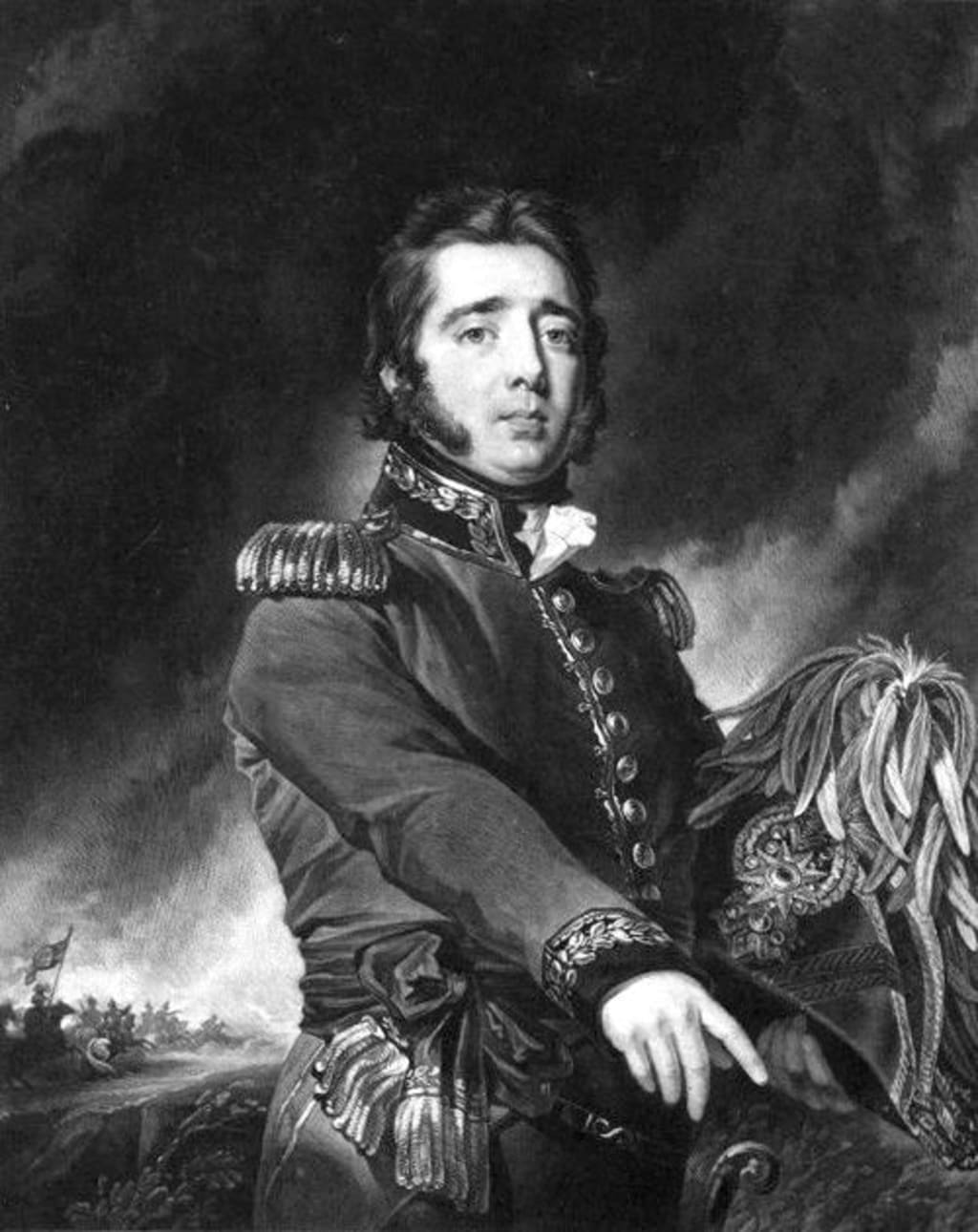
Imagine strolling through London on May 27, 1821, bundled up against an unexpected late-spring snowstorm. Flurries swirl around you, a dreary reminder that even as summer nears, the weather can turn as sour as the mood on the streets. For the British, grumbling about the weather is practically a national pastime, but that year, the gloom went far beyond the clouds. After two decades of war—think Napoleon, Waterloo, and all the chaos of continental Europe—the nation’s economy was limping along, leaving even the upper crust with little to cheer about. The upcoming coronation of King George IV in July was a rare bright spot, a chance to clink glasses and forget the hard times. But just as despair threatened to settle in, a flamboyant stranger breezed into town, promising paradise and dazzling the city with tales of a distant utopia.
Enter General Gregor MacGregor, a man who introduced himself as the “Cazique,” or prince, of Poyais—a supposed Central American Eden. Never heard of it? Neither had Londoners. Yet MacGregor painted a picture so vivid it was impossible to ignore: rivers sparkling with gold and silver, soil so rich it yielded three maize harvests a year instead of the usual two, and forests teeming with fish and game enough to feed a family for a week after a single hunt. Poyais, he claimed, wasn’t just a natural wonder—it was a budding civilization complete with a democratic government, a bustling civil service, a national bank, and a military. Its capital, St. Joseph, boasted grand boulevards, elegant mansions, and even an opera house. It sounded like a dreamland, and conveniently, MacGregor and his “government” were looking for investors to turn this vision into a fortune.
If this sounds like a fairy tale too perfect to believe, you’re sharper than many in 1821. Today, we’d call it a scam and scroll past it online, but early 19th-century Britain was a more trusting place. Hundreds of hopeful investors and settlers, lured by the promise of a new life, poured their savings into MacGregor’s scheme. Little did they know they were betting on a mirage—a con so audacious it would claim lives, ruin fortunes, and even rattle the stock market. To unpack how one man sold a nonexistent country, we need to rewind and meet the mastermind behind the mask: Gregor MacGregor, the self-styled prince of Poyais.
Born on Christmas Eve 1786 into a proud Scottish family, MacGregor was bred for adventure. His father captained ships for the East India Company, his grandfather fought as a soldier, and his great-great-uncle was none other than Rob Roy, the legendary rebel. Young Gregor joined the British Army at 16, his family footing the bill for an officer’s commission—a shortcut that skipped the usual grind of earning rank through merit. Still, he showed promise, rising to lieutenant in the 57th Regiment of Foot within a year, a climb that typically took three. At 19, he married Maria Bowater, a wealthy admiral’s daughter whose connections—and cash—helped him buy a captaincy for £900 (about £80,000 today). Pay-to-play wasn’t new even then.
After a stint in Portugal aiding the Duke of Wellington, MacGregor left the army and tried his luck in Edinburgh, posing as a colonel with tales of battlefield glory. His old regiment had earned the nickname “Die Hards” at the Battle of Albuera, but MacGregor had conveniently missed that fight by a year. Scotland didn’t buy his act, and after his wife’s death in London left him broke, he reinvented himself again. This time, he set his sights on Venezuela, where a war of independence raged against Spain. Offering his services to revolutionary leader Francisco de Miranda, MacGregor—now “Sir Gregor” of the 57th Foot—talked his way into a colonel’s role commanding cavalry. In 1812, he married Josefina, a cousin of Simón Bolívar, and soon snagged a brigadier general’s title. Over time, he proved he could lead, most notably in a grueling 34-day retreat across Venezuela, outwitting two royalist armies with 1,200 men. It was a genuine feat that cemented his reputation.
But fame didn’t pay the bills. After mixed fortunes in Florida and falling out with his Venezuelan allies, MacGregor needed a new hustle. He found it in 1820 on the Mosquito Coast, a swath of modern-day Honduras and Nicaragua. There, he traded rum and trinkets with local ruler King George Frederic Augustus for 8 million acres of swampy, uninhabitable land. Where others saw a wasteland, MacGregor saw opportunity. Sailing back to Britain in 1821, he arrived as the “Prince of Poyais,” armed with a dazzling story and a knack for selling it.
London ate it up. MacGregor’s military exploits had preceded him, giving his wild claims a sheen of credibility. Poyais wasn’t just a land—it was a lifestyle, sold with consulates across England, a flag, a faux military with uniforms, and a banking system complete with bonds. He penned a guidebook as “Captain Thomas Strangeways,” filled with lush illustrations, and hired singers to croon Poyaisan ballads in the streets. Investors, from aristocrats to working families, sank £200,000—over £23 million today—into land and bonds for a place that didn’t exist. Scots, trusting their kinsman, signed up as settlers, filling seven ships with dreams of a fresh start.
The reality hit hard. In September 1822, the *Honduras Packet* carried 70 pioneers from London to the Mosquito Coast, followed by 200 more on the *Kennersley Castle*. They arrived in tattered finery, clutching worthless Poyais dollars printed in Edinburgh, only to find jungle and despair. No officials greeted them; no St. Joseph rose from the trees. Torrential rains, disease, and starvation turned their camp into a nightmare of violence and suicide. A rescue ship, the *Mexican Eagle*, saved some, but most perished. Five more ships were stopped by the Royal Navy or turned back after spotting the wreckage.
MacGregor, meanwhile, had fled to Paris, pulling the same stunt for £300,000 until French authorities caught on. Arrested but acquitted in 1826, he slunk back to London, peddling smaller scams until the Mosquito King undercut him with real land sales. In 1838, MacGregor retired to Venezuela, living off a pension as a war hero until his death in 1845, buried with honors—never facing justice for Poyais.
The fallout was seismic. The frenzy of speculation in Poyais and Latin America fueled the 1825 stock market crash, dubbed “The Panic,” toppling banks and nearly breaking the Bank of England. Thousands lost everything to a country that never was. MacGregor’s tale endures as a warning: if it sounds too good to be true, it probably is. Today’s scammers might lack his flair, but his legacy reminds us to keep our wits sharp—and our wallets closed.
About the Creator
KWAO LEARNER WINFRED
History is my passion. Ever since I was a child, I've been fascinated by the stories of the past. I eagerly soaked up tales of ancient civilizations, heroic adventures.
https://waynefredlearner47.wixsite.com/my-site-3
Keep reading
More stories from KWAO LEARNER WINFRED and writers in History and other communities.
The Rise and Fall of Bobby Fischer: Chess Genius, Troubled Soul
Some people seem destined for greatness in a single pursuit. Lionel Messi was born to dazzle on the soccer field, Mozart to compose timeless symphonies, and Einstein to unravel the mysteries of the cosmos. For Robert James Fischer—known to the world as Bobby—his calling was chess. A prodigy unlike any other, Fischer didn’t just play the game; he redefined it, shattering records and overwhelming opponents with a brilliance that remains unmatched. At his peak, he took on the Soviet Union’s chess empire—a powerhouse that had ruled the board for 25 years—and emerged victorious, cementing his status as a legend. Yet, his story is as much about triumph as it is about tragedy, a tale of a man who conquered the chess world only to lose himself to his own unraveling mind.
By KWAO LEARNER WINFREDabout a year ago in History
The Mughal Princess Who Changed the Image of the Imperial Harem
When people imagine royal harems in medieval empires, they often picture places of luxury, secrecy, and endless indulgence. The Mughal Empire is no exception. For centuries, the Mughal harem has been portrayed as a secluded world of wealth and pleasure where royal women lived hidden lives behind palace walls. However, one remarkable woman challenged this narrow view: Gulbadan Begum, a Mughal princess whose life and writings revealed a very different reality.
By Irshad Abbasi 2 days ago in History




Comments
There are no comments for this story
Be the first to respond and start the conversation.