
The Rise and Fall of Bobby Fischer: Chess Genius, Troubled Soul
Bobby Fischer: The Chess Prodigy Who Conquered the World and Lost Himself

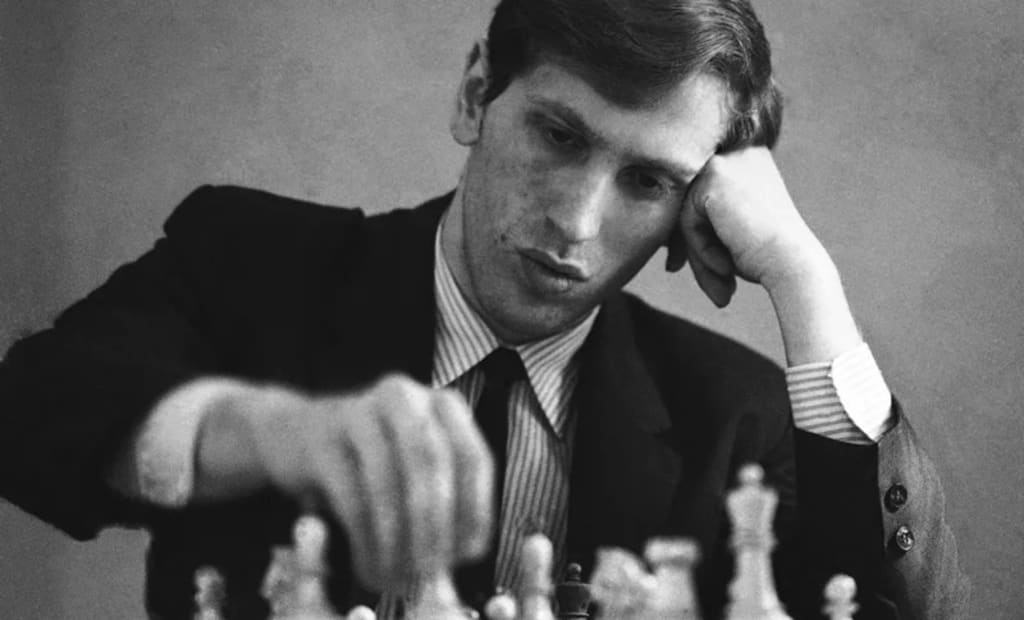
Some people seem destined for greatness in a single pursuit. Lionel Messi was born to dazzle on the soccer field, Mozart to compose timeless symphonies, and Einstein to unravel the mysteries of the cosmos. For Robert James Fischer—known to the world as Bobby—his calling was chess. A prodigy unlike any other, Fischer didn’t just play the game; he redefined it, shattering records and overwhelming opponents with a brilliance that remains unmatched. At his peak, he took on the Soviet Union’s chess empire—a powerhouse that had ruled the board for 25 years—and emerged victorious, cementing his status as a legend. Yet, his story is as much about triumph as it is about tragedy, a tale of a man who conquered the chess world only to lose himself to his own unraveling mind.
Born in 1943, Fischer came into the world with intellect woven into his DNA. His mother, Regina, was a multilingual physician with a PhD, while the man listed as his father, Herman, was a biophysicist. Rumors persist, however, that his true father was Paul Nemenyi, a Hungarian mathematician and physicist who had an affair with Regina. Whatever the truth, Fischer’s brilliance was undeniable from the start. His early years were far from stable—born into technical homelessness and raised by a single mother after his parents split, he grew up in a household shaped by Regina’s fierce political activism, which drew FBI scrutiny for suspected communist ties. The two were never close, and by age 16, Fischer was living alone in a rough Brooklyn neighborhood after his mother left to pursue her career.
Chess entered his life at six, sparked by a set his sister Joan brought home. Together, they puzzled out the rules from the instruction booklet, but what began as a casual pastime soon consumed him. While Joan drifted away from the game, Bobby’s fascination deepened into an obsession. With no one to play, he faced himself, honing his skills in solitude. At seven, his mother, worried about his isolation, placed a newspaper ad seeking opponents for her son. The response changed everything: an invitation to a simultaneous exhibition against Max Pavey, one of America’s top players. Fischer lost in 15 minutes, but his performance impressed onlookers, including the Brooklyn Chess Club president, who offered mentorship and opened the door to a world of competition.
From there, Fischer’s ascent was meteoric. At nine, he won his first tournament. By 13, he claimed the U.S. Junior Chess Championship, the youngest ever to do so. That same year, 1956, he stunned the chess elite with a victory over International Master Donald Byrne in what’s now called the “Game of the Century.” Playing Black, Fischer sacrificed his queen in a daring assault that checkmated Byrne’s king—a masterpiece still studied today. At 14, he became the youngest U.S. Chess Champion, a record that endures, and at 15, he earned the Grandmaster title, again setting a historic benchmark. His dedication was relentless: he taught himself Russian to study Soviet chess literature, dropped out of school at 16 to focus on the game, and outplayed veterans who’d spent decades mastering it.
Fischer’s genius was undeniable, but cracks in his psyche were already showing. Temperamental and uncompromising, he clashed with tournament organizers, often skipping events when his demands weren’t met. His outspokenness veered into troubling territory—despite his Jewish heritage through his mother, he harbored virulent antisemitic views that worsened with age. Yet when he let his chess speak, it was poetry. In the early 1970s, he hit his stride, earning a shot at the World Championship by demolishing the Candidates Tournament. He crushed Soviet Grandmaster Mark Taimanov and Danish Grandmaster Bent Larsen 6-0 each—unheard-of scorelines at that level—before topping it off with a 20-game winning streak against the planet’s best. Chess legend Mikhail Botvinnik called it a miracle.
The 1972 World Championship in Reykjavik, Iceland, pitted Fischer against Soviet titleholder Boris Spassky in a Cold War showdown that gripped the globe. Spassky, a formidable champion with a strong record against Fischer, had the Soviet chess machine behind him. Fischer had only his second, William Lombardy, and his own stubbornness, nearly derailing the match with demands over prize money and venue. A British banker’s donation and Spassky’s sportsmanship kept it alive. Down 2-0 after a loss and a forfeit, Fischer rallied, winning 7 of the next 19 games to Spassky’s 1, with 11 draws. His triumph made him the 11th World Chess Champion and a national hero.
But the crown was fleeting. In 1975, Fischer was set to defend his title against Anatoly Karpov, but his barrage of demands—some reasonable, others outlandish—went unmet. He walked away, forfeiting the title, and vanished from competitive chess for two decades. Becoming a recluse, he flirted with a doomsday cult before resurfacing in 1992 for a rematch with Spassky in Yugoslavia. He won handily, but the event violated a U.N. embargo, earning him a U.S. arrest warrant after he defiantly spat on a government cease-and-desist letter during a press conference. Now a fugitive, Fischer lived in Hungary and Japan, narrowly escaping deportation in 2004 after a passport snafu landed him in a Japanese jail for nine months. Iceland granted him citizenship, and he spent his final years in Reykjavik, dying in 2008 at 64.
Fischer’s legacy is a paradox. His chess brilliance—evidenced by a 125-point rating lead over rivals at his peak—places him among the all-time greats, rivaling Magnus Carlsen and Gary Kasparov despite just one world title. Yet his later years were marred by paranoia, antisemitic rants, and extremist outbursts, including a chilling celebration of the 9/11 attacks. Some speculate mental illness drove his decline, though no diagnosis was ever confirmed. Those close to him argue he was misunderstood, but his recorded words leave little room for doubt about his darker side.
Bobby Fischer was a chess titan whose talent reshaped the game, a man born to move pieces with unrivaled mastery. But his story is a cautionary one—a reminder that even the brightest minds can falter when genius blurs into chaos.
About the Creator
KWAO LEARNER WINFRED
History is my passion. Ever since I was a child, I've been fascinated by the stories of the past. I eagerly soaked up tales of ancient civilizations, heroic adventures.
https://waynefredlearner47.wixsite.com/my-site-3
Keep reading
More stories from KWAO LEARNER WINFRED and writers in History and other communities.
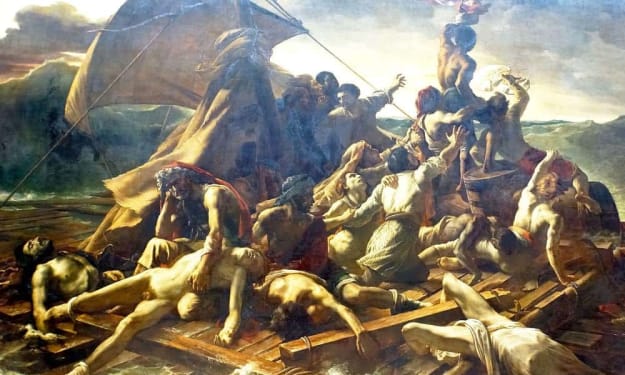
The Harrowing Tale of the Medusa: A Maritime Tragedy Unraveled
On July 2, 1816, a French frigate named the Medusa met a disastrous fate when it struck a hidden reef 30 miles off the coast of what is now Mauritania. With over 400 souls aboard and too few lifeboats to accommodate them all, the ship’s captain devised a desperate backup plan: construct a massive raft to ferry the excess passengers to safety. Towed by the lifeboats, this makeshift vessel was meant to be a lifeline. Instead, it became a floating nightmare, spiraling into one of history’s most gruesome maritime catastrophes.
By KWAO LEARNER WINFRED11 months ago in History
Mestre Best: The Warrior Who Taught Restraint
In the mountain city of Valenor, there was a name spoken softly, almost with reverence—Mestre Best. No statues were built in his honor, no songs officially recorded his deeds, yet every fighter, scholar, and traveler knew the legend. Some said he was the greatest master of combat the world had ever seen. Others claimed he was a philosopher disguised as a warrior. The truth was more complex than either tale.
By The best writer about 24 hours ago in History
A massive underwater stone wall that is almost 7,000 years old is found by divers.
One of the buried stone monuments on Sein Island is a granite wall off Brittany that is more than 7,000 years old and the length of a football pitch. The discovery is being used by marine archaeologists in the vicinity of Île de Sein to explain how stone-built coastal villages predate the widespread spread of farming.
By Francis Dami6 days ago in History
Miss Persephone's Manual to a Seemingly Ordinary Life
Miss Persephone was found at the dining table, her blue eyes swollen, her tears arriving and retreating like the tides of the ocean. Earlier that day, her family had visited her in the retirement home where she had lived for eight years. It was her eightieth birthday.
By Imola Tóth4 days ago in Fiction


Comments
There are no comments for this story
Be the first to respond and start the conversation.