
Echoes of the fall
The Collapse of the Soviet Union and Its Global Reverberation

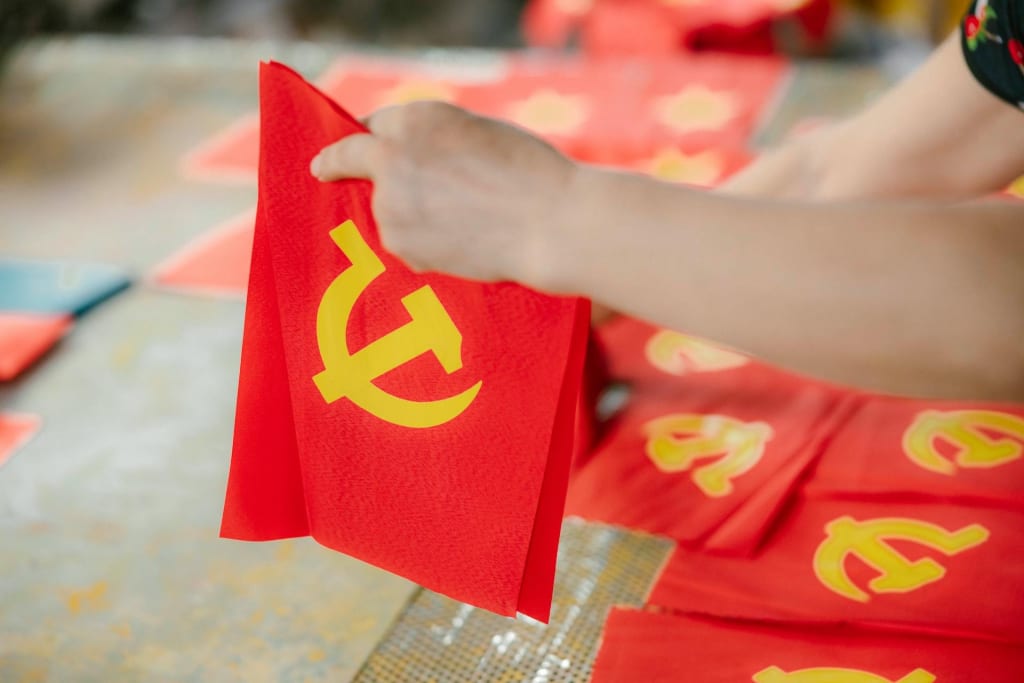
At the threshold of the 1990s, the world was witnessing the concluding moments of one of the most epic changes in modern history: the collapse of the Soviet Union. For over four decades, the Cold War had shaped international politics; the United States and its Western allies, on one side, struggled against the communist superpower. But at the threshold of the 1990s, the world would be aghast, disbelieving its own eyes, as the Soviet Union-a seemingly impregnable fortress of power-only apparently dissolved overnight. The fall of this giant would reshape the world order, leaving behind a legacy that still ripples through the globe today.
The story of the Soviet Union's demise cannot be described without an appreciation of the great internal pressures that, over preceding decades, had been building up inside it. The Soviet economy by the late 1980s was in free fall. Heavy military expenditure, inefficient central planning, and corruption had bled it white. Basic goods were in short supply, with the black market thriving as ordinary citizens tried to make ends meet. Production from factories designed on outdated models proved incapable of standing up to more modern standards, while the large agricultural sector turned out insufficient food supplies for the populace.
It is upon this backdrop that Mikhail Gorbachev, a reform-minded leader, took office in 1985. Gorbachev recognized the need for change and henceforth implemented two major policies—*glasnost* or openness and *perestroika* or restructuring—to revitalize the Soviet Union. *Glasnost* allowed for political openness and free speech to enable people to speak against the government for inefficiency and corruption. By contrast, *perestroika* refers to the process of Soviet economy restructuring through the infusion of market economics and lessened state control over diverse industries.
In the beginning, this particular set of reforms was welcomed optimistically. There was a new sense of freedom as the iron grip of the Soviet government loosened. The newspapers, which had never done so before, began to carry stories that one could hardly imagine-criticizing the government and exposing one to the raw realities of existence in the Soviet Union. The long-imprisoned or silenced political dissidents found their voice once again. But as these reforms took hold, the more the cracks in the Soviet system became apparent, and with each revelation, the disillusionment of the people grew.
By 1990, even Gorbachev could not control the forces that his policy unleashed. Nationalist movements within the Soviet republics began to demand independence from the central government. The first to do so were the Baltic states of Lithuania, Latvia, and Estonia, but others soon joined in. There was no way the central government in Moscow could keep pace with this increasing tide of demands for independence.
1991 marked the tipping point. Hard-line Communist Party members, disturbed by the dissolution of the Soviet Union, mounted a coup against Gorbachev on August 19th that year. Tanks moved into Moscow, and for a day or so, it seemed as though the old guard would be back in command. It promptly fell apart in the face of the resistance by ordinary people, as well as in the face of the then newly elected president of the Russian Soviet Federative Socialist Republic, the largest republic within the Soviet Union, Boris Yeltsin.
Yeltsin called for people to oppose the coup, standing on top of a tank outside the Russian White House; he led the opposition, and that day was hailed as a national hero-a position that most certainly eclipsed Gorbachev's influence. Over the following months, the Soviet Union continued to disintegrate at a simply breathtaking pace. In turn, each of the republics declared its independence, and on December 25, 1991, Gorbachev formally resigned as president, marking the formal end of the Soviet Union. From the ashes of the late Soviet state rose fifteen new countries, of which Russia was by far the largest successor state.
The dissolution of the Soviet Union had profound effects not only on the people within the former borders of the Soviet Union but also on the whole world. The end of the Cold War brought along with it the end of a nuclear arms race that had threatened for at least a decade to annihilate the world. It was the signal for a new era in U.S. hegemony: the United States now stood as a solo superpower unchallenged by any equal rival. The Western model of liberal democracy and capitalism triumphed.
The challenges did not completely disappear in the post-Soviet world. Now under Yeltsin, Russia struggled to return to a market economy. The rapid privatization of state industries caused chaos in the economy as oligarchs in a few hands amassed unprecedented wealth, and poverty on a horrific scale confronted the ordinary citizen. The social safety net that had been guaranteed under the Soviet regime vanished: unemployment and homelessness became a real, everyday threat, and the life-span did a nosedive.
The fall of the Soviet Union also created a power vacuum politically in Eastern Europe and Central Asia. In some instances, that void was filled with violence and instability. Conflicts erupted in places like Chechnya and the Balkans, where ethnic and nationalist tensions, long suppressed under Soviet control, boiled over into bloody wars. Thus, the breakup or breaking-away republics felt the stringent task of establishing stable governments as corruption, authoritarianism, and economic problems beset many of the newly independent states.
Meanwhile, the international community was still ironing out the wrinkles of this new world order. The European Union worked to include the former Eastern Bloc countries within its structure by expanding eastward, as did NATO-deep into what was once Soviet space-which only angered Russia, as it felt this further threatened its security. These tensions would only grow in the years to come, laying the groundwork for future geopolitical conflicts.
The collapse of the Soviet Union is among the most important events of the 20th century. It also closed a superpower and transformed the world in a fashion that still resounds today. The echoes of that collapse still reverberate in the cold political, economic, and military relations between Russia and the West, in the struggles for democracy inside the former Soviet republics, and in the memories of those who lived through the uncertainty of such a fateful period.
To the people of Cedar Springs and those around the world, the end of the Soviet Union meant both hope and fear. It is a time of change unparalleled by any, one that proves just how tenuous empires can be, serving to remind one that even the strongest of forces may be toppled—sometimes in silence, sometimes in an avalanche of activity that forever reorders the face of the world.
Thanks for reading. If you enjoyed this content, please don’t forget to subscribe to get more.
About the Creator
Keep reading
More stories from Boluwatife Oreoluwa and writers in History and other communities.
The Silent Road
It was the year 1996, with most of the world ready to plunge into the digital era, but in this small town called Cedar Springs, nestled in the heart of the Midwest, time stood still. Life moved slower, air crisper with the scent of pine; high school football games and the occasional town gathering were usually the most excitement. Cedar Springs was a quiet place until the night of November 13th when the mystery of Silent Road had begun.
By Boluwatife Oreoluwaabout a year ago in History
The Quiet Rise of Global Militarization
The Quiet Rise of Global Militarization Across the world, governments are increasing military spending, expanding defense industries, and modernizing weapons systems—often without openly acknowledging why. There are no formal declarations of war, no mass troop mobilizations, and no clear enemy named in many cases. Yet behind the scenes, a quiet shift is taking place. Global militarization is rising, not loudly, but steadily, reshaping international relations in ways that may define the coming decades.
By Wings of Time 6 days ago in History


Comments
There are no comments for this story
Be the first to respond and start the conversation.