
Global Energy Crisis 2025: How the World Could Face Total Blackout
An urgent look into how geopolitical tensions, cyberattacks, and climate disasters could trigger a worldwide energy collapse — and what might happen in the first 72 hours.

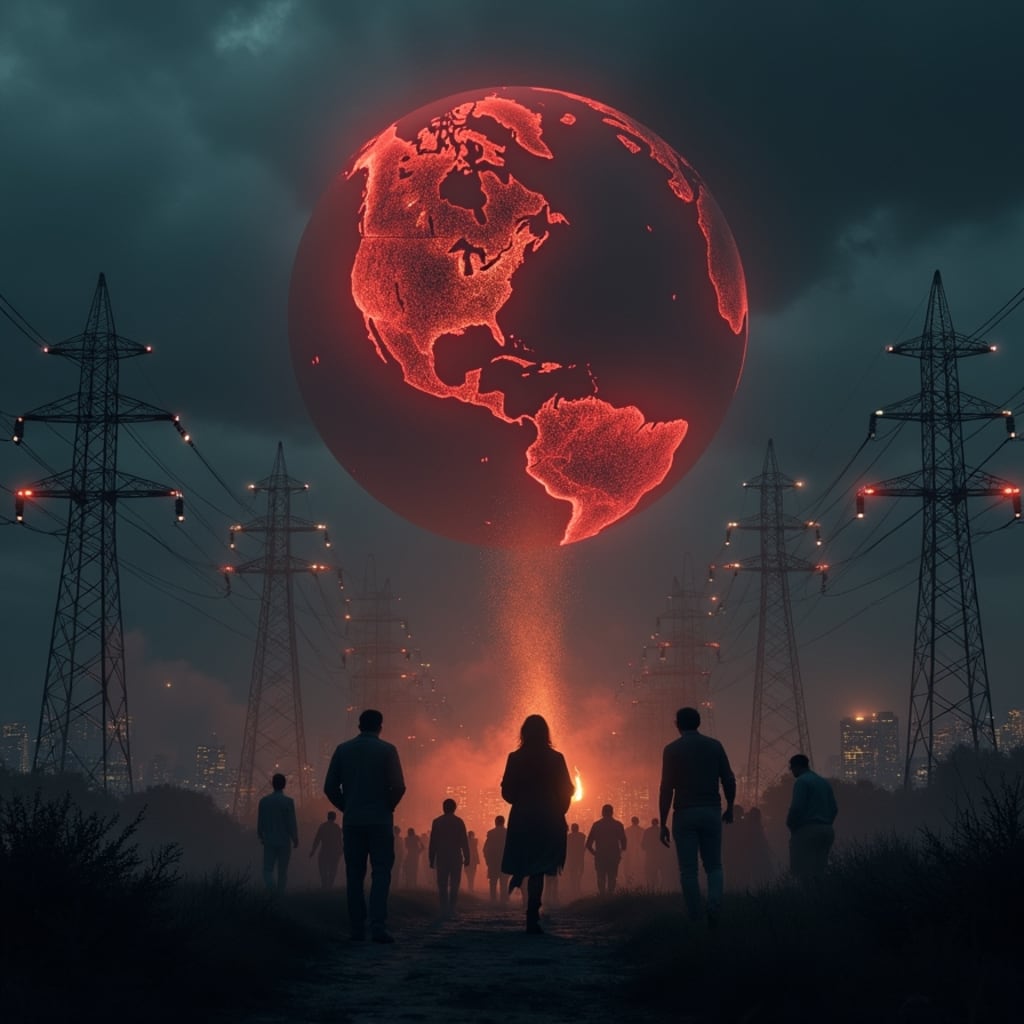
Global Energy Crisis 2025: How the World Could Face Total Blackout
The year is 2025. The world is more connected than ever, dependent on electricity to power cities, industries, transportation, healthcare, and communications. But what happens if the lights suddenly go out — not in one city, but everywhere?
Experts warn that a perfect storm of geopolitical conflict, cyber warfare, and climate disasters could trigger a global energy collapse. This is not speculation. Signs are already emerging — political tensions between superpowers are rising, cyberattacks on energy infrastructure are increasing, and climate events are disrupting supply chains.
Here’s a possible timeline of what could happen in the first 72 hours of a total blackout.
Hour 1: The Lights Go Out
It begins quietly. A coordinated cyberattack hits power grids in multiple nations. Within minutes, major cities lose electricity. Traffic lights stop working. Communication networks falter. Banks shut down digital services. Hospitals switch to emergency power.
In New York, London, Beijing, and Islamabad, darkness falls. Stock markets halt trading as uncertainty spreads. Social media lights up with unconfirmed reports. Panic begins to stir.
Hour 6: Rising Panic
By the sixth hour, the blackout is spreading. Trains stop, airports ground flights, and hospitals run on limited backup generators. Communication systems are unstable. Emergency alerts flood mobile devices.
In cities, chaos grows. People crowd gas stations, supermarkets, and banks, fearing shortages. Governments call emergency meetings, but solutions are unclear. The world wakes up to a new reality — life without power.
Hour 24: A World in Crisis
A day into the blackout, entire regions face critical shortages. Food supply chains collapse. Refrigeration fails, spoiling food. Water systems lose pressure. Hospitals struggle without power.
Governments scramble to restore order. Martial law is declared in some countries. Cybersecurity agencies reveal the attacks may have originated from a coordinated effort by multiple hostile actors — possibly a new form of cyberwar.
Every city becomes a crisis zone. The blackout is no longer a local issue — it is a global emergency.
Hour 48: Global Economy Crumbles
Two days in, the impact deepens. Stock markets are in freefall. Oil prices surge as production and distribution collapse. Factories shut down. Supply chains break entirely. The world economy teeters on collapse.
Without electricity, communication networks remain fragmented. News is spread in bits and pieces. Rumors fuel panic. Governments warn citizens to prepare for prolonged outages.
This blackout is no ordinary power failure. It is a worldwide test of resilience.
Hour 72: A New Reality
By the third day, the world begins to adapt. Local communities form self-reliant networks. Cities operate in survival mode. Some nations begin restoring power, but others remain in darkness.
Global politics change overnight. Alliances are reshaped. Trust between nations erodes. The crisis forces humanity to rethink dependence on centralized energy systems.
The energy crisis of 2025 would not just be about darkness — it would redefine the future of civilization.
Final Thought
A global blackout is no longer science fiction. It is a growing possibility in a world where power grids are vulnerable to attack, natural disasters, and political disruption.
The question isn’t whether such a crisis could happen — but whether humanity is ready for the day when the lights go out forever.
Because when the world loses power, it loses more than electricity — it loses control.
About the Creator
Wings of Time
I'm Wings of Time—a storyteller from Swat, Pakistan. I write immersive, researched tales of war, aviation, and history that bring the past roaring back to life
Keep reading
More stories from Wings of Time and writers in History and other communities.
World War 3: The Silent War That Could Begin Tomorrow
World War 3: The Silent War That Could Begin Tomorrow How Cyber Warfare Could Become the Deadliest Battlefield What if the next world war didn’t start with tanks, fighter jets, or nuclear missiles — but silently, in the hidden world of cyberspace?
By Wings of Time 4 months ago in History
Venezuela’s President Under Pressure: Arrest Calls, Indictments, and a Nation at a Crossroads
How the Arrest Narrative Began The idea of arresting Venezuela’s president did not appear out of nowhere. It stems from years of accusations that range from human-rights abuses to corruption and drug-related activities. U.S. authorities have filed formal charges against Nicolás Maduro, linking him to cocaine trafficking networks and large-scale financial misconduct. These cases place him among the few sitting leaders facing active international legal pressure.
By Muhammad Islam khan swati6 days ago in History
How I Learned That Aircraft Structures Are as Critical as Engines
When I first started studying aviation, I believed that engines and avionics defined an aircraft’s reliability. Over time, as I explored aerospace history and manufacturing records, I realized how incomplete that understanding was. Aircraft safety does not depend solely on thrust or navigation systems. It is deeply rooted in structural engineering, certified manufacturing, and the disciplined production of components that passengers never see.
By Beckett Dowhan2 days ago in History


Comments
There are no comments for this story
Be the first to respond and start the conversation.