
Giordano Bruno: The Visionary Monk
giordano bruno

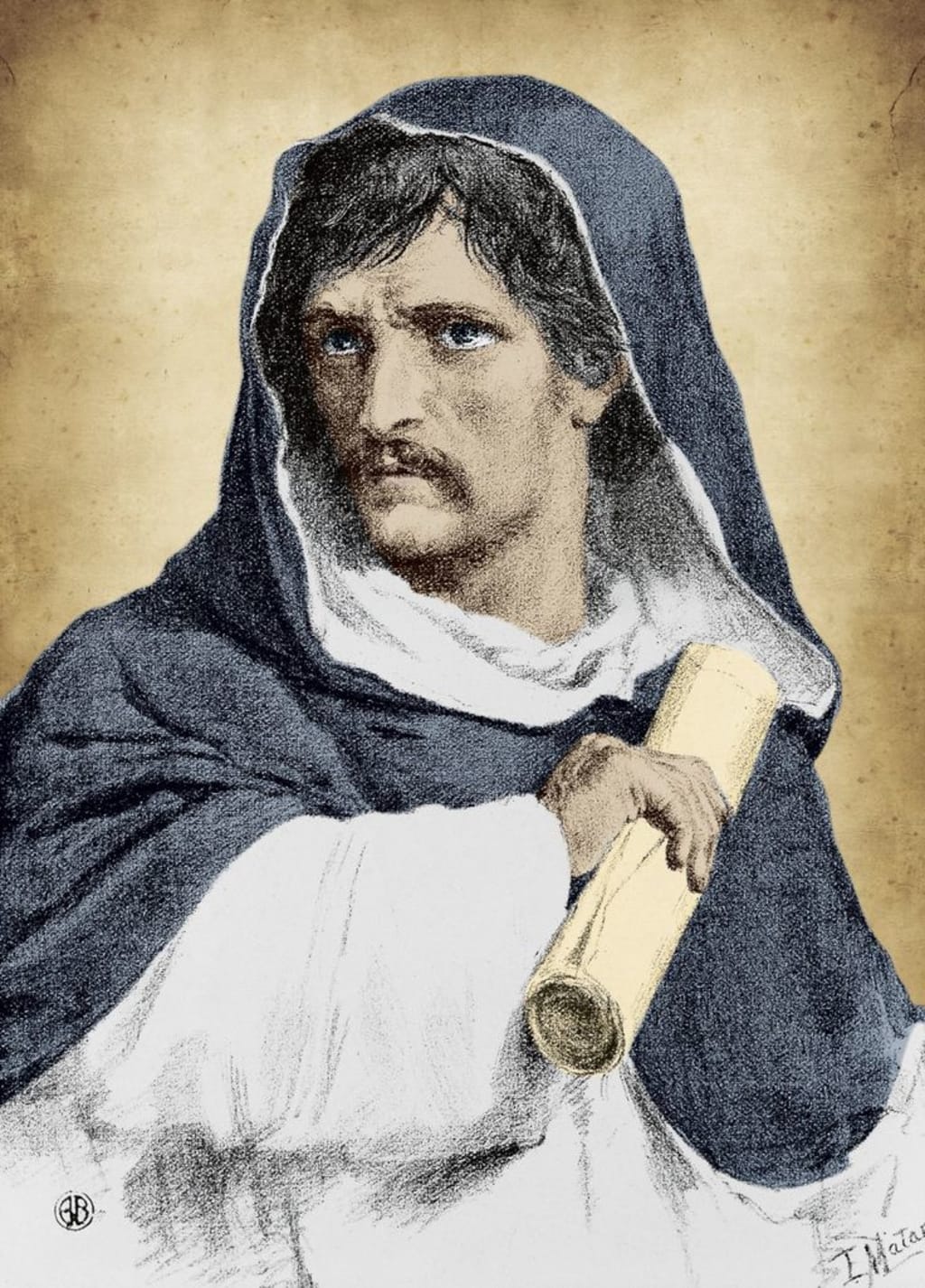
Giordano Bruno: The Visionary Monk
Introduction: A Man Beyond His Time
In a world where the Earth sat immovable at the center of the universe, Giordano Bruno dared to imagine otherwise. Born in 1548 in the Kingdom of Naples, Bruno grew up in an age of intellectual suppression, where the Catholic Church held tight reins on thought and knowledge. But Bruno was a visionary, and his radical ideas about the universe would not only challenge the Church’s doctrines but also cost him his life. His story is one of courage, imagination, and the price of unyielding conviction.

A Curious Mind: Early Life and Monastic Training
From an early age, Bruno exhibited a fierce intellectual curiosity. He joined the Dominican Order as a young man, attracted by its reputation for scholarship and the promise of access to some of the greatest books in the world. Within the quiet halls of the monastery, Bruno immersed himself in theological studies, but it wasn’t long before his questions began to disturb his superiors. Rather than adhering strictly to Church doctrines, he was drawn to new, controversial ideas.
The turning point came when he began reading the works of ancient Greek philosophers like Heraclitus and the Roman poet Lucretius. These thinkers espoused ideas about the universe that clashed with Christian doctrine. Bruno’s fascination with their work led him to question everything he had learned, and he began to feel confined by the dogma of the Church. Eventually, Bruno’s unorthodox views led to his excommunication from the Dominican Order. He was forced to flee Naples, embarking on a lifelong journey across Europe in search of intellectual freedom.
Exile and Exploration: Ideas That Defied the Cosmos
As Bruno traveled, he encountered the writings of Nicholas Copernicus, who had posited that the Earth revolved around the sun—a heretical idea at the time. To Bruno, Copernicus’s model was liberating, but it did not go far enough. While Copernicus envisioned a single, heliocentric universe, Bruno imagined a universe without boundaries, one that was infinite and filled with countless stars and planets. These celestial bodies, he believed, were not merely lights in the sky but suns like our own, potentially hosting other worlds and beings.
This revolutionary idea became the cornerstone of Bruno’s philosophy. He argued that God’s creation could not be limited to a single solar system. If God was infinite, so too was the universe. In his groundbreaking work *De l'Infinito, Universo e Mondi* (On the Infinite, the Universe, and the Worlds), Bruno wrote of an unbounded universe teeming with worlds beyond our comprehension. The radical nature of his vision made him both famous and feared.

Philosopher on the Run: Europe’s Open Arms and Closed Minds
Bruno’s ideas found favor in some circles, particularly among scientists, thinkers, and those questioning the Catholic Church. He gained patrons in France, England, and Germany, where he lectured at prestigious institutions. Yet his beliefs, particularly his criticisms of the Catholic Church, eventually put him at odds with authorities everywhere he went. While some accepted his revolutionary ideas, most feared them.
In England, Bruno found temporary refuge at the court of Queen Elizabeth I, where he became a controversial but celebrated intellectual. He debated with Oxford scholars and mingled with members of the Elizabethan court, where his ideas about the universe gained a following. However, his controversial opinions—especially his rejection of the Christian Trinity—led him to be labeled a heretic. As his teachings began to attract negative attention, he again found himself on the run.
By the time he reached Venice, he hoped he had found safety. Unfortunately, Venice was a dangerous place for a man with radical beliefs, as the Church's influence was omnipresent.

Trial and Inquisition: The Final Stand
In 1592, a former patron betrayed Bruno to the Roman Inquisition. He was arrested, and his trial began soon after. Over the next eight years, Bruno would face his inquisitors, refusing to recant his beliefs. They accused him of numerous heresies, including belief in the infinity of worlds, rejection of key Catholic doctrines, and even possession of magical abilities. Bruno defended his ideas with a passionate conviction that angered his interrogators.
During his trial, Bruno argued that his ideas about the universe were rooted in reason and faith. He famously declared, “I have fought, and I shall continue to fight, for the freedom of philosophy and the truth of things.” This defiance, however, only worsened his situation. To the Inquisition, Bruno’s unyielding commitment to his ideas was a direct affront to the Church’s authority.
In 1600, after years of imprisonment and interrogation, Bruno was condemned as a heretic. On February 17, he was led to the Campo de' Fiori in Rome, where he was burned at the stake. According to witnesses, he faced his executioners with quiet dignity, refusing to recant his beliefs even in the face of death. His last words are lost to history, but his actions spoke louder than words ever could.

Legacy: A Martyr for Science and Free Thought
Giordano Bruno’s death did not erase his ideas; if anything, it strengthened them. His life and death became a symbol for intellectual freedom, scientific inquiry, and the power of conviction. While his contemporaries like Galileo and Kepler advanced scientific thought in more cautious ways, Bruno’s unyielding belief in an infinite universe marked him as a true visionary.
Bruno’s ideas also anticipated modern astrophysics. His belief in a boundless cosmos filled with stars and planets mirrors our current understanding of the universe. Today, scientists know the universe to be vast, expanding, and filled with billions of galaxies. In this sense, Bruno’s vision of an infinite universe teeming with life seems less heretical and more prophetic.
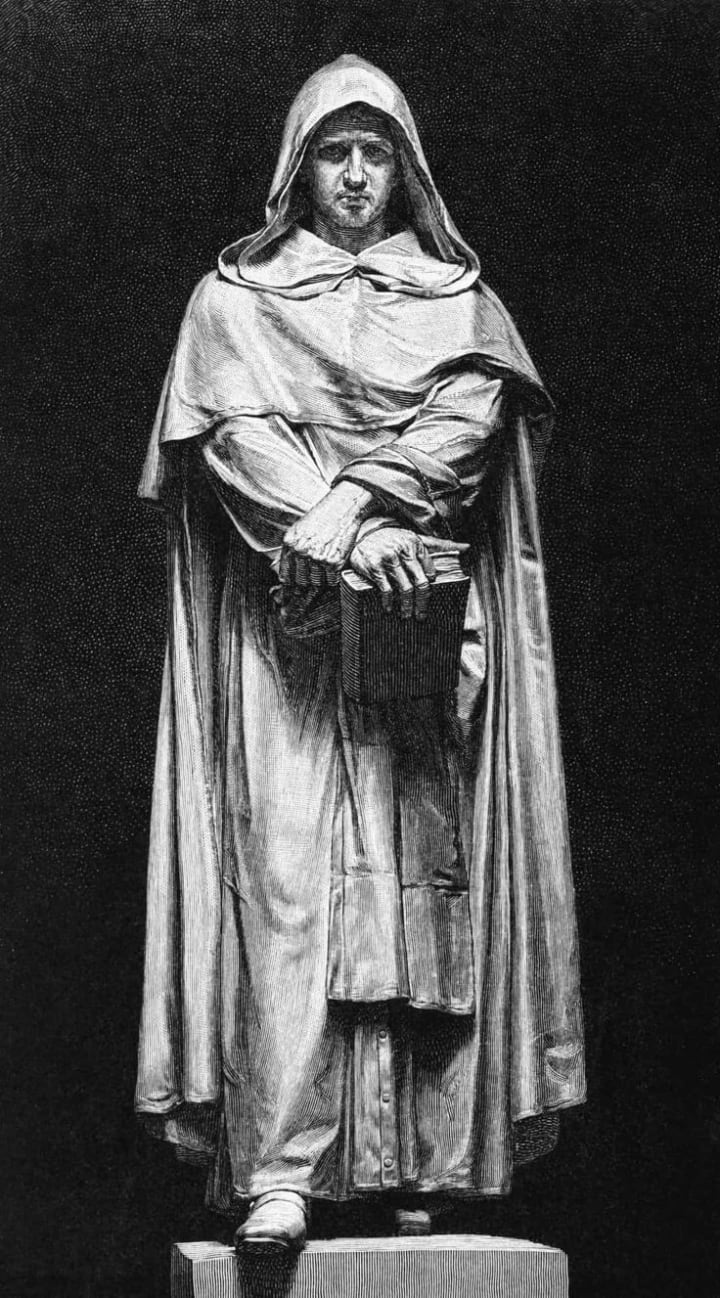
Though he did not live to see his ideas vindicated, Bruno’s legacy lives on in the hearts of those who value knowledge and freedom of thought. The Campo de' Fiori, where he was martyred, now hosts a statue commemorating him, symbolizing the endurance of truth and the unyielding spirit of exploration. The story of Giordano Bruno is not just a historical account—it is a timeless reminder of the human desire to seek, to know, and to understand, even in the face of persecution.
Conclusion: Giordano Bruno’s Enduring Impact
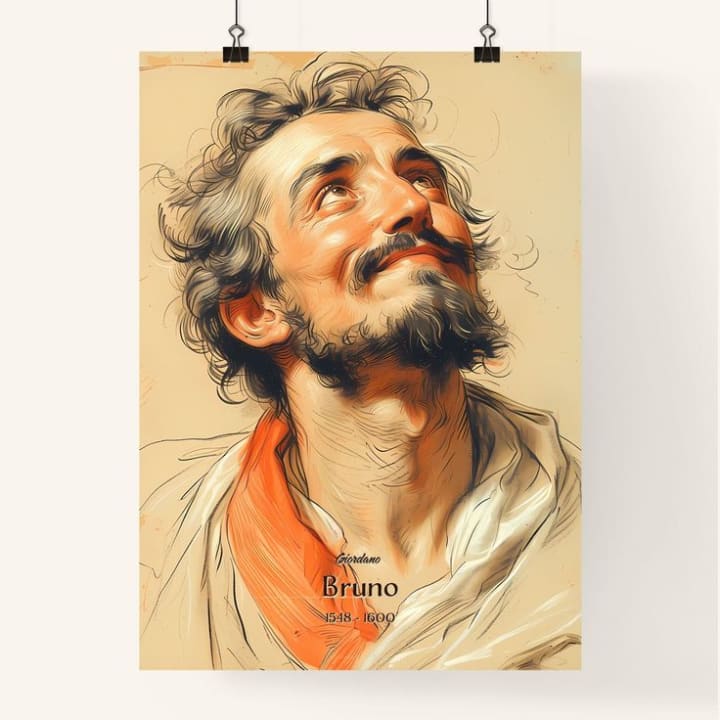
Giordano Bruno’s story is one of defiance against a world that sought to suppress his vision. He dared to see beyond the accepted limits, challenging an ancient belief in a finite cosmos and paving the way for a universe filled with boundless possibilities. In his pursuit of knowledge, he lost his life, yet his ideas transcended his death, influencing generations of thinkers, scientists, and advocates of intellectual freedom. Today, Bruno’s life and work serve as a powerful reminder that the pursuit of truth is worth every sacrifice.
In the grand, endless universe that Bruno imagined, his spirit remains—eternally expanding with the cosmos he loved so fiercely.
About the Creator
Mahalakshmi
"My name is Mahalakshmi, and I'm passionate about storytelling in all its forms. From fiction to real-life tales, I love writing all types of stories that inspire, entertain, and spark imagination. Join me on this creative journey!"
Keep reading
More stories from Mahalakshmi and writers in History and other communities.
Nicolaus Copernicus: The Revolutionary Astronomer Who Changed Our View of the Universe**
**Nicolaus Copernicus: The Revolutionary Astronomer Who Changed Our View of the Universe** **Introduction** Nicolaus Copernicus (1473 - 1543) is renowned for transforming the scientific worldview of the cosmos. His revolutionary theory placed the Sun, rather than the Earth, at the center of the universe, challenging centuries of established beliefs. Copernicus’s life and work laid the foundation for modern astronomy and altered the trajectory of scientific thought, ultimately inspiring other great scientists like Galileo, Kepler, and Newton.
By Mahalakshmiabout a year ago in History
Dracula: The Real Man Behind the Legend and His War Against the Ottoman Empire
When most people hear the name Dracula, they imagine a mysterious vampire who drinks human blood and lives in a dark castle. This terrifying character became famous through Bram Stoker’s 1897 novel Dracula. However, the fictional vampire was actually inspired by a real historical figure: Vlad III of Wallachia, better known as Vlad the Impaler. His life was filled with war, brutality, and political struggle, especially against the powerful Ottoman Empire.
By Irshad Abbasi 3 days ago in History


Comments
There are no comments for this story
Be the first to respond and start the conversation.