

When people today talk about leadership, they often mean ambition. They mean clawing your way to the top, holding onto power with both fists, and never letting go until they pry it from your cold hands. That’s politics now. But that was not Washington.
George Washington was, by all accounts, a man who could have had everything. He had the respect of the people, the loyalty of his army, and the opportunity to seize the nation in his grasp. After all, we had just torn ourselves away from one king. What was stopping us from crowning another, this time one of our own choosing?
Nothing, except Washington himself.
That’s the first thing people forget. Washington’s greatness wasn’t in what he took. It was what he refused to take. He turned down power most men would have killed for. He set a standard that no president has fully lived up to since.
A Man Formed in Fire
Washington wasn’t born into greatness. He wasn’t the most educated man of his generation. He wasn’t the flashiest speaker, either. He was quiet, deliberate, and often misunderstood. But he had two things that mattered: character and courage.
In the French and Indian War, he learned what it meant to face death. He saw bullets tear through his coat and horses shot from under him. He knew the sting of failure and the weight of responsibility. Those lessons shaped him long before America called him “General.”
When the Revolution came, Washington didn’t win every battle. In fact, he lost more than he won. But he held the army together. That was his real victory. Soldiers froze, starved, and bled, but they didn’t abandon him. They believed in him because he refused to abandon them.
Power within Reach
When the war was finally won, the world held its breath. Generals in history don’t usually go home quietly. They seize crowns. They rewrite laws in their own image. Washington could have done the same. The army would have followed him. The people would have accepted it.
But instead, in one of the most remarkable moments in world history, Washington resigned his commission. He walked away. He handed power back to Congress. King George III, when told what Washington had done, reportedly said: “If he does that, he will be the greatest man in the world.”
Washington did it. And that’s exactly what made him great.
A Nation Built on Restraint
When Washington became the first president, he could have stayed until he died. Many expected him to. But after two terms, he stepped aside. Once again, he gave up power. He made it clear: this office does not belong to a man. It belongs to the people.
Think about it, America was built on restraint. On one man refusing to put himself above the republic. Washington set the tone. He made the presidency temporary, accountable, and limited enough to serve freedom, but never so big it could devour it.
What Washington Wanted
Washington warned us. In his farewell address, he said parties would tear this nation apart, and look at us now. He warned against foreign entanglements that would drag America into endless wars, and still we bleed in conflicts that were never ours to begin with. He believed the government should stay limited, that public service should be temporary, and that citizens should be strong enough to stand on their own without kneeling to a permanent political class.
He didn’t dream of career politicians. He didn’t envision a bloated, centralized government where people lived off Washington D.C. instead of Washington D.C. living off the people.
And yet, here we are.
Where We Went Wrong
The rot didn’t come overnight. But somewhere along the line, Washington’s vision faded. Politics became a profession. Career politicians began to build dynasties. Men and women now cling to their seats for forty, fifty years, wielding power until they die, leaving nothing but division behind.
That’s not what Washington fought for. That’s not what he sacrificed for.
What if Washington walked among us today? What would he see? He’d see a country strangled by partisanship. He’d see people shouting each other down, calling neighbors enemies. He’d see leaders more interested in building their brand than building the nation.
And I can almost hear him saying: This is not what I bled for.
Washington’s Lesson for Us
If there’s one thing we can take from George Washington, it’s this: true strength doesn’t cling to power. True leadership knows when to step down, when to serve, and when to walk away.
Washington’s greatness wasn’t just in crossing the Delaware or leading armies. His greatness was in humility. His greatness was in restraint. His greatness was in remembering that freedom is fragile and power, if left unchecked, will devour it.
We need that reminder today. Because we’ve forgotten.
We live in an America where hate fuels politics, where leaders thrive on division, and where citizens are encouraged to see themselves as victims rather than victors. Washington’s America wasn’t perfect, but it was aimed at something higher. Something nobler.
And if we want to recover that, it won’t be through shouting matches, or career politicians, or endless wars of ideology. It will be through ordinary men and women reclaiming Washington’s example: self-control, humility, service, and the courage to let go of power when the time comes.
Closing Thoughts
George Washington never proclaimed himself a great man. He never chased after titles, and he never pretended to be flawless. What set him apart was not what he seized, but what he surrendered. Twice, he laid down power that he could have kept.
In doing so, he carved out a standard that still rebukes our age.
If America hopes to endure the storms we face today, we must look back to our beginnings. Not to kings, not to lifelong politicians, but to a man who proved that liberty outweighs power and showed it by walking away.
That is Washington’s true legacy. And it is the legacy we are called to reclaim.
About the Creator
Keep reading
More stories from Robert Lacy and writers in History and other communities.
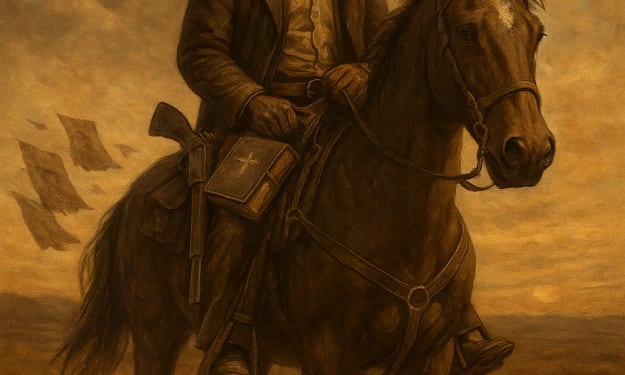
The Lawman They Tried to Forget: Bass Reeves and the Masked Myth of the American Wes
The truth is, some stories were never lost. They were buried. Not because they lacked heroes but because the heroes didn’t fit the version of America the storytellers wanted to sell.
By Robert Lacy9 months ago in History
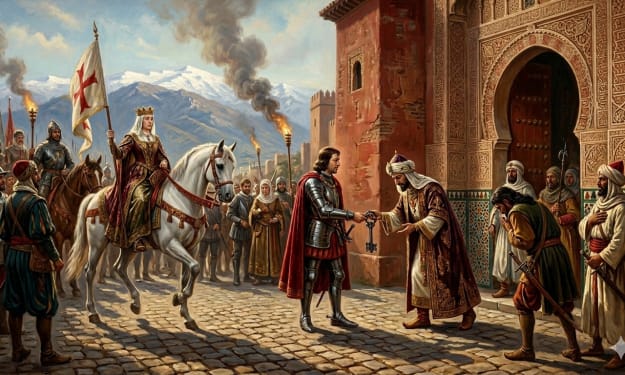
The Last Sigh of Al-Andalus: When the Keys to Paradise Were Lost
The date was January 2, 1492. As the morning mist cleared over the Sierra Nevada mountains, a somber procession wound its way down from the red walls of the Alhambra. At its head was Muhammad XII, known to the West as Boabdil, the last Sultan of the Nasrid dynasty. In his hands, he carried the keys to the city—keys that represented not just a fortress, but the final heartbeat of a civilization that had flourished for 781 years.
By Irshad Abbasi 3 days ago in History


Comments
There are no comments for this story
Be the first to respond and start the conversation.