


On July 9, 1755, a pivotal moment in American history unfolded, one that would soon shape the legacy of a young man named George Washington. At just 23 years old, Washington found himself amidst the chaos of the French and Indian War, where his actions would earn him the respect and admiration of his peers and set the stage for his future as a brilliant military leader.
The Context: The French and Indian War
Before diving into that fateful day, it’s essential to understand the backdrop of the French and Indian War (1754-1763). This conflict pitted the British colonies against the French and their Native American allies. The struggle was primarily over land and trade rights in North America. Tensions escalated as both sides sought to expand their territories, leading to skirmishes and, eventually, full-blown warfare.
In the early stages of the war, the British government decided to send a military expedition to assert control over the Ohio Valley, an area claimed by both the French and the British. This mission was commanded by General Edward Braddock, and it included a young George Washington, who had already gained some military experience during his earlier service in the Virginia militia.
The Road to Fort Duquesne
The British forces embarked on a mission to capture Fort Duquesne, a French stronghold located at the confluence of the Allegheny and Monongahela rivers (present-day Pittsburgh, Pennsylvania). Despite being inexperienced, Washington’s earlier service during skirmishes in the region had earned him the position of aide-de-camp to Braddock. His familiarity with the terrain and understanding of Native American warfare would prove crucial in the events that followed.
As they approached Fort Duquesne, Braddock’s forces, totaling around 2,100 soldiers, moved with confidence but little awareness of the danger that lay ahead. Washington, on the other hand, had a growing sense of unease. He understood that traditional European-style warfare did not easily translate to the North American wilderness, where guerilla tactics employed by the French and their Native allies were the norm.
The Ambush
On the morning of July 9, 1755, as Braddock’s forces advanced, they were suddenly ambushed by French troops and their Native American allies. The British soldiers were caught off guard, and the chaos that ensued was devastating. The troops were not prepared for the guerilla warfare tactics employed by their opponents, who used the forest's natural cover to their advantage.
In the heat of battle, the British soldiers struggled to adapt. They were trained for open-field combat, not the hidden, stealthy assaults that characterized much of the fighting in North America. Braddock himself was wounded early in the fight, leaving Washington to step up in a moment of crisis.
Washington’s Leadership
As the battle raged on, Washington demonstrated remarkable courage and leadership. Despite being in the midst of intense gunfire, he rode through the chaos, rallying troops and encouraging them to stand firm. Reports from the battlefield noted that bullets whizzed past him, and several horses were shot from under him, yet he remained resolute.
Recognizing the dire situation, Washington made the critical decision to organize a retreat. He directed the remaining forces to fall back to a more defensible position, helping to save many lives in the process. His quick thinking and strategic mindset in such a chaotic environment showcased his emerging leadership qualities.
Aftermath and Recognition
The battle resulted in a disastrous defeat for the British, with heavy casualties. Braddock was mortally wounded and later died from his injuries. The loss shocked the British military establishment and marked a significant moment in the French and Indian War.
Despite the defeat, Washington's actions did not go unnoticed. His bravery and leadership during the battle earned him recognition from both his fellow soldiers and military leaders. He was praised for his composure and ability to lead under fire, qualities that would serve him well in the years to come.
The experience at Fort Duquesne became a defining moment for Washington. It not only solidified his reputation as a capable military leader but also instilled in him a deep understanding of the complexities of warfare. He learned valuable lessons about the importance of adaptability and the need to respect the unique challenges posed by the American environment.
Legacy of the Day
The events of July 9, 1755, were pivotal in shaping Washington’s character and future. His reputation as a war hero began to take root, and he would go on to play a critical role in the American Revolution, ultimately becoming the first President of the United States. The lessons he learned during the French and Indian War, particularly the need for a more flexible approach to military strategy, would influence his decisions as a leader during the Revolution.
Furthermore, Washington's experiences at Fort Duquesne highlighted the growing tensions between the British government and the American colonies, laying the groundwork for the revolutionary sentiments that would emerge in the following decade. His understanding of the land and its people would also enable him to connect with the colonists and rally support for the cause of independence.
Conclusion
George Washington’s journey from a young soldier to a revered war hero began on that fateful day in July 1755. The chaos of the French and Indian War, particularly the ambush at Fort Duquesne, tested his mettle and revealed his potential as a leader. The bravery he displayed and the lessons he learned would ultimately shape the future of a nation.
Today, as we reflect on Washington’s early military career, we recognize the significance of that day and the extraordinary path that lay ahead for one of America’s founding figures. His legacy continues to inspire generations, reminding us of the courage and determination that forged our nation.
About the Creator
Meko James
"We praise our leaders through echo chambers"
Keep reading
More stories from Meko James and writers in History and other communities.
Help Wanted
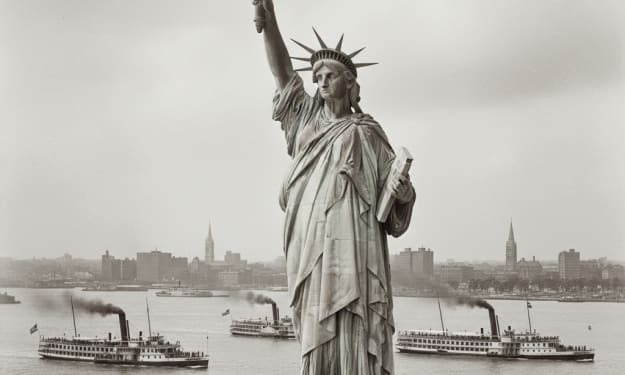
AMERICA! Land of the Free, and standing watch upon her shores, is the Statue of Liberty. For almost 140 years, she has proudly stood as a beacon to the World. A symbol of diversity, democracy, and opportunity, believed by many, to only exist in the "Great" United States. The idea for the statue was conceived in 1865, when the French historian and abolitionist Édouard de Laboulaye proposed a monument to commemorate the upcoming centennial of U.S. independence (1876), and the eradication of slavery, with the Union's Civil War victory. However, war in Europe and difficulty in raising funds for the project would see it take almost 20 years for sculptor Frédéric Auguste Bartholdi's, and civil engineer Gustave Eiffel's statue to be completed and erected on U.S. soil.
By Meko James 3 months ago in History


Comments
There are no comments for this story
Be the first to respond and start the conversation.