
Gaza War Part 1
Understanding the Conflict and Its Impacts


The Gaza War, which began on October 7, 2023, is a significant escalation in the long-standing Israeli-Palestinian conflict, centered in the Gaza Strip and involving Israel and Hamas-led Palestinian militant groups. This conflict, often referred to by various names such as the "Iron Swords War" by Israel or the "Battle of Al-Aqsa Flood" by Palestinian militants, has resulted in profound humanitarian, political, and social consequences. Below is an exploration of the war’s key points and underlying reasons, providing a detailed understanding of its complexity and impact.
Key Points
1. Initiation and Scale of the Conflict
The war was triggered by a surprise attack by Hamas and other Palestinian militant groups on October 7, 2023, targeting southern Israel. This assault killed 1,195 Israelis and foreign nationals, including 815 civilians, and resulted in 251 hostages taken, with the stated goal of pressuring Israel to release Palestinian prisoners. Israel responded with a large-scale bombing campaign and a ground invasion starting October 27, 2023, aimed at destroying Hamas, freeing hostages, and ensuring Gaza poses no further threat. By May 2025, over 59,000 Palestinians, predominantly women and children, and more than 142,000 injuries were reported, with estimates suggesting a higher toll when indirect deaths are included.
2. Humanitarian Crisis
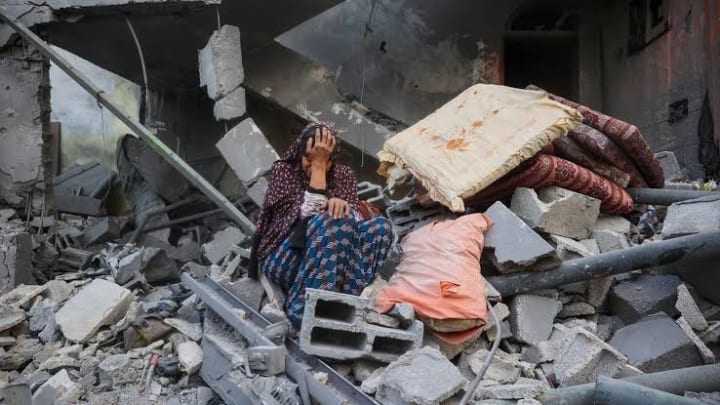
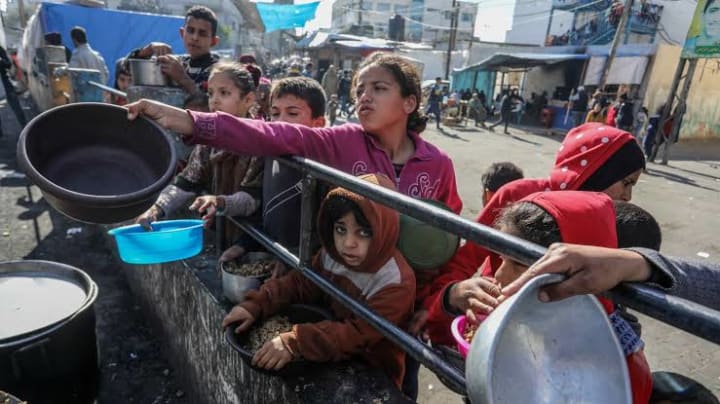
The war has caused an unprecedented humanitarian crisis in Gaza. Israel’s tightened blockade has restricted access to food, water, medicine, and fuel, leading to a severe hunger crisis and a high risk of famine persisting into May 2025. Approximately 1.9 million of Gaza’s 2.3 million population have been displaced, many multiple times, with entire cities leveled and critical infrastructure, including hospitals, schools, and water systems, destroyed., The United Nations and humanitarian organizations like UNICEF and Doctors Without Borders have reported dire conditions, with children facing malnutrition, dehydration, and trauma.,

3. Allegations of Atrocity Crimes
Both sides face accusations of war crimes. Human rights organizations and the UN have documented Israel’s actions, including deliberate attacks on civilians, starvation as a method of warfare, and destruction of civilian infrastructure, as potential war crimes, crimes against humanity, and genocide., Hamas’s October 7 attack, involving civilian killings and hostage-taking, has also been classified as a war crime by the UN. The International Criminal Court issued arrest warrants for Israeli Prime Minister Benjamin Netanyahu, former Defense Minister Yoav Gallant, and a Hamas official in November 2024, citing reasonable grounds for war crimes and crimes against humanity.
4. International Response and Legal Actions
The conflict has drawn significant international attention. The International Court of Justice is reviewing a case accusing Israel of genocide, issuing provisional measures to prevent such acts and ensure aid delivery. Over 28 countries, including the UK and Canada, have called for an immediate end to the war, condemning the killing of civilians seeking aid. The Israeli Knesset’s decision to ban UNRWA, a key aid provider, in October 2024 has further complicated humanitarian efforts.

Reasons for the Conflict
- Historical Context and Occupation
The Gaza War is rooted in the broader Israeli-Palestinian conflict, which began in 1948 with the establishment of Israel and the displacement of over 700,000 Palestinians, many of whom settled in Gaza as refugees. Israel’s occupation of Gaza since 1967 and the subsequent blockade since 2007, described as an "open-air prison," have fueled tensions. Hamas views the blockade as a form of collective punishment, while Israel defends it as necessary to prevent rocket attacks. This historical grievance, coupled with ongoing settlement expansion and restrictions on Palestinian movement, has perpetuated cycles of violence.
- Hamas’s Objectives and Militant Actions
Hamas’s October 7 attack aimed to disrupt the status quo, challenge Israel’s control, and draw global attention to the Palestinian cause. The group’s stated goal was to pressure Israel into releasing Palestinian prisoners, though the attack’s strategic success is debated, as it provoked a massive Israeli retaliation without clear political gains for Hamas. The use of tunnels, hit-and-run tactics, and alleged human shield strategies reflect Hamas’s guerrilla approach, further escalating the conflict.
- Israel’s Security and Political Goals
Israel’s response is driven by its objectives to neutralize Hamas, secure the release of hostages, and ensure long-term security. Prime Minister Netanyahu has emphasized demilitarizing Gaza and maintaining IDF control post-war, rejecting international peacekeeping proposals., However, Israel’s military actions, including widespread destruction and a tightened blockade, have been criticized for their disproportionate impact on civilians, raising questions about strategic clarity and long-term peace prospects.

- Regional and Global Dynamics
The conflict has regional implications, with groups like Hezbollah, the Houthis, and Iranian proxies exploiting the war to challenge Israel and Western interests. The U.S. continues to provide military aid to Israel, despite criticisms of enabling human rights violations, while mediating ceasefire efforts alongside Egypt and Qatar., The war’s global polarization, with rising antisemitism and Islamophobia, underscores its broader impact on international relations and domestic politics in countries like the U.S. and Ukraine.
Conclusion
The Gaza War, initiated on October 7, 2023, is a tragic escalation of the Israeli-Palestinian conflict, marked by significant loss of life, widespread destruction, and a deepening humanitarian crisis. Its roots lie in decades of unresolved grievances, occupation, and mutual distrust, with both Israel and Hamas pursuing strategies that have led to catastrophic outcomes. The international community’s calls for peace, coupled with legal actions, highlight the urgency of addressing the conflict’s humanitarian and political dimensions

About the Creator
Am@n Khan
I'm educational storyteller passionate about turning knowledge into engaging narratives.
I write about topics like science, history and life skills.
Contact
WhatsApp : +923336369634
Ancient Roman Secrets: What Their Monuments Teach Us About Sustainable Construction
Across Europe and the Mediterranean, the remains of ancient Roman structures continue to amaze architects, engineers, and historians alike. Massive aqueducts still stretch across valleys, amphitheaters remain standing after centuries of earthquakes and wars, and the iconic Pantheon in Rome still boasts the world’s largest unreinforced concrete dome. These remarkable structures are more than just archaeological treasures; they hold important lessons for modern construction. Hidden within these monuments is a set of engineering secrets that could help today’s builders create stronger, longer-lasting, and more sustainable structures.
By Irshad Abbasi a day ago in History
The Piggy Project
I’ve had so many names in this life I lose track of which ones were ever really mine and which ones I wore because someone needed me to. Some were handed to me before I had words to refuse them, before I knew what they meant, before I knew I could say no. Most weren’t meant to hurt. That doesn’t mean they didn’t leave marks. Marks that told me who I belong to, who I am by way of who claims me, recognizes me in the good and bad, who walks beside me.
By Fatal Serendipity7 days ago in Confessions




Comments
There are no comments for this story
Be the first to respond and start the conversation.