
Funiculars in 2025: Why These Historic Railways Are Making a Comeback
From 19th-Century Innovation to Modern Travel Trend: The History, Technology, and Scenic Beauty of Funiculars in 2025.


What Exactly Is a Funicular?
A funicular is a type of cable railway system designed to move passengers up and down steep slopes. Unlike traditional trains that rely on engines, a funicular uses two cars connected by a cable. As one car ascends, the other descends, creating a natural balance that reduces energy use.
The name comes from the Latin funiculus, meaning “little rope.” While the technology might sound simple, funiculars are elegant engineering marvels that have fascinated travelers for more than a century.
A Brief History of Funiculars
The first modern funiculars appeared in the 19th century, during the Industrial Revolution, when cities needed creative ways to connect their upper and lower districts. In mountainous regions of Europe, funiculars became essential for transporting people, goods, and even coal.
By the early 20th century, they were no longer just practical—they became tourist attractions. Places like Switzerland, Italy, and Austria built scenic funiculars that provided breathtaking views of mountains, lakes, and valleys. Many of those same systems are still in operation today, now preserved as cultural landmarks.
Why Funiculars Are Trending Now
Funiculars may seem like relics of the past, but in 2025 they are making headlines again. Here’s why:
1. Tourism Revival
Social media platforms are overflowing with viral videos of funicular rides, from glass-roofed modern cabins in Asia to century-old wooden carriages in Europe. Travelers are drawn to the mix of history, scenery, and novelty.
2. Sustainable Transportation
With growing interest in eco-friendly travel, funiculars stand out. Their counterbalanced system means they use less energy than buses or traditional trains climbing steep slopes.
3. Cultural Heritage
Cities like Pittsburgh in the U.S., Lisbon in Portugal, and Hong Kong highlight their funiculars as iconic tourist landmarks. These aren’t just rides—they’re living pieces of history.
4. Engineering Fascination
Funiculars capture the imagination of engineers and designers. Their simple yet effective mechanics are being studied and modernized, blending tradition with innovation.
Famous Funiculars Around the World
The Peak Tram (Hong Kong): Perhaps the most famous modern funicular, offering panoramic views of the Hong Kong skyline.
Duquesne and Monongahela Inclines (Pittsburgh, USA): Historic funiculars that date back to the late 1800s and still serve as functional transit systems.
Gelmerbahn (Switzerland): Known as one of the steepest funiculars in Europe, it gives thrill seekers a breathtaking experience.
Lisbon Funiculars (Portugal): A network of charming old systems that wind through the city’s hilly streets.
Each one carries not just passengers, but also a sense of nostalgia, adventure, and cultural identity.
The Human Experience of Riding a Funicular
Stepping into a funicular feels different from boarding a train or bus. The slow climb up a hillside, the quiet hum of the cable, and the gradual reveal of a sweeping view all combine to create a memorable and personal experience.
For some, it’s about convenience—getting from one part of a city to another without breaking a sweat. For others, it’s about the journey itself. Funiculars remind us that transportation doesn’t have to be rushed; sometimes it can be about savoring the ride.
Funiculars in the Modern World
Today, cities are reinventing funiculars with glass cabins, modern safety systems, and digital ticketing. While they remain heritage icons, they’re also adapting to the demands of contemporary travelers.
In fact, several cities are now considering funiculars as solutions for urban congestion. Their ability to handle steep terrain without heavy infrastructure makes them an attractive option for sustainable city planning.
Why Funiculars Matter in 2025
Funiculars are more than just quirky transportation—they represent the intersection of history, engineering, tourism, and sustainability. In a world where speed and efficiency dominate, they offer something refreshingly different: a reminder that travel can be scenic, slow, and meaningful.
Their renewed popularity in 2025 shows how old ideas can become new again when seen through the lens of culture, technology, and environmental awareness.
Conclusion
From the cobblestone streets of Lisbon to the glass-roofed cars of Hong Kong, funiculars are enjoying a well-deserved revival. They are a living link between past and present, carrying passengers not just uphill but also into a shared story of innovation and tradition.
As they trend across social media and inspire fresh appreciation from travelers, funiculars prove one thing: some journeys are just as important as the destinations.
About the Creator
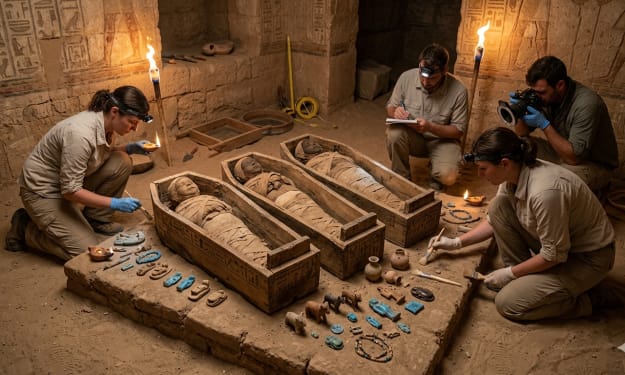
Ancient Egyptian Tomb Unearthed: 3,000-Year-Old Remains of Four Children Discovered
In a remarkable archaeological discovery in Egypt, researchers have uncovered the mummified remains of four children dating back nearly 3,000 years. The find, located in the southern region of Luxor, offers a rare glimpse into the lives, deaths, and funerary customs of young Egyptians during the New Kingdom period.
By Irshad Abbasi 3 days ago in History



Comments
There are no comments for this story
Be the first to respond and start the conversation.