
From Science Fiction to Reality
The Historical Evolution of AI and Its Impact on Society Today


From Science Fiction to Reality: The Evolution of AI and Its Impact on Society
Introduction
Artificial Intelligence (AI) has made an extraordinary leap from the pages of science fiction to becoming a crucial part of our daily lives. What once seemed like a distant dream of futuristic worlds is now a reality shaping everything from how we work to how we interact with the world around us. In this article, we'll explore the fascinating journey of AI, from its roots in imaginative fiction to its present-day role in society, and the profound impact it has on our lives.
The Origins of AI in Science Fiction
Early Dreams of Intelligent Machines
The idea of machines that could think like humans isn’t new; it’s been around for centuries in myths and stories about mechanical beings. But it wasn’t until the 20th century that these ideas started to take a more concrete form. Visionaries like Isaac Asimov and Arthur C. Clarke began to explore what it might mean if machines could truly think for themselves, planting the seeds for the AI we know today.
AI in Movies and Books
By the mid-1900s, AI had become a fixture in science fiction movies and books. Films like "2001: A Space Odyssey" and novels such as "Do Androids Dream of Electric Sheep?" delved into the complex questions AI raises—like whether machines could surpass human intelligence and what that might mean for the future. These stories captured the public’s imagination and played a huge role in sparking interest in AI, both in popular culture and in the academic world.
The Birth of AI: From Theory to Practice
The Dartmouth Conference: Where It All Began
The official birth of AI as a field of study can be traced back to the Dartmouth Conference in 1956. Here, pioneers like John McCarthy, Marvin Minsky, and Alan Turing laid the groundwork, suggesting that machines could one day simulate human intelligence. During this time, early AI programs like the Logic Theorist and the General Problem Solver showed that computers could tackle complex problems, marking the first steps toward practical AI.
Advancements in Machine Learning and Neural Networks
Fast forward to the late 20th century, and AI was making significant strides, especially in machine learning and neural networks. These developments allowed computers to learn from data, leading to incredible advances in recognizing patterns, understanding language, and even “seeing” through computer vision. These breakthroughs opened the door to countless AI applications that we now rely on in various sectors, from medicine to finance.
AI's Impact on Our Lives Today
AI in Our Everyday Activities
Today, AI is deeply woven into our daily routines. Whether it’s using voice assistants like Siri and Alexa, getting personalized content recommendations on Netflix, or benefiting from AI-driven medical diagnostics, AI has made our lives more convenient and efficient. In healthcare, for example, AI helps doctors diagnose diseases more accurately, while in finance, it’s used to detect fraud and optimize investments.
Changing the Face of Entire Industries
AI isn’t just making our personal lives easier; it’s also revolutionizing entire industries. In manufacturing, AI-powered robots increase productivity and reduce errors. In agriculture, AI helps farmers get better yields with fewer resources. The transportation industry is on the brink of a major transformation with the development of self-driving cars, which could change the way we think about getting from place to place.
Ethical and Social Challenges
But with all its benefits, AI also brings some serious challenges. Concerns about data privacy, bias in algorithms, and the potential loss of jobs are just a few of the issues that society needs to grapple with. As AI systems become more capable and autonomous, we need to carefully consider who is responsible for their decisions and how they are made.
The Future of AI: Promise and Peril
AI as a Tool for Scientific Discovery
Looking ahead, AI holds tremendous potential for advancing scientific research and innovation. By processing vast amounts of data, AI could help us unlock new discoveries in everything from genetics to climate change. In fields like drug discovery and materials science, AI is already speeding up the process of finding solutions to some of the world’s biggest challenges.
The Risks of Autonomous Weapons and Surveillance
However, the future of AI isn’t without risks. The development of autonomous weapons and AI-driven surveillance poses serious threats to global security and human rights. As AI continues to evolve, it’s crucial that we address these risks and ensure that AI is used responsibly.
Conclusion
The story of AI is a remarkable journey from the imaginative tales of science fiction to a powerful force that is reshaping our world. As AI continues to develop, its impact will only grow, presenting us with both incredible opportunities and complex challenges. By looking back at its history and understanding its current role in society, we can better prepare for the future of this transformative technology.
About the Creator
Adebayo Mahmud
To go straight to the point i like diving into topics that interest me and make me begin to think. Promoting peoples work especially those have interest in, in my articles is an hobby of mine. (I GUESS :-p).
Keep reading
More stories from Adebayo Mahmud and writers in History and other communities.
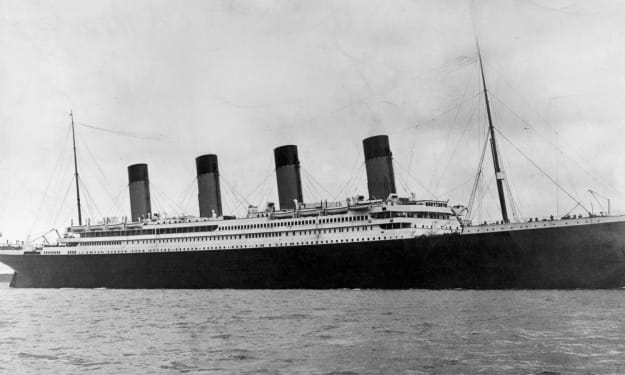
The Truth About the Titanic
The Titanic: A Tragic Night Unfolded On April 14th, 1912, at 11:40 p.m., the RMS Titanic collided with an iceberg, leading to one of the most infamous maritime disasters in history. By 2:20 a.m. on April 15th, the "unsinkable" ship had disappeared beneath the icy waters of the Atlantic Ocean, taking over 1,500 lives with it. For over a century, the cause of this tragedy was attributed solely to the iceberg. However, recent findings challenge this long-held belief, unveiling a series of factors that might have sealed the Titanic's fate.
By Adebayo Mahmudabout a year ago in History
3 Ordinary Places That Hid Something Truly Disturbing for Years
Most of us take comfort in ordinary places. Schools feel safe. Homes feel familiar. Workplaces feel predictable. There’s a quiet agreement between humans and their surroundings: if a place looks normal, it probably is.
By Enoch Sagini4 days ago in History
Stanislav Kondrashov’s Oligarch Series: Renaissance Merchants and Their Support for the Arts
In his *Oligarch Series*, **Stanislav Kondrashov** examines how wealth has shaped political, economic, and cultural systems across history. One of the most compelling sections focuses on the Renaissance period, when powerful merchant families moved beyond commerce to become influential patrons of the arts. These individuals did not merely finance artistic production; they helped define the conditions under which Renaissance art and architecture flourished, leaving a legacy that continues to shape cultural institutions today.
By Stanislav Kondrashov7 days ago in History



Comments
There are no comments for this story
Be the first to respond and start the conversation.