
From Primates to Pioneers: A Concise History of Human Evolution
"Tracing Our Journey from Ancient Ancestors to Modern Explorers"

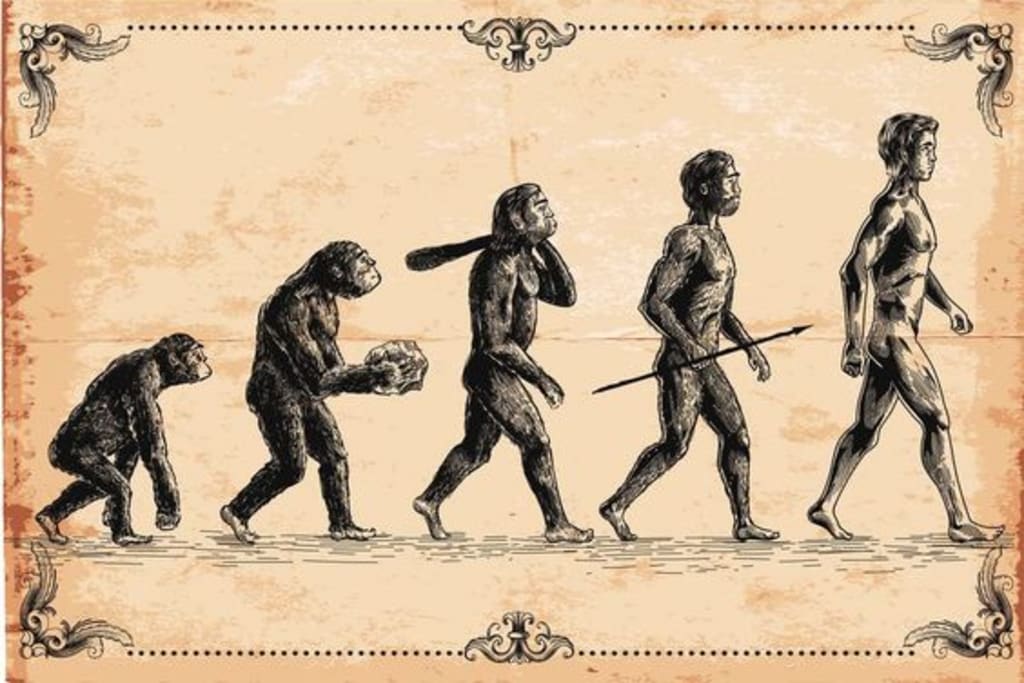
The history of human evolution is a fascinating journey that spans millions of years, from our humble origins as primates to the sophisticated beings we are today. This concise history provides a glimpse into the major milestones that shaped our species, Homo sapiens, and our unique place in the natural world.
Early Ancestors and Primate Origins:
The story of human evolution begins in the African continent around 6-7 million years ago. Our earliest primate ancestors, resembling chimpanzees, lived in forests and primarily moved on all fours. Over time, changes in climate and habitat led to the development of new adaptations, such as walking on two legs, which eventually marked the emergence of hominins, the group that includes modern humans.
Australopithecus and Early Hominins:
Around 4 million years ago, Australopithecus appeared. These hominins walked upright but had relatively small brains. The famous fossil "Lucy" is a representative example. Around 2 million years ago, Homo habilis emerged, using tools for various tasks, a significant milestone in our evolutionary journey.
The Rise of Homo erectus:
Approximately 1.9 million years ago, Homo erectus emerged with a more human-like body, larger brain, and the ability to control fire. This species left Africa and spread across different continents, adapting to various environments. They are believed to be the first hominins to have migrated out of Africa.
The Neanderthals and Homo sapiens:
Around 200,000 years ago, Homo sapiens, our direct ancestors, appeared in Africa. They had larger brains and more advanced tools. As Homo sapiens migrated across the globe, they encountered Neanderthals, another distinct hominin species that had adapted to the harsh conditions of Europe and Asia. The interaction between these two species is a subject of scientific inquiry, with evidence suggesting some interbreeding.
Behavioral Modernity and Cultural Development:
Around 70,000 to 50,000 years ago, Homo sapiens underwent a significant cognitive and cultural revolution known as the Upper Paleolithic Revolution. This period marked the development of complex tools, symbolic art, and early forms of social organization. Evidence of cave paintings, intricate sculptures, and specialized tools reflect the emergence of modern human behavior.
Agriculture and Civilization:
Around 10,000 years ago, humans transitioned from nomadic hunting and gathering to settled farming communities. This marked the beginning of the Neolithic Revolution, a turning point that led to surplus food production, population growth, and the foundation of the first civilizations in Mesopotamia, Egypt, and beyond.
Technological Advancements and Global Exploration:
The last few millennia saw remarkable advancements in technology, culture, and knowledge. From the invention of writing systems to the development of mathematics and science, human societies became more complex and interconnected. The Age of Exploration further expanded human horizons, connecting people from different continents through trade, cultural exchange, and colonization.
Modern Era and Scientific Discoveries:
The last few centuries witnessed the Industrial Revolution, which transformed societies through mechanization and urbanization. In the 19th century, Charles Darwin's theory of evolution by natural selection provided a comprehensive framework for understanding the origins of species, including humans. The study of genetics in the 20th century added a new layer of understanding to human evolution and our shared ancestry with other life forms.
Contemporary Challenges and Progress:
In the 21st century, humans continue to advance technologically and socially. However, we face challenges related to environmental sustainability, social inequality, and ethical considerations arising from scientific advancements. Understanding our evolutionary history and the interconnectedness of all life on Earth can guide our efforts to create a more harmonious and sustainable future.
In a mere thousand words, this overview scratches the surface of the intricate journey that led to the remarkable species we are today. The history of human evolution is a testament to our adaptability, curiosity, and capacity for innovation.
About the Creator
Keep reading
More stories from Gps Stories and writers in History and other communities.
Punjab's Pain: The Tragic Partition of 1947.
The Partition of Punjab and the creation of Pakistan in 1947 marked a significant turning point in the history of the Indian subcontinent. The event resulted in widespread violence, mass migrations, and the division of communities along religious lines. This essay will provide a concise overview of the Partition of Punjab and the birth of Pakistan, highlighting the key events and consequences within a 1000-word limit.
By Gps Stories3 years ago in History
Dust
It was dust. Dust had weight there. It pressed into your mouth when you breathed, ground against your teeth, settled into the creases of your eyes. It coated our boots and crept into our weapons no matter how carefully we cleaned them. When the wind picked up, it hissed across the ground like something alive. Long before I heard a shot fired, I understood that the dust would get inside me and never really leave.
By Gaofeng Wang4 days ago in History
A Crisis of Power, Politics, and the People
The relationship between Venezuela and the United States remains one of the most complicated political dynamics in the Western Hemisphere. Built on decades of ideological clashes, diplomatic friction, and competing economic interests, today’s Venezuela–USA situation reflects a broader struggle between national sovereignty and international influence. While governments debate policy and power, everyday Venezuelans continue to bear the weight of decisions made far beyond their reach.
By Muhammad Islam khan swati4 days ago in History
"Hear Me Out"
"Hear me out, what if we ran away together?" "Where do you want to go?" "Anywhere but here. We could move to a new city or to Canada, or we could disappear from society to live in the middle of the woods. Maybe a combination of two of those things would be good. What do you say?"
By Kay Husnick7 days ago in Fiction




Comments
There are no comments for this story
Be the first to respond and start the conversation.