
From Humble Beginnings to Global Dominance
The Rise and Legacy of the Macedonian Empire

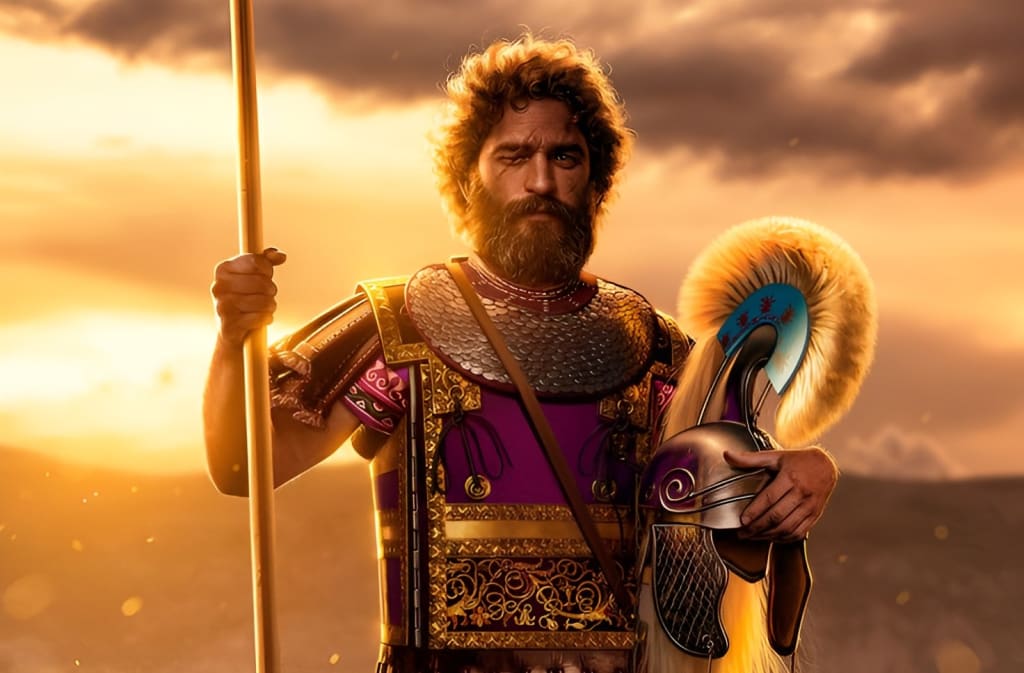
Throughout history, many of the most formidable empires have emerged from humble origins. The Macedonian Empire exemplifies this phenomenon. Originating as a minor, seemingly inconsequential tribe in the northern part of the Greek peninsula, it ultimately evolved into a civilization that exerted its influence across three continents, profoundly impacting the world. This narrative chronicles the ascent of the Macedonians, who were once regarded as barbarians, to one of the most significant powers of the ancient era.
The ancient kingdom of Macedonia was situated in the rugged highlands of northern Greece. The people known as the Macedonians, originally referred to as the Maedi, derived their name from an Indo-European root that signifies "tall" or "mountainous," reflecting both their physical characteristics and the landscape they occupied. According to legend, their ancestry was divine, tracing back to Makedon, a son of Zeus, the chief of the Olympian gods. This mythical heritage instilled a sense of pride and identity among the Macedonians, even as their southern Greek counterparts regarded them with contempt.
Herodotus, the renowned historian from the 5th century BCE, observed that the Macedonians were among the first to identify themselves as Hellenes, a designation that would eventually include all Greeks. However, despite this assertion, the southern Greeks perceived the Macedonians as outsiders—barbarians deemed only valuable for the natural resources their territory offered, especially timber for shipbuilding. In response, the Macedonians nurtured their own resentment towards the southern Greeks, whom they considered arrogant and patronizing.
The establishment of the Macedonian kingdom occurred in the 6th century BCE, initiated by Caranus, the inaugural monarch of the Argead dynasty. Legend suggests that Caranus had semi-divine roots, tracing his lineage back to Heracles, the formidable offspring of Zeus. Under the leadership of Caranus and his heirs, the Macedonians began to strengthen their influence, progressively broadening their territory and displacing competing tribes such as the Thracians and Illyrians.
The Macedonian people communicated in a distinct dialect known as Macedonian, which set them apart from the Greek dialects spoken in the southern regions. This linguistic divergence, coupled with their unique customs and lifestyle, further distanced them from the southern Greeks. Herodotus noted that the first king of Macedonia, Perdiccas I, was a descendant of Temenus, who was also linked to Heracles. Although this ancestry connected the Macedonians to the legendary Greek hero, it was a claim that the southern Greeks did not fully acknowledge.
Macedonia was characterized by a geographical contrast between its densely forested highlands and its fertile lowlands, nourished by three significant rivers. The highlands were a source of timber, while the lowlands produced a variety of crops. These natural resources formed the foundation of the Macedonian economy, driving trade and development. However, this geographical division also resulted in the emergence of small, autonomous communities that ultimately came together under a unified monarchy.
The early rulers of Macedonia governed from the city of Aigai, known today as Vergina, and later from Pella. They managed the kingdom's administration while entrusting local leaders with the oversight of trade and agriculture. In contrast to their southern counterparts, the Macedonians did not depend on slave labor; they cultivated their own lands, a practice that distinguished them from the Greeks to the south.
The significant transformation of Macedonia commenced with Philip II, who became king in 359 BCE. Having spent time as a hostage in Thebes, Philip acquired a formal education in military strategy and diplomacy. Upon his return to Macedonia, he implemented extensive reforms, modernizing the military and adopting new tactics learned during his time in Thebes. Additionally, Philip promoted Hellenization, introducing Greek culture and education to Macedonia, and engaged the philosopher Aristotle to educate his son, Alexander.
Philip's ambitions reached beyond the borders of Macedonia. He adeptly manipulated the southern Greek city-states, forming alliances and defeating adversaries. In 338 BCE, Philip and Alexander triumphed over the united forces of Athens and Thebes at the Battle of Chaeronea, effectively bringing much of Greece under Macedonian dominance. By the time of Philip's assassination in 336 BCE, Macedonia had evolved into a formidable and unified kingdom, ready for further expansion.
Philip's passing allowed his son, Alexander III, who would later be known as Alexander the Great, to ascend to the throne. Alexander quickly set out to fulfill his father's ambition of conquering the Persian Empire, the dominant power of the era. In 334 BCE, he led an army of 32,000 infantry and 5,000 cavalry into Asia Minor. Over the next ten years, he would achieve remarkable victories, extending his reach from Egypt to India and disseminating Greek culture and philosophies throughout his conquests.
Alexander's military campaigns were not solely focused on gaining land; they also facilitated significant cultural interactions. He aimed to merge Greek and Eastern traditions, resulting in the emergence of a new Hellenistic civilization. Nevertheless, his empire did not endure. Following his death in 323 BCE, his generals, known as the Diadochi, partitioned his realm, which sparked a series of conflicts that ultimately diminished Macedonian dominance.
Although the Macedonian Empire disintegrated following Alexander's death, its influence persisted. The Hellenistic culture that Alexander disseminated throughout his empire left a lasting impact on art, science, and philosophy for many generations. The Macedonian language and traditions, once regarded as primitive, became integral to the cultural landscape of the ancient world.
In the ensuing centuries, Macedonia encountered various challenges, including Roman conquest and Ottoman domination. Nevertheless, the essence of the ancient Macedonians continued to thrive. Today, the Republic of North Macedonia serves as a symbol of the lasting legacy of a people who emerged from modest origins to significantly influence the trajectory of history.
About the Creator
A História
"Hi. My name is Wellington and I'm a passion for general history. Here, I publish articles on different periods and themes in history, from prehistory to the present day.
Keep reading
More stories from A História and writers in History and other communities.
The Enigmatic Nok Culture
The Nok Culture, an intriguing ancient civilization in West Africa, thrived from 1500 BCE to 500 CE in present-day Nigeria. Renowned for its intricate terracotta sculptures, the Nok people created a significant artistic and cultural heritage that continues to engage historians and archaeologists globally. This article delves into the origins, artistic accomplishments, and enduring impact of the Nok civilization.
By A Históriaabout a year ago in History
The Oil Weapon: When the Arab World Challenged the West in 1973
In modern history, few economic events have shaken the global order as dramatically as the 1973 oil crisis. More than fifty years ago, the Arab world demonstrated that oil was not merely a natural resource but also a powerful political weapon. In response to geopolitical tensions in the Middle East, Arab oil-producing countries restricted oil exports to the United States and several Western nations, triggering a global energy crisis that reshaped international politics and economics.
By Irshad Abbasi 5 days ago in History
TUS NUA - ch 53
TUS NUA – ch 53 New Beginnings – Mia and Midnight (*)(*)(*) Finola knew Ali’s brother-in-law needed to put his mind at rest. She fed her arm through his and led him outside. “We’ll sit here. If you like, I can put a block around us so our conversation will be private.”
By Margaret Brennana day ago in Fiction



Comments
There are no comments for this story
Be the first to respond and start the conversation.