
From Freedom Fighter to EU Maverick: The Unchanging Viktor Orbán?
The Two Faces of Viktor Orbán

Introduction: The Two Faces of Viktor Orbán
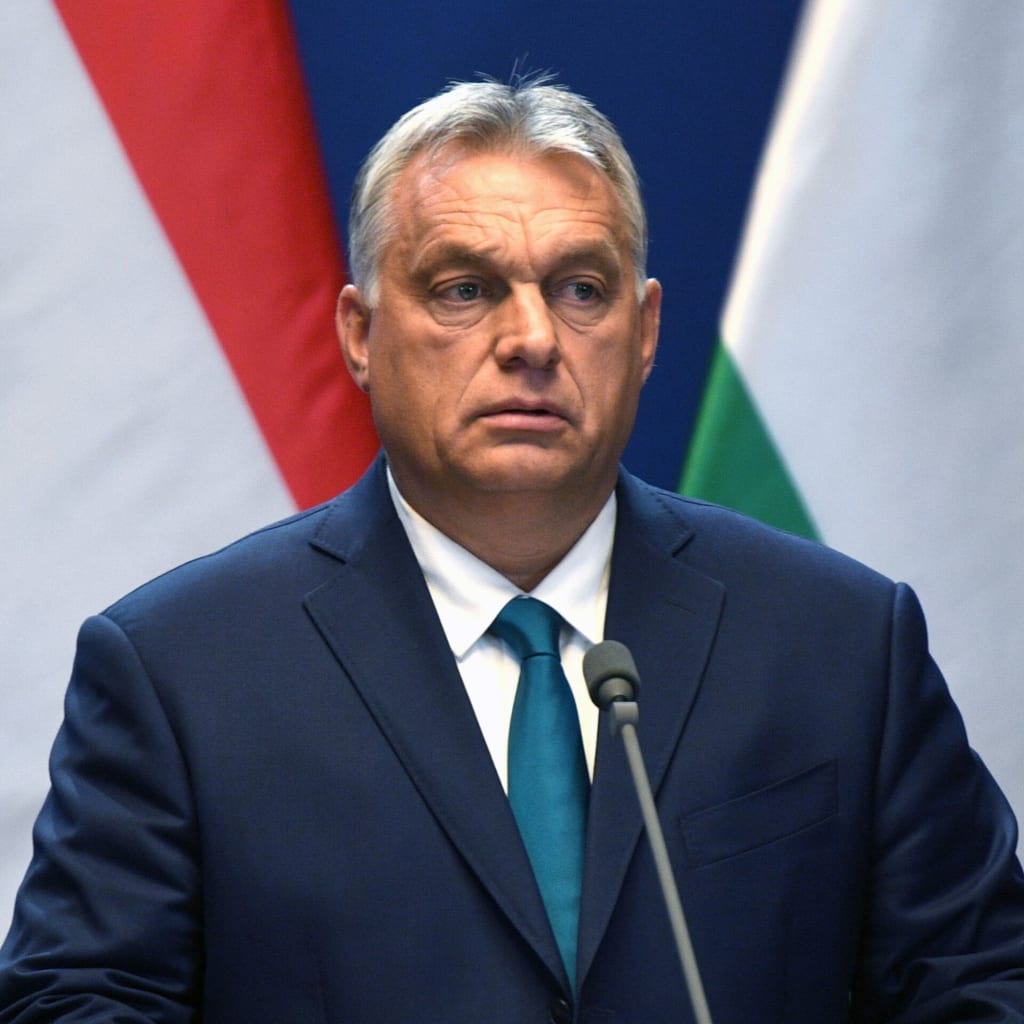
Few European leaders have undergone a more dramatic transformation in the court of Western public opinion than Hungarian Prime Minister Viktor Orbán. Before 2010, he was widely celebrated by mainstream Western media as a champion of liberty, a youthful leader who bravely stood against Soviet tyranny. A little over a decade later, that image has been replaced by a litany of condemnations: he is the “right-wing populist,” the “authoritarian,” the “Putin-ist” threatening the very foundations of the European project.
Yet, viewed from a purely Hungarian perspective, a compelling argument can be made that Viktor Orbán has never really changed. His core mission has remained remarkably consistent. In a detailed 2014 speech delivered in a small town in Romania, Orbán articulated the philosophy that has guided his actions. Everything he does, he explained, is a means of “organizing, revitalizing, and building a national community.” The ultimate goals are to foster national self-sufficiency and to safeguard Hungary’s sovereignty and unique cultural identity.
This unwavering focus on national interest dictates his distinct foreign policy. As the leader of a small, landlocked nation sharing a border with Ukraine and possessing only one-sixth of its landmass, Orbán has pursued a diplomatic path diametrically opposed to that of President Volodymyr Zelenskyy. Instead of aligning unequivocally with one side, he has meticulously maintained lines of communication with all major powers, refusing to be drawn fully into any single camp. This strategy is designed to carve out the maximum possible space for Hungary’s development in a turbulent geopolitical landscape.
While this independent stance has drawn fierce criticism from a Western world that increasingly speaks the language of “values,” the tangible results are hard to ignore. Hungary has consistently remained a leading destination for foreign investment in Central and Eastern Europe and has emerged as a significant hub for electronics manufacturing. In a Europe where conformity to a shared set of values is often the price of admission, Hungary’s unapologetic pursuit of its national interest has made it an outlier.
Today, this nation, seen as an anomaly in the West, is positioning itself to become Europe’s leading producer of electric vehicles—a future of immense potential. The political odyssey of its leader, Viktor Orbán, is not a story of ideological betrayal, but rather the story of Hungary itself as it navigates a complex world, searching for a development path that is uniquely its own.
Chapter 1: Forged in the Soviet Shadow: The Making of a Rebel
The Scar of 1956
The psychological landscape of modern Hungary was carved by the events of October 23, 1956. On that day, some 200,000 protesters flooded Kossuth Square in the capital, Budapest. In a cathartic act of defiance, they tore down a colossal bronze statue of Joseph Stalin, their voices rising in a unified call for economic reform and, most critically, for the withdrawal of Soviet troops from Hungarian soil.
At the time, Hungary was firmly under Moscow’s control, and the government’s rigid imposition of the Stalinist economic model had driven the nation into recession. That evening, the demonstrations erupted into an armed uprising, and the pro-Soviet government quickly collapsed. Imre Nagy, a former speaker of the National Assembly, was elevated to the premiership, and for a brief, hopeful moment, he attempted to build a socialist state independent of the Soviet Union.
The dream ended in tragedy. The Soviet crackdown was swift and brutal, and Nagy was eventually executed. Yet, from the ashes of the failed revolution, Hungary gleaned a priceless political lesson: stable order could only be achieved by improving the domestic economy and raising the quality of life for its citizens. Direct confrontation with a superpower was futile, but the pursuit of national well-being was a viable path to greater autonomy.
In 1966, the Hungarian Central Committee approved the “New Economic Mechanism,” embarking on a path that blended market economics with the state-owned system. In doing so, Hungary effectively became the first nation in the socialist bloc to attempt its own version of “reform and opening up.” It was into this unique historical context that Viktor Orbán was born.
Orbán's Formative Years
Born in 1963 in a small village west of Budapest, Orbán’s early life was almost entirely disconnected from politics. His father managed the machinery department of the local collective farm, and his mother was a teacher. The young Orbán’s passion was football; he was a talented player who joined the youth team of a top-tier Hungarian club. Outside of his studies, he spent 90% of his free time on the training pitch.
This apolitical existence, however, was soon shattered as another political storm engulfed Hungary. As the reforms of the New Economic Mechanism progressed, supermarket shelves grew more abundant, and average incomes steadily rose. Hungary became known for having the highest standard of living within the Eastern Bloc. But just as before, the Soviet Union did not tolerate outliers.
In February 1972, Hungarian leader János Kádár was summoned to Moscow, where he was publicly interrogated by Leonid Brezhnev about his economic reforms. Nine months later, in a thinly veiled threat, Brezhnev made a surprise visit to a Soviet airbase inside Hungary, delivering a final ultimatum to the Kádár government: halt the reforms. Under immense pressure, Budapest capitulated, and the nation’s economy once again sank into stagnation.
As a direct witness to this history, Orbán, like most young people of his generation, developed a deep-seated resentment of the Soviet regime. He would later state that this period caused a “fundamental shift” in his originally “pro-Soviet” political views.
The Birth of a Politician
In 1983, Orbán enrolled in the Faculty of Political Science and Law at Eötvös Loránd University, where he joined a specialized law society named “István Bibó.” The society was funded by George Soros, a Hungarian-American billionaire financier, and was dedicated to cultivating a new generation of radical liberals eager to break free from Soviet control. The profound irony of this early partnership would become a defining feature of European politics decades later.
Within the society, Orbán’s natural leadership talents quickly became apparent. In 1984, at the age of 21, he was elected chairman of its 60-student executive committee. Four years later, he and 36 other students co-founded the Alliance of Young Democrats, known today as Fidesz. The new organization served as a magnet for radical and reform-minded youth, attracting over 1,000 members in its first four weeks.
The pivotal moment arrived on June 16, 1989. In Budapest’s Heroes’ Square, the Hungarian government held a long-overdue state reburial for the martyred Prime Minister Imre Nagy. Representing the youth of Hungary, Orbán delivered a searing six-minute speech. He declared that Soviet domination must end and that a freer future awaited Hungary. The speech electrified the nation, earning Orbán his first major political capital and widespread praise from the Western media.
He was hailed as a new hero of liberalism. What his Western admirers did not yet understand, however, was that this young Hungarian had no intention of following the script they had written for him. His embrace of liberalism was not an ideological destination but a vehicle for a much older and deeper ambition: national sovereignty. It was a convenient tool to expel one foreign power, but it could be discarded just as easily if another perceived threat to Hungary’s autonomy emerged.
Chapter 2: A Nation Adrift: The Pragmatist Takes the Helm
The Hangover of Freedom
On October 23, 1989, from a balcony of the Parliament Building in Budapest, interim President Mátyás Szűrös declared the formal establishment of the Republic of Hungary. It was one of the first Eastern European nations to break away from the Soviet bloc. But liberation came at a staggering price. Overnight, Hungary lost access to 70% of its export markets, dealing a devastating blow to its economy. Between 1988 and 1993, the country’s GDP fell by 20%, while unemployment skyrocketed to 12%.
Many had hoped that rapid and comprehensive privatization—the “shock therapy” prescribed by the West—would be a panacea. The reality was starkly different. With the disappearance of state subsidies, the standard of living for ordinary Hungarians plummeted. It was an era of chaos and confusion, with political groups and social organizations deeply divided over the country’s future. This painful experience instilled in the young Orbán a profound and lasting skepticism toward one-size-fits-all solutions imposed by external powers.
Under his leadership, Fidesz began its transformation from a radical liberal student movement into a more pragmatic center-right political party. In 1998, a political coalition led by Fidesz won 42% of the vote, and at the age of 35, Viktor Orbán became Prime Minister of Hungary.
The "Double-Edged Sword" of EU Membership
As the leader of a landlocked country with few natural resources, Orbán recognized that finding new engines for economic growth was paramount. At the time, the European Union represented the most important trading partner for many of Europe’s smaller nations. Consequently, Orbán’s first government was staunchly pro-European. He entered into negotiations with Brussels for EU accession and, to accelerate the process of European integration, led Hungary into NATO in 1999.
During this period, his image in the West remained overwhelmingly positive. By the end of 2000, Hungary’s foreign currency debt held an “A” grade from all major Wall Street credit rating agencies. The United Nations Conference on Trade and Development praised Hungary for having “the most open economic structure in the region.” Orbán’s first term successfully paved the way for Hungary’s formal accession to the EU in 2004.
However, for a nation with a relatively weak economic base, joining the bloc proved to be a double-edged sword. In the short term, membership was beneficial, attracting lower-end industries relocated from developed EU countries like Germany and France, which helped stimulate economic growth. But in the long term, a powerful “siphoning effect” emerged, threatening Hungary’s future development. Lacking high-end domestic industries, professionals with specialized skills were naturally drawn to the higher salaries and greater opportunities available in Western Europe. This brain drain gradually became one of the most critical problems facing the Hungarian economy.
Within a single country, regional imbalances can be mitigated through fiscal transfers from wealthier to poorer areas. Within the EU, however, this mechanism is far weaker. The dominant powers, Germany and France, have been reluctant to provide sufficient support to weaker member states without using those funds as leverage to influence their domestic policies. This structural inequality—a core-periphery dynamic that fostered economic dependency—was a primary catalyst for Orbán’s later strategic shift. He concluded that relying solely on the West was a strategic dead end.
The "Eastern Opening": A Strategic Pivot
When Viktor Orbán returned to the premiership in 2010, his attitude toward the EU had fundamentally changed. He was determined to find new sources of economic growth for his country. On September 5 of that year, at a meeting of the Hungarian Permanent Conference in Budapest, he unveiled his signature “Eastern Opening” policy. “The wind in the world economy is blowing from the East,” he famously declared, “while we are sailing under Western flags.”
The strategy was clear: Hungary would leverage its advantageous position inside the EU to transform itself into an indispensable economic bridge connecting Europe with the rising powers of the East. This was not an ideological choice but a rational response to the perceived limitations of full Western integration. To regain economic agency, he had to actively cultivate relationships with other global centers of power.
This policy soon translated into concrete action. In 2014, the Hungarian government signed a deal with Russia’s state nuclear energy corporation, Rosatom, to expand the Paks nuclear power plant. Once completed, the facility is projected to supply over 50% of Hungary’s electricity, securing its long-term energy independence. A year later, in 2015, Hungary became the first European country to sign a Memorandum of Understanding with China on the “Belt and Road Initiative.”
It was precisely during this period of pragmatic engagement with Russia and China that Orbán’s image in the Western media began to shatter. He was no longer the celebrated freedom fighter but a dangerous disruptor. NATO officials went so far as to accuse Hungary of being a “Trojan horse” within the alliance—a conflict of perception that would only grow more intense with the outbreak of the Russo-Ukrainian War.
Chapter 3: The Art of the Veto: Playing the Great Game
Transactional Diplomacy in Action
On February 23, 2024, Swedish Prime Minister Ulf Kristersson stood in Budapest and announced a landmark deal: Sweden would provide Hungary with four new Gripen fighter jets and establish an advanced artificial intelligence combat research center in the country. Witnessing this moment, it would be difficult to imagine that just weeks earlier, the two nations had been locked in a serious diplomatic crisis.
Following the outbreak of the war in Ukraine, a new wave of NATO expansion was put on the agenda. In June 2022, Sweden was formally invited to begin the accession process. However, the admission of a new member requires the unanimous consent of all existing allies. For 19 months, Sweden’s application was blocked by a single vote: Hungary’s. Only after the Swedish prime minister arrived in Budapest with a sufficiently compelling offer did the Orbán government finally grant its approval. This episode was a masterclass in how a small country can use its institutional veto power to extract tangible national benefits.
This was not an isolated incident. In December 2023, EU leaders convened in Brussels to discuss a proposed $50 billion financial aid package for Ukraine. Once again, Hungary cast the sole dissenting vote, blocking the measure. Orbán’s obstruction triggered a furious backlash within the EU, with European Council President Charles Michel even threatening to invoke a procedure to strip Hungary of its voting rights. Yet, the high-stakes game of chicken ended with the EU blinking first. In January 2024, after Brussels agreed to release $10 billion in previously frozen funds earmarked for Hungary, Orbán softened his stance and allowed the aid package to pass.
Hungary as China's European Beachhead
These hard-nosed bargaining tactics, however, have their limits. As a country with only 40,000 active military personnel and an economy that accounts for just one percent of the EU’s total GDP, securing subsidies and technology transfers is the most Hungary can achieve within the European framework. With the entire EU economy facing significant challenges, Orbán has looked eastward for new, more transformative growth opportunities.
Thanks to its stable political environment and proactive diplomacy, Hungary is attracting a rapidly growing wave of Chinese investment. In 2023, China became Hungary’s single largest investor, committing $10.7 billion. This deepening relationship is most evident in the electric vehicle (EV) industry, a sector poised to reshape the global economy.
The dynamic highlights a growing contradiction within the West. On May 8, 2024, at a Christian Democratic Union conference in Berlin, EU Commission President Ursula von der Leyen threatened to follow the United States in imposing punitive tariffs on Chinese-made EVs. In stark contrast, individual member states, including industrial powerhouses Germany and France, have been quietly rolling out the red carpet, launching charm offensives to attract Chinese auto manufacturers.
Orbán has capitalized on this hypocrisy. By dispensing with the pretense and openly courting Chinese firms, Hungary has leveraged its first-mover advantage to become the biggest beneficiary. In 2023 alone, Hungary attracted $4.34 billion in Chinese investment, far surpassing the second-place country, Sweden ($1.28 billion), and third-place Spain ($0.91 billion). With the backing of Chinese capital and technology, Hungary is becoming the primary beachhead for Chinese automakers seeking to conquer the European market. It now has a credible chance of surpassing Germany to become the continent’s leading producer of electric vehicles.
This success is a direct result of Orbán’s flexible positioning and shrewd political experience. As a leader who lived through the Cold War, he belongs to an older school of classical politicians who understand the 20th-century theories of geopolitics—how to maneuver between great powers to maximize the interests of one’s own nation. He is exploiting the erosion of a unified Western foreign policy, a trend where the collective anti-China rhetoric of supranational bodies is increasingly disconnected from the competitive, self-interested actions of individual nation-states.
Conclusion: A Badge of Honor in a Multipolar World
It must be understood, however, that Viktor Orbán is acting solely for the benefit of his own country. One cannot expect, nor demand, that he align completely with any other nation’s position on all matters. To break his diplomatic isolation within Europe, for instance, Orbán has cultivated a close relationship with Donald Trump, another figure labeled “far-right” by the mainstream Western media. This is a natural alliance of leaders who prioritize national sovereignty over globalist agendas.
That a national leader acts in the interest of their own country should be the norm, not a controversial exception. Moreover, experience shows that nations possessing a certain spirit of independence tend to have good relations with China, because China’s formidable economic power can offer them tangible benefits. Conversely, those nations that throw themselves unconditionally into America’s arms are, in effect, surrendering their leverage to bargain with great powers. They risk being reduced to mere pawns on a chessboard, or worse, disposable pieces to be sacrificed when they are no longer useful.
Of course, independence comes at a price. Orbán’s position in Europe today is not an easy one; he endures high-intensity criticism from so-called mainstream media outlets on a daily basis. Yet, in an era where comprador elites often serve foreign interests, these international condemnations can be seen as a kind of badge of honor. They are evidence that a leader is successfully resisting external influence. For the leader of a sovereign nation, the only evaluation that truly holds weight is the one delivered by their own people.
About the Creator
When Allies Disagree: How Global Partnerships Are Being Redefined
When Allies Disagree: How Global Partnerships Are Being Redefined For much of the modern era, global alliances appeared firm and predictable. Powerful countries formed blocs, promised mutual support, and stood together during times of war and crisis. But in today’s world, those alliances are changing. Recent disagreements between long-standing partners show that global cooperation is no longer based on automatic loyalty—it is increasingly shaped by national interests, public opinion, and long-term stability.
By Wings of Time 5 days ago in History
Stanislav Kondrashov’s Oligarch Series: Renaissance Merchants and the Power of Cultural Patronage
In his *Oligarch Series*, Stanislav Kondrashov explores how wealth has shaped history far beyond economics. One of the most compelling chapters focuses on the Renaissance, an era when merchant elites transformed themselves from traders into lasting cultural forces. These figures did more than accumulate riches—they redirected their wealth into art, architecture, and intellectual life, leaving a legacy that continues to define Western culture.
By Stanislav Kondrashov 6 days ago in History
How, Too
Many people wonder how, too. You are not alone, and I am an expert. I will teach you how, too! First, you need to remit a small application fee and fill out an application describing the nature of your financial situation and how often payments will be made, as this will have great bearing on how well I teach you how, too.
By Harper Lewis4 days ago in Fiction

Comments
There are no comments for this story
Be the first to respond and start the conversation.