
From Discovery to Dilemma
The Complex Journey of Fossil Fuels and Climate Change

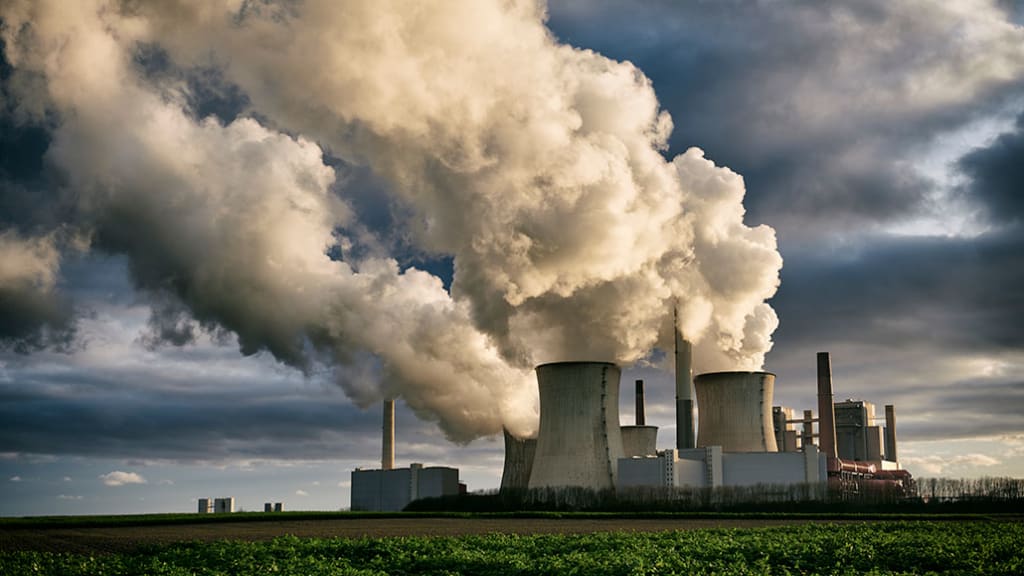
In 1856, a pioneering scientist named Eunice Foote conducted an experiment that would have profound implications for the future of our planet. She observed that carbon dioxide (CO2) in the atmosphere trapped heat more effectively than regular air when exposed to sunlight. Foote's findings led her to publish a prescient note suggesting that an atmosphere rich in CO2 could lead to a significant rise in Earth's temperature.
Fast forward to a century later, and the American oil industry was celebrating its centennial, commemorating Edwin Drake's discovery of oil in Western Pennsylvania. As fossil fuels began to power the world, physicist Edward Teller, one of the inventors of the atomic bomb, warned about the greenhouse effect caused by excess carbon emissions and its potential consequences, such as melting ice caps and submerging cities like New York.
Over the years, the warnings from scientists about the impact of greenhouse gases on the planet intensified. By 1965, scientists formally alerted U.S. President Lyndon B. Johnson about the implications of rising CO2 levels. In the 1980s, Exxon's own scientists presented grim predictions about the consequences of burning fossil fuels, and by 1988, climate change became a prominent front-page issue.
Despite these warnings, the world economy continued its heavy reliance on fossil fuels, with oil accounting for a significant share of energy consumption. Ironically, the very substances that drove human development and progress became the major contributors to climate change, endangering the future of civilization as we know it.
The Rise of Oil and Its Impact on Developing Nations:
The discovery of oil in various parts of the world, including Iran and Nigeria, marked the beginning of geopolitical clashes and technological advancements that shaped the 20th century. Oil became the backbone of industrial nations, transforming economies and enabling significant development. However, this transformation was not without its costs.
In Nigeria, for instance, the discovery of oil in the Niger Delta region brought high hopes for economic prosperity and development. But this oil wealth came at a price. The exploitation of oil resources led to environmental devastation, massive oil spills, and the displacement of communities that depended on fishing and agriculture. Additionally, a significant portion of the oil wealth was siphoned off by transnational corporations and corrupt government officials, leaving the majority of Nigerians in poverty.
The Curse of the Resource:
This pattern of unequal distribution of oil wealth and the negative impacts of fossil fuel dependence on developing countries is often referred to as the "resource curse." It exacerbates corruption, inequality, and political instability, hindering overall development and exacerbating climate-related challenges.
The Urgency of Climate Change:
Climate change is already taking a toll on the planet, with rising global temperatures leading to heatwaves, intensifying hurricanes, and destructive wildfires. The urgency to tackle climate change has led to the concept of achieving "net-zero" emissions, where countries aim to offset their carbon emissions with carbon capture and other sustainable practices. However, achieving net-zero requires significant investments in clean energy and technology, especially for developing countries.
The Challenge of Energy Transition:
While some developed nations are making strides in transitioning to renewable energy, the developing world faces the challenge of balancing economic growth and access to energy. For many of these countries, coal and other fossil fuels remain the most affordable energy sources. Calls for the global North to help finance the transition to cleaner energy are met with complexities, as many developed nations continue to invest in fossil fuel projects around the world.
A Path Towards a Sustainable Future:
The journey to a sustainable future involves global cooperation, financial support, and technological advancements. Wealthier nations must take the lead in transitioning to renewable energy while providing financial assistance to developing countries to facilitate their transition. The shift to a low-carbon economy necessitates a just and equitable approach, ensuring that those who have contributed to climate change are not left behind.
Conclusion:
The story of fossil fuels and climate change is a tale of intertwined complexities, geopolitical interests, and economic challenges. While fossil fuels have been instrumental in driving human progress, they now pose a threat to the very existence of our civilization. The path towards a sustainable future requires collective action, shared responsibility, and a focus on ensuring a fair and just transition for all nations. Only by working together can we hope to address the urgent global challenge of climate change and forge a more sustainable path for future generations.
About the Creator
Medina Hassan
As a storyteller, I am aware of the profound impact of words and use this power responsibly to inspire, uplift, and ignite meaningful conversations.
Keep reading
More stories from Medina Hassan and writers in History and other communities.
Ancient Creatures That Have Stood the Test of Time
The vast diversity of life that has existed on Earth is awe-inspiring. While we encounter various animals in our daily lives, it is astonishing to know that these represent only a fraction of all the species that have ever lived on our planet. Some remarkable creatures have managed to survive for millions of years, adapting and evolving to withstand the challenges of the ever-changing geology and environmental conditions. Join us on a journey through time as we discover ancient creatures that are still alive today, defying the ages with their resilience and unique characteristics.
By Medina Hassan2 years ago in Education
The Rise and Fall of Nicolae Ceaușescu
Nicolae Ceaușescu’s rise to power was initially marked by promise, even optimism. Born in 1918 into a poor peasant family, he entered politics early, shaped by the ideological rigidity of interwar and wartime communism. When he became General Secretary of the Romanian Communist Party in 1965, following the death of Gheorghe Gheorghiu-Dej, many Romanians saw in him a younger leader, one who might soften the harsh Stalinist legacy that had defined the previous decades. For a society weary of repression and deprivation, Ceaușescu appeared to embody the possibility of cautious change.
By Pure child4 days ago in History
A woman from a vanished female dynasty was discovered buried with 270,000 beads.
In a Copper Age tomb close to Seville, Spain, the Montelirio bead assemblage contains over 270,000 beads that identify the ladies buried there as elites. The discovery is the biggest collection of beads ever
By Francis Dami6 days ago in History




Comments
There are no comments for this story
Be the first to respond and start the conversation.