
🌍 For "Smoke, Steel, and Progress: The Age That Changed the World"
From crowded factories to global empires—the far-reaching effects of the first industrial age.
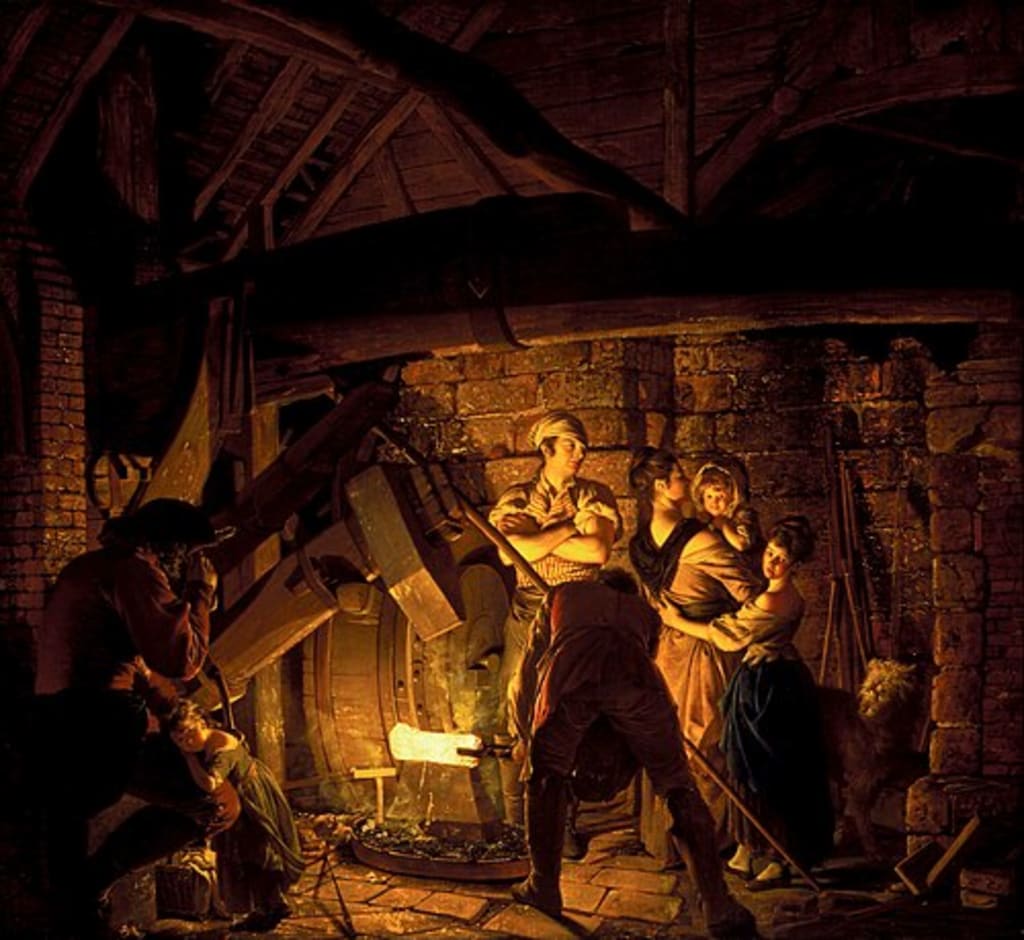
The Industrial Revolution: A Defining Moment in Modern History
The Industrial Revolution, which unfolded between the late 18th and early 19th centuries, stands as one of the most transformative periods in world history. It marked the transition from traditional agrarian economies to industrialized, mechanized societies, ushering in profound changes in technology, economy, society, and culture. Originating in Great Britain, the Industrial Revolution eventually spread across Europe, North America, and beyond, laying the foundations of the modern industrial world.
Origins and Catalysts of the Industrial Revolution
The roots of the Industrial Revolution can be traced back to several interlinked developments. Britain was particularly well-positioned to become the birthplace of industrialization for multiple reasons:
Natural Resources: The country possessed abundant supplies of coal and iron ore—essential for powering machines and building infrastructure.
Political Stability and Legal Framework: Unlike many continental European countries plagued by political unrest, Britain enjoyed relative stability, which fostered economic growth and private investment.
Colonial Wealth and Global Trade: The British Empire provided raw materials like cotton and created vast markets for manufactured goods, enabling industrial expansion.
The Agricultural Revolution: Innovations in farming techniques, such as crop rotation and selective breeding, increased food production. This reduced the need for agricultural labor and allowed a growing workforce to seek employment in cities and factories.
Scientific and Technological Innovation: Enlightenment thinking and a spirit of scientific inquiry encouraged inventors and entrepreneurs to develop new machinery and production methods.
Technological Advancements
At the heart of the Industrial Revolution were groundbreaking technological innovations that changed how goods were produced:
The Spinning Jenny (1764) and power loom mechanized textile production, significantly increasing output and reducing costs.
The Steam Engine, refined by James Watt in the 1770s, provided a reliable source of power for factories, ships, and trains.
The Bessemer Process, introduced in the 1850s, revolutionized steel production by making it faster and cheaper to produce large quantities of high-quality steel.
Railways and Steamships greatly enhanced transportation, enabling raw materials and finished goods to move quickly and efficiently across regions.
These innovations led to the rise of factories, which replaced the traditional domestic system of production, where goods were made by hand in homes or small workshops.
Economic and Social Transformation
The economic impact of the Industrial Revolution was immense. Britain became the “workshop of the world,” producing a significant share of the world’s goods. Industrialization also led to the rise of capitalism and a shift in economic power from land-owning aristocrats to industrial capitalists.
Urbanization was one of the most visible effects of industrialization. As factories sprouted up, people flocked to cities in search of work. Cities like Manchester, Birmingham, and Glasgow grew rapidly, often without proper infrastructure, leading to overcrowded slums, poor sanitation, and high disease rates.
Working conditions during this era were often dire. Factory workers, including women and children, labored for long hours in dangerous environments for meager wages. These harsh realities gave rise to early labor unions, social reform movements, and eventually labor laws regulating working hours, safety, and child labor.
A new middle class of entrepreneurs, managers, and professionals emerged, gaining wealth and influence. Meanwhile, traditional rural and artisan communities struggled to adapt to the new industrial order.
Global Impact and Imperialism
The Industrial Revolution was not confined to Britain. It spread to Western Europe, particularly Germany and France, and across the Atlantic to the United States, where it fueled rapid economic expansion. In these regions, industrialization became closely linked with imperialism. Industrial powers sought raw materials and new markets, leading to increased colonization and exploitation of less developed regions, particularly in Africa and Asia.
Environmental and Ethical Consequences
While the Industrial Revolution brought economic growth and innovation, it also came with significant environmental and ethical costs. The rise of factories led to widespread air and water pollution, deforestation, and the overuse of natural resources. These environmental challenges marked the beginning of human-driven ecological change, the consequences of which are still felt today.
Socially, the exploitation of labor, especially women and children, raised moral and ethical concerns. Public outcry and reformers like Charles Dickens highlighted the darker side of industrial progress, influencing legislation and labor reform in the decades that followed.
Legacy
The legacy of the Industrial Revolution is vast and complex. It ushered in an age of technological innovation, improved standards of living for many, and laid the groundwork for modern economic systems. It also brought about profound societal challenges, from labor inequality to environmental degradation.
In many ways, the world we live in today—with its urban landscapes, mechanized production, and global economy—is a direct result of the changes set in motion during this period. Understanding the Industrial Revolution is essential to understanding the modern world.
About the Creator
Ayon
I am a student
A 4,400-Year-Old Priestess Tomb Discovered in Egypt
Archaeologists in Egypt have uncovered the remarkable tomb of a priestess that dates back approximately 4,400 years, offering new insight into religion, culture, and daily life during the height of the ancient Egyptian civilization. The discovery was made near the famous pyramids on the Giza Plateau, one of the most important archaeological areas in the world. Experts believe the tomb belonged to a high-ranking priestess named Hetpet, who lived during Egypt’s Fifth Dynasty, around 2400 BC. 
By Irshad Abbasi 3 days ago in History


Comments (1)
Hello, just wanna let you know that according to Vocal's Community Guidelines, we have to choose the AI-Generated tag before publishing when we use AI 😊