
Pohela Boishakh: Celebrating the Bengali New Year with Joy and Tradition
"Pohela Boishakh Unites All: A Festival of Love & Renewal"
Introduction
Pôhela Boishakh, the Bengali New Year, is a lively and culturally rich festival celebrated by Bengalis around the globe. In 2025, this vibrant occasion falls on Monday, April 14th, marking the start of the Bengali calendar year 1432. This day represents renewal, togetherness, and the deep cultural roots of Bengal. With colorful parades and traditional feasts, Pôhela Boishakh unites people in a grand celebration of life, art, and heritage.
Historical Significance of Pôhela Boishakh
The roots of Pôhela Boishakh stretch back to the Mughal era. It is said to have been initiated by Emperor Akbar, who introduced the Bengali calendar in 1584 to simplify tax collection in an agrarian society. This calendar aligned with the solar year, making it easier for farmers to manage their taxes following harvest time. Over the years, Pôhela Boishakh transformed from a mere administrative function into a vibrant cultural festival, firmly embedded in Bengali identity.
During the period of Pakistani rule in East Bengal (present-day Bangladesh), Pôhela Boishakh emerged as a symbol of resistance and cultural pride. The festival played a vital role in the Bengali Language Movement and was significant during the Liberation War of 1971. Today, it stands as a powerful reminder of the resilience and unity of the Bengali people.
How Pôhela Boishakh is Celebrated
1. Mangal Shobhajatra—The Grand Procession
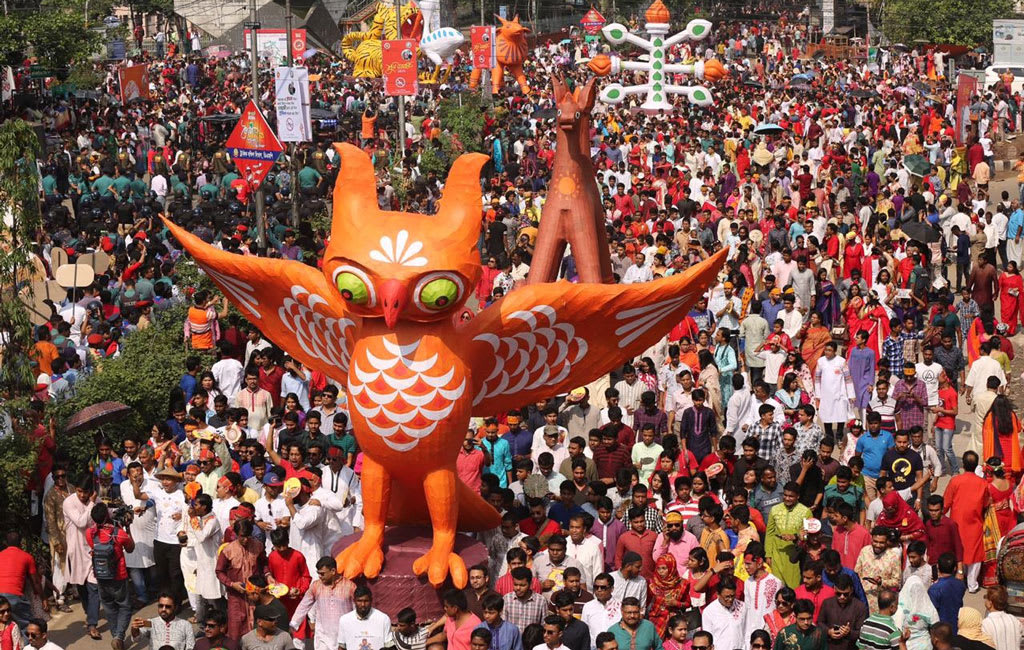
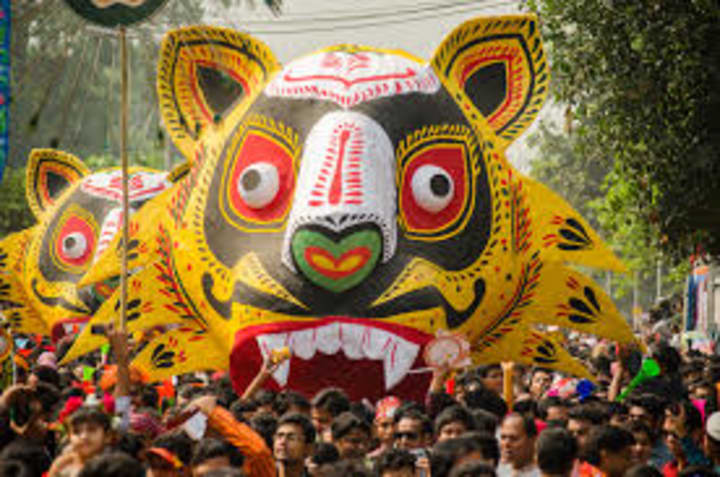
A highlight of Pôhela Boishakh is the Mangal Shobhajatra, a spectacular procession that originated in Dhaka, Bangladesh. Organized by the Faculty of Fine Arts at the University of Dhaka, this parade showcases enormous papier-mâché masks, floats, and colorful banners that symbolize courage, peace, and prosperity. In 2016, UNESCO acknowledged Mangal Shobhajatra as an Intangible Cultural Heritage of Humanity.
In Kolkata, India, similar festivities abound, with participants dressed in traditional attire, singing, dancing, and playing musical instruments like the dhak (drum) and flute.
2. Traditional Attire—Red and White Elegance
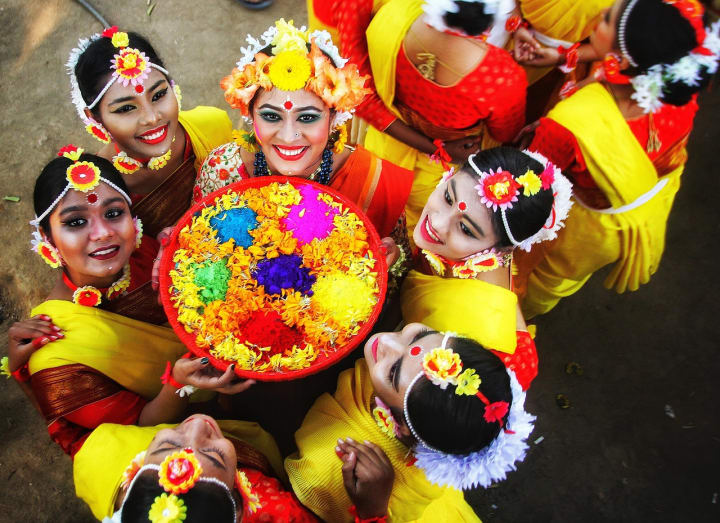
On Pôhela Boishakh, Bengalis proudly don traditional clothing. Women adorn themselves in white sarees with red borders—a symbol of purity and prosperity—complemented by floral accessories, while men typically wear panjabis (kurtas) paired with pajamas or dhotis. The vibrant colors of red and white dominate the celebrations, encapsulating the spirit of Bengali culture.
3. Delicious Bengali Cuisine—A Feast for the Senses
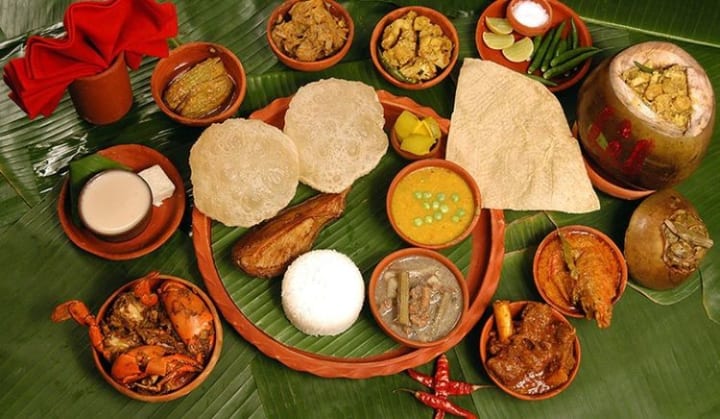
No Bengali festival is complete without a sumptuous feast. Families pull together delightful dishes like panta bhat (fermented rice) accompanied by fried hilsa fish, begun bhaja (fried eggplant), daal, and a variety of bhortas (mashed vegetables). To satisfy sweet cravings, treats like rasgulla, sandesh, and mishti doi (sweet yogurt) are essential. Many begin their day at "Chhoto Haat" (small fairs), where traditional sweets and snacks are plentiful.
4. Cultural Programs and Musical Performances
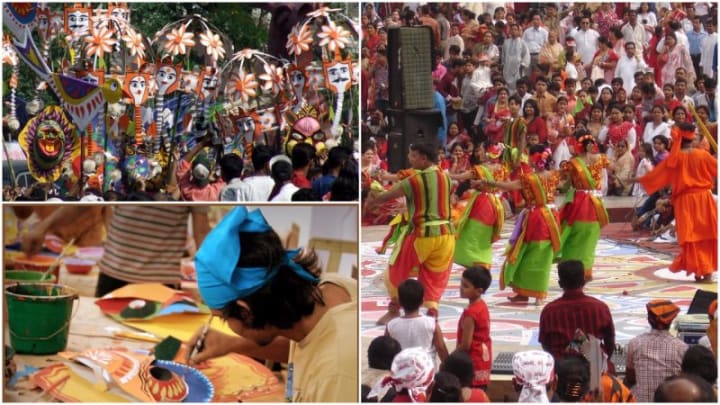
Pôhela Boishakh truly comes alive with the enchanting sounds of Rabindra Sangeet, the poignant melodies of Nazrul Geeti, and the vibrant rhythms of traditional folk music like Bhatiali and Baul. Cultural organizations play a vital role by organizing events that showcase a variety of art forms, including dance, drama, and poetry. One of the highlights in Bangladesh is Chhayanaut, a prominent cultural organization that hosts a captivating open-air concert at Ramna Batamul in Dhaka, where the new year is welcomed with Tagore’s beloved song "Esho Hey Boishakh" (Come, O Boishakh).
5. Haat Melas (Fairs) and Business Traditions
In the business community, especially within Bangladesh, the "Halkhata" tradition is observed. Here, shopkeepers wrap up their old ledgers and start fresh accounts, often treating their customers to sweets and settling outstanding dues, creating a warm atmosphere of goodwill.
Throughout Bengal, haat melas—colorful fairs—pop up, offering an array of handicrafts, pottery, and traditional toys. These fairs draw crowds of all ages, enchanting children and adults alike.
Pôhela Boishakh in the Digital Age
As technology advances, so do the celebrations of Pôhela Boishakh, which have embraced the digital realm. Social media allows people to share their greetings and engage in virtual events and live performances. Numerous organizations now host online art competitions, cooking shows, and musical concerts, making it possible for those far from home to join in the festivities.
Conclusion
Pôhela Boishakh 2025 promises to be a day filled with joy, cultural pride, and a sense of unity. Whether you find yourself in the energetic streets of Dhaka, the artistic corners of Kolkata, or communities around the globe, the spirit of Boishakh
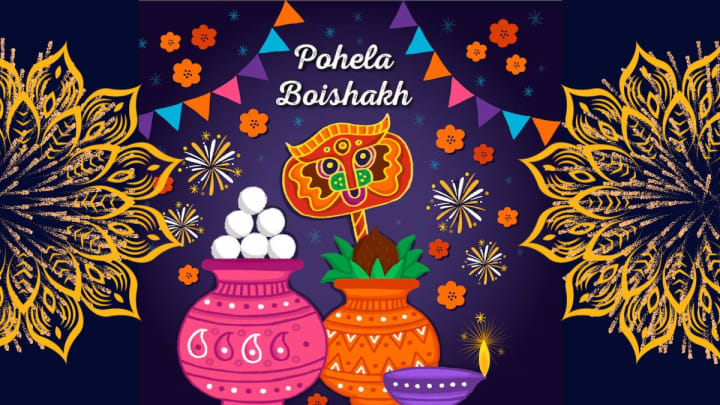
Shubho Noboborsho 1432! Wishing you a joyful and prosperous New Year!
About the Creator
Ayon
I am a student
The Year 2015 in Review: Facts, Trivia, and Historic Highlights
This quick read is a collection of fun facts, trivia, and historical events from the year 2015. Discover the year’s top news stories, most influential people, sports facts, grocery prices, computer and Internet news, entertainment trivia, and much more.
By Gregory DeVictor3 days ago in History
The Solitude of The Chupacabra
Many say that the Chupacabra is a rather recent and modern tale, a mangy coyote or rabied dog. Some point out that it’s just twisted evolution. But very few know the true backstory of the shapeshifter that led to the bloodsucking legend. And perhaps once you will come to know and understand more, you might “forget” a few cattle out to wander.
By Oneg In The Arctic3 days ago in Fiction


Comments
There are no comments for this story
Be the first to respond and start the conversation.