
Examining the Mycenaean Civilization
Pioneers of Ancient Greece.

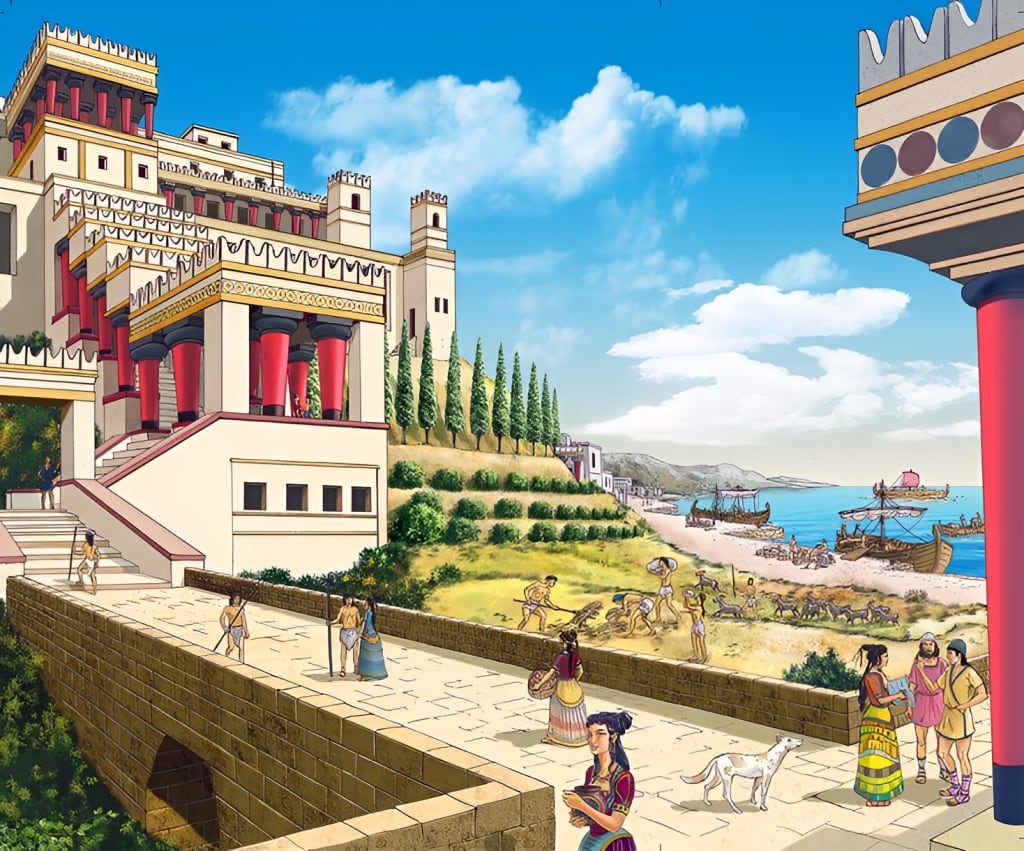
The Mycenaean civilization, which thrived during the late Bronze Age, occupies a crucial position in the historical narrative of Europe and Greece. This sophisticated society not only shaped the cultures of its time but also made lasting contributions to later Greek heritage. With its monumental architecture and rich mythological traditions, the Mycenaeans played a significant role in the cultural development of Europe.
The Mycenaean civilization took its name from Mycenae, the central city located in northeastern Argolis. Recognized as the first sophisticated society on the Greek mainland, they excelled in urban development, palace construction, artistic expression, and their unique writing system known as Linear B. Drawing inspiration from the earlier Minoan culture of Crete, the Mycenaeans incorporated Minoan architectural styles, religious customs, and artistic techniques into their own more militaristic and austere way of life.
Referred to as the Achaeans in later Greek history, the Mycenaeans founded important cities such as Tiryns, Argos, and Pylos. The impressive fortifications of these urban centers highlight the significance of military strength and security within Mycenaean culture.
The fortifications of Mycenaean cities illustrate a society with a strong emphasis on defense. The walls, reaching heights of 13 meters and thicknesses of 8 meters, were built using enormous unworked stones known as cyclopean masonry, showcasing their remarkable engineering skills. The iconic Lion Gate at Mycenae, featuring its emblematic pair of lions, highlights the magnificence and significance of their architectural style.
In addition to their defensive structures, the Mycenaeans were active in trade and diplomacy beyond their territories. Numerous artifacts, including pottery, jewelry, and weapons, have been discovered throughout the Mediterranean, spanning from Egypt to Mesopotamia, indicating a dynamic network of exchange.
The palaces of the Mycenaean civilization were remarkable feats of architecture. Central to these structures was the megaron, a rectangular hall that functioned as both the throne room and a space for ceremonies. This design element laid the groundwork for the development of later Greek temples and civic buildings. Additionally, these palaces contained facilities for administration, manufacturing, and storage, reflecting the intricate socio-political systems of the Mycenaean society.
Mycenaean art, while drawing inspiration from Minoan styles, exhibited a unique aesthetic characterized by more abstract and less lifelike depictions. Common themes included spirals, rosettes, and imagery of warriors and chariots. Their craftsmanship was evident in gold masks, ivory sculptures, and frescoes, underscoring their artistic prowess as well as their ties to wealth and commerce.
The religious customs of the Mycenaeans are somewhat obscure, yet it is clear that sacrificial rites, communal gatherings, and offerings were integral to their practices. They likely incorporated Minoan symbols, such as the double axe and horns of consecration, for both spiritual and political significance.
The downfall of the Mycenaean civilization around 1100 BCE continues to be one of history's great enigmas. Various theories have been suggested, including natural disasters, internal conflicts, invasions by the so-called "Sea Peoples," and climate change. This decline signified the conclusion of the Bronze Age in the Aegean region, leading to what is commonly known as the Greek Dark Ages.
Even in their decline, the Mycenaeans left a lasting impact on subsequent Greek culture. Their myths and stories, preserved in Homer's Iliad and Odyssey, became foundational elements for the Greeks during the Classical era. Legendary figures such as Agamemnon, Achilles, and Odysseus, all originating from Mycenaean traditions, emerged as enduring symbols of heroism and human achievement.
The Mycenaeans established a foundation for numerous elements of Greek civilization, evident in their advanced architecture and early written Greek. Their influence on language, art, and mythological traditions extended well beyond their era, significantly shaping Europe's cultural identity for centuries.
This extraordinary civilization, brought to light by trailblazers such as Heinrich Schliemann in the late 19th century, continues to fascinate and inspire. Their narrative serves as a testament to the lasting impact of cultural exchange, innovation, and resilience.
Begin your exploration of history and delve into the realm of the Mycenaeans—the original Greeks whose legacy resonates through the ages.
About the Creator
A História
"Hi. My name is Wellington and I'm a passion for general history. Here, I publish articles on different periods and themes in history, from prehistory to the present day.
Keep reading
More stories from A História and writers in History and other communities.
Investigating the Wonders of the Maya Civilization
We embark on a temporal exploration to reveal the narratives of extraordinary civilizations. In this discussion, we focus on the intriguing realm of the Maya, the creators of one of Mesoamerica's most vibrant and lasting cultures. Examining their beginnings, spiritual beliefs, renowned calendar, and innovative achievements, the Maya remain a source of fascination for both historians and enthusiasts.
By A Históriaabout a year ago in History
This is the world’s most heavily secured convoy. Part 2
To handle this challenge, the U.S. government has created a dedicated agency whose sole job is to secure nuclear weapons. The military convoys you see are commonly used to transport nuclear weapons within the U.S. At first glance, such a convoy looks even more secure than that of a VIP—security an ordinary person can hardly imagine.
By Imran Ali Shah6 days ago in History
Unofficial Challenge: Black History Celebration
Forward: February 28th, 10:53 PM, EST... The final hour of Black History Month, 2026. Hello fellow writers. I've had this challenge waiting in my drafts for most of the month. But I held off on publishing it, until now.
By Sam Spinelli7 days ago in Writers



Comments
There are no comments for this story
Be the first to respond and start the conversation.