
Enver Hoxha. The Man Who Turned Albania Into a Hermit Kingdom.
Albania, 1944-1985
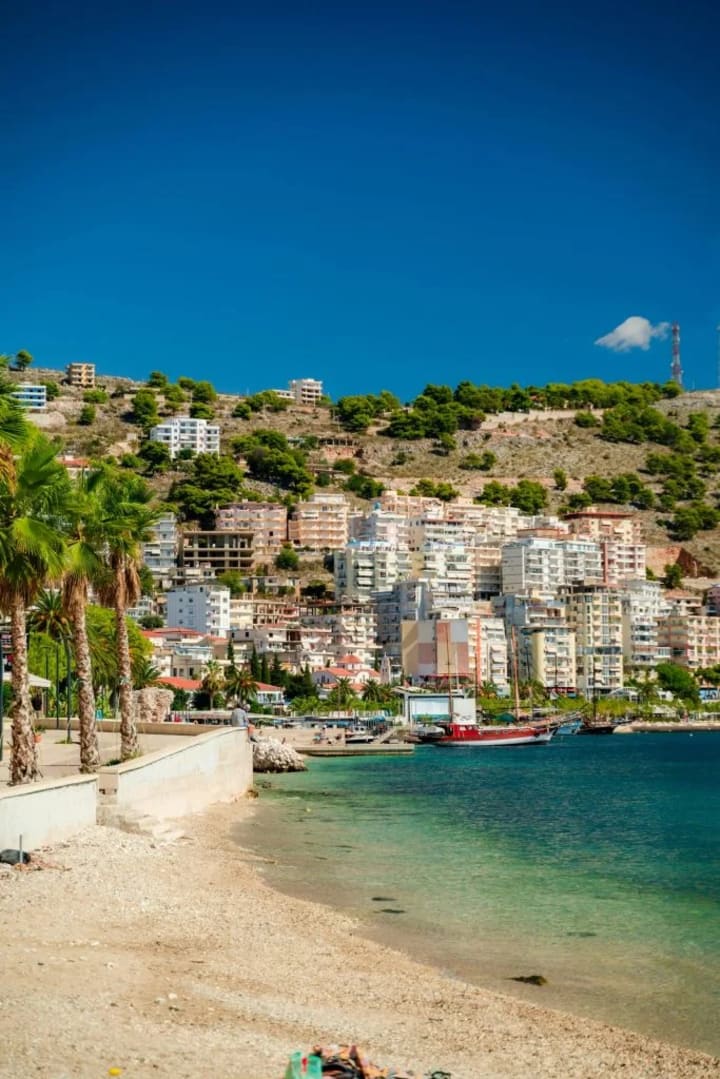
Albania, a country not known to some, and not often thought about among those who are familiar. The South Balkan country bordering Montenegro to the North, Kosovo to the Northeast, North Macedonia to the East, and Greece to the South with the entirety of the Western border being a beautiful coastline stretching approximately 476 kilometres where the mouth of the Adriatic meets the Ionian sea. It is one of Europe’s most mountainous countries, yet roughly an eighth of the size of the UK. Ranking #3 among the poorest nations in the continent and suffering through years of political corruption that would later cause it to be the the third poorest country in the world, not the continent the small country had been apart of many empires.
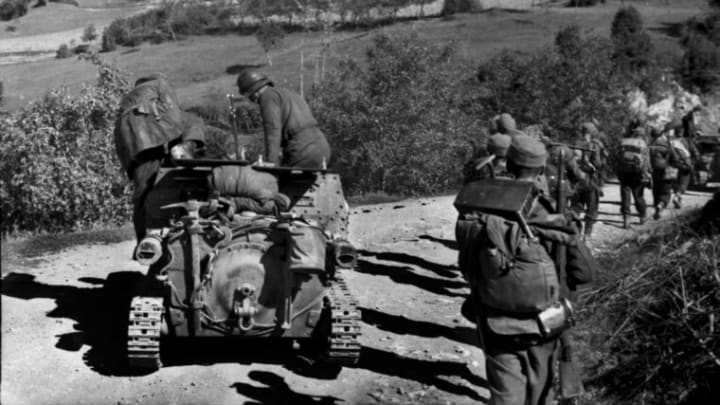
Most notably, the Ottoman Empire until 1912 when it would declare independence. In April of 1939, it would be invaded by Italy and known as Greater Albania. There were multiple armed resistances during the Italian invasion of Albania, yet none would prove effective. Following the collapse of Mussolini’s regime, the Nazi’s would invade the balkans and take over what once belonged to Mussolini. The Wehrmacht would invade Albania on September 9th 1941, it would become a Nazi protectorate state, and only after 3 years would it escape the hold of fascism after the Germans would retreat from the Southern Balkans in 1944.
Full disclosure, there is an extremely limited amount of reliable information available on the internet to base this article off of. I have done my best to cross reference, and to verify all timelines and information. There are certain chunks of time that are unclear or too not detailed enough for to be included.
Beginnings.
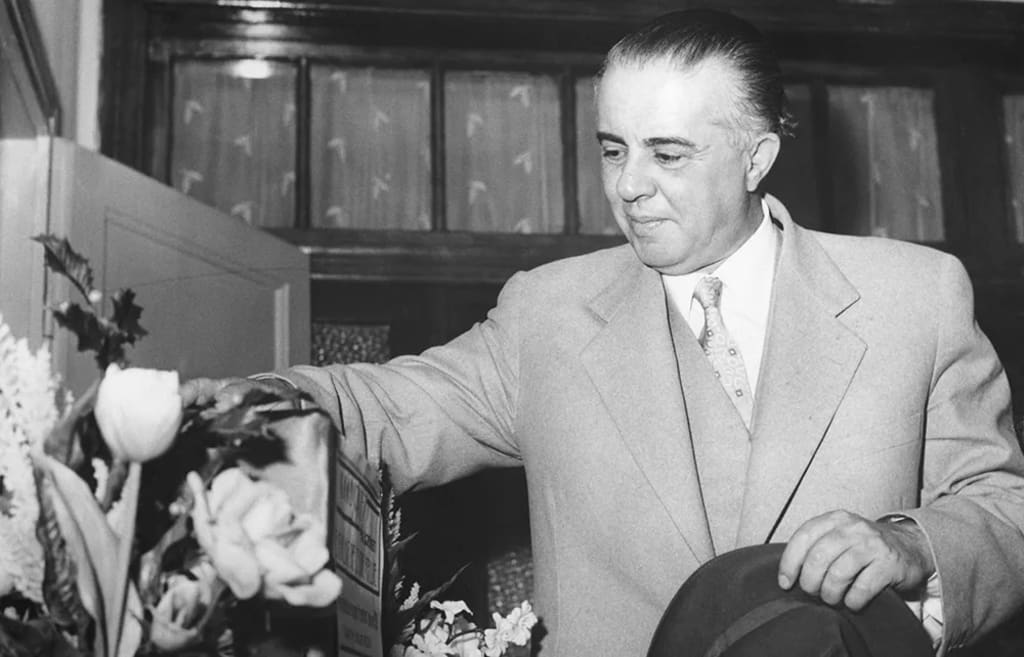
During the 1930’s and 1940’s, there were a few small communist parties operating in Albania. Eventually, a representative from the Communist Party of Yugoslavia would be sent to Albania to unite the smaller parties into one, the multiple parties found it difficult and did not agree on selecting a single leader. The Yugoslavs would arrange The Central Committee, with the main goal of the organization being a joint leadership module. As the Nazis left in 1944, one man named Enver Hoxha would see himself at the top of the party, the news came as a surprise to the rest of the members as he had not stood out to his peers in any way.
Other party members remembered him as a man of average intelligence, nor did he have any influence in the party itself. His place in the party was even thought to be a way to be seen as more diverse, as Hoxha was the only Muslim member in a group that was predominantly Christians. Throughout the years spent in the party, Hoxha would gain influential allies and be known as a vicious opportunist, meaning he would do whatever he needed to be at the top. His opprotunistic approach would be put on display as the Wehrmacht would make their way out of Albania in 1944, an armed group by the name of the National Liberation Army which was under the control of the Worker’s party, would be directed by 34 year old Hoxha.
The NLA would shadow the Nazis and carry out purges or “political cleansing” against those suspected to be enemies of the party. The suspects would be brought to abandoned areas of the country and “liquidated.” In the time he spent commanding the NLA, Hoxha became known for his callousness and brutality toward those that were dispatched. When Albania gained independence again, it would turn into a single party communist state, with Hoxha at the top.
Who’s This Hoxha?
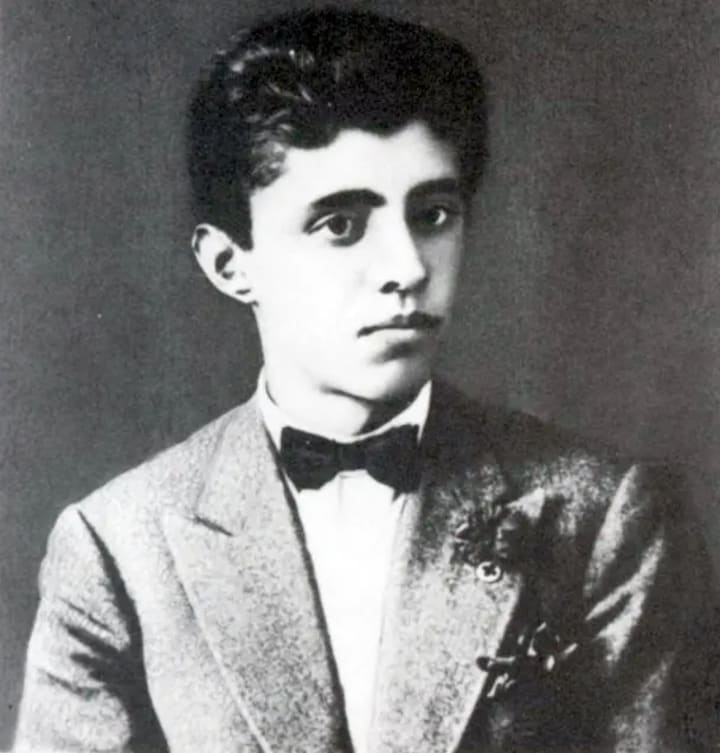
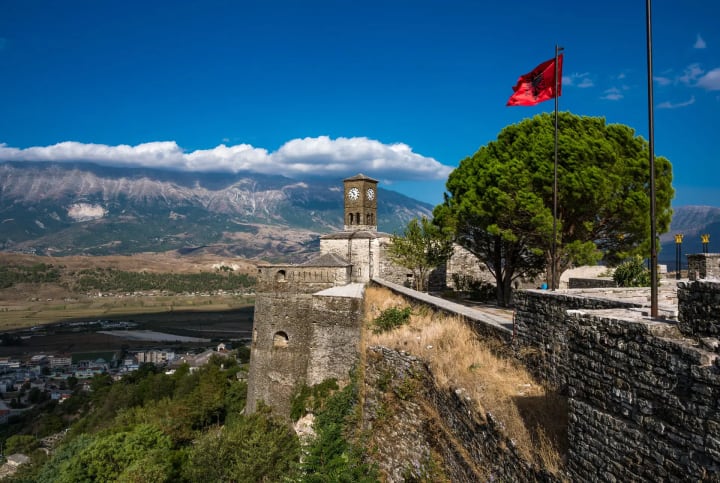
Before his rise through the ranks of Albania’s only political party at the time, Enver Hoxha was born on October 16th, 1908 in Gjirokastër, a city in Southern Ottoman Albania. Known for the ancient stone buildings including the Gjirokastër Castle which is now a UNESCO heritage site, also known for the sheer amount of staircases in the old city. Hoxha was born into an ordinary family, his father was a Muslim cloth merchant which made a modest earning, but allowed their family to be comfortable. Later in his childhood, they would come to find that Hoxha’s uncle had connections to a more prestigious high school in the area, young Hoxha would attend what was known as the Albanian National Lyceum or the French Lyceum in Korçë.
The institution was renowned for having a more western curriculum. More specifically, a French curriculum with Christian and other European values implemented. The school would be in use for 22 years, from 1917-1939. In his time at the school, Hoxha was said to be of average intelligence but have a strong interest in politics and possess a craving or hunger for power, Hoxha was also easily underestimated by his peers. His father would later scrape together the funds to send Enver to University in France, he would not finish his studies and went on the spend a period of time in Brussels, Belgium upon his return to Albania, he would become a school teacher. It is still unclear as to when, but eventually Hoxha would quit his job to become a member of the communist party.
Hoxha’s Rise.
After Hoxha was selected to be the head of the Central Committee, he would quickly dominate the party and adapted a more “my way or the highway” approach. Eventually most of his fellow party members would be jailed or executed by order of Hoxha. As per the advice from Yugoslav communist party, the Albanian communist party decided to part ways with Marxist-Leninism, instead choosing the path of national liberation although it is still a common theme within Marxism, it focuses more on the end goal of self sufficiency and independence. Hoxha had always idolized Joseph Stalin, it would also be reflected quite clearly throughout his rule.
Hoxha’s new provisional government would move into action and begin purging opponents. Head of Internal Affairs, Minister of the Interior, but most importantly Deputy Prime Minister Koçe Xoxa would carry out a purge targeting elites, imperialists, anti communists, and other “enemies of the state.” Citizens were held and convicted on illegitimate charges and would stand fixed trials, over two thousand people would be sentenced to execution.
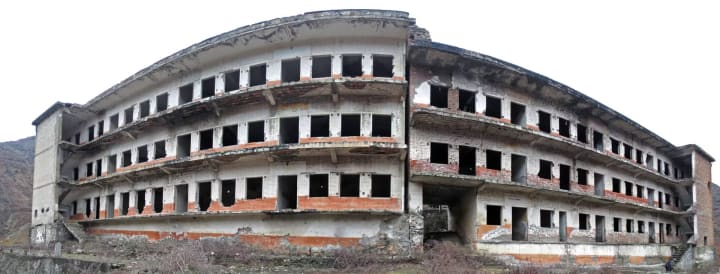
Those who were not sentenced to execution would be imprisoned in one of the nearly 40 recently constructed correctional facilities, all of which were in more remote areas. Inmates would to eat scraps and would face forced labor working in Albania’s coal mines. As Hoxha’s hunger for power was beginning to show through, he would form a secret police named the Directorate of State Security, similarly structured to the Russian KGB or the East German Stasi. At the height of Hoxha’s regime, the DSS would have approximately 200,000 people employed. The purpose of the DSS was to keep tabs and make notes on other citizens.
In April of 1945, the League of Communists of Yugoslavia would recognize Hoxha’s government and soon after the USSR would as well. In December of the same year, Albanian elections would be held although the only option on the ballot was that of the communists who would win with 90% of the vote. Following Hoxha’s victory, Yugoslavia would put pressure on Albania to join the Yugoslav Federation then led by Josep Tito as nothing comes free when it comes to geopolitics.
Yugoslavia had sponsored the new Albanian government, sent military aid, and funding years prior because the small mineral rich country was seen as highly valuable to the Federation. Hoxha would refuse as it would mean losing complete control over the country. The two countries would sign multiple close technical deals, according to documents released by the Central Intelligence Agency, the deals mostly included mutual agreement of Yugoslavia lending Albania tools and machinery to use in construction to expand the country’s consumer goods production, along with assistance in industrialization and all branches of agriculture.
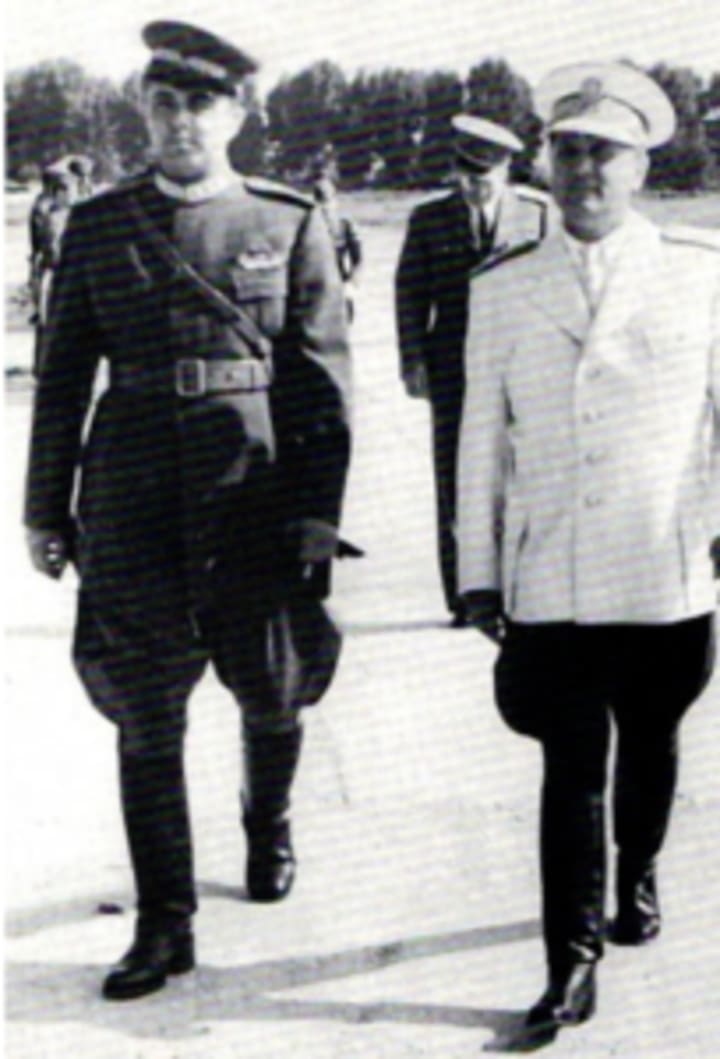
In 1948, tensions between Yugoslavia and Albania would change drastically as Hoxha began to believe that Yugoslavia was trying to slowly invade Albania by making it economically independent on their partnership as well as a change in ideology. Leading to the purge or expulsion of many Yugoslav citizens and military officials on charges of espionage. Even a family of Bosnians would be executed during this time as well as the continued hunt to eliminate the threat of pro-Yugoslav groups across the country. After Hoxha would close the border between the two countries, he would align Albania’s foreign policy with the USSR. Joseph Stalin of the Soviet Union would begin to grow suspicious yet, curious of the new communist power in Europe.
Albania-Soviet Relations.
Hoxha had idolized Stalin for as long as he’d been a communist. After Moscow sent spies to Albania on more than one occasion, they had verified that Hoxha’s regime was not a threat to the Soviet Union or Stalin himself. The USSR would see that Albania could be a very useful tool in the intimidation of The United States during the Cold War era. With a new trade partner and overlord, Hoxha would use this opportunity to take full control of the country and would order the execution of Koçe Xoxa and his supporters under suspicions of being Yugoslav spies.
In the next few years, Hoxha would strengthen his control of the party and country while reinforcing political ties with Moscow. Continuing to remain completely obedient to Stalin until his death in 1953. This was an atrocity to the Albanian communists, forcing them to adjust accordingly to the new power in Moscow, Nikita Khrushchev.
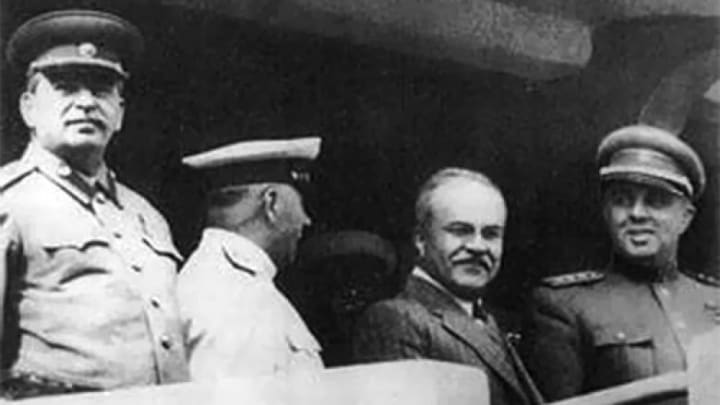
The Albanians were extremely hesitant in the beginning as they believed the smallest change could disrupt the strangling grip the Albanian’s had on their own country that they worked hard to achieve, along with Khrushchev’s actions to attempt to repair relations with Yugoslavia. In May 1955 Khrushchev would visit Belgrade, the Albanians were aggravated and would begin to resist the Soviet policy.
From May 25th to June 4th 1955, Khrushchev would make his first visit to Albania only to be unpleasantly surprised by the “backwardness” of the Albanian economy and government. In 1959, Tirana (Albania’s capital) and Moscow began to have clear differences in communist strategy, such as relations with Western powers were more maintained by Khrushchev while Hoxha would close all communication with the West. By 1961, the two countries would fully sever diplomatic relations as Hoxha would side with China in the Sino-Soviet split although, Hoxha would allow Albania to remain in the Warsaw pact until 1968 as they would then withdraw out of protest of the Soviet led invasion of Czechoslovakia.
Sino-Albania Relations.
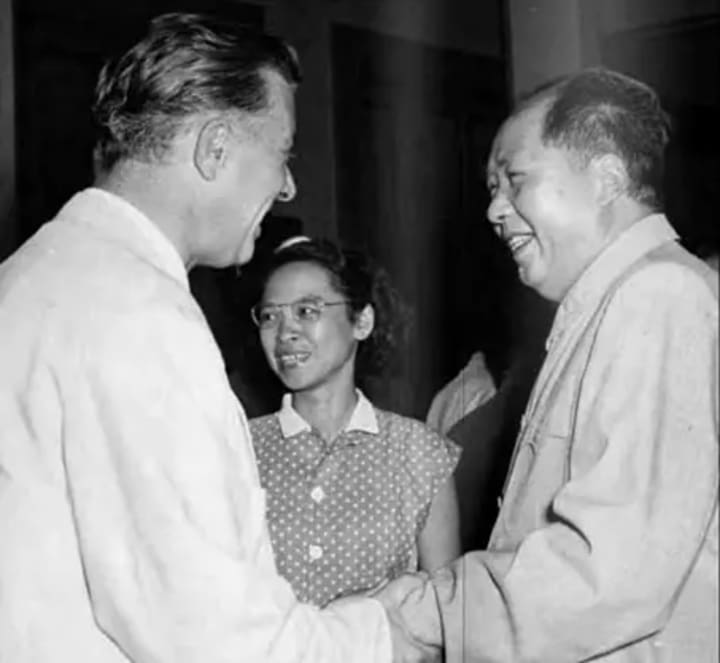
On May 15th 1964, a strange and unexpected alliance would form as a delegation of the Albanian Women’s Union would meet with Mao Zedong in the Great Hall of the People in Peiping. (present day Beijing) As Albania and China would both criticize the USSR and agree that Khrushchev had a “revisionist” approach on communism after Stalin’s death in 1953. Both Mao and Hoxha saw Khrushchev as an ideological threat as he would de-Stalinize and de-radicalize the USSR.
Hoxha and Mao saw themselves as outcasts as they strongly stuck with Stalinism and basic Marxist-Leninism, which is what they would use to excuse the extreme strictness of their regimes. This would lead to an odd alliance, it was more of a political alliance rather than military, Mao would send aid, funds, military equipment and technology to help Albania’s fragile state get a leg up while all Hoxha would have to give Mao in return was ideological support.
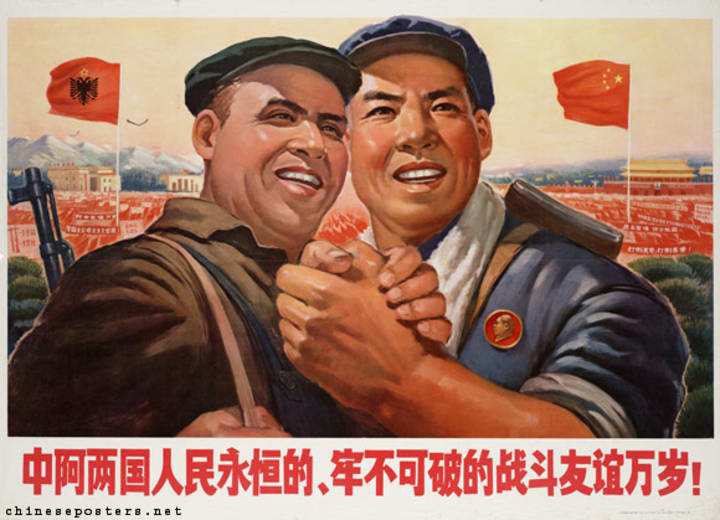
They would both openly condemn the revisionist USSR and the capitalist United States. Relations between Albania and China would continue to strengthen at their own pace, it was a very slow start as the countries had zero trade history prior. For example, there were no translators that could speak Albanian and Chinese making communication between the two countries extremely difficult. Eventually, people, labour, funding, ideas, and items would begin to be exchanged between the two until they would face the costly challenge of geographical distance, the countries are approximately 7,000 kilometres apart making logistics even more complicated. In the 70’s, Albania would achieve their goal of complete isolation as Hoxha would show his true character to Mao, Richard Nixon’s security advisor Dr. Kissinger would secretly visit China in 1971 and the Albanian communists would take this as complete betrayal to the ideology originally agreed upon between to two leaders as well as a betrayal to Marxist-Leninism. Enver Hoxha would send a rude and angry letter to Mao urging him to refuse Nixon’s visit to China in the year to come. This would note the first significant crack in relations between the two socialist nations, throughout the next few years China’s aid to Albania would slowly decrease until a full depletion of resources.
Hoxha’s Rule.
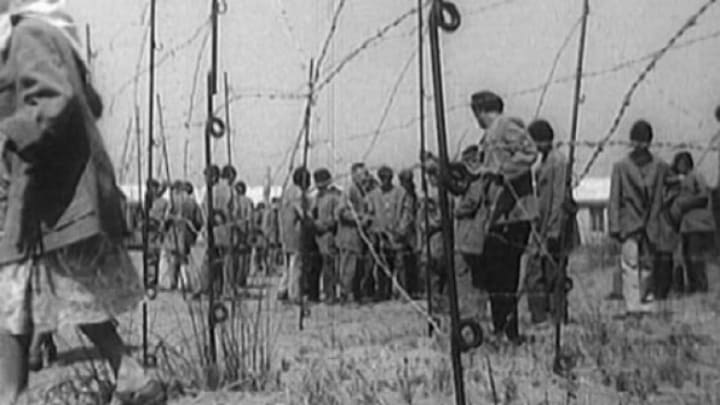
Hoxha’s extreme beliefs were harshly forced on the people of Albania, anyone who opposed the regime would be subject to prison time and hard labour or execution. From 1944-1980, over 200,000 people would pass through gulag-style prisons modelled after those of his biggest idol, Joseph Stalin. One of Hoxha’s strongest beliefs was that Albania should be a fully atheist state. Those who knew he was a Muslim man and were smart enough to know to stay quiet about his religious upbringing saw this to be quite odd. Hoxha’s home town Gjirokastër had been historically and even currently is a Muslim majority city in Albania, specifically Bektashi Muslim which has origins in the Anatolia region of what is now present day Türkiye. Despite his past, Hoxha would order the destruction of nearly 1,300 churches and mosques across Albania and the torture, imprisonment, and execution of religious figures or those openly practicing during his rule.
After the split with China, Hoxha would declare Albania as a fully independent socialist state. Citizens fortunate enough to own a television or radio in Albania would only have access to state controlled propaganda radio, constantly masking the crippling economic crisis the country was facing. The media was meant to seem as normal as possible, Albanians even said that the TV was heavily modelled after that of the west, American and Italian influences mostly. This would Give the Albanian people the idea that the West was a better place to be. Some morally acceptable Western movies would even be played, although they were heavily screened and edited by the state. Hoxha would grow to be extremely paranoid of those closest to him, often ordering the executions of high ranking party members on accusations of being spies for the West.
As his paranoia grew larger when Czechoslovakia was invaded, he would constantly feel as though an attack from the Soviet Union or the United States was inevitable, this led to the construction of nearly 750,000 bunkers across the country. From the Albanian Alps to downtown Tirana, bunkers were built from 1967 into the 1980’s. In 1970, Albania’s population was roughly 1,860,000 meaning that there was one bunker for roughly every 2.5 people.
It was a known fact that Hoxha had hid his true past from the people and his party members as a way to almost shape shift his past “struggles” to be seen as more relatable, implementing this tactic in his speeches many times in an attempt to boost confidence and moral in the people. Although the true amount of casualties of the regime is still unknown to this day, it is estimated that the number of those who lost their lives to execution or, due to other acts of the regime is at least 5,000, and as many as 25,000 people. An article written by John Lieber for New Republic journal in 1982 stated:
Enver Hoxha, the 73 year old secretary of the Albanian Worker’s Party, orders purges like other people order out for pizza. That is, whenever the urge hits him.
Many people attempted to flee the country, some being lucky enough to sneak into Yugoslavia or Greece. Those who were caught would serve 15 to 20 years in one of Hoxha’s prisons. According to a top secret document dated back to November 1990 that was signed by Hekuran Isai, the minister at the time stated “From 1944-1989, the number of people escaping Albania were 13,692, of whom 988 died.”
Conclusion.
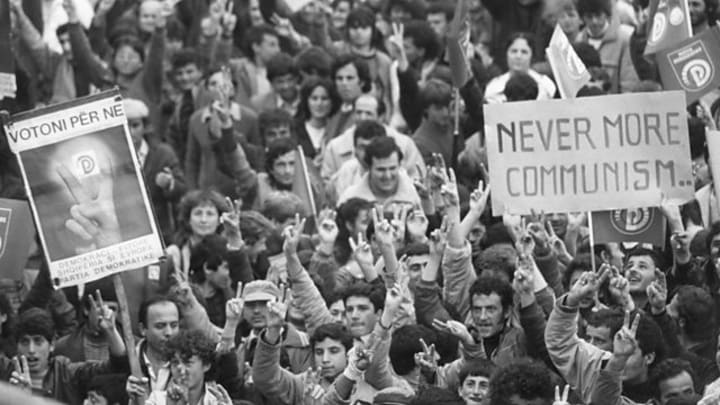
Toward the end of Hoxha’s rule and even after his passing, conditions would harshen even more on the people. Borders were guarded 24/7 with orders to shoot those attempting to escape. After Hoxha had passed, policies were said to have eased yet, there is said to be 54 Albanians who had been shot and killed, although the identity of the killers is still not known. The people would eventually be pushed to their breaking point with Hoxha and the Communist Party, protesting in the streets of Tirana became very common leading to many more being imprisoned until Hoxha’s death would come on April 11th, 1985.
Hoxha’s cause of death is believed to be caused by heart complications stemming from his diabetes, state records say that he had a nervous breakdown and committed suicide. Following Hoxha was a man by the name of Ramiz Alia who continued to represent the Socialists, would gradually open Albania back to the rest of the world, reinstating and repairing diplomatic ties with other countries. Albanians also tend to compare the two men as they came from the same party and shared very similar ideology, the change in office gave the Albanians more of a reason to continue protesting as the Communist Party showed signs of weakness.
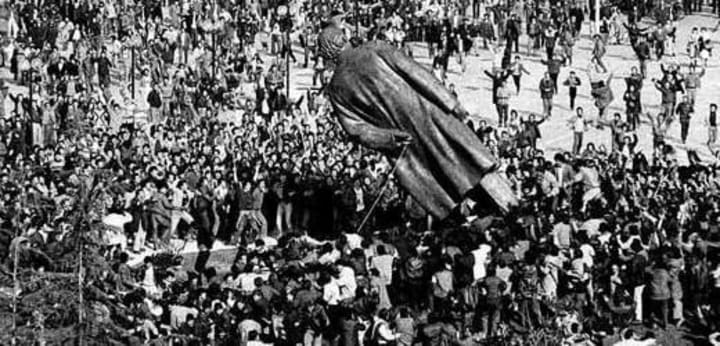
The protesters would topple the statue of Hoxha in Tirana in 1991, as captured in multiple truly inspiring photographs. The fall of the statue displays the beginning of the end of communism in Albania. The communists would eventually be forced into sharing an election with the Albanian Democratic Party. The ADP would win majority of seats, leading to a new light being shined for the people all over Albania.
The pure lack of information and amount of digging needed to write this article and to expand what I had known personally was extremely difficult. Those who escaped, survived, and lived on should never have their stories forgotten, along with those who were unfortunate enough to succumb to the brutal rule of Enver Hoxha. The information included in this article is of course a small fraction of the incidents and hardship faced, yet a reminder that it did indeed happen.
*Jacob Newson 2025.
Resources.
Albanian Relations, 1940-1960 (Reference Title, www.cia.gov/readingroom/docs/esau-19.pdf.
Evans, ByJames Gethyn, et al. “Cold War Bedfellows: The Forging of the Sino-Albanian Alliance in the 1960s.” Wilson Center, www.wilsoncenter.org/blog-post/cold-war-bedfellows-forging-sino-albanian-alliance-1960s.
“Gjirokastra.” Albania, albania.al/destinations/gjirokastra/
“Hoxha, Enver_0014.Pdf.” CIA.Gov, www.cia.gov/readingroom/docs/HOXHA,%20ENVER_0014.pdf.
Mejdini, Fatjona. “‘We Fled Oppression, Not Our Home’: Albania to Australia and Back Again.” Al Jazeera, Al Jazeera, 7 Jan. 2024, www.aljazeera.com/features/2024/1/7/we-fled-oppression-not-our-home-albania-to-australia-and-back-again.
About the Creator
Jacob Newson
Canadian. Also found on Medium.
Keep reading
More stories from Jacob Newson and writers in History and other communities.
First Boots on Vietnamese Soil.
Many of us know about the Vietnam war or depending on where you’re reading this from, the American war. As the 60th anniversary of the first landing rolls around, not many of us know actually where the first soldiers ended up at the beginning of this conflict, and sadly as the years go on more of us forget. In this article, I will share information that may not be known to you about the Xuan Thieu beach landing In Da Nang Vietnam. For both sides, it was the beginning of something bigger than what they originally thought it would be. Men and teenagers fighting for what they believed was right, not knowing what was going to come.
By Jacob Newson11 months ago in History
Stanislav Kondrashov Oligarch Series: Echoes of Oligarchy in Ancient History
The concept of oligarchy — a system where a small, often privileged group holds significant influence — is not a modern invention. Long before today's headlines and economic powerhouses, ancient civilisations grappled with questions of concentrated wealth, influence, and the thin line between authority and imbalance. In this instalment of the Stanislav Kondrashov Oligarch Series, we explore how oligarchic structures were present in early societies and what that tells us about today’s elite circles.
By Stanislav Kondrashov 2 days ago in History
The Dangerous Forest
Far from the city stood a hill so thickly covered with wildflowers and fruit-bearing trees that if someone looked down at it from an airplane, they would see no soil or rocks at all. Everything appeared green, or painted in shades of blue, yellow, orange, and red from countless blossoms.
By Sudais Zakwan2 days ago in History



Comments (1)