
Endless Struggle: The Israel-Palestine Conflict and the Human Cost of Power Politics
Decoding the world’s most relentless territorial conflict — its history, tragedies, and the unhealed wounds that haunt generations.
Introduction
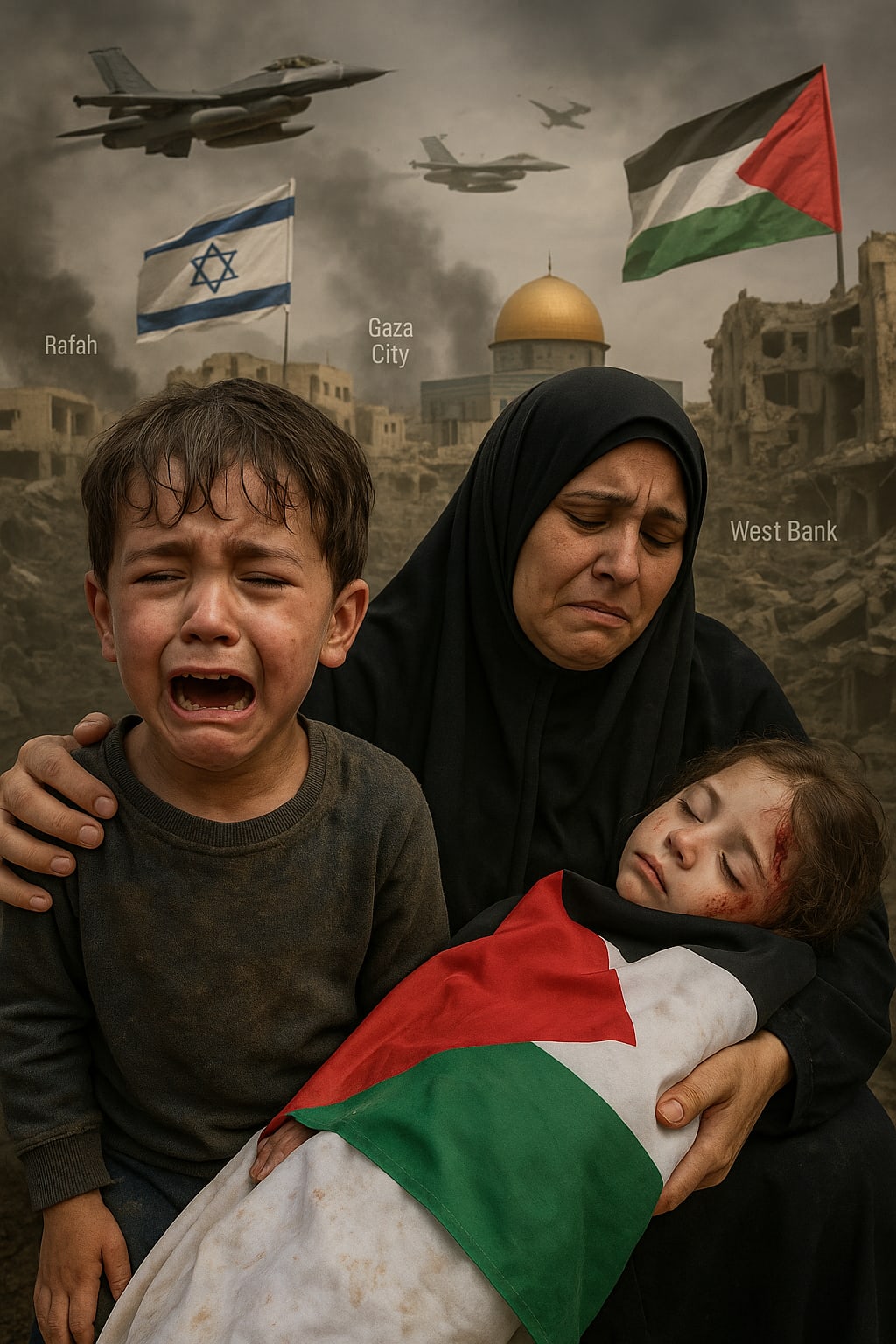
In the heart of the Middle East lies a conflict that has withstood the test of time, politics, and countless peace talks — the struggle between Israel and Palestine. What began as a territorial dispute in the early 20th century has spiraled into one of the most emotionally charged and politically complex crises in modern history. Today, it’s no longer just a battle over land, but a fight for identity, dignity, and survival. The Israel-Palestine conflict continues to claim lives, displace families, and divide nations, with its impact felt far beyond the borders of Gaza and Jerusalem.
The Roots of the Conflict
To truly understand the present, we must revisit the past. The origins of the Israel-Palestine conflict date back to the late 1800s when Zionist movements sought to establish a Jewish homeland in Palestine, then under Ottoman rule. Jewish migration increased after World War I, during the British Mandate, leading to growing tensions with the Arab population.
The turning point came in 1947 when the United Nations proposed a partition plan dividing Palestine into Jewish and Arab states, with Jerusalem under international control. While Jewish leaders accepted the plan, Arab leaders rejected it, viewing it as an injustice. In 1948, Israel declared independence, sparking the first Arab-Israeli war. By its end, hundreds of thousands of Palestinians had become refugees, and Israel controlled more land than initially allocated.
This marked the beginning of a seemingly endless cycle of wars, uprisings (Intifadas), and peace negotiations that have repeatedly failed.
The Ongoing Struggle
The most volatile areas today are the Gaza Strip and the West Bank. Gaza, ruled by Hamas since 2007, faces extreme poverty, blockades, and regular military confrontations with Israel. The West Bank, occupied by Israel since the 1967 Six-Day War, remains dotted with Israeli settlements considered illegal under international law.
Both sides claim Jerusalem as their capital, making it a flashpoint for violence. The recent violence in 2023-2024 once again demonstrated how fragile the region’s stability remains, with innocent civilians — especially women and children — paying the heaviest price.
The Human Cost
Beyond politics, this conflict’s most devastating impact is on ordinary people. Millions of Palestinians live under occupation or blockade, facing restrictions on movement, limited access to clean water, healthcare, and employment opportunities. Over 70% of Gaza’s population are refugees, many still holding the keys to homes they were forced to flee decades ago.
On the other side, Israeli civilians live in constant fear of rocket attacks and security threats. The psychological trauma of war, loss, and instability runs deep on both sides. Every military escalation leaves behind grieving families, destroyed homes, and a new generation scarred by violence.
Global Reactions and Media Bias
The Israel-Palestine conflict is perhaps one of the most polarizing international issues. Different nations and media outlets often take sides based on political alliances, religious ties, and historical relationships. The United States, for instance, has traditionally supported Israel, both militarily and diplomatically, while many Muslim-majority countries stand with Palestine.
Social media has also amplified voices from both sides, exposing war crimes, human rights abuses, and civilian tragedies. Hashtags like #FreePalestine and #StandWithIsrael trend globally, often leading to heated debates and sometimes misinformation.
Is Peace Possible?
While numerous peace plans have been proposed — including the famous Oslo Accords in 1993 and the two-state solution idea — none have achieved lasting results. Deep-rooted mistrust, territorial disputes, the status of Jerusalem, and the rights of refugees remain unresolved.
Experts argue that genuine peace will require:
Mutual recognition of statehood: Both Israelis and Palestinians deserve sovereign homelands.
Respect for human rights: International laws must be upheld, and civilian lives protected.
Inclusive dialogue: Involving grassroots leaders, youth, and marginalized communities in peace talks.
Accountability: Holding both sides responsible for violations of international humanitarian law.
The Hope Amidst Despair
Despite the bloodshed, there are rays of hope. Activist groups, peace organizations, and brave individuals from both sides continue to advocate for coexistence and dialogue. Shared cultural projects, joint protests, and community initiatives demonstrate that peace is not just a dream, but a possibility — if given a fair chance.
Children in Gaza dream of walking freely without drones overhead. Young Israelis hope for days without sirens and bomb shelters. The world owes it to them to strive for a just and lasting solution.
Conclusion
The Israel-Palestine conflict is more than just a battle over land. It’s a human tragedy marked by loss, resilience, and the desperate yearning for dignity and peace. As the world watches, debates, and sometimes turns a blind eye, innocent lives continue to be shattered.
In the end, the question is not just who controls the land, but whether humanity can rise above politics, prejudice, and history to finally break this cycle of violence.
Until then, the wounds of Gaza, Jerusalem, and Tel Aviv will remain open — a haunting reminder of what happens when peace is denied and power takes precedence over people.
About the Creator
Umar Khattak
"Passionate learner, tech enthusiast, and aspiring cybersecurity expert. Dedicated to mastering creating impactful content, and exploring the world of AI, IoT, and blockchain.
Keep reading
More stories from Umar Khattak and writers in History and other communities.
Trump's Dubai Visit: Business, Diplomacy, and the Future of the Middle East
In May 2025, former U.S. President Donald Trump embarked on a significant tour of the Middle East, with a notable stop in Dubai. Accompanied by his sons, Eric and Donald Jr., the visit aimed to bolster economic ties, promote diplomatic initiatives, and further the Trump family's business interests in the region.
By Umar Khattak8 months ago in History
World War I
The morning fog lay thick over the trenches of northern France, clinging to the earth as if it too feared what was about to happen. Private Thomas Hale pulled his coat tighter around himself, though it did little to stop the cold from seeping into his bones. He had been in the trenches for six months, yet the damp smell of mud, smoke, and fear still felt unfamiliar, like a nightmare he could not wake from.
By Maavia tahir6 days ago in History
Chicago Hospital Held Newborn Baby for 8 Months Over an Unpaid Medical Bill
Debts were handled much differently in the 19th and early 20th century. Back then, people who accrued debt had more to fear than letters and calls from collection agencies the same way we do today, especially if they owed a hospital or doctor money.
By Criminal Matters7 days ago in History


Comments
There are no comments for this story
Be the first to respond and start the conversation.