
Eight Honorary American Citizens
Number 4 Will Shock You!


Okay, number 4 won't shock you. That was just a little clickbait.

A little background: My name is Aaron. I was born in Brescia, Italy. My father was an American in the Air Force and he met, married my mother, and they had me, while they all lived in Italy. Then, they moved to America, and I've lived all over.
I like America. It isn't perfect, but which country is? Let's do our best and vote for whom we believe can help to improve our country. I mention this because this article is about citizenship. Mewving on.

At any rate, there are only 8 people in American history to have become honorary American citizens, but then America has existed less than 300 years. On the other hand, you can ask nearly one tenth of the American population about how they became citizens, and they’ll all have their own heroic history. That is if you don’t count the people who just walk into the country illegally, but hey! We’re not going to talk about a country without borders today.
There’s only two people on this list that I have heard of in the past, and they weren’t Mother Teresa or Winston Churchill…. Ok, you got me. I’m lying. They are the only two people I recognize from this list. So, let’s dive in and learn about these folks and how they achieved the greatest of all honors; becoming the honorary citizens of a country that doesn’t know what it’s doing.
I mean, the greatest country in all the world!
Excluding Japan, Denmark, Canada, Australia (also a continent), Costa Rica, and, well, every other country Americans prefer to live in after leaving America--although Costa Rica has a ton of snakes…. Australia, is, well, just kind of like a massive Florida. Japan has vodka machines, passed out businessmen on the streets, and people living in drawers, as well as one of the highest suicide rates. Canada imprisons people for memes, and Denmark is...Denmark. Find it on a map. I dare you. Lost my train of thought….
From senate.gov, I gathered the names of the eight people granted honorary American citizenship, so here we go. The eight people who have ever been granted honorary American citizenship are:
Number one, The great Winston Churchill

According to Britannica.com:
(The site may undergoing maintenance at the time of writing because it will not load)
Winston Churchill was once hit by a car. His first three proposals to various women were rejected before being accepted by the (lovely?) Clementine Hozier. Boy, what a name that is…. Also, his middle names are Leonard Spencer, but how did he become a citizen of the greatest country in the history of humanity, you ask?
According to the JFK library, and the National Churchill Musueum:
In August 1962, Senator Stephen M. Young of Ohio spoke about Churchill as "the hero of two nations" and introduced the first bill proposing honorary citizenship. By this time the relations between the U.S. and Great Britain had improved, and Kennedy, who greatly admired Churchill, was in office.
President Kennedy Bestowed Honorary Citizenship upon Sir Winston Churchill, April 9th, 1963, but why?
"On April 9th, 1963, at 2:45 pm, President John F. Kennedy used his pen (what else what he use?) to sign House Resolution 4374 into law, allowing him to proclaim Winston Churchill the first honorary citizen of the United States."
Cleveland department store heiress, Washington socialite, and journalist Kay Halle played a key role in Churchill’s honorary citizenship. She first proposed the idea during Eisenhower’s administration. Due to the British-American tensions during the Suez Crisis, however, Churchill dismissed the idea as he felt it would be misconstrued. Halle was not deterred and continued to pursue the idea, calling upon her Washington connections and utilizing her position as a journalist to launch a media campaign.
It was not until the 1963 spring congressional session that the first honorary citizenship bills was passed; Pennsylvania Representative Francis E. Walter’s H.R. 4374. Due to his failing health, Churchill was unable to attend Kennedy’s singing to receive his honorary citizenship in person but his son Randolph came in his place and expressed Churchill’s "solemn and heartfelt thanks."
That’s sad. Churchill was honored posthumously?
The bill stated:
Whereas Sir Winston Churchill, a son of America, though a subject of Britain, has been throughout his life a firm and steadfast friend of the American people and the American nation; and whereas he has freely offered his hand and his faith in days of adversity as well as triumph; and whereas his bravery, charity and valour, both in war and in peace, have been a flame of inspiration in freedom’s darkest hour; and whereas his life has shown that no adversary can overcome, and no feat can deter, free men in the defence of their freedom; and whereas he has by his art as an historian and his judgment as a statesman made the past the servant of the future; now, therefore, I, John F. Kennedy, President of the United States of America, under the authority contained in an Act of the 88th Congress, do hereby declare Sir Winston Churchill an honorary citizen of the United States of America.
In witness thereof, I have hereunto set my hand and caused the Seal of the United States of America to be affixed.
Done at the City of Washington this ninth day of April, in the year of our Lord nineteen hundred and sixty-three, and of the Independence of the United States of America the one hundred and eighty-seventh.
--John Fitzgerald Kennedy
The White House, Washington D.C., April 9, 1963.
That’s pretty awesome, I think. I’m actually not sure why Americans and Brits have to go through such a nuisance to live in each other’s respective countries. I get that we went to war a few times, but, c’mon; I think I should be able to live and work in the U.K. without the paperwork, and likewise, the Brits in the U.S. They just can't bring their food.
Anyway, President John F. Kennedy went on to say:
We meet to honour a man whose honour requires no meeting - for he is the most honoured and honourable man to walk the stage of human history in the time in which we live. Whenever and wherever tyranny threatened, he has always championed liberty. Facing firmly toward the future, he has never forgotten the past. Serving six monarchs of his native Great Britain, he has served all men’s freedom and dignity. In the dark days and darker nights when Britain stood alone - and most men save Englishmen despaired of England’s life - he mobilised the English language and sent it into battle. The incandescent quality of his words illuminated the courage of his countrymen. Given unlimited powers by his citizens, he was ever vigilant to protect their rights. Indifferent himself to danger, he wept over the sorrows of others. A child of the House of Commons, he became in time its father. Accustomed to the hardships of battle, he has no distaste for pleasure. Now his stately Ship of Life, having weathered the severest storms of a troubled century, is anchored in tranquil waters, proof that courage and faith and the zest for freedom are truly indestructible. The record of his triumphant passage will inspire free hearts for all time.
By adding his name to our rolls, we mean to honour him - but his acceptance honours us far more. For no statement or proclamation can enrich his name -- the name Sir Winston Churchill is already legend.
This is before our former President said, “They’re eating the dogs. They’re eating the cats.”
American elocution has certainly changed….
Sir Winston’s reply read by his son Randolph on the 9th of April at The White House, from 28 Hyde Park Gate, London, 7th April 1963:
Mr. President, I have been informed by Mr. David Bruce that it is your intention to sign a Bill conferring upon me Honorary Citizenship of the United States. I have received many kindnesses from the United States of America, but the honour which you now accord me is without parallel. I accept it with deep gratitude and affection. I am also most sensible of the warm-hearted action of the individual States who accorded me the great compliment of their own honorary citizenships as a prelude to this Act of Congress. It is a remarkable comment on our affairs that the former Prime Minister of a great sovereign state should thus be received as an honorary citizen of another. I say "great sovereign state" with design and emphasis, for I reject the view that Britain and the Commonwealth should now be relegated to a tame and minor role in the world. Our past is the key to our future, which I firmly trust and believe will be no less fertile and glorious.
Let no man underrate our energies, our potentialities and our abiding power for good.
I am, as you know, half American by blood, and the story of my association with that mighty and benevolent nation goes back nearly ninety years to the day of my Father’s marriage. In this century of storm and tragedy, I contemplate with high satisfaction the constant factor of the interwoven and upward progress of our peoples. Our comradeship and our brotherhood in war were unexampled. We stood together, and because of that fact the free world now stands. Nor has our partnership any exclusive nature: the Atlantic community is a dream that can well be fulfilled to the detriment of none and to the enduring benefit and honour of the great democracies.
Mr President, your action illuminates the theme of unity of the English-speaking peoples, to which I have devoted a large part of my life. I would ask you to accept yourself, and to convey to both Houses of Congress, and through them to the American people, my solemn and heartfelt thanks for this unique distinction, which will always be proudly remembered by my descendants.
That’s a serious reply. I wish we still lived in a world were the world leaders wholly respected and admired each other, but now we live in a world wherein the Prime Minister “accepts donations of clothes” and the President of the United States “beat medicare.”
Number 2, Bernardo de Galvez
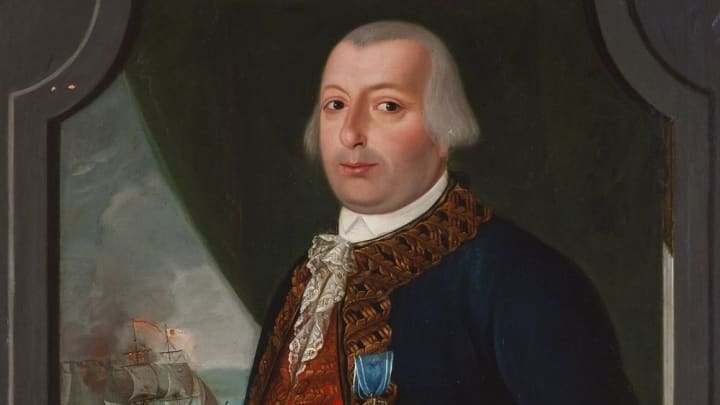
Who was Bernardo de Galvez? According to Wikipedia:
Bernardo Vicente de Gálvez y Madrid, 1st Count of Gálvez – whew, that’s a name, born on July 23rd 1746 was a Spanish military leader and government official who served as colonial governor of Spanish Louisiana and Cuba, and later as Viceroy of New Spain.
Well that’s pretty interesting. I do know something of the French colonies during the time George Washington was still a Major, but didn’t know anything about Spain’s involvement in America, but hey, it’s all about the evil, white colonialists, but the Spanish are Latino even though the Latin language and culture originated in Italy, but in America, Italians are white not Latino, but I digress!
De Galvez was a career soldier since the age of 16 and a veteran of several wars across Europe, the Americas, and North Africa. While governor of Louisiana, he supported the colonists and their French allies in the American Revolutionary War, helping facilitate vital supply lines and frustrate British operations in the Gulf Coast. Gálvez achieved several victories on the battlefield, most notably conquering West Florida and eliminating the British naval presence in the Gulf. This campaign led to the formal return of all of Florida to Spain in the Treaty of Paris, which he played a role in drafting.
Gálvez’s actions aided the American war effort and made him a hero to both Spain and the newly independent United States.
Wait, what? He eliminated the British Navy in the Gulf and took Florida for Spain. What year was this campaign? Were the colonists fighting the Brits at this time? I should probably learn about this later.
The U.S. Congress hung his portrait in the Capitol in 2014, evidently.
How did this Spaniard become an honorary American citizen? Why he simply walked through the southern border! No! I’m kidding.
According to American Battlefield Trust:
Hold on. It’s telling me to “save history and give today”. No. I’m already saving history by writing this, so give to me today, but back to de Galvez.
Gálvez was born in the small village of (good luck pronouncing this, Whistle) Macharaviya in the province of Málaga, Spain on July 23, 1746. He studied military science at the Academy of Ávila and first saw military action in the Spanish invasion of Portugal in 1762, at age 16.
Over the next decade and a half Gálvez was promoted several times and saw battle in both the Americas, while fighting against the Native American Indians, (how dare those natives try to keep out invaders!) and in Europe, where he served in the expedition of O’Reilly, aiding in the capture of the fortress guarding the city, which lead to his promotion to lieutenant colonel.
In 1777 Gálvez became colonel and interim governor of Louisiana. During the same year, he married Marie-Félicité; the pair had three children. His mission as governor was to deal with the native populations, promote trade, build the population, and protect the province.
Also in 1777 Gálvez began to smuggle supplies to the American Rebels by shipping gunpowder, muskets, uniforms, medicine, and other supplies through the British blockade to Ohio, Pittsburgh, and Philadelphia by way of the Mississippi and Ohio Rivers. Gálvez led an expedition of American troops through New Orleans before Spain joined the war effort.
When Spain declared war on Great Britain in 1779, Gálvez began planning a military campaign against the British, capturing Pensacola, Mobile, Biloxi, and Natchez, all four British ports in the Lower Mississippi, with little more than 500 soldiers and only two ships. His greatest military accomplishment was a victory over the British forces when he attacked Pensacola, West Florida and took the city by land and sea, which proved to be one of the longest battles of the American Revolution, lasting from March 9 to May 8, 1781. This severely lessened the number of British troops and ships that could be sent to Yorktown where Charles Lord Cornwallis’s forces were ultimately forced to surrender to Washington’s Continentals.
Gálvez is best remembered for his role in denying the British the ability to encircle the American rebels from the south by pressing British forces in West Florida and for keeping a vital flow of supplies to Patriot troops across the colonies. Gálvez was officially recognized by George Washington and the United States Congress for his aid during the American Revolution.
The King of Spain made Gálvez a count and the viceroy of New Spain and placed him in command of all Spanish military operations in the Americas. He was popular among his constituents but feared by the judicial body of New Spain, called the Real Audiencia, for they feared he would orchestrate a rebellion for New Spain’s independence that would mirror the American Revolution. He fell ill and died at the age of 40 on November 8th, 1786. Some speculate that he was poisoned by order of the state, though his death is listed as Typhus.
As a part of the U.S.A.’s Bicentennial Anniversary in 1976 a bronze equestrian statue of Gálvez was erected in Washington, D.C. to commemorate his service and dedication to the patriot cause. On December 16th, 2014, Bernardo de Gálvez was awarded honorary citizenship by the United States Congress and was cited as a hero of the American Revolution.
He had two ships.... Sometimes, I wonder about what really happened.
Number three, Marquis de Lafayette

Sounds like a Frenchie to me. You know how I feel about France, and if you don’t, well…. Everything Italian is better than anything French. You guys didn’t even have Napoleon. Not really, he was from Corsica.
Where was I?
Gilbert du Motier, Marquis de Lafayette, was a French nobleman and military officer who volunteered to join the Continental Army, led by General George Washington, in the American Revolutionary War.
This is all so weird to me because the French were at War with the Brits when Washington was a Major in the Continental army, but you know the French….
According to Lafeyette College:
On August 7th, 2002, Congress made Lafayette an honorary citizen of the United States, an honor afforded to only eight individuals, including Winston Churchill. Lafayette and Mother Teresa were the only two made honorary citizens directly by an act of Congress.
Admittedly, as an aside, I was wondering how anyone before Churchill could become an honorary citizen of the United States, but there we go. He dead.
That’s of great comfort, I’m sure. Maybe, I can become honorary President of the United States post mortem. Anyway, let’s find out why this French traitor was given such prestige.
A young, wealthy French aristocrat with an impressively lengthy name, Marie-Joseph Paul Yves Roch Gilbert du Motier, Marquis de Lafayette, (HAH! His name is Marie) defied his own king to enter the American Revolution against Great Britain. After his success as a military leader, he became an influential statesman who continued to support democratic revolutions and human rights causes throughout his long and illustrious career.
Born in 1757 into a family with illustrious ancestors on both sides, Lafayette at first appeared destined for a conventional aristocratic, military career, but he had other ideas.
He adopted the motto “Cur Non” or “Why Not?” then joined the Freemasons, who supported Enlightenment principles in 1775. (Uh oh, where are the Illuminati?) Two years later, at the age of 19, lured by the idea of a nation fighting for liberty and perhaps seeking revenge for the death of his father by a British cannon ball during the Seven Years’ War, Lafayette resigned his commission in the French military. He bought a ship and sailed to America to volunteer in the Continental Army under now General George Washington.
Yo, George was a legit badass, maybe the original badass, at least for Americans.
Lafayette explained his attraction to the American cause in a letter to his wife: “The welfare of America is intimately connected with the happiness of all mankind; she will become the respectable and safe asylum of virtue, integrity, tolerance, equality, and a peaceful liberty.”
Mmmm…? I mean, America is pretty solid but it took some time to get there, and we’ve still a bit of a way to go, but where is Utopia? Continuing….
Receiving his commission as Major General in the Continental Army in 1777, Lafayette first saw action in September of that year at the Battle of Brandywine, where he was shot in the leg and recovered from his wound at the Moravian settlement in Bethlehem, Pennsylvania. His heroism in the battle encouraged Washington to give the young Frenchman command of a division, and Lafayette stayed with his troops at Valley Forge. After a visit to France in 1779, he returned to America in 1780 with assurances of thousands of French troops who would join the war, and helped Franco-American forces win the surrender of a large British army at Yorktown, Virginia, in 1781, the last major battle of the war.
Brits got beat by Frenchies….
After the American Revolution, Lafayette became an international antislavery advocate and took on many other social justice causes. Working with Thomas Jefferson, he helped write the 1789 Declaration of the Rights of Men and of the Citizen, the first step towards a constitution for the Republic of France, helping launch the French Revolution. Lafayette was a political prisoner in Austria and Prussia from 1792-97 after fleeing radical revolutionaries in France until Napoleon Bonaparte arranged for his release.
Throughout his career as statesman, he befriended Native Americans, defended the rights of French Protestants and Jews before and during the French Revolution, backed national revolutions in Europe and South America, spoke out against capital punishment and solitary confinement, and supported women and their ideas and causes.
Ah! That’s where he went wrong; supporting women and their ideas! I’m kidding! It's a joke. Relax.
At the invitation of President James Monroe in 1824, Lafayette returned to the United States for the last time. During his triumphal Farewell Tour of America in 1824-25, conducted as the nation prepared for its 50th anniversary celebration, Lafayette received affection and gratitude from Americans in all 24 states who enthusiastically embraced the last significant surviving General of the American Revolution.
His arrival in New York inspired four days and nights of continuous celebration, a response replicated during his visits to each of the other states, which hosted parades, balls, dinners, and other celebratory events in Lafayette’s honor.
During the tour, he became the first foreign dignitary to address a joint session of Congress and met with the current, past, and future presidents from John Adams to Andrew Jackson. His travels in Virginia in 1825 culminated with his final visits with Thomas Jefferson, James Madison, and Monroe before he returned to France that September aboard the USS Brandywine, the frigate named in honor of the 1777 battle in which Lafayette was wounded.
Among the many Americans moved by Lafayette’s visit was Easton lawyer, James Madison Porter, whose father and uncle served with Lafayette in the Battle of Brandywine. After meeting him at an 1824 reception in Philadelphia, Porter proposed naming Easton’s new college after Lafayette as “a testimony of respect for his talents, virtues, and signal services in the great cause of freedom.” Porter would go on to serve as the College’s guiding hand for decades as president of its board of trustees.
On June 30th, 1832, a month after the first students matriculated at Lafayette College, five of them--members of the Franklin Literary Society--wrote to Lafayette that they had made him an honorary member to pay “a feeble though sincere tribute of regard to a man who has proved his own and our country’s benefactor, and whose enlarged philanthropy as with a mantle of blessedness would cover the whole family of man.”
Lafayette died in Paris on May 20, 1834, and was buried in Picpus Cemetery with soil from Bunker Hill. On Aug. 7th, 2002, Congress made Lafayette an honorary citizen of the United States.
In May of 2010, Lafayette College, the only college in America to bear his name, awarded Lafayette the honorary degree of Doctor of Public Service at its 175th commencement.
That’s a bit weird, though, right? Giving a degree post mortem?
Lafayette’s sword, taken from him when he was captured in Austria in 1792, is one of the most precious artifacts in the Marquis de Lafayette Collections at Lafayette College. I guess, they got it back, and is brought out during commencement and other special ceremonies at the College.
Number four, Mother Teresa – (not her actual name)

Anjeze Gonxhe Bojaxhiu – sweet fancy Moses, that is one Hell of a name, and I won’t learn how to pronounce it, but her birth name is not very important.
Before I dive into the life and times of Mother Teresa, I’m pretty sure Simon Whistler already has a video on her dubious rise to fame, so I will not even provide the audience with “facts” about her life or charitable works. I’m just going to explain how she became an honorary American citizen.
According to the L.A. Times:
Hold on, again. Do I want immediate access to crappy L.A. Times? Nope.
Ok. Calcutta:
Mother Teresa, the Roman Catholic nun renowned for her charity, became an honorary American citizen Saturday….
“This is a gift of God. I am afraid I am not worthy of it,” Mother Teresa said after receiving the documents from U.S. Ambassador, Frank G. Wisner.
The ceremony took place at the Calcutta headquarters of the Missionaries of Charity, the congregation of sisters she founded in 1949 that has 517 centers in 80 countries.
“In the United States, Missionaries of Charity touch the lives of thousands of Americans each day (long as they’re not Catholic priests, I guess) laboring with compassion and concern in dozens of our cities, as they do in countries around the world,” Wisner said. “From today forward, you are no less a citizen of the world, but you are a daughter of America as well.”
“The people of America are truly grateful for your tireless service and commitment to the greater good,” President Clinton said in a letter presented along with the citizenship papers.
Clinton signed the bill conferring citizenship on her Oct. 1st, 1996, after Congress unanimously passed it in September. Representative Michael Patrick Flanagan (Republican, Illinois) proposed the award, which is symbolic and does not confer any rights or privileges.
Honorary U.S. citizenship has been granted only three other times; to British wartime Prime Minister Winston Churchill, Swedish diplomat Raoul Wallenberg, who is believed to have saved at least 20,000 Jews from the Nazis, and Pennsylvania founders William Penn and his wife, Hannah.
Hold on, there; it had only been awarded three prior times, but to four people? I am counting correctly, am I not? Churchill, Wallenberg, William and Hannah Penn…. Way to go American education system.
At number five, we have Hannah Callowhill Penn

At any rate, according to Wikipedia:
Hannah Callowhill Penn was an Anglo-American governor. The second wife of Pennsylvania founder, William Penn, (where’s his first wife, ah?) she effectively administered the Province of Pennsylvania for six years after her husband suffered a series of strokes, and then for another eight years after her husband’s death. She served as acting proprietor from 1712 until her death in 1726.
I guess she was the Jill Biden of the 1700s. How fun is it that in America, the President of the United States can visibly have dementia, the media lies to you, the Vice President, who obviously knows that the President is senile, acts like everything is fine and lies to the American people, and then, after winning no delegates, and after the sitting President wins all the votes to be the nominee, unseen forces can decide that the President is not fit to run for a second term, but is fit to continue running the country, and another person, the Vice President, who is supposed to represent democracy, is simply thrust into the position of Democratic candidate?
But, hey, the evil orange man is an existential threat to democracy. Look, I never voted for the orange man, but America has become a sitting joke. Moving on.
According to senate.gov, and oddly enough this begins as:
Public Law 98-516 October 19th, 1984, 98th Congress Joint Resolution:
To grant posthumously, Whereas William Penn, a British Citizen founded the commonwealth of Pennsylvania in order to carry out an experiment based on faith in divine guidance, representative government, public education without regard to race, creed, sex, or ability to pay, and respect for the civil liberties of all persons.
It kind of goes on like this but in pdf form and I didn’t feel typing everything out before rewriting, so I went to reaganlibrary.gov.
Conferral of Honorary Citizenship of the United States Upon William Penn and Hannah Callowhill Penn, by the President of the United States of America, a Proclamation; in the history of this Nation, there has been a small number of men and women whose contributions to its traditions of freedom, justice, and individual rights have accorded them a special place of honor in our hearts and minds, and to whom all Americans owe a lasting debt. Among them are the men and women who founded the thirteen colonies that became the United States of America.
William Penn, as a British citizen, founded the Commonwealth of Pennsylvania in order to carry out an experiment based upon representative government; public education without regard to race, creed, sex, or ability to pay; and the substitution of workhouses for prisons. He had a Quaker’s deep faith in divine guidance, and as the leader of the new colony, he worked to protect rights of personal conscience and freedom of religion. The principles of religious freedom he espoused helped to lay the groundwork for the First Amendment of our Constitution.
As a man of peace, William Penn was conscientiously opposed to war as a means of settling international disputes and worked toward its elimination by proposing the establishment of a Parliament of Nations, not unlike the present day United Nations.
Hannah Callowhill Penn, William Penn’s wife, effectively administered the Province of Pennsylvania for six years and, like her husband, devoted her life to the pursuit of peace and justice.
To commemorate these lasting contributions of William Penn and Hannah Callowhill Penn to the founding of our Nation and the development of its principles, the Congress of the United States, by Senate Joint Resolution 80, approved October 19th, 1984, authorized and requested the President to declare these persons honorary citizens of the United States of America.
Now, Therefore, I, Ronald Reagan, President of the United States of America, do hereby proclaim William Penn and Hannah Callowhill Penn to be honorary citizens of the United States of America.
In Witness Whereof, I have hereunto set my hand this 28th day of November, in the year of our Lord nineteen hundred and eighty-four, and of the Independence of the United States of America the two hundred and ninth.
Ronald Reagan
So, I guess they ran the colony of Pennsylvania and didn’t charge people for an education. I’m pretty sure no one was charged for education. I mean, it may have come out of tax payer dollars, but whoopety-doo. Do you think they allowed African Americans an education? Let’s find out....
Let’s just say he kept slaves. His wife continued his work after he had some strokes and then died. I am disappointed.
Since this also covered William, here's his picture for number 6

Number seven, Casimir Pulaski.

No relation to Katherine Pulaski, M.D.
According to American Battlefield Trust:
Growing up as a privileged aristocrat, and with a reputation of more bravado than sense, (more balls than brains) Casimir Pulaski nonetheless made a significant impact on the course of the Revolutionary War with a reckless courage and a set of skills rarely found in his American compatriots.
Casimir Pulaski was born on March 4th, 1745, in the city of Warsaw, then the capital of the Polish-Lithuanian Commonwealth, one of the most politically odd states in Europe at the time. Poland in the 18th century was not the formidable power it had once been, and then faced heavy pressure from neighboring Russia to act as its protectorate. In 1768, however, a group of nobles and patriots, including Pulaski, formed the Confederation of the Bar and declared a rebellion against the government to remove the overbearing Russian influence.
Pulaski first made a name for himself during this war, for a string of small but unlikely victories against Russian forces. Like most Polish military men of his class, he was a cavalryman, and by all accounts a skilled rider and swordsman. Unfortunately, Pulaski also participated in a failed attempt to kidnap the pro-Russian King Stanislaw II Augustus, which ended the Confederation’s foreign support from France and Austria, leading to its defeat in 1772 and the First Partition of Polish territories between Austria, Prussia and Russia. Facing defeat and charges of attempted regicide, Pulaski fled Poland to Prussia, then the Ottoman Empire, and then finally France. The French army refused to allow one accused of regicide to join their ranks and the count might have died in a debtor’s prison or been surrendered to Russia had the American Revolution not provided him with an opportunity.
When Pulaski first met Dr. Benjamin Franklin, the American commissioner to France, in the spring of 1777, the printer-turned-diplomat was already aware of the count’s previous exploits. This was good news for Pulaski, as Franklin and other Americans had been bombarded with hundreds of requests from European military careerists for a commission in the Continental Army, and Pulaski’s apparent talent and zeal for liberty placed him well ahead of the other candidates.
Many French officials also encouraged Franklin to send Pulaski to America, if only to remove a potential agitator. They even offered to pay for the voyage, as Pulaski had no money to do so on his own. Pulaski embarked from France and landed in Boston, learning as much English as he could along the way. Eager to get right into the thick of the fighting, he traveled to the encampment of General Washington, who gently informed the aristocrat he needed the approval of Continental Congress before joining. Undeterred, Pulaski refused to wait for official approval before jumping into one of the most important battles of the war at a critical moment, The Battle of Brandywine.
As the British forced the Americans off the field on the 11th of September, Washington realized, to his horror, that the right flank of his army was about to collapse, potentially causing a general rout and destroying his army. In a flash, Pulaski volunteered to counter-charge the British and give the Continentals time to withdraw in good order. With no time to argue, Washington entrusted Pulaski with his own mounted guard, about thirty in number, and watched as the Polish volunteer led his band directly into the fray, delaying the British long enough for the Continentals to retreat and possibly saving Washington’s life. For this gallant deed, Congress immediately commissioned him as a Brigadier General, with the honorific “Commander of the Horse.” He also took part in the Battle of Germantown the following month.
Pulaski spent most of his generalship leading small bands of horsemen on scouting patrols as the Continental Army did not generally have a cavalry. To Pulaski, such a situation was unacceptable, and he began working to rectify the issue. In the early spring of 1778, he offered to raise an independent cavalry unit for the army and was allowed to do so with little supervision, mostly because the Continental Army hated working with him and dealing with his vain, arrogant demeanor.
You can be a dick when you’re good at your job.
Taking mostly recruits from the area around Baltimore, Maryland, Pulaski presented his Cavalry Legion, equipped and armed as lancers in the style of his home country and trained to those standards. Many Continental Army officers spoke highly of the unit’s fighting ability, but Pulaski finally ran afoul of Washington’s good will when he began requisitioning supplies and steeds from locals he suspected of Loyalist sympathies, customary in Europe but anathema to the Revolution’s ideological aims. In 1779, Washington sent Pulaski south to Charleston, where he was ordered to support General Benjamin Lincoln in his march to recover Savannah, Georgia from British occupation.
On the 11th of May 1779, he charged a British raiding party led by Brigadier General Augustine Prevost outside of Charleston, North Carolina, that cost his men dearly. Months later, on the last day of the Siege of Savannah, Pulaski attempted to rally a group of fleeing Frenchmen (fleeing and Frenchmen are synonyms) by charging a British position, but was sadly struck by grapeshot and died some days later. He was buried with full honors at an unknown location, and his Legion was incorporated into the rest of the Continental Army.
After the war, he became an important symbol of both American and Polish independence for his battlefield valor in both Europe and North America, as well as his later sacrifice. In 2009, the United States Senate granted him the posthumous reward of honorary United States citizenship. In military history, he is known to this day as “The Father of the American Cavalry.”
I don’t know why some people think that it’s spelled and pronounced calvary. There’s a movie called Calvary, but it’s about priests sexually abusing kids, so…. Moving on.
And Number eight, Raoul Wallenberg

According to Lunds Universitet:
Raoul Wallenberg was a man of outstanding individual courage, humanity and decisiveness. By the end of the Second World War, the young architect and businessman Raoul Wallenberg saved the lives of tens and thousands Hungarian Jews. Some estimates suggest that he saved as many as 100,000 people.
From the moment he arrived in Budapest in July 1944 as Secretary to the Swedish Legation, Wallenberg became an unusually successful diplomat. He is said to have had a strong effect on his opponents; particularly able as negotiator with a natural authority that made people listen. He also had a remarkable linguistic talent.
Raoul Wallenberg made tireless negotiation efforts and actions of various neutral diplomatic missions. The Papal Nunciature and the International and Swedish Red Cross saved as many as 100,000 Hungarian Jews from Nazi persecution. It is well-known that it is thanks to Wallenberg leading the negotiations directly with Adolf Eichmann and the Hungarian Nazi Arrow Cross, that made this possible.
Handing out ‘Schutzpass’
Among other measures Wallenberg took to save people’s lives, and one of the first things he did, was to hand out protective passports, ‘Schutzpass’, and set up safe houses for Jews. The blue passports with the three yellow cronors, symbolising the Swedish State, were provisional passports giving Jews the status of Swedish citizens.
Thanks to these passports, at least some Jews could escape the fate of being brought to different labor camps, mainly at the Austrian border, by trains or in “death-marches”. 450,000 were deported in Hungary, and all of them perished.
Another thing Wallenberg did, was to draw up a post-war plan on reconstruction and employment opportunities for deportees. It was this plan, which Wallenberg brought with him on the day he left the Swedish Legation on 17 January 1945 to visit the Soviet military headquarters in Debrecen in the eastern part of Hungary.
Disappearance on January 17, 1945....
Wallenberg was on his way to visit the Soviet military headquarters, with the reconstruction plan in his briefcase. However, the plan was never put into action. That day, Wallenberg met his fate. He was captured and detained by Soviet forces--no one still knows why. It has been said that some suspected that he was a spy on behalf of the Americans. His connections with high-level German politicians have also been brought forward as motifs for his detention.
According to Soviet sources and the Smoltsov Report, which was documented by the Lubyanka prison Doctor’s son, Smoltsov, Wallenberg died in the Lubyanka prison in July 1947 from infarction. At the time, it was not uncommon to use cardiac infarction as a cause of death used to conceal unnatural death, i.e., death by execution or ill-treatment. The accuracy and authenticity of the report is disputed.
During confidential talks between Swedish and Russian diplomats during the last decade, the Russians stated that Wallenberg in reality was executed.
While this story has also been brought forward during interviews undertaken in connection to a recent report on the fate of Raoul Wallenberg undertaken by a Swedish-Russian working group, no proof or evidence has been found to confirm this theory.
In the preface of the report, the Swedish Secretary of State, Hans Dahlgren, makes the following remark of Raoul Wallenberg:
"He did not ask what needed to be done. He did not need a decision making process in the face of evil. His unerring moral compass indicated the path that he should take. Raoul Wallenberg thus set an example. He knew that we need not always be prepared to do what is right. He showed that we are all able to meet a challenge."
In 1981, US Congressman Tom Lantos, one of those saved by Wallenberg, sponsored a bill making Wallenberg an honorary citizen of the United States.
And there you have it. 8 great people have had the privilege of becoming honorary U.S. citizens, most of them after being dead; better late than never...I guess. For more reading, visit StoriesbyDennis.com and thanks for dropping by.
About the Creator
Aaron Dennis
Creator of the Lokians SciFi series, The Adventures of Larson and Garrett, The Dragon of Time series, and more.
Keep reading
More stories from Aaron Dennis and writers in History and other communities.
Worst Mid-Air Crash in Aviation History part 1
It was evening over Delhi when two aircraft carrying a total of 349 people were moving toward each other in the sky. One of them was preparing to land at Delhi Airport, while the other had just taken off from Delhi. Both pilots were receiving instructions from the same air traffic controller, and a vertical separation of 1,000 feet had been maintained between them.
By Imran Ali Shah4 days ago in History
Belle of the Bayou
Bad move, cher. Not just the slip of her kitten heel on the rainy February cobblestones in the Fourth Ward. She got caught snooping. Detective Deleon clucked and strutted like a rooster in his rush to clear her from the scene, waving cigar smoke to and fro as he gesticulated amid the thick air of the speak easy. An experienced crime reporter, Marie knew better than to let the coppers catch her on the wrong side of the line, but curiosity had gotten the better of her.
By Maia Gadwall the metAlchemist6 days ago in Fiction




Comments
There are no comments for this story
Be the first to respond and start the conversation.