
"Echoes of the Pathans"
"A Saga of Honor, Struggle, and Legacy"

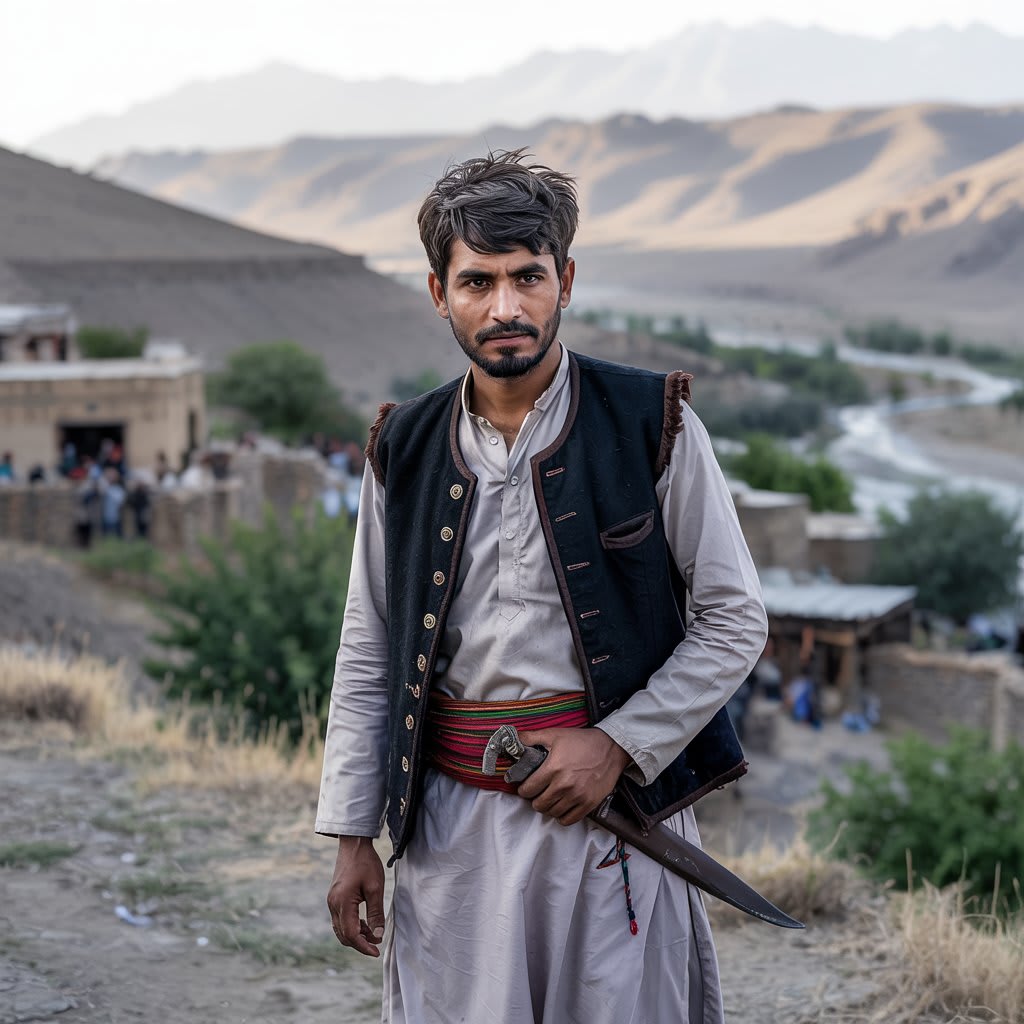
The sun beat down mercilessly on the rugged hills of the Khyber Pass, where the dust of centuries seemed to cling to the earth, as though time itself had chosen this place to leave its mark. Here, in the heart of the Pashtun lands, an age-old story was unfolding—one of honor, loyalty, and an unyielding struggle against both external forces and internal conflict.
The Pathans, a proud and ancient people, have lived in these mountainous regions for centuries, their lives defined by a strict code of conduct called the Pashtunwali, a set of ethical principles rooted in justice, hospitality, and revenge. For them, the heart of the world beats in the rhythm of the hills—where every stone, every creek, every tree whispers tales of ancestors whose sacrifices shaped their very identity.
The story of Echoes of the Pathans begins with the rise of a young man named Zahir Khan, the son of a respected tribal leader in the Khyber Agency. Born into a world where blood feuds were as common as the changing of seasons, Zahir grew up listening to the stories of his ancestors—men who fought fiercely to protect their people and uphold the honor of their tribe. His father, the formidable Malik Noor, had instilled in him the importance of Nang (honor) and Itfaq (unity). But Zahir's journey was not to be a simple continuation of tradition.
In the early days of his life, Zahir was taught to be a warrior, a leader, and a man of principle. His family’s home, perched on a hill overlooking the sweeping plains below, was a place of both refuge and contention. Here, the elders gathered in the evenings to discuss matters of tribe, while the younger men trained in the art of combat, preparing for the inevitable battles that lay ahead. Yet Zahir’s spirit was not content with mere tradition. He often wondered what lay beyond the confines of the hills and valleys he had known all his life. His heart burned with a desire to understand the world beyond the Pashtun borderlands—an urge that often made him feel like an outsider in his own tribe.
One day, the calm of the mountain village was shattered by the arrival of foreign invaders—British forces looking to expand their empire into the heart of the Pashtun territories. The winds of war had shifted, and Zahir knew that this was the moment of his own test. His father, Malik Noor, called upon him to help defend their lands, but the conflict was not just one of land and power—it was one of principle, of cultural survival. For the Pathans, it was a struggle to preserve their honor and way of life in the face of colonial oppression.
Zahir’s journey into the depths of battle was one of both physical and spiritual transformation. The early skirmishes with the British were brutal. His first taste of battle left a scar not just on his body, but deep in his soul. He witnessed the deaths of his comrades, men who had sworn their lives to the principles of Pashtunwali, men who had sacrificed everything for their land. Yet, the invaders seemed unstoppable, their tactics sharp, their resolve unshakable. The Pathans were fighting with heart, but Zahir soon realized that it was not enough. Honor alone could not defeat a well-armed and determined enemy.
Amidst the turmoil, Zahir encountered a British officer, Captain William Hawthorne, who seemed different from the rest of his comrades. Hawthorne, though a soldier, was a man of thought and contemplation, and he recognized in Zahir a fire that reminded him of the very spirit that had once driven his own ancestors. Despite the nature of their conflict, an unspoken bond formed between the two men—one based not on war, but on a shared respect for the principles that defined their cultures. Zahir and Hawthorne exchanged words in the language of respect, discussing honor, duty, and sacrifice. Zahir began to question if there could ever be a way to preserve his people’s honor without annihilating the enemy.
As the war dragged on, Zahir’s internal conflict deepened. He found himself torn between his loyalty to his tribe and his growing recognition that the endless cycle of violence might lead them to extinction. Was there a path forward, a way to navigate the storm without losing everything?
The final turning point came when Zahir’s village was decimated in a raid, and his father, Malik Noor, was captured and executed by the British forces. Stricken with grief and rage, Zahir initially sought revenge, determined to strike down those who had killed his father. But as he stood at the edge of the battlefield, blood on his hands and his heart heavy with sorrow, a realization washed over him. The cost of vengeance had already been too high. It was then that Zahir understood the deeper meaning of Pashtunwali: badal (revenge) was not just about retaliation—it was about balance, about restoring harmony to a world that had been disrupted by chaos. Revenge, if unchecked, would only feed the very cycle of destruction that had torn his world apart.
In the aftermath of the war, Zahir returned to his people—not as a warrior seeking vengeance, but as a leader who had seen beyond the immediate horizon. He took the mantle of leadership, not to fight for survival, but to forge a new path—a path of diplomacy, of negotiating peace without compromising the core values of the Pashtun heart.
The legacy of Zahir Khan lived on, not in the battlefields where he fought, but in the stories that his descendants would tell. Echoes of the Pathans became a legend, not just of struggle, but of wisdom, where honor was preserved not through bloodshed, but through understanding. Zahir had learned that true strength lay not in war, but in the courage to transcend it, and to leave behind a world for future generations where the echoes of the Pathans could still be heard—but in the whispers of peace, not the roar of conflict.
Echoes of the Pathans is a story of a man’s journey through the fierce tides of history, a story that reflects the broader struggles of identity, honor, and the search for meaning in a rapidly changing world. Zahir’s legacy endures not because of the battles he fought, but because of the wisdom he gained in understanding that peace is not the absence of conflict, but the ability to confront and transcend it.
About the Creator
Akhunzada Murtaza
I share heartfelt tales and deep dives into the past—exploring the roots that shape us and the stories that deserve to be remembered. From forgotten history to personal reflections, each piece is a journey through time and legacy.
Keep reading
More stories from Akhunzada Murtaza and writers in History and other communities.
The Voice of the Divine
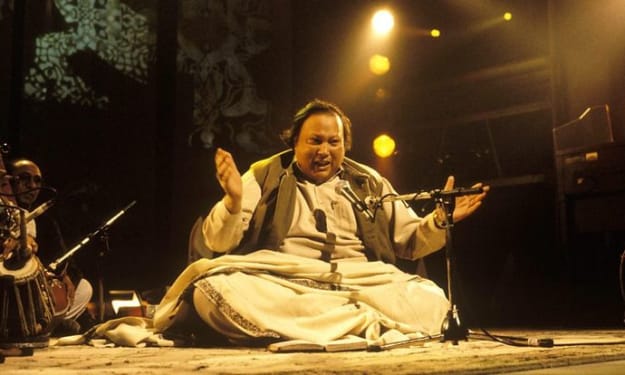
How Nusrat Fateh Ali Khan Redefined Sufi Music for the Modern World There are voices that move us, and then there are voices that transcend the boundaries of sound to stir something deep and timeless within the soul. Nusrat Fateh Ali Khan possessed the latter—a voice that echoed like a call from the divine, commanding attention, reverence, and emotion. Widely regarded as one of the greatest vocalists in the history of music, Nusrat was not merely a singer. He was a vessel of centuries-old tradition, a bridge between East and West, and a spiritual force who brought Sufi music, particularly qawwali, to global audiences in a way that no one before him had done.
By Akhunzada Murtaza10 months ago in History
The Penguin Who Walked Away: Not a Tragedy, but a Choice.
Every once in a while, the internet turns a moment from nature into a metaphor for human pain. Recently, a video of a penguin walking away from its colony went viral, framed as a heartbreaking image of abandonment, lost love, or emotional defeat. Millions watched it through a romantic lens, calling it tragic and cruel.
By Voxwrite ✍️ about 24 hours ago in History
Hannibal Barca: Tactical Genius Beyond Politics
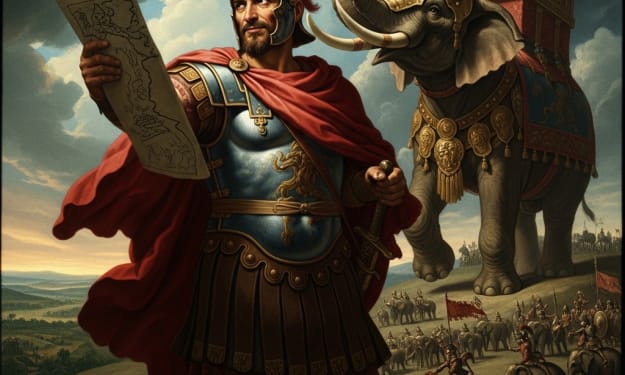
History often favors the victors, but strategy remembers the exceptional. Few commanders embody this truth more clearly than Hannibal Barca. Though he ultimately lost the Second Punic War, Hannibal remains one of the most studied military minds of all time. His genius did not lie in ruling empires or shaping laws, but in something purer and rarer—battlefield intelligence unchained by politics. Hannibal was not a builder of states. He was a master of movement, deception, and human psychology.
By Fred Bradfordabout 11 hours ago in History


Comments
There are no comments for this story
Be the first to respond and start the conversation.