
Echoes of the Mountains: A Journey Through Afghanistan's Turbulent History
From Ancient Civilizations to Modern Struggles – The Story of a Resilient Nation

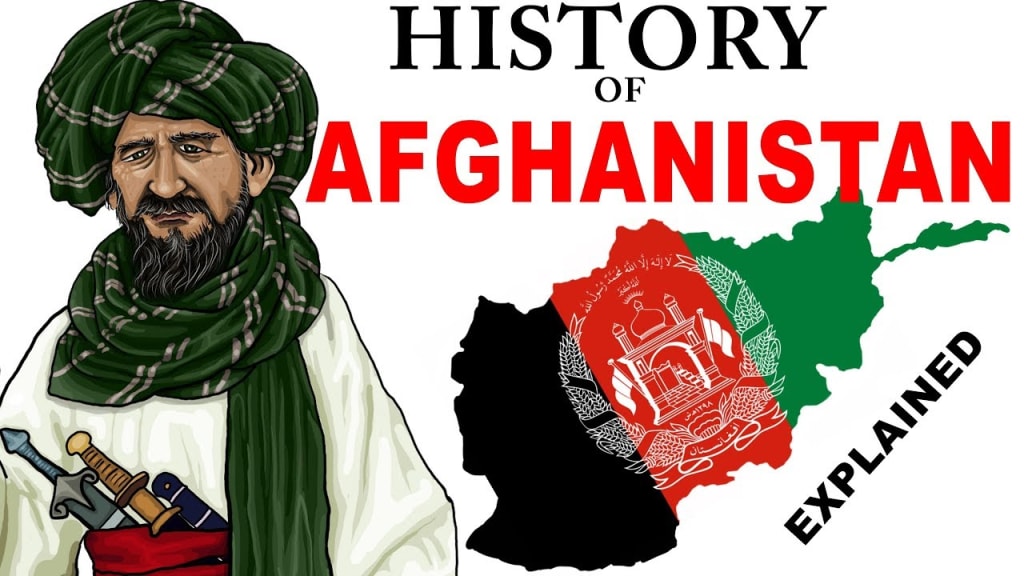
Nestled in the heart of Asia, surrounded by rugged mountains and ancient trade routes, Afghanistan is a land where history breathes through every stone and whisper of the wind. Its past is a tale of empires, invasions, resistance, and survival—a testament to the unbreakable spirit of its people.
Thousands of years ago, long before modern borders were drawn, Afghanistan was home to one of the world’s earliest civilizations—the Indus Valley. Ancient cities like Mundigak in Kandahar tell stories of early human settlements and bustling trade. As centuries passed, Afghanistan became a crossroads for great empires, connecting East and West through the famous Silk Road.
In the 6th century BCE, the land fell under the Achaemenid Empire, founded by Cyrus the Great of Persia. It was a time of cultural growth, where Zoroastrianism flourished. But change was constant in these lands. In 330 BCE, Alexander the Great marched through the Hindu Kush mountains. He faced fierce resistance from Afghan tribes but eventually conquered the region, marrying a local princess, Roxana, and founding the city of Alexandria Arachosia—modern-day Kandahar.
Following the Greeks came the Mauryan Empire from India, bringing with it the influence of Buddhism. Afghanistan soon became a center of Buddhist learning and art, most notably seen in the towering Buddhas of Bamiyan, carved into cliffs in the Hazarajat region. These monuments stood for centuries as symbols of Afghanistan’s role in the spiritual and cultural exchange between civilizations.
By the 7th century CE, Islam spread into Afghanistan through Arab conquest. The new religion blended with local traditions, creating a unique Islamic culture. Dynasties rose and fell—the Ghaznavids, Ghurids, Timurids—all leaving behind architectural marvels and tales of glory. Cities like Herat and Balkh became centers of art, science, and poetry. Scholars like Al-Biruni and poets like Rumi either lived in or drew inspiration from these lands.
In the 18th century, a new chapter began with the rise of Ahmad Shah Durrani, known as the founder of modern Afghanistan. A unifier of tribes and a warrior king, he established the Durrani Empire in 1747, with Kandahar as his capital. Under his leadership, Afghanistan became a sovereign power in a region dominated by the Persian and Mughal empires.
However, the 19th century brought new challenges as imperial ambitions clashed over Afghanistan. The British Empire, expanding from India, and the Russian Empire, moving southward, engaged in a political chess game known as The Great Game. Afghanistan’s strategic location made it a buffer zone between two giants. The First Anglo-Afghan War (1839–1842) ended disastrously for the British, with only one survivor reportedly making it back from Kabul. The Second and Third Anglo-Afghan Wars followed, but Afghanistan fiercely protected its independence, eventually gaining full sovereignty in 1919 under King Amanullah Khan.
The 20th century saw rapid modernization attempts, followed by political instability. In 1973, the monarchy was overthrown, and a republic was declared. Five years later, in 1978, a communist coup changed the nation's course. Soviet forces invaded in 1979, beginning a decade-long war that devastated the country and displaced millions. Afghan mujahideen, backed by the U.S., Pakistan, and others, resisted fiercely. The Soviets withdrew in 1989, but civil war soon followed.
In 1996, the Taliban, a militant group, seized power. Their rule was marked by harsh laws and international isolation. Then, in 2001, following the 9/11 attacks and the Taliban’s refusal to hand over Osama bin Laden, the United States and its allies invaded. The Taliban were ousted, but a new, complex war began—one that lasted two decades.
Despite billions in aid and the establishment of a democratic government, Afghanistan continued to face violence, corruption, and poverty. In 2021, after U.S. and NATO forces withdrew, the Taliban swiftly returned to power. Many Afghans fled, fearing for their future, while others stayed, hoping once again for peace.
Today, Afghanistan stands at a crossroads—its people still resilient, its culture rich with poetry, music, and tradition. Through every invasion, every war, and every political upheaval, the Afghan spirit has endured. The mountains have witnessed centuries of sorrow and strength. And though the road ahead remains uncertain, Afghanistan’s story is far from over.
It is not just a tale of war—it is a saga of survival, identity, and hope. The echoes of its past guide its people, as they continue the struggle for dignity, freedom, and peace in the land they call home.
About the Creator
NIAZ Muhammad
Storyteller at heart, explorer by mind. I write about life, history, mystery, and moments that spark thought. Join me on a journey through words!
Keep reading
More stories from NIAZ Muhammad and writers in History and other communities.
Threads of a Nation: The Journey of the United States
In the shadowy corners of colonial taverns and open fields of rebellion, the idea of America was born—not in grand halls of government, but in the hearts of ordinary people yearning for freedom. It began in the 18th century, when thirteen British colonies, scattered along the eastern seaboard, decided to rise against the world’s greatest empire. Tired of unfair taxes and distant kings, farmers, blacksmiths, and scholars united behind a radical dream: self-rule.
By NIAZ Muhammad9 months ago in History
Sometimes It's Like That and That'sThe Way It Is
It was the late 1960s, and ten-year-old Gloria Coleman was standing with her grandmother on the side of the highway waiting for the bus. As the Greyhound pulled up, it seemed monstrous and intimidating. Grandma Elizabeth grabbed Gloria's hand, holding it tightly as they boarded.
By Cheryl E Preston3 days ago in Fiction



Comments
There are no comments for this story
Be the first to respond and start the conversation.