
Echoes of Empire: How Forgotten Civilizations Still Shape Our World
Exploring Hidden Histories and the Untapped Resources Left Behind by Ancient Powers
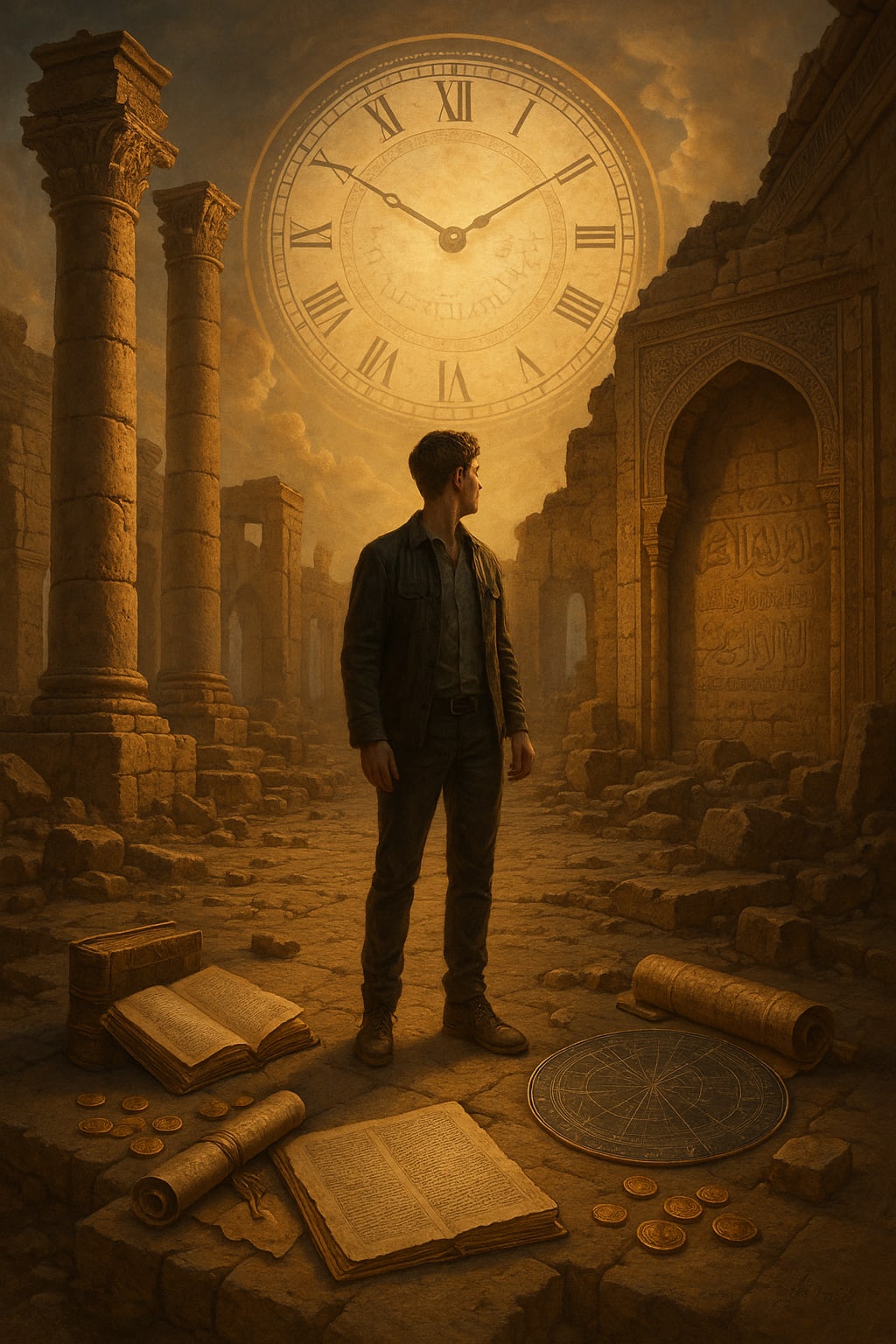
In the shifting sands of time, empires rise and fall. But their legacies—often buried beneath our feet or hidden in plain sight—continue to shape the modern world in surprising ways.*
Long before modern highways and skyscrapers, the world was stitched together by the ingenuity of ancient civilizations. From the mighty Roman Empire to the wisdom-filled centers of the Islamic Golden Age, and even deeper into the cradle of civilization—the Sumerians, Egyptians, and the Indus Valley people—each of these societies left behind more than ruins. They left blueprints. They left lessons. And most importantly, they left resources—intellectual, cultural, and material—that continue to impact our lives today.
### The Silent Architects of Modern Engineering
Let’s start with Rome. Known for its vast armies and powerful emperors, Rome’s most profound contribution was perhaps its engineering. Roads like the *Via Appia* still exist today, laid with such precision that some are still walkable after 2,000 years. Roman aqueducts, bridges, and sanitation systems were masterpieces of design and have influenced everything from modern plumbing to city planning.
But this knowledge wasn’t just about infrastructure. The Romans also mined silver and copper, built trade routes that moved salt and spices across continents, and cultivated agriculture on a massive scale. Their understanding of resource management—whether through storing grain or channeling water—was centuries ahead of its time.
### Hidden Wealth of the Islamic Golden Age
Fast forward to the 8th to 13th centuries, when the Islamic Golden Age illuminated the world from Córdoba to Baghdad. While Europe struggled through the Dark Ages, Muslim scholars were translating Greek texts, inventing surgical tools, mapping the stars, and founding universities.
Al-Khwarizmi, the father of algebra, gave us the very term “algorithm,” a concept so essential to today’s technology that without it, your smartphone wouldn’t exist. Ibn Sina (Avicenna) wrote *The Canon of Medicine*, used in Europe for centuries. These weren’t just abstract ideas—they were intellectual resources that seeded the Renaissance and fuel our modern science and medicine.
Libraries like the House of Wisdom in Baghdad weren’t just buildings; they were reservoirs of knowledge, echoing across time to inspire modern education and research systems.
### Lost Cities, Living Impact
Farther east, the Indus Valley Civilization—one of the world’s earliest urban cultures—once thrived along the banks of the Indus River. Mohenjo-daro and Harappa had grid-based cities, standardized weights and measures, and sophisticated drainage systems, all around 2600 BCE.
Though this civilization mysteriously vanished, its influence lingers. The focus on hygiene, the development of trade through seals and tokens, and even early forms of democracy are threads that connect their world to ours. We’ve only excavated a fraction of their cities—what other knowledge might be hidden, waiting to resurface?
Similarly, ancient China and Mesopotamia developed water irrigation systems, bronze tools, and early forms of paper and writing that later became the spine of bureaucratic governance and cultural identity for entire nations.
### Why These Resources Matter Today
You might ask: why does this history matter now?
Because the world is facing modern challenges that echo ancient problems—climate change, water scarcity, overpopulation, and disease. Our ancestors faced many of these issues and developed localized, sustainable solutions. Ancient Persian wind towers, for instance, used natural air flow to cool buildings—a design modern architects now mimic for eco-friendly buildings.
Today, researchers are revisiting indigenous and ancient agricultural practices to build sustainable farming systems. Archaeologists are uncovering ancient seeds, forgotten crops, and climate-resistant techniques that may feed our future.
### The Risk of Forgetting
Unfortunately, as modern life races forward, we often forget the value of these ancient resources. Colonization, war, and modern expansion have destroyed many historical sites. Entire cultures have been wiped out, their languages and knowledge systems lost forever.
But there is hope.
Digital preservation projects, like the Endangered Archives Programme and 3D modeling of ancient ruins, are bringing ancient knowledge back into view. Schools and media platforms like Vocal Media are becoming tools to share these stories, spark curiosity, and preserve these treasures.
### Echoes You Can Still Hear
Next time you hold a book, use a compass, walk on a paved road, or follow a recipe—remember, you're not just enjoying modern conveniences. You're benefiting from centuries of accumulated wisdom, passed down silently from hands long gone.
Civilizations may fall, but their contributions whisper through time. They shape our architecture, nourish our science, and influence our ideas of justice, education, and beauty. Their echoes still guide us—if only we’re willing to listen.
**Final Thoughts**
History isn’t just about the past. It’s about the resources—physical and intellectual—that continue to define our present and build our future. By studying the echoes of empire, we don’t just learn where we come from—we learn where we’re going.
About the Creator
The Year 1963 in Review: Facts, Trivia, and Historic Highlights
This quick read is a collection of fun facts, trivia, and historical events from the year 1963. Discover the year’s top news stories, most influential people, sports facts, grocery and other retail prices, entertainment trivia, and much more.
By Gregory DeVictor5 days ago in History


Comments
There are no comments for this story
Be the first to respond and start the conversation.