
The Boy Who Defied an Empire: A True Tale of Faith and Fire
How a Young Rebel's Courage Challenged Oppression and Left a Lesson for Generations
The Boy Who Defied an Empire: A True Tale of Faith and Fire
Written by: (Haroon Ali)
In the heart of British-ruled India, during a time when silence was safety and obedience was survival, a young boy named Shahid Ali chose the path of resistance. He wasn’t a scholar, a warrior, or a politician. He was simply the son of a poor teacher in a small Punjabi village — but he had something greater than wealth or education: faith and fire in his heart.
Shahid was born in 1927, a time when the British Empire ruled not only over the land but over minds and hearts. His father, Maulvi Rafiq, was a respected local teacher who taught Quran, Urdu literature, and Indian history. But when British laws forbade local languages and enforced English-only education, his father refused to comply. As a result, he was arrested, beaten publicly, and removed from his post.
That incident was Shahid's awakening.
At just 13 years old, he began to ask questions no one dared to ask:
"Why can’t we speak our own language?"
"Why are we afraid of people who don’t belong here?"
"Why is truth punished and silence rewarded?"
His mother feared for him. His teachers warned him. But Shahid’s curiosity turned into conviction.
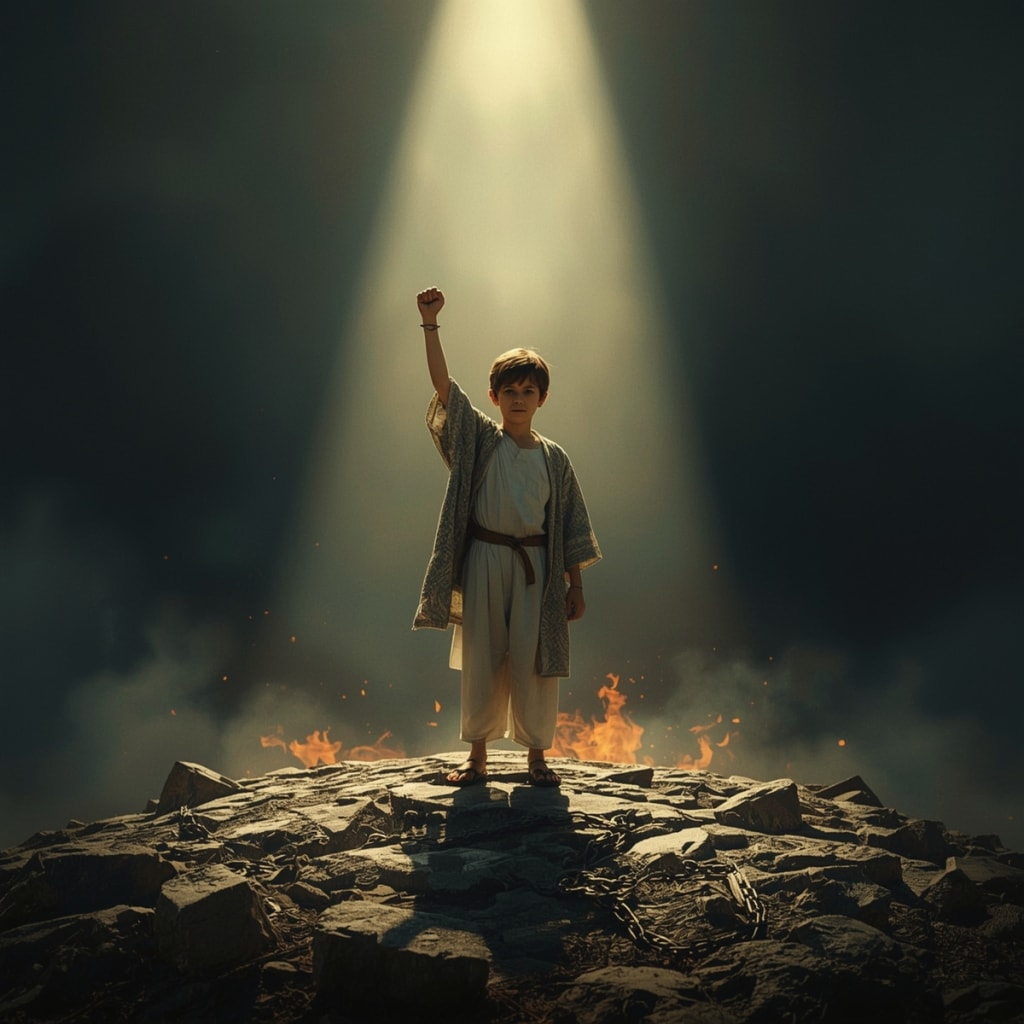
One day, he was in the village square when a British officer struck an old man who had refused to bow. The crowd remained still — some looked away, others lowered their heads. But Shahid clenched his fists and stared directly at the officer. That moment was etched into his soul.
That night, under a flickering lantern, he wrote his first words of rebellion on a scrap of cloth:
"Freedom is not a gift; it is a fight."
He hung it secretly on a school wall. The British schoolmaster was furious, but no one knew the culprit. It was only the beginning.
By the time Shahid turned 15, he was gathering a small group of village boys. They would read history, share hidden newspapers, and talk about heroes of 1857 — Mangal Pandey, Rani Laxmibai, Bahadur Shah Zafar. These weren’t just names to them. They were flames in a dark tunnel.
Then came his defining act.
In 1942, when the Quit India Movement swept across the country, Shahid climbed to the rooftop of his government school at dawn. He tore down the Union Jack and raised a green flag with the words “La ilaha illallah Muhammadur Rasulullah.” He stood there, hand on heart, and recited:
“My faith is my freedom.”
He was arrested within an hour.
In prison, the guards tried to break him. They gave him dirty food, made him sleep on cold floors, and forced him to clean latrines. But every time they asked, “Do you regret it?”
He replied, “No. I only regret not doing more.”
His story spread like wildfire. In nearby towns, elders spoke of the “Little Lion of Punjab.” People started drawing his image — a boy with a cloth flag, eyes like fire, face like steel. But the British labeled him a traitor.
His trial was held in Lahore. He was charged with sedition, incitement, and disrespecting the crown. The courtroom was packed. When the judge asked if he had anything to say, Shahid stood tall and declared:
> “I am guilty of loving my land. I am guilty of speaking truth. If that is a crime, then I accept every punishment.”
The courtroom fell silent.
He was sentenced to ten years in prison, to be served in a remote camp near the Afghan border. But prison did not dim his spirit — it sharpened it. There, he memorized the Quran, learned English, read books on politics, and began to write letters.
His writings, secretly smuggled out, were published in underground journals. He wrote under the name:
"Zindaan ka Shaheen" — The Falcon of the Prison.
His letters spoke of injustice, dignity, courage, and hope. People read them by candlelight. They gave strength to others who were too afraid to speak.
After seven years, Shahid was released early due to a general amnesty when independence seemed near. But the world had changed. The country was dividing — India and Pakistan were on the horizon. People were busy choosing sides. But Shahid chose a different path.
He returned to his village, built a small madrasa-school hybrid, and started teaching both religion and resistance. His curriculum included Quran, Urdu, and history from the people's perspective — not the colonizers'.
He rejected offers from political parties, refusing fame or power. “I didn’t fight for flags,” he said. “I fought so children could speak truth without fear.”
In 1947, when independence was declared, Shahid refused to celebrate. He said:
> “Freedom of land is easy. Freedom of soul is harder. Until every man is treated with justice, the fight is not over.”
He lived humbly for the rest of his life, giving away what little he had. He died in 1961 at the age of 34, due to health damage caused by prison torture. But his legacy lived on.
His grave bears no fancy title, only these words:
> “He raised his voice before he could grow a beard.”
Moral of the Story:
This is not just the tale of one boy. It’s a reminder that change begins when even one heart refuses to bow. Shahid Ali never led an army, never ruled a nation — but he inspired thousands because he chose to speak when silence was safer.
Empires may dominate through weapons, but they fall because of truth. And sometimes, that truth comes from a 14-year-old with nothing but a scrap of cloth and the courage to raise it.
About the Creator
The Year 1883 in Review: Fun Facts, Trivia, and Historic Highlights
This quick read presents a collection of fun facts, trivia, and historical events from the year 1883. Discover the year’s top news stories, most influential people, historic facts, sports trivia, famous weddings, grocery prices, and much more.
By Gregory DeVictor7 days ago in History


Comments (1)
nice ,, pls support me