
Divided Yet Connected: The Legacy of India-Pakistan Partition and the Golden Temple's Struggle for Unity
The Line That Divided Us

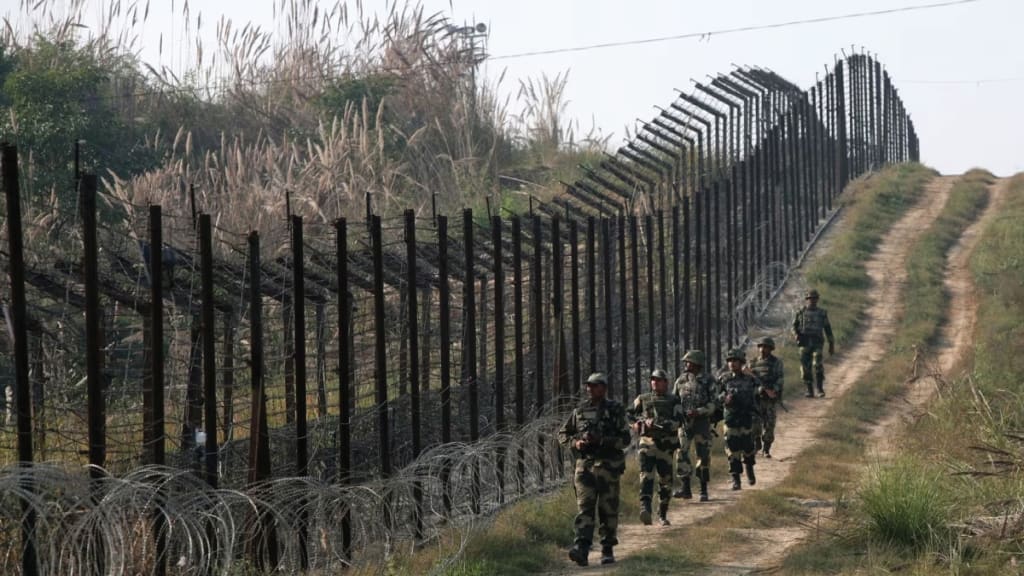
In the bustling city of Amritsar, nestled in the heart of the Punjab region, stood the magnificent Golden Temple. The sacred gurdwara, with its shimmering gold-plated dome and serene Sarovar, had long been a symbol of unity and harmony for the Sikh community. But amidst the echoes of the India-Pakistan Partition, the Golden Temple found itself at the epicenter of a struggle that would test the very essence of its purpose.
It was the year 1947, and the subcontinent was engulfed in turmoil as India gained independence from British rule. The Partition had created an artificial border between India and Pakistan, and the once-diverse communities were now divided based on religious lines. Sikhs, Muslims, and Hindus, who had once coexisted peacefully, now faced animosity and fear as they found themselves on the "wrong" side of the border.
As the news of the division spread, the Sikh community's hearts sank with sorrow, for the holiest shrine of their faith, the Golden Temple, now lay on the newly formed Indian side of the border. The Sikh leaders faced a daunting challenge - how to maintain the sanctity of the Golden Temple while fostering a spirit of unity and compassion amidst the chaotic backdrop of partition.
Amidst the communal violence that swept through Punjab, the leadership of the Golden Temple vowed to keep the doors open to all, regardless of their religious background. They proclaimed that the Golden Temple would remain a place of peace, refuge, and communal harmony.
Sikhs from both sides of the border heeded the call, making arduous journeys to the Golden Temple, seeking solace and safety within its hallowed walls. Langar, the community kitchen, welcomed everyone - Hindus, Muslims, and Sikhs - to share a meal together, reinforcing the message of unity amidst the prevailing discord.
Despite their best efforts, maintaining this spirit of unity was not without challenges. As the years passed, tensions between India and Pakistan persisted, and occasional skirmishes erupted along the border. The Golden Temple, standing close to the dividing line, often found itself caught in the crossfire of political and military struggles.
In 1984, the Golden Temple faced one of its darkest chapters when Operation Blue Star was launched. The Indian government sought to flush out Sikh separatists hiding within the temple complex, leading to a tragic armed conflict that resulted in significant loss of life and damage to the sacred site. The wounds from that event ran deep, and the trust between the Sikh community and the Indian government was fractured.
However, even in the face of such adversity, the Golden Temple's legacy of unity and compassion endured. The Sikh community showed resilience, working towards rebuilding their shrine and, in turn, reinforcing their commitment to fostering understanding and empathy among all people.
As decades passed, the Golden Temple became a beacon of hope for those who sought peace and unity. Visitors from all corners of the world found themselves drawn to its ethereal beauty and the message it embodied - that even in times of division, humanity's core values of love and compassion could endure.
Over time, diplomatic efforts between India and Pakistan gained momentum, leading to periods of détente and renewed dialogues. Slowly, people began to realize that the division that had once seemed insurmountable was, after all, a human construct, and that the hearts of the people on both sides of the border beat with similar aspirations for peace and prosperity.
The Golden Temple's struggle for unity did not end with the passage of time; it was an ongoing endeavor. The shrine's leadership continued to advocate for peace and reconciliation, inviting people from all walks of life to experience the temple's embrace.
As the 21st century dawned, the legacy of the Golden Temple and its role in fostering unity stood as a testament to the power of compassion and understanding. It was a reminder that despite the turbulent history and the artificial boundaries that divided the subcontinent, the human spirit could transcend all differences to seek a better, united future.
Divided yet connected, the Golden Temple remained a living symbol of hope and a testament to the indomitable spirit of humanity, transcending borders and paving the way for a brighter, more harmonious world.
About the Creator
Amirthalingam
I was born in a small village near Pollachi in Tamil Nadu. Bachelor. I studied in the nearest town. . Fluent in English, Kannada & Tamil. I LOVE reads a lot, is always looking for news, and wants to share what he knows with others.
Keep reading
More stories from Amirthalingam and writers in History and other communities.
Making Money the Funny Way
Introduction Who said making money has to be all serious and boring? In a world that appreciates humor and laughter, there are unique and hilarious ways to earn a living. From clowning around to crafting funny products, these ventures not only bring joy to others but also offer lucrative opportunities for those daring enough to step into the realm of laughter. In this article, we explore ten hilarious money-making ventures that prove you can have a blast while earning a living.
By Amirthalingam 2 years ago in Motivation
The Red Sea Crisis and the Fragility of Global Trade
The Red Sea Crisis and the Fragility of Global Trade The Red Sea has quietly become one of the most critical pressure points in global affairs. Once seen mainly as a commercial shipping route connecting Asia, Europe, and Africa, it is now a zone of rising military tension, disrupted trade, and geopolitical rivalry. What happens in this narrow stretch of water is no longer a regional issue—it is reshaping global economics and international security.
By Wings of Time about 22 hours ago in History
3 Times Safety Rules Were Written After It Was Already Too Late
Safety rules like to pretend they are proactive. They wear reflective vests, carry clipboards, and speak confidently about prevention. But history knows the truth: many safety rules were written after something went catastrophically wrong, when prevention was no longer an option and regret had already filled out the paperwork.
By Enoch Saginiabout 21 hours ago in History
How to Succeed at the Benson Directory®
Congratulations and welcome to the Benson Directory® employee #22391! As our newest call handler, you will have the privilege of speaking with dozens of unique and interesting people on a daily basis as well as the opportunity to earn bonuses for high performance. Contained within this handbook you will find a set of ease to follow instructions designed to help you settle in to your new role and begin paving the way to success.
By S. A. Crawford3 days ago in Fiction



Comments
There are no comments for this story
Be the first to respond and start the conversation.