
Design Evolution: Exploring Art Nouveau, Art Deco and Art Moderne
A Comprehensive Analysis of Three Iconic Architectural Styles and their impact on Modern Design.

Please note while AI was used to assist in drafting portions of this article, the insights, analysis and final edits were completed by me. This blend of technology and expertise allowed for a more efficient writing process, while ensuring the quality and accuracy of the content reflect my professional knowledge and experience.
Introduction
Art and design in the late 19th and early 20th centuries crystallized around three influential movements: Art Nouveau, Art Deco, and Art Moderne. Each of the above styles rests on a singular aesthetic premise and culture shift, thus making each factor important for the development of modern design. This paper looks at the origin of the three major styles, key characteristics of each style, major figures, and respective legacies.
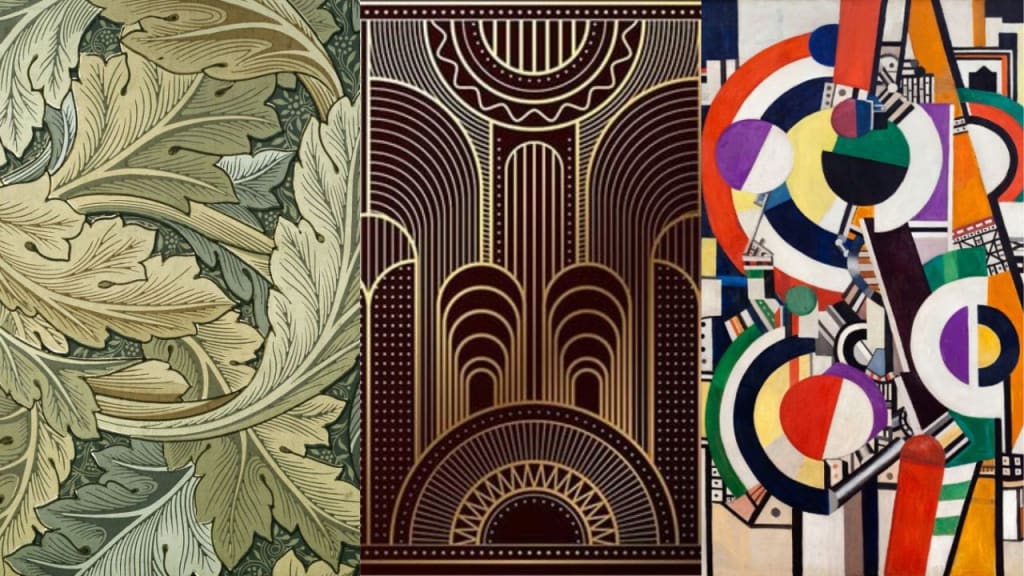
Art Nouveau came into being as a form at the tail end of the 19th century in response to mechanization and mass production derived from the industrial revolution. Characterized by organic forms, flowing lines, and intricate details, Art Nouveau strove for the unification of art with everyday life in such a way that there was a harmonious relation between artistic expression and functional design. It draws its origins from Europe's aesthetic movements: the creative artists and architects sought a revival of the handcraft skills but, simultaneously, they explored novel artistic expression. The dramatic curves and elaborate ornamentation are features of this style and usually drawn from nature and botany.
Art Deco became popular after Art Nouveau during the 1920s and 1930s when it came to represent modernity. Encouraged by the avant-garde of technology and pleased with the estrus of the Jazz Age, Art Deco employed bold geometric patterns, streamlined forms, and only the finest materials of luxury. This style effectively married elegance with functionality, reflecting an era enchanted by progress and sophistication. Many buildings and design features display symmetrical patterns along with chrome accents and texture in depth-all those characteristics that signal a moving away from the ornamented detail of its predecessor.

Art Moderne or Streamline Moderne style, developed at the end of the 1930s and during the 1940s, is a style of perfection from the previous Art Deco. It is more attentive, however, to simplicity with smooth curves and aerodynamic shapes, which signalize streamlined technologies at that time. The style now focuses more on practicality with efficiency and minimalism; yet, it does not set aside the need for elegance. Smooth curving surfaces and a lack of ornamentation are typical in Art Moderne, suitable for the techno-cultural shift in those times.

Real insight into modern design development comes from understanding these styles. Each of the movements identified here presents different aesthetic preferences and reactions toward broader socio-economic and technological changes. The paper will introduce and discuss Art Nouveau, Art Deco, and Art Moderne; the reader will examine in detail how these styles set the artistic palette for their respective times and continue to have an influence on modern-day design.
Art Nouveau
Origins and Historical Background
Beginning from 1880 until 1914, the international style in Art Nouveau emerged as a response to the rapid industrialization and mass production of the late 19th century, which eclipsed craftsmanship. At the height of the movement, the solution to the conflict between fine and applied arts was an integral approach that incorporated painting, sculpture, architecture, and furniture design into the continuum of everyday life. Instead of just decoration, the emphasis of Art Nouveau is fineness of craftsmanship, the artistry, even for functional objects.
Art Nouveau is rooted in late 19th-century movements: the British Arts and Crafts Movement, led by William Morris; and French Symbolist art. Morris advocated a return to traditional craftsmanship as a means of correcting the dehumanizing effect of industrialization. Symbolism-nearer mysticism, sensuality, and dreamlike vision-became the organic, nature-inspired aesthetic so characteristic of Art Nouveau.

Art Nouveau coincided with a very transitional period, in terms of social and cultural life. On one hand, the Industrial Revolution changed the working method, but it also "implied the decline of craftsmanship and the accentuation of the division between art and functionality". The designers tried to contradict this process by treating every object as art and vice versa. As such, the name of the movement-"Art Nouveau" is French for "New Art"-reveals the ambition of the movement to break away from academic traditions in order to create something modern and forward-looking.

The movement received international publicity through various events like the Exposition Universelle in Paris in 1900, which displayed Art Nouveau pieces to an international audience. Originated in Europe, the style crossed the ocean quickly and expanded into the United States and other parts of the world: Jugendstil was the German version; Sezession, the Austrian version; and Modernismo, Spain's take on this style. Still, all of these variations shared three fundamental principles: craftsmanship, organic forms, and the integration of art and life.
Characteristics and Design Elements
The flowing, organic line, which is often referred to as "whiplash" curves, has been inspired by natural forms, such as plants and the human body. It is one of the most defining features of Art Nouveau. This gives energy to a design, making the design alive and organic.

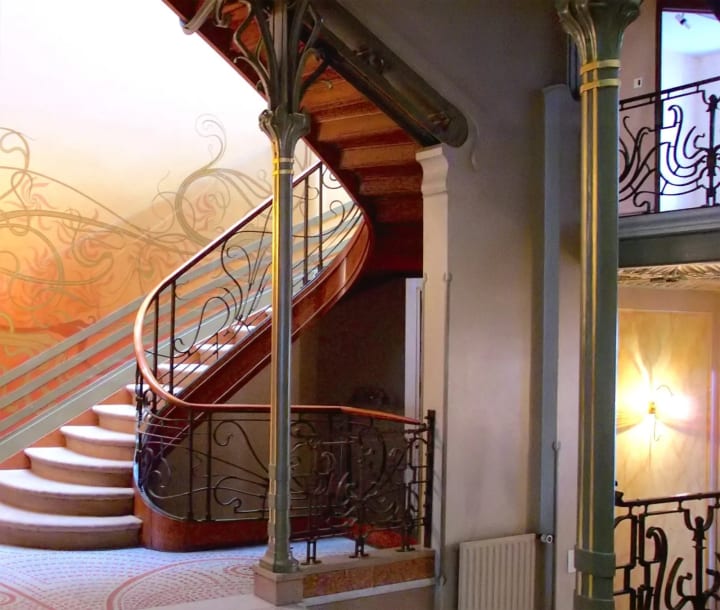
Art Nouveau design centers on botanical motifs-vines, leaves, and flowers-and thus incorporates natural elements into the very structure of the pieces. For example, the Belgian architect Victor Horta used incessant flowing lines that connect elements smoothly and thereby obscure the differences between the various aspects of design. The great stress on natural forms exalts the detailed beauty of nature.

Animal forms also pervade Art Nouveau: the stylizing or abstracting of form into a decorative type is emphasized. These animals, such as the dragonfly, peacock, swan, and butterfly, are not only symbolic of grace but also of transformation, so as to further stress the very singular fusion of organic and modern sensibilities belonging to the movement.

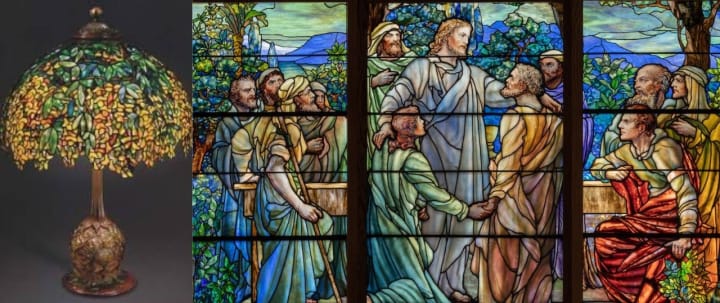
Colour proved particularly integral to the work of glass artists, including Louis Comfort Tiffany and Émile Gallé. The latter most commonly are remembered for their glittering, bright, iridescent hues of stained glass, enamelwork, and Favrile glass, as tendrils of the sinuous forms intertwined with these colours. For instance, Tiffany's stained-glass windows epitomize ways in which Art Nouveau artists used colour and craftsmanship to make works visually striking.
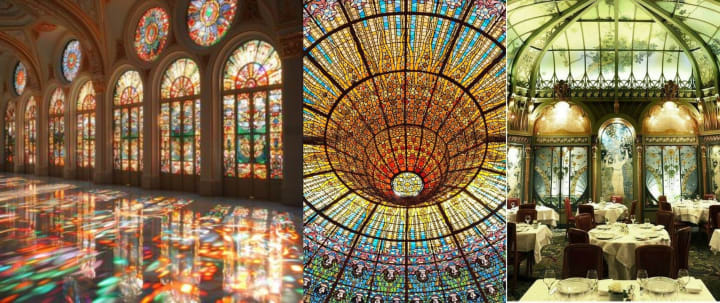
The Art Nouveau style is committed to craftsmanship, from the use of the best-quality, handmade materials to the objection against mass production. The artists rejected mass production for intricate, handcrafted objects. It could be in wrought iron, ceramics, wood, or glass; each design had the motivating power of turning an object of utility into an object of art. Even industrial materials such as steel and glass were manipulated into organic forms, as in contemporary architecture.

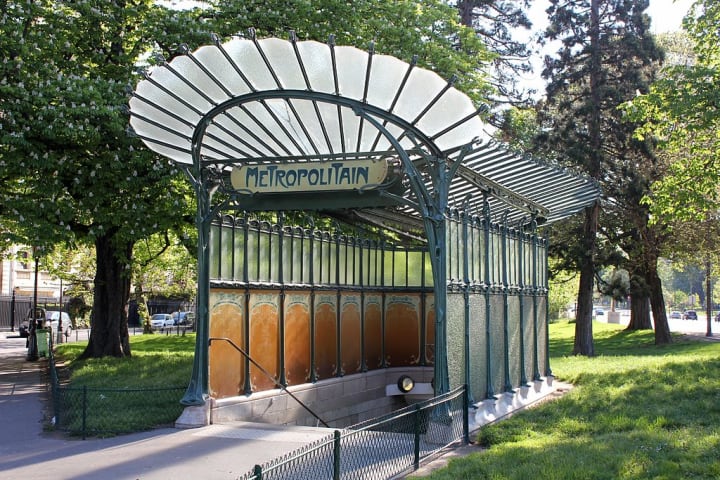
Architecture was one field in which Art Nouveau combined design and nature in terms of decoration and structure. Innovative architects such as Antoni Gaudí projected buildings that expressively grew organically from the earth. The wavy facades and organic interiors that Gaudí designed have made his works among the most elaborate and dramatic instances of Art Nouveau architecture, and as such, Casa Batlló and La Sagrada Família rank as two of the prime pieces by him. Another figure of the time, Hector Guimard, the designer of the famous Paris Métro entrances, combined such naturalistic forms in public spaces to transform functional structures into artistic expressions of the movement.
Art Nouveau furniture design rejected the inflexible geometrical forms of their predecessors and instead used curvilinear asymmetrical designs. Many chairs and cabinets take on the appearance of being carved from a block of wood into one organic, fluid form, rather than constituting individual parts, in order to be as sculptural as functional. In Art Nouveau interiors, everything worked together to form one artistic expression.


Key Figures and Works
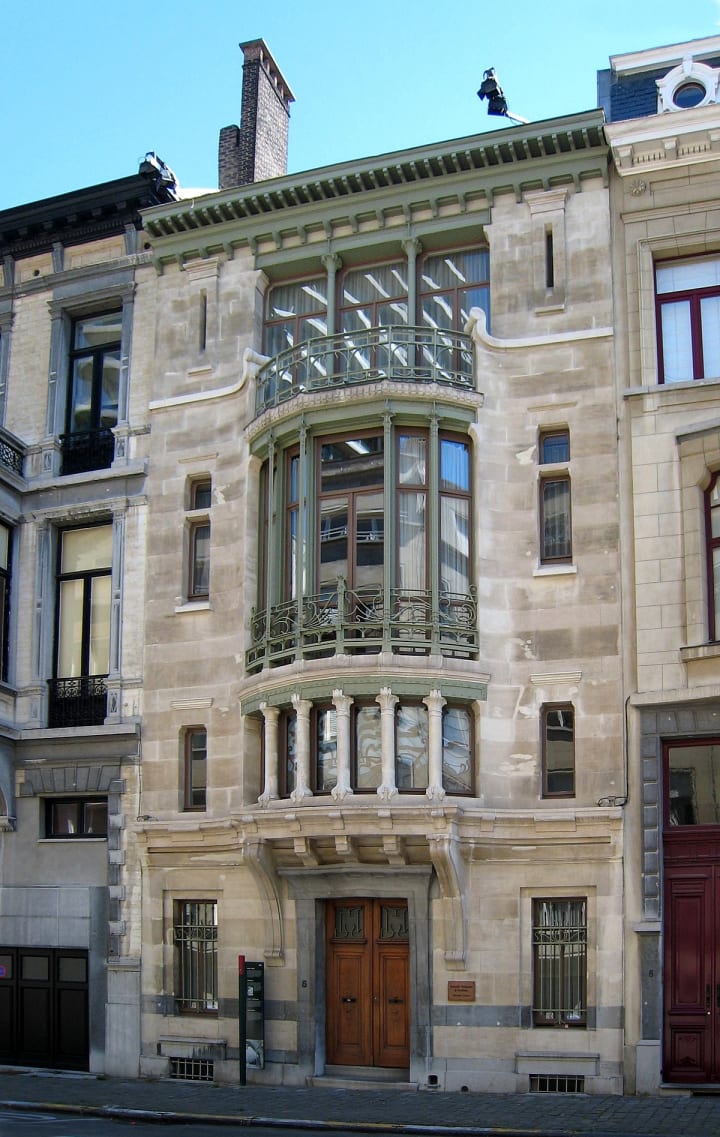
Art Nouveau was pioneered by a number of different artists, each bringing their distinctive vision to the movement. Victor Horta's Hôtel Tassel in Brussels, from 1893, often thought of as the first fully-fledged building of Art Nouveau, perfectly captures the sense of structure and decoration in its sinuous ironwork and whiplash lines.
In Spain, the name most synonymous with Art Nouveau was Antoni Gaudí, though his version was different again. His surreally fantastic Casa Batlló and La Sagrada Família represent his most famous works, which marry natural forms with Catholic symbolism to near overwhelming effect.

The French architect Hector Guimard is perhaps most famous for his work on the entranceways to the Paris Métro. Transformed into these fluid, organic, botanical shapes, even the most banal civic construction became an artful threshold.
Louis Comfort Tiffany was a highly talented American designer who was a key figure in glass and interior decoration. Art Nouveau is synonymous with his famous lamps and stained-glass windows, nature-inspired motifs, and iridescent colors as an indication of the devotion of Art Nouveau to craftsmanship.
Legacy and Impact
Despite its brief popularity, Art Nouveau's influence on art, design, and architecture lasted well beyond its heyday. The emphasis on craftsmanship and the integration of art into everyday objects in the movement prefigured other 20th-century movements such as Art Deco and Modernism. Organic forms and flowing lines that characterize Art Nouveau find application in contemporary designs from jewelry to furniture and interior design.
Other innovative designers, like Antoni Gaudí and Victor Horta, abandoned the strict classical forms of their contemporaries and paved the way for new expressive modes for those architects who followed. A similar synthesis of structure and decoration would later inspire the modernist architects, such as Frank Lloyd Wright, whose buildings often express a corresponding impulse toward harmony among a building's form, its function, and its surroundings.
Art Nouveau gave pride of place to decorative arts, mainly ceramics and glass, in the creation of new forms. Its concern with craftsmanship and the aesthetics of commonplace objects finds considerable resonance today among craftsmen and designers.
Iconic works by the likes of Guimard's Paris Métro entrances and Gaudí's La Sagrada Família attract millions of visitors and are lasting testaments to the principles of the movement. In Art Nouveau's idealization of nature, beautiful forms, and handcraft lies an indelible stamp on design the world over, securing its place within art and architectural history.

Art Deco
Origins and Historical Context
Art Deco emerged at the beginning of the 20th century-between two of the most culturally and historically complicated decades: the 1920s and the 1930s. It was, so to say, a certain reaction against the elaborate styles of Art Nouveau and Arts and Crafts. While the latter, Art Nouveau, was all about flowing, organic forms, Art Deco welcomed modernity through industrialization, technology, and mass production. It made its appearance on the world stage in the form of the 1925 Exposition Internationale des Arts Décoratifs et Industriels Modernes, in Paris, that showed off the sleek, glamorous look which would define the style.

Above all, at the core, Art Deco was about embracing luxury, sophistication, and progress. Geometric designs, bold patterns, and streamlined forms symbolized the rapid modernizing of society, especially after WWI, when enthusiasm about the future drove the development of this forward-looking aesthetic.

Art Deco design lies in a true appeal to geometry, symmetry, and modern materials. The typical patterns of the movement, such as zigzags, chevrons, and sunbursts, have subtle feelings of speed and dynamism that catch a sense of the decade's burgeoning technology. These motifs were often inspired by ancient civilizations, including Egyptian, Aztec, and Greco-Roman cultures, producing some fresh crosses of modernity with timeless grandeur.
Art Deco emerged as a response to the previous stylistic ornamentation-that of, among others, the styles of Art Nouveau and Rococo-which by this time came to be perceived as too historic by the new generation of designers. As such, it reflected a new social atmosphere of urbanizing centres, particularly in such cities as Paris, New York, and London, where the new prospects created by rapid urbanization combined with consumer culture and jazz music to inspire everything from fashion to architecture.
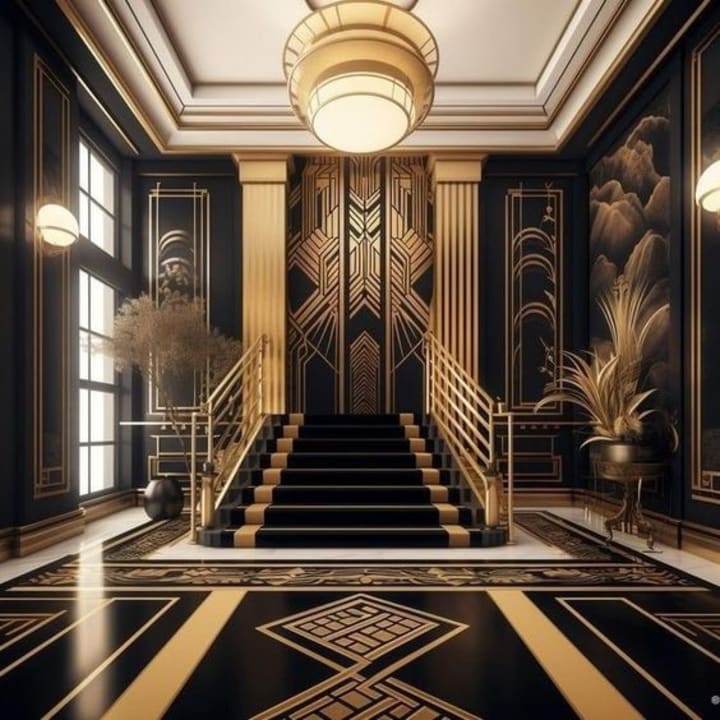
Art Deco borrowed liberally from the abstraction of Cubism and the sleek functionality of modern engineering. Eclectic eclecticism gave Art Deco a unique capability for fusing luxury and simplicity into some tasteful, approachable designs.

One of the peculiarities of Art Deco is the way it manages to merge traditional craftsmanship with modern technology. In fact, the conjunction of luxury handmade pieces with those resulting from mass production was symbolic of the era's balancing between exclusiveness and accessibility, making Art Deco the style that could answer both the needs of the elite and the growing middle class.
This movement navigated quite easily across the continent of Europe and the United States. Meanwhile, the skyscrapers in New York came to be the symbols of progress and ambition, searching for an organic location right in the middle of Art Deco. The predilection for verticality and geometric forms was, in fact, tailor-made for the design of monumental buildings such as the Chrysler Building of 1930 and the Empire State Building of 1931. By the early 1940s, though, it had fallen out of favour as World War II came about and more functional and minimalist designs such as modernism prevailed. Its influence on architecture, fashion, interior design and the visual arts survives however and thrives as considerably important even today.

Characteristics and Elements of Design
A few of the first things which pop into a person's mind upon seeing Art Deco are bold geometric shapes, sharp angles and symmetry. While the organic curves and sinuous lines of Art Nouveau are antithetical to the very concept, Art Deco is about predilection for exact, rectilinear forms that suggest order and modernity. Triangular and zigzag motifs, chevrons, sunbursts, and stepped forms were commonplace in the architecture and decorative arts of Art Deco. These geometric patterns set in symmetrical composition epitomized the modernist interest in control and balance, celebrating industrial achievement.


Maybe the most overt manifestations of symmetry and balance that one may find in Art Deco are those which can be evidenced in its architectural proposals. This is to say, many buildings were designed around a central tower or spire, flanked by symmetrical wings or stepped setbacks in such a way as to produce a tiered or cascading effect. The stepped design, also known as the "ziggurat" form, was especially effective for skyscrapers since it gave added emphasis to the verticality of the building. All that smacks of the Chrysler Building in New York by William Van Alen in its tapering form, stylized automotive motifs, and cladding with stainless steel radiating a veneer both of elegance and modernity.

The international discoveries and interests in these exotic cultures greatly influenced the movement. The tomb of King Tutankhamun, which was discovered in 1922, created a general obsession with ancient Egypt. Egyptian motifs surfaced in Art Deco architecture and design through pyramids, hieroglyphics, and sphinxes. Ancient Mexico-its Aztec and Mayan civilizations-supplied the style with bold, geometrical forms in its art and architecture.

This was an eclectic blend of global influences, rooted in the past while being incredibly forward-looking. Art Deco utilized these ancient traditions as a means to express modern luxury and cosmopolitanism, imbuing everyday objects and buildings with an air of grandeur and mystery.
Another exponent of Art Deco was the imagery of the modern machine age. Airplanes, automobiles, and ocean liners stood as symbols of progress, symbols of available industrial power. Streamlined, aerodynamic shapes in metallic finishes now intimated speed and motion-technological progress. Tubular frames and chrome-plated steel, to use just two examples, show up literally everywhere as preferred materials for furniture design in capturing this sleek-and-functional look of the time. These expressions again marked the fascination of the movement with modernity and disowned every historic revival style.
Perhaps nowhere is the influence of Art Deco more visible than in architecture. Most major cities around the world followed the style. During the skyscraper boom of the 1920s and 30s, New York fronted the race. Buildings such as the Chrysler Building and the Empire State stand out as iconic examples of how Art Deco was applied on a monumental scale, continuing to mesmerize their viewers. These buildings used sleek, streamlined forms, sharp vertical lines, and stylized ornamentation to give an impression of power, wealth, and optimism about the future.
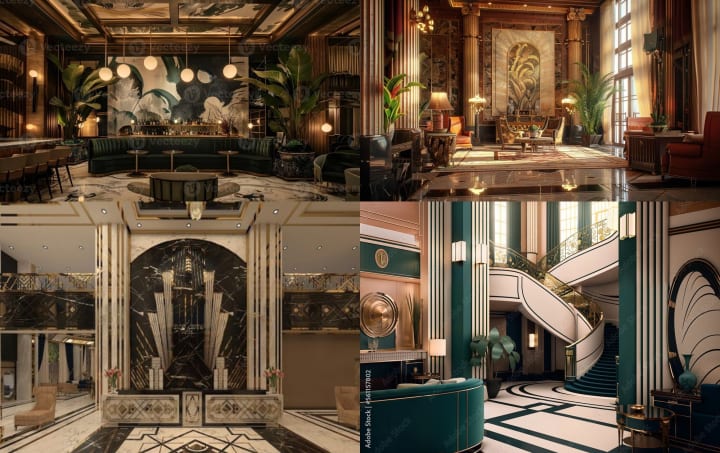
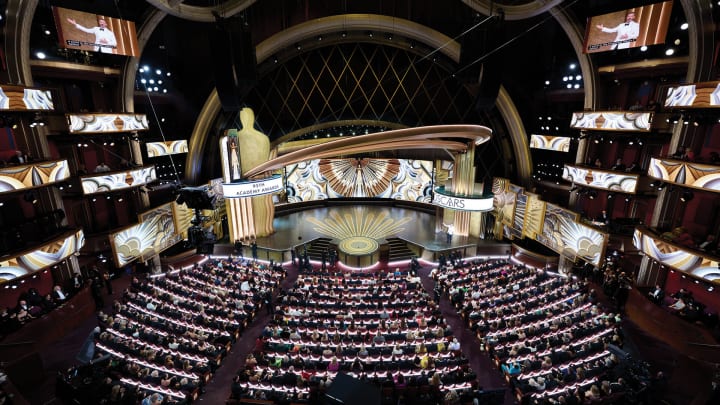
Save for skyscrapers, Art Deco architecture was manifest in public buildings, hotels, cinemas, and apartment buildings. Symmetry and repetition, hallmarks of the style, are well-documented in grand entrances, ornate facades, and highly stylized interior spaces. Metallic finishes, polished stone surfaces, and intricate glasswork further reinforce the movement's notion of extravagance and glamour.
Materials and Craftsmanship
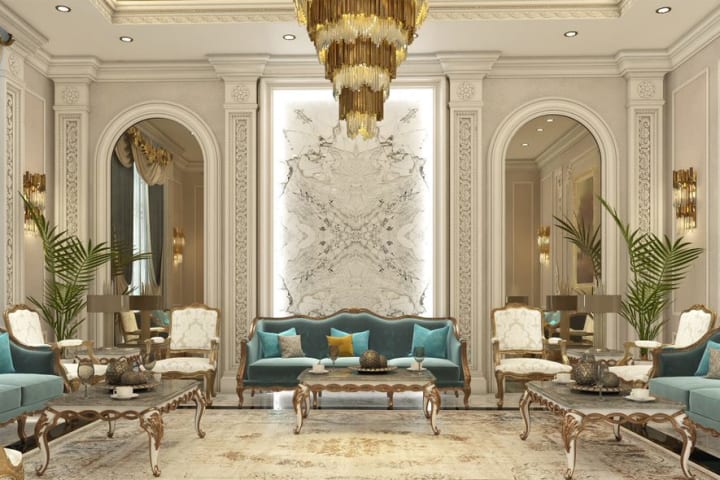
The sumptuousness of materials, however, is probably one of the features that make Art Deco most recognizable. Designers used polished marble, exotic woods, lacquer, chrome, glass, and bakelite to achieve a high-class elegance. Very often, these materials implied contrasts: shining chrome surfaces of glass were juxtaposed with rich textures such as lacquer or stingray leather and striking patterns that gave drama to the visual rhythm both in interiors and in product design.
Where the Art Deco pieces were concerned, the craftsmanship was painstaking, yet the style similarly embraces mass production. This ambiguity could be seen in the choice of materials: whereas truly valued were handmade items, such as ornate glassware or custom-made furniture, Art Deco also embraced the novelty of new materials that could be mass-produced, like plastics and metal alloys.
These materials in interior design literally labeled everything, from furniture to lighting fixtures, to create cohesive, polished-looking rooms. The richness of the interiors in Art Deco was completed by rich colour palettes that incorporated deep blues, golds, silvers, and reds-to create an environment which was as modern as undeniably opulent.
Figures and Major Works
Art Deco was indeed a movement influenced by many architects, designers, and different types of artists who each contributed their vision toward the movement. Probably one of the biggest names to spearhead this movement was that of the French designer Émile-Jacques Ruhlmann. Ruhlmann made his name with very luxurious furniture. His work was said to be the model example of refinement and elegance, pouring from the style of Art Deco. Ruhlmann worked lacquered wood, ivory, and silk together skilfully to create highly sought-after pieces amongst the upper classes.

William Van Alen was an architect of repute who built one of the finest skyscrapers in the world, the Chrysler Building. It also represented one of the most fabulous examples of Art Deco architectural style. The skyscraper, clad with its stainless steel spire, stylized eagles, and other streamlined automotive motifs, was giving full expression to the interest of Art Deco in the universe of modernity and progress. The technological realization present in the design proposed by Van Alen was fully expressed; the ornamentation of industrial materials was shown to the fullest.

Donald Deskey was a famous American industrial designer who helped popularize Art Deco in the United States. Probably the most famous of his interior designs, Radio City Music Hall in New York, belongs to the year 1932. Rich in materials and bold geometric patterns with dramatic lighting, the interior of the building is a specimen of the great pride and richness of Art Deco. Donald Deskey made several innovative designs that helped in the shaping of the movement of American Art Deco.

Tamara de Lempicka was a Polish painter who would probably be the most iconic of those artists associated with Art Deco. Sleek, highly stylized portraits of society figures and celebrities were generally set amidst sumptuous settings that epitomized Art Deco's fascination with glamour and modernity. It was in its bold use of colour and precision in the line, with a feeling of luxuriousness that Lempicka had adopted which made her creation into a pictorial Hemingway-esque expression of urbane elegance from this era.

The name most synonymous with industrial design in relation to Art Deco is Raymond Loewy. Loewy, to many, was the father of industrial design, as he utilized Art Deco to reimagine consumer products such as cars, locomotives, and household appliances. In Bel Geddes, one finds a vision of cities of the future combined with sleek Art Deco lines of transportation systems.

Legacy and Impact
Although Art Deco lost its momentum after World War II when it was overshadowed by the rise of modernist architecture, the movement's influence has never actually disappeared. It enjoyed a revival in the late 20th century, especially in the 1980s, when its glamour and elegance were popular once more among designers, filmmakers, and fashion houses. Art Deco keeps impressing architects and designers even now with its sleek, geometric lines, apart from its already strong hold on the worlds of fashion, jewellery, and interior design.
With its international reach, the many forms of Art Deco moved everything from slick skyscrapers in New York to candy-coloured hotels lining Miami's Ocean Drive. Popular revivals both in the 1960s and again in the 1980s sealed it as one of the most important design movements of the 20th century. Today, buildings and artifacts from the Art Deco period are strongly in demand and have come to be regarded as timeless monuments to modern taste and sophistication.

Art Moderne
Origins and Historical Context
Art Moderne also known as Streamline Moderne, was a transitional style that appeared at around 1934 from the evolutionary phase of Art Deco. The development concentrated on the dynamic cultural and economic circumstances surrounding the period. From luxurious and decorative, Art Deco evolved into Art Moderne which would represent simplicity and usefulness. Art Moderne was a representation of the technological and industrial enhancements of the early 20th century. Sleek, aerodynamic forms lent to the designs an ever-growing fascination that society was with speed, efficiency, and the machine age-from the shape of ships, automobiles, and airplanes.

It was this style that really took flight through the Great Depression since the flamboyance of those earlier movements was no longer called for but a more economic and functional approach towards design. It maintained simplicity, affordability, and modern taste with an appeal. It had already dominated architecture, household products, and transportation by the mid-1930s and became the optimism and progress symbol during harsh economic times.

By the time World War II was looming, the practicality of Art Moderne had become even more relevant, but by the early 1950s it started to wane as Mid-Century Modernism came into prominence. Still, besides the development of modern industrial design, its streamline aesthetics and functionality did eventually leave an enduring stamp.

Art Moderne reached its peak in the late 1930s and early 1940s across the United States. In this country, it was used in public buildings, in transportation terminals, in movie houses, and in commercial structures; its smooth curved lines, chromel finishes, and nautical motif were acquired everywhere. Out of Art Moderne's emphasis on efficiency and streamlining came the boulder and more expressive forms of its successor.
Key Characteristics and Design Elements


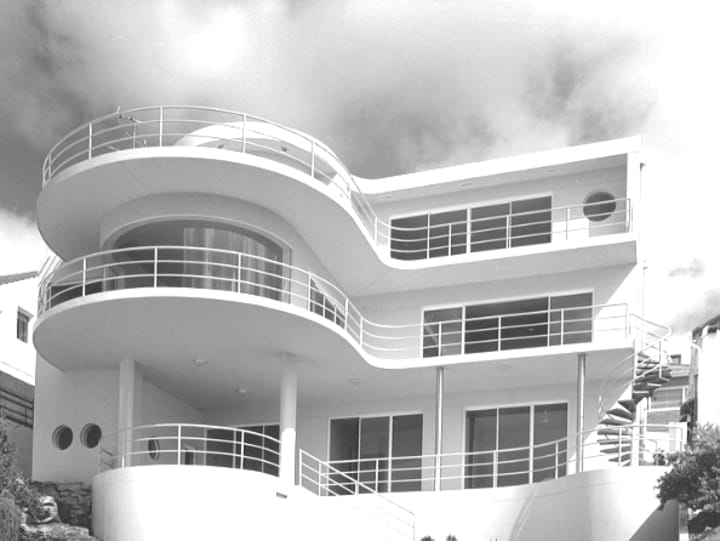
Art Moderne is clean-lined, aerodynamic in form, and horizontal in emphasis. Contrasted with the verticality and ornamentation of Art Deco, Art Moderne relied upon smooth, curving shapes that suggested motion and speed, much as did machines. Chrome, glass, and concrete were the principal building materials because they were closely associated with modernity and tended to provide sleek, functional designs.
Ornamentation Art Moderne is distinguished by its horizontal line element: many buildings feature very long, unbroken strips of window, combined with flat roofs and rounded edges, giving the building a streamlined appearance. This style was meant to evoke concepts of motion and speed, even on stationary objects. Its derivation from transportation design was reflected in elements such as porthole windows, arcing railings, and exteriors sculpted to resemble ships.
While Art Deco was loud and colorful, Art Moderne favored the subdued and neutral in its approach to color: whites, beiges, and grays were the order of the day. Ornamentation tended toward the sparse, with interior spaces designed for functionality with area-conscious built-in furniture and smooth, unadorned surfaces. In both cases, style was an imperative that was inextricably linked to both economic reality and modernist imperatives toward efficiency and utility.


Key Figures and Major Works
It was several architects and designers who popularized Art Moderne, bringing into the mainstream design the style of streamline. One of the leading figures was a French-American industrial designer named Raymond Loewy, who designed everything from automobiles to household products. Indeed, his Greyhound buses and locomotives are recognizable examples of how Art Moderne influenced transportation design through sleek aesthetics combined with functionality.

The other visions in the movement were those of Norman Bel Geddes, who was especially noted for his futuristic work concerning exhibition pavilions and transport. His vision, as shown in the 1939 New York World's Fair Futurama exhibit, comprised a future replete with streamlined vehicles and modern architecture, catching perfectly the forward-thinking spirit of progress toward efficiency in the heart of Art Moderne.

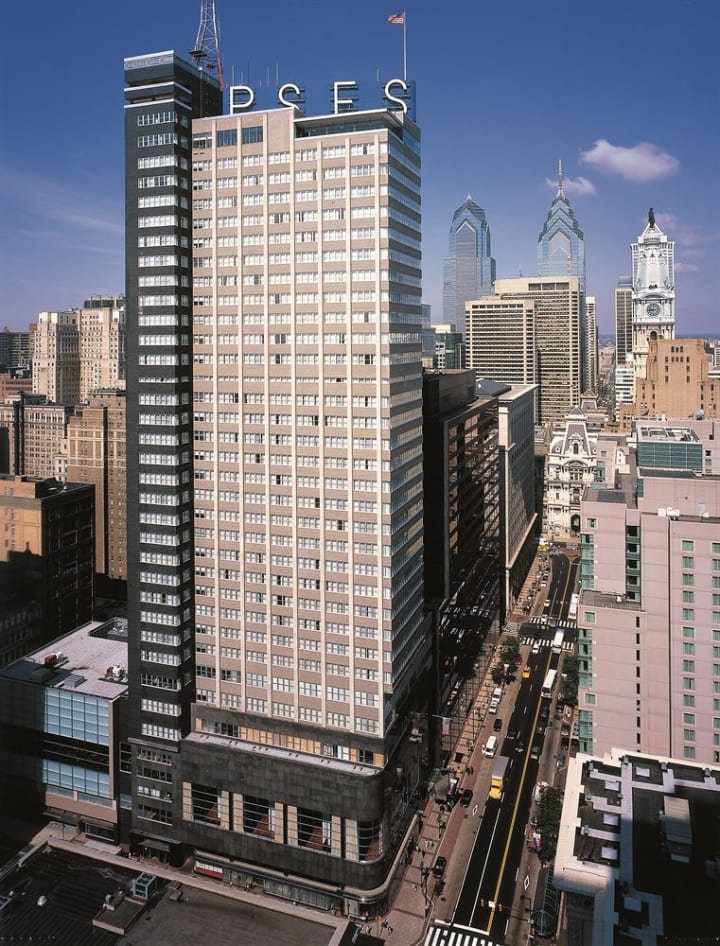
The architectural manifestation was defined by William Lescaze in his design of the PSFS Building in Philadelphia, one of the first modernist skyscrapers in the United States, which he designed in 1932. Its smooth lines, curving corners, and functional design summed up the minimalist ethos of Art Moderne.
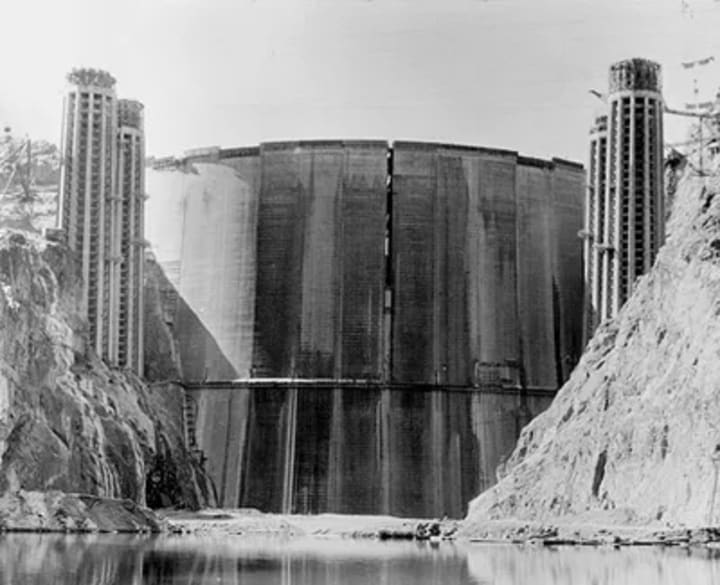
Other works of influence are the Hoover Dam, 1935-using streamlined forms in monumental scale-and the Pan-Pacific Auditorium in Los Angeles, also from 1935, which perfectly epitomized the use of horizontal lines and aerodynamic curves. The style trickled down into movie theatres that embraced this sleek, futuristic look, such as the Delman Theatre in Houston-nailing it deep within popular culture.
Legacy and Impact

Though it fell out of favor in the 1950s, Art Moderne continues to strongly influence modern architecture and industrial design alike. With an emphasis on clean lines, functionality, and simplicity, Art Moderne set the stage for subsequent modernist movements like Mid-Century Modernism. Streamlining of forms, use of industrial materials-most notably chrome and glass-continue to impinge upon contemporary design, everything from minimalist architecture to product design.
From Apple's sleek, minimalist aesthetic to a focus on functional beauty, the echoes of Art Moderne can still be seen in today's industrial design. The streamlined design language of Art Moderne gave birth to innovations in transportation design, from automobiles to airplanes, each incorporating an emphasis on efficiency and motion.
This style in turn still reverberates today through modern buildings that look back to the minimalism of the Machine Age and technological advance of the early 20th century. Examples of Streamline Moderne buildings in places like Miami, built during the 1930s and 1940s, stand as testaments to the architectural impact the movement had on the shaping of a city's visual identity.
Because Art Moderne concerns functionality, efficiency, and novelty, the style can push the bounds of design in ways that still really inform modern aesthetics. Its legacy does not reside in architecture alone but also in ordinary products, transport, and gadgets that continue to inspire designers who seek a balance between form and function. Overshadowed perhaps by its flashier predecessor, Art Deco, the slick and futuristic designs of Art Moderne sealed its place in design history during the 20th century; hence, it influenced not only how we live in our time but also how we would interact with today's-built environment.
Comparative Analysis: Art Nouveau, Art Deco, and Art Moderne
Appearance of the Styles and Their Influence on Each Other
Transitions through those styles happened from Art Nouveau to Art Deco and then to Art Moderne during a time of great cultural, economic, and technological change at the turn of the 19th and early 20th centuries. Each was a movement answering the artistic and societal demands of its time, one evolving from and reacting against the others.
Art Nouveau developed in response to the Industrial Revolution and adopted craftsmanship, using organic forms with a deeply organic reliance on nature. The movement was against mass production and moved toward techniques of artisans, as in Antoni Gaudí's Casa Batlló and Victor Horta's Hôtel Tassel, where sinuous lines and floral motifs are extended. In creating one undeviated flow from interior to exterior in the use of art and functionality, Art Nouveau was able to approach design holistically.
While this was the case, Art Deco embraced the industrial age between 1919 and 1939, giving up the organic fluidity of Art Nouveau for geometric patterns and modern materials like chrome, glass, and lacquer. While Art Nouveau had cast aside mass production, Art Deco hailed it. The Chrysler Building in New York, with its razor-sharp, streamline forms, became an internationally recognized symbol of technological advancement and optimism. This style was typical of the Roaring Twenties and the longing for luxuriousness and modernity.
Art Moderne emerged during the Great Depression and simplified excesses of Art Deco into the new cultural imperatives of efficiency and functionality. Its focus was on smooth, streamlined forms and minimal ornamentation, mirroring technologies of the time, which can be further evidenced in both the Normandie Hotel and the Pan-Pacific Auditorium since both stressed horizontal lines and aerodynamic curves inspired by transportation technologies such as ocean liners and airplanes.
Design and Architectural Impact
Each of these movements brought in its wave that would impress architecture and design for a long period. Art Nouveau created immersive environments, with the flowing lines and organic motifs extending into furniture and interior spaces to make cohesive, naturalist designs.
Art Deco began to reimagine the cityscapes of simple, bold, geometric forms with modern materials. The skyscrapers like the Chrysler and Empire State Buildings were the icons of Industrial Progress, while in fashion, jewelry, and automobile design, the influence of Art Deco stood for technological optimism and decadence in luxury.
By contrast, Art Moderne molded the grandeur of Art Deco into a workable, utilitarian fashion: one that employed smooth curves and streamlined forms that preferred functionality to ornamentation in structures like Hoover Dam and Houston's Delman Theatre. It also filtered into product design and transportation, from cars to household appliances.
Cultural Significance
Each of them is the reflection of values and aspirations coming from its time. Born out of the rapid boom in urbanization and industrialization, Art Nouveau aimed at the incorporation of beauty and craftsmanship into everyday life to counter the dehumanizing force of mass production. It meant cultivating individuality and artistic freedom. Gaudí's La Sagrada Família perfectly expressed it, with the connection between nature and art in a singularly organic architectural form.
Art Deco was a response to the desire after World War I for technological advance and luxury, rejoicing in modernity through bold geometry and opulent materials. This style mirrored the exuberance of the Roaring Twenties, drawing inspiration from ancient civilizations and modernist cubism. Thus, this style turned into one of the most varied and influential movements of the 20th century.
Art Moderne took a cue from the Great Depression into simplicity, functionality, and economics. Its minimalist, aerodynamic principles of design flowed into mid-century modern architecture and product design, which had at its base the modernist precepts that utility trumped ornamentation.

Conclusion
While each style thus had a unique challenge related to the times, they would go on to influence modern design. All three have transcended their origins to inspire everything from historic architecture and decorative arts to contemporary space, fashion, and interior design, where their principles are continually modernized and refined.
The organic forms and craftsmanship of Art Nouveau have evolved into modern sustainable and eco-friendly design. The natural motifs and skilled craftsmanship remain the backbone of architects and designers who build breathtakingly beautiful yet sensitive environments.
Art Deco, with its bold geometry combined with rich materials, continued to inspire luxury brands like Louis Vuitton, while its influence remains in the design of urban skyscrapers. Its clean forms-usually symmetrical-remain a hallmark of contemporary architecture and interiors, where their balance of opulence and functionality continues to fascinate designers and consumers.
Art Moderne's simplicity and smooth efficiency echo through today's minimalist trends. From transportation design to industrial architecture, technology products, and everything in between, horizontal lines and functional forms can be noted; these forms balance aesthetic appeal with utility. It is the functionality without sacrificing elegance that is what really keeps this style so relevant today in current design.
Such movements remind us of the continuing dialogue between past and present. Through direct revival and subtle homage, it is both Art Nouveau, Art Deco, and Art Moderne that give meaning to our approach toward space, form, and aesthetics in the 21st century. This depicts how design flows into the next, where historical influences meet the needs of today to shape our lived environments.
The power of the aforementioned styles lies in their very nature-that they changed with the times, moulding and shaping according to the contemporary requirements, blending timeless beauty with practical functionality. While that continues to stir creativity and innovation, it shapes not only how we create but also how we experience the world around us.
About the Creator
Eng. Omar Malkawi
Jordanian Architectural Technologist studying in the UK, currently on placement in Jordan. Passionate about historical architecture from the 1700s-2020s, inspired by The Sims. Published a novel at 15 on societal standards and mental health.
Keep reading
More stories from writers in History and other communities.
Aristotle: The Mind That Shaped Human Knowledge
Aristotle was born in 384 BCE in the small Greek town of Stagira, in northern Macedonia. His life unfolded during a time of political change, intellectual awakening, and cultural expansion across the Greek world. Though more than two thousand years have passed since his death, Aristotle’s ideas continue to influence philosophy, science, politics, ethics, education, and even everyday thinking. His story is not a legend built on myths, but the true journey of a curious mind that sought to understand everything—from the smallest living creature to the highest purpose of human life. Aristotle’s father, Nicomachus, was a physician to King Amyntas III of Macedon. Because of this, Aristotle grew up in an environment where observation, biology, and the study of nature were part of daily life. From an early age, he was exposed to the idea that the natural world could be studied systematically, not just explained through myths or religious stories. This early influence played a major role in shaping his later approach to knowledge. At around the age of seventeen, Aristotle traveled to Athens, the intellectual center of the Greek world, to study at Plato’s Academy. Plato was already famous as the student of Socrates and one of the greatest philosophers of his time. Aristotle remained at the Academy for nearly twenty years. Although he deeply respected Plato, he did not agree with all of his ideas. Plato believed that true reality existed in a world of perfect, unchanging “Forms,” while the physical world was only an imperfect reflection. Aristotle, however, believed that knowledge begins with observing the physical world itself. This difference would later define Aristotle’s unique philosophy. Despite their disagreements, Aristotle and Plato shared a strong teacher-student bond. Aristotle learned logic, ethics, metaphysics, and political theory at the Academy. Over time, however, his independent thinking became more noticeable. After Plato’s death in 347 BCE, Aristotle left Athens. Some historians believe this was partly because the Academy was now led by Plato’s nephew and partly because anti-Macedonian feelings were growing in Athens, which made life difficult for someone connected to Macedonia. Aristotle then spent several years traveling and studying. He lived in Asia Minor and later on the island of Lesbos, where he conducted detailed research on marine life. During this period, he carefully observed animals, plants, and natural processes. Unlike many thinkers before him, Aristotle did not rely only on abstract reasoning. He dissected animals, recorded their structures, and classified them based on shared characteristics. This work laid the foundation for biology and zoology as scientific disciplines. In 343 BCE, Aristotle’s life took a dramatic turn when he was invited by King Philip II of Macedon to tutor his young son, Alexander. This boy would later become Alexander the Great. Aristotle taught Alexander philosophy, ethics, politics, literature, and science. He introduced him to the works of Homer and emphasized the importance of reason and self-control. While Alexander would go on to become a military conqueror, Aristotle hoped his student would also rule with wisdom and justice. Though historians debate how much influence Aristotle truly had on Alexander’s actions, there is no doubt that their relationship connected philosophy with world-changing power. After Alexander became king, Aristotle returned to Athens around 335 BCE and founded his own school, the Lyceum. Unlike Plato’s Academy, the Lyceum focused heavily on empirical research and systematic study. Aristotle and his students walked while discussing ideas, which is why his followers were called the “Peripatetics,” meaning “those who walk about.” At the Lyceum, Aristotle organized research across many fields, creating one of the earliest models of a research institution. Aristotle wrote extensively, though most of his popular writings have been lost. What remains are mainly lecture notes and technical works. These texts cover an astonishing range of subjects: logic, physics, metaphysics, ethics, politics, rhetoric, poetry, biology, astronomy, and psychology. In logic, Aristotle developed the system of syllogisms, a method of reasoning that dominated logical thought for centuries. In ethics, his work Nicomachean Ethics explored the idea of virtue as a balance between extremes and argued that the goal of human life is eudaimonia, often translated as “flourishing” or “well-being.” In politics, Aristotle studied different forms of government, analyzing monarchies, aristocracies, and democracies. He believed that the best political system depended on the character and needs of the people, not on a single perfect model. He famously described humans as “political animals,” meaning that living in a community is essential to human nature. Despite his achievements, Aristotle’s later years were marked by difficulty. After Alexander the Great died in 323 BCE, anti-Macedonian sentiment rose sharply in Athens. Aristotle was accused of impiety, a charge similar to the one that had led to Socrates’ execution. Refusing to face trial, Aristotle left Athens, saying he would not allow the city to “sin twice against philosophy.” He retreated to Chalcis, where he died in 322 BCE at the age of sixty-two. Aristotle’s death did not end his influence. In fact, his ideas grew stronger over time. His works were preserved by scholars in the Islamic world during the Middle Ages and later reintroduced to Europe. Thinkers such as Avicenna, Averroes, and Thomas Aquinas studied and expanded upon Aristotle’s philosophy. For centuries, Aristotle was known simply as “The Philosopher,” a title that reflected his unmatched authority in many fields. The true story of Aristotle is not just about a man who lived long ago. It is the story of a thinker who believed that the world could be understood through careful observation, logical reasoning, and thoughtful reflection. He taught humanity to ask not only what things are, but why they are. In doing so, Aristotle shaped the foundations of Western thought and left a legacy that continues to guide minds across the world.
By The best writer 4 days ago in History
Between Rich Dad and Real Life
I was twenty-two when the book found me, or when I found it—depending on how destiny prefers to be credited. It was wedged between used exam guides at a railway bookstall, its purple cover creased like it had already survived disappointment. Rich Dad Poor Dad. I bought it with my last spare cash before rent was due, convinced that if a book could change my thinking, it could change my life.
By Maavia tahir4 days ago in History



Comments (1)
This article beautifully captures the timeless relationship between art and architecture. It's fascinating how historical structures not only reflect the artistic sensibilities of their time but also serve as a bridge to our past, preserving the cultural and emotional essence of those who lived before us. Each intricate detail, from the sweeping arches to the delicate carvings, tells a unique story. Thank you for shedding light on how these masterpieces continue to inspire modern creativity and remind us of the importance of preserving our architectural heritage for future generations.