
Defending Identity, Managing Change: How South Indian States Are Responding to Northern Migration
As migration from Northern India to the South increases, Southern state governments are enacting a series of language policies, job reservations, urban planning initiatives, and cultural programs to manage the influx and protect local identities. This article explores how Tamil Nadu, Karnataka, Andhra Pradesh, Kerala, and Telangana are addressing the economic, linguistic, and social impacts of migration while balancing national unity and regional pride.

Defending Identity, Managing Change: How South Indian States Are Addressing Northern Migration
South Indiahome to ancient Dravidian languages, dynamic regional identities, and economic centers such as Bengaluru, Chennai, and Hyderabadhas experienced a significant increase in the influx of migrants from North India in recent decades. As this migration escalates, authorities in Tamil Nadu, Karnataka, Kerala, Telangana, and Andhra Pradesh are implementing various strategies to safeguard their indigenous cultures, ensure social cohesion, and manage the strain on their infrastructure.
This article examines the tangible measures undertaken by Southern states to address this internal migration while upholding constitutional principles and fostering economic progress.
Understanding the Strain
Migration, while inherent in a vast and diverse nation like India, presents challenges when not aligned with local requirements. South India’s flourishing IT sector, improved public services, and comparatively higher wages have rendered it an attractive destination for workers and families from states such as Uttar Pradesh, Bihar, and Rajasthan.
Nevertheless, the cultural, linguistic, and economic disparities between these groups and the resident populations have raised concerns regarding job competition, wage suppression, and cultural dilution. This has resulted in a strong public demand for protective actions from Southern governments.
1. Language Preservation Laws and Policies
Tamil Nadu: "Tamil First" Policies
Tamil Nadu has been the most outspoken and proactive in resisting the perceived imposition of Hindi. The state government has long advocated a bilingual policy: Tamil and English, rejecting the trilingual model promoted by the central administration.
Employment Regulation: Government recruitment examinations are predominantly conducted in Tamil.
Signage Legislation: Public signs, boards, and advertisements must prominently feature Tamil.
Education: Tamil is compulsory in all schools, including private institutions, up to Class 10.
Karnataka: Kannada Language Emphasis
Karnataka has adopted a “Kannada-first” strategy to safeguard its linguistic heritage.
Kannada Language Act: Requires the use of Kannada in government offices, banks, and public sector entities.
Private Sector Adherence: The Kannada Development Authority encourages businesses to perform basic communication in Kannada, especially with clients.
Cinema and Media Quota: Guarantees a percentage of content in multiplexes and broadcast media remains in Kannada.
2. Local Employment Protection Initiatives
Amid increasing job competition, particularly in low-skill sectors, several South Indian states are actively instituting local employment preference policies.
Andhra Pradesh: Local Quota Legislation
75% Local Jobs Reservation: In 2019, Andhra Pradesh enacted a law mandating that 75% of jobs in private industrial units be allocated for local youth. This was a significant measure aimed at mitigating economic displacement attributed to migrant workers.
Tamil Nadu: Emphasis on Skill Development
Priority in State Projects: Numerous government tenders and construction initiatives promote the employment of local laborers.
Youth Training Programs: Programs such as “Naan Mudhalvan” concentrate on equipping Tamil youth with skills to diminish reliance on external labor.
Karnataka: Local Employment Requirement
The government advocates for the hiring of Kannadigas in both public and private sectors through pressure from local organizations and incentives for compliant companies.
3. Urban Planning and Migrant Regulation
Kerala: Migrant Registration Systems
Awas Portal (Kerala): The Kerala administration implemented a registration system for migrant laborers, enabling the state to oversee population influx and distribute health and housing resources effectively.
Language and Integration Programs: Malayalam language courses for migrant workers are offered in certain districts to enhance integration and mitigate tensions with local residents.
Bengaluru’s Smart Regulation Strategy
As a migrant hub, Bengaluru encounters overcrowding and infrastructure stress. The city’s approach encompasses:
Stringent zoning and construction regulations to manage migrant communities.
Migrant mapping by municipal authorities to prevent slum proliferation.
Promoting bilingual communication in public services to alleviate conflicts.
Cultural Integration and Public Awareness
Several states have transitioned towards integration via respect, rather than confrontation.
Cultural Events: Tamil Nadu and Telangana have utilized Pongal and Bathukamma festivals to incorporate migrants into local customs.
Media Campaigns: Public initiatives promote respect for local languages and traditions while fostering national unity.
Neighborhood Committees: Local municipalities engage residents and migrants in collaborative activities to enhance cultural understanding.
Political Mobilization and Regional Parties' Stand
Regional parties such as DMK (Tamil Nadu), JD(S) and Kannada organizations (Karnataka), and TRS (Telangana) have adopted vigorous positions to uphold their linguistic and cultural autonomy.
They frequently contest central policies advocating Hindi or universal education curricula.
These parties campaign on platforms that prioritize regional identity and resist central encroachment in cultural and linguistic affairs.
Challenges and Criticism
While these initiatives have garnered substantial public backing in the South, they are not devoid of critique:
Some accuse the governments of prioritizing regionalism over national cohesion.
Businesses sometimes express concerns that stringent language or hiring regulations hinder efficiency.
Migrant rights advocates contend that excessive regulation may result in discrimination.
Nonetheless, the majority of South Indian governments assert that their policies are not anti-migrant, but rather pro-local, aimed at ensuring equitable coexistence rather than assimilation or dominance.
Conclusion
South Indian states are navigating a delicate balancemaintaining their identity, supporting local communities, and addressing the phenomenon of internal migration. Through language regulations, employment policies, cultural assimilation, and intelligent governance, they are establishing a framework that could serve as a blueprint for other regions experiencing similar challenges.
The effectiveness of these initiatives will hinge on equilibriumsafeguarding the essence of the South while extending a welcoming hand to others with fairness, not apprehension.
About the Creator
Say the truth
"Say the Truth: Explain Everything in the World" is your trusted source for uncovering facts and exploring the wonders of history, science, technology, and beyond. We simplify complex ideas and reveal truths to inspire curiosity .
Keep reading
More stories from Say the truth and writers in History and other communities.
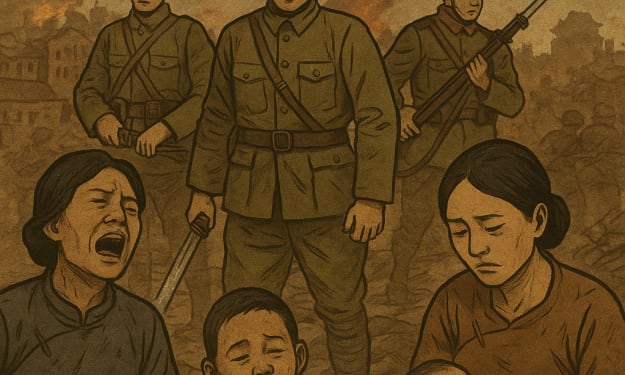
“Resonances of Terror: The Catastrophe of the Nanjing Massacre”
apanese forces entered Nanjing on December 13, 1937, it signified the onset of one of history’s bleakest and most savage massacres. Over the course of approximately six weeks, the ancient Chinese city endured incomprehensible violence, leaving a legacy of terror that continues to resonate in the hearts of millions today.
By Say the truth 9 months ago in History
Why Early Aircraft Designers Had No Second Chances
When I read about the earliest days of aviation, I’m always struck by how unforgiving that era truly was. Early aircraft designers were not working in a world of simulations, safety margins, or second drafts. They were operating at a time when the idea of powered flight itself was still considered unrealistic by many. Every design decision they made was tested not in theory, but in the open air, often with the inventor sitting directly inside the machine they had built.
By Beckett Dowhan4 days ago in History
Dr. Martin Luther King, Jr.
Dr. Martin Luther King, Jr. was born on January 15, 1929. Martin Luther King, Jr. Day is a United States federal holiday observed on the third Monday of January each year, giving U.S. residents a three-day weekend. It is the first federal holiday of 2026.
By Margaret Minnicks3 days ago in History



Comments
There are no comments for this story
Be the first to respond and start the conversation.