
Dear Harriet...Tonight We Run!!!
For the love of ourselves. The brave voices still fierce and strong, fighting across time.


Dear Readers:
I invite you to travel through time to meet some brave and noteworthy souls.
There are, throughout history, several powerful first-person accounts of slavery that provide deep insights into the experiences of enslaved individuals. Here are a few notable examples:
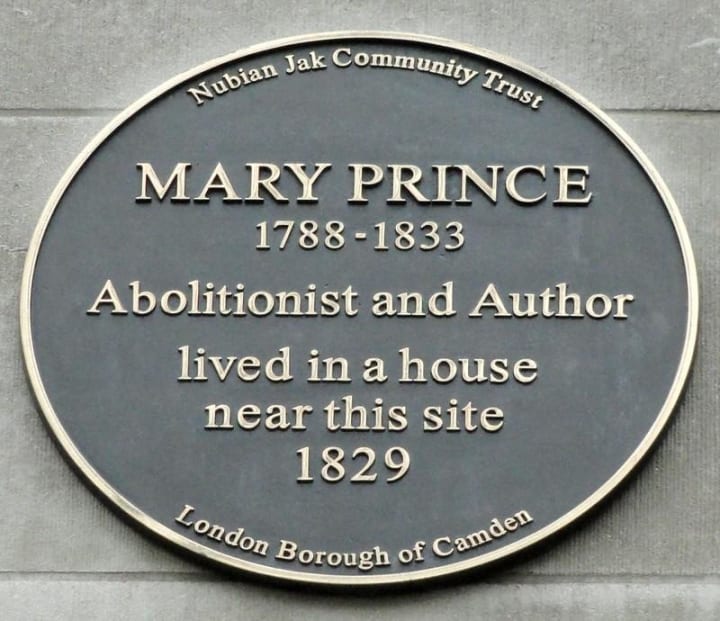
Mary Prince: In her narrative, "The History of Mary Prince, a West Indian Slave, Related by Herself," published in 1831, shares her experiences of being enslaved in the British West Indies. Her account highlights the harsh realities of slavery and her journey towards freedom.
Prince’s story is an account by a freed slave of her experience in the Caribbean and the first book in England which tells the story of a black woman’s life.
Mary was born in 1788 in Brackish Pond, Bermuda, into a life of slavery. Her early years were marked by relentless hardship and suffering. At the age of 12, she was separated from her family and sold to different masters. This separation from her loved ones was a recurring theme in her narrative and deeply affected her throughout her life.
Her life as an enslaved woman was filled with severe physical pain and psychological torment. She endured harsh work, severe punishment, and the degradation of being treated as property. Despite the trauma, Mary’s fierce determination never faltered. She held on to her humanity in the face of cruelty, and it was this inner strength that carried her through unimaginable hardships.
In 1828, Mary was brought to London by her enslavers, the Woods. Her health was worsening, and she struggled to carry out the tasks imposed on her. Eventually, she found refuge in the Moravian Mission in Hatton Garden and later found work and a home with Thomas Pringle, secretary of the London abolitionist group, the Anti-Slavery Society. Pringle helped her create her autobiography, "The History of Mary Prince, A West Indian Slave," which was published in 1831.
Mary Prince's narrative was a powerful document that exposed the brutal realities of slavery and had a significant impact on the British abolitionist movement. Her story remains a vital voice in the fight against the inhumanity of the transatlantic slave trade.
Many representations of slavery did important work in the argument for abolition. Some of the most important aspect of the work is the distinctive, characterful, persuasive first-person voice of Mary herself. She is both a representative of slavery and its wrongs and absolutely herself, a full person and a character not a type. And it is this fully present being-ness of Mary Prince that makes her a powerful vehicle for anti-slavery.
Prince is of England and the Caribbean, of slavery and emancipation. She is free in England but still technically a slave in Antigua, should she return. Her history is situated also between literacy and illiteracy: it appears that she could write, but her testimonial is mediated by white abolitionists who are also authenticating her testimony by writing it for her. She is a slave, but the treatment she describes in England would also resonate with those who were in domestic service in the country and suffered the cruelty of their masters and mistresses. Mary Prince boldly asks her readers to make their own choice: to stand with her and other slaves.
Although much of her story bridges difference and finds common cause between enslaved peoples in the Caribbean and the hard-working poor in England, she concludes her history by pointing out to those readers the difference between slavery and servitude. She wants only the freedom to work hard for her own living. (Oxford Faculty of English).
Your Voice in Solidarity,
The Writer.
..
Dear Reader:
We now speak of The Federal Writer's Project and The Slave Narratives.
The Federal Writers' Project (FWP) was a New Deal program established in 1935 as part of the Works Progress Administration (WPA). Its primary goal was to provide employment for out-of-work writers during the Great Depression and to create a comprehensive "self-portrait of America" through various publications.
The FWP produced a wide range of works, including state and city guides, local histories, oral histories, ethnographies, and children's books. One of its most notable achievements was the American Guide Series, which consisted of detailed guides to the then 48 states, the Alaska Territory, Puerto Rico, and Washington, D.C. These guides included histories, descriptions of cities and towns, travel routes, photographs, maps, and essays on natural resources, culture, and geography.
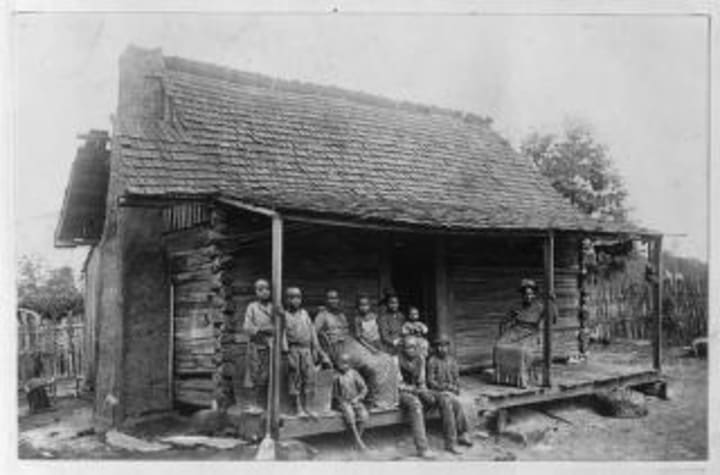
The project also collected over 2,300 first-person accounts of slavery from former slaves, known as the Slave Narratives. These narratives provide invaluable insights into the experiences of enslaved individuals and are a significant part of the FWP's legacy.
The FWP employed thousands of people, including writers, librarians, clerks, researchers, editors, and historians. It was directed by Henry Alsberg from 1935 to 1939, after which federal funding was cut, and the project fell under state sponsorship. The FWP ended in 1943 as funds were diverted to the war effort during World War II.
++
Vol. 17, Virginia, Berry-Wilson
Historical Overview
In the Depression years between 1936 and 1938, the WPA Federal Writers' Project (FWP) sent out-of-work writers in seventeen states to interview ordinary people in order to write down their life stories. Initially, only four states involved in the project (Florida, Georgia, South Carolina, and Virginia) focused on collecting the stories of people who had once been held in slavery. John A. Lomax, the National Advisor on Folklore and Folkways for the FWP (and the curator of the Archive of American Folk Song at the Library of Congress), was extremely interested in the ex-slave material he received from these states. In 1937 he directed the remaining states involved in the project to carry out interviews with former slaves as well. Federal field workers were given instructions on what kinds of questions to ask their informants and how to capture their dialects, the result of which may sometimes be offensive to today's readers (see A Note on the Language of the Narratives). The field workers often visited the people they interviewed twice in order to gather as many recollections as possible. Sometimes they took photographs of informants and their houses. The interviewers then turned the narratives over to their state's FWP director for editing and eventual transfer to Washington, D.C. The administrative files accompanying the narratives detail the information supplied to field workers as well as subjects of concern to state directors of the FWP. For more information about the interviewers, the people interviewed, and the processes of collection and compilation, see Norman Yetman's essay which accompanies the online collection.
Yours truly,
The Writer.
...
Dear Readers:
Ottabah Cugoano, his autobiography
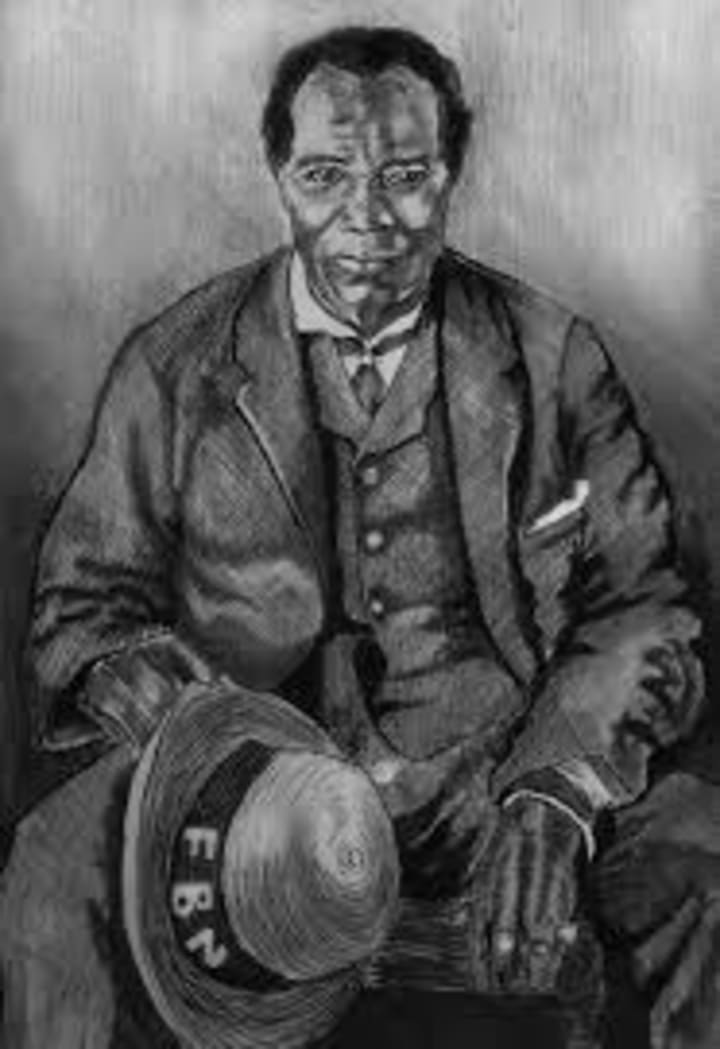
Ottobah Cugoano, also known as John Stuart, was a prominent abolitionist and political activist born around 1757 in Ajumako, West Africa (modern-day Ghana). At the age of 13, he was kidnapped and sold into slavery, eventually being transported to Grenada in the West Indies. In 1772, he was purchased by a merchant who took him to England, where he gained his freedom.
In England, Cugoano learned to read and write, and he became an influential voice in the abolitionist movement. He worked for the artists Richard and Maria Cosway, which allowed him to connect with prominent British political and cultural figures. Cugoano joined the Sons of Africa, a group of Black abolitionists in Britain, and actively campaigned against the transatlantic slave trade.
In 1787, Cugoano published his seminal work, "Thoughts and Sentiments on the Evil and Wicked Traffic of the Slavery and Commerce of the Human Species," which was a powerful critique of slavery and the slave trade. His writings combined religious, economic, and political arguments to advocate for the abolition of slavery.
Cugoano's contributions to the abolitionist movement were significant, and his legacy continues to be remembered and celebrated.
...
In closing, I must emphasize that:
These accounts are invaluable resources for understanding the personal and emotional impact of slavery.
Your Narrator across time,
The Writer.
++++++++++++++++++++++++++++++++++++++++++++++++++++
Some notable books
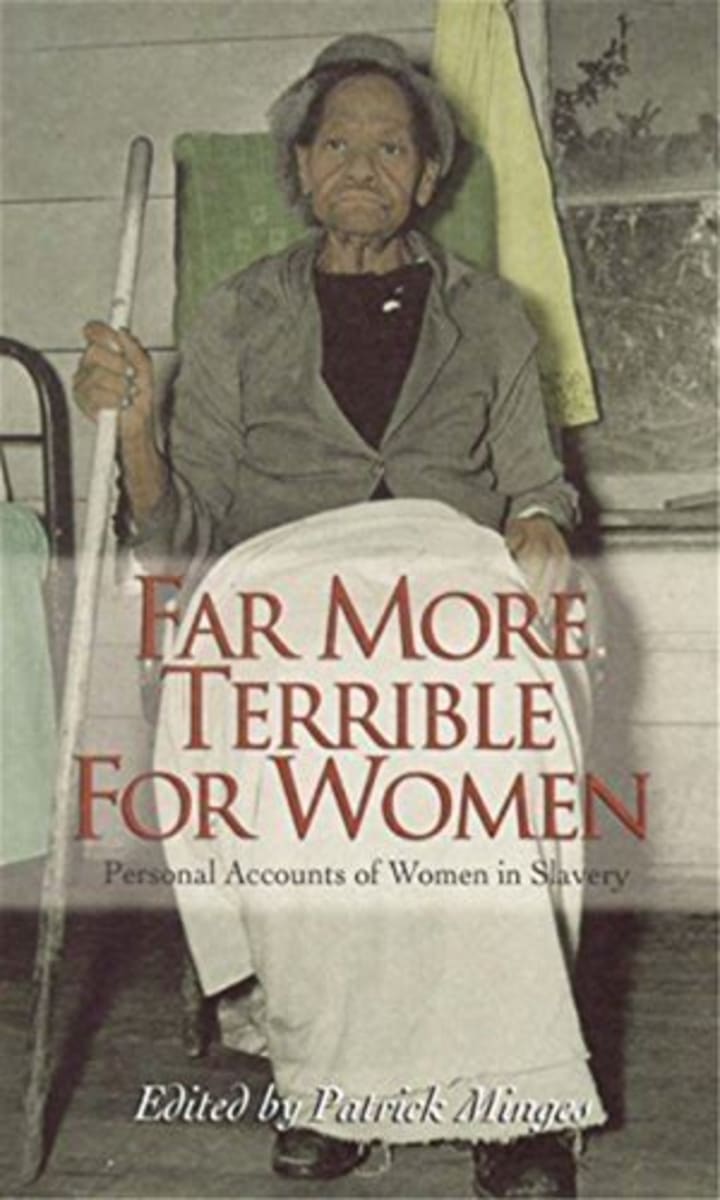
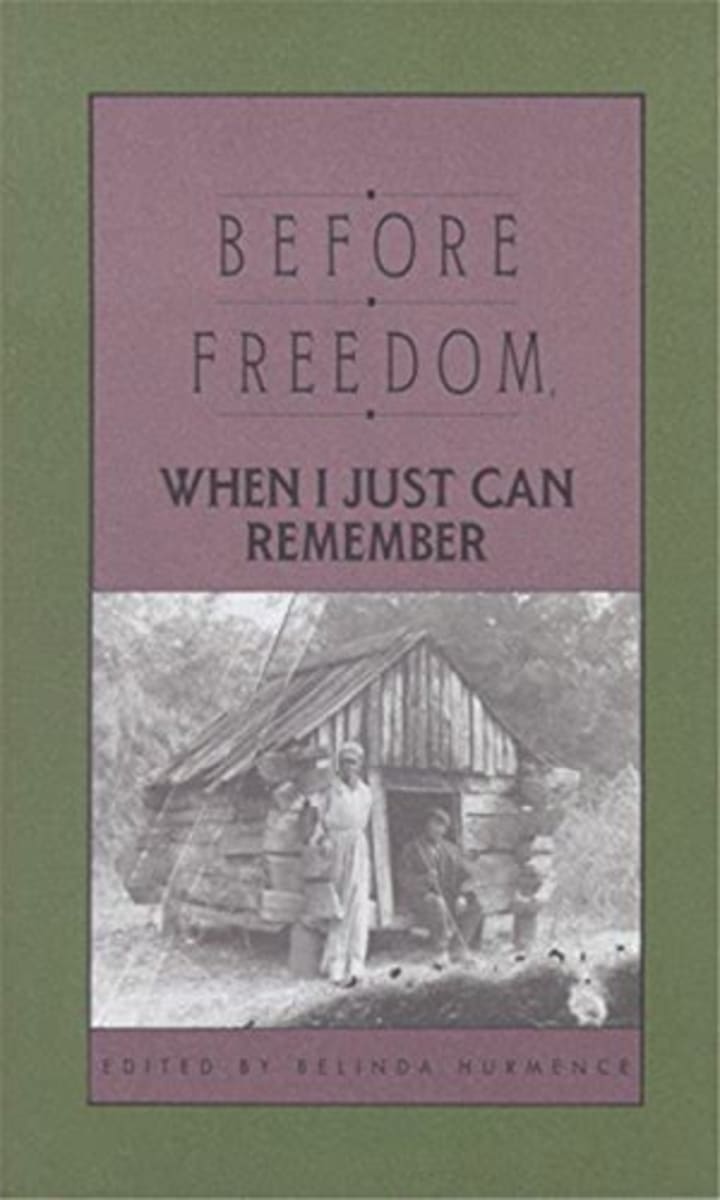
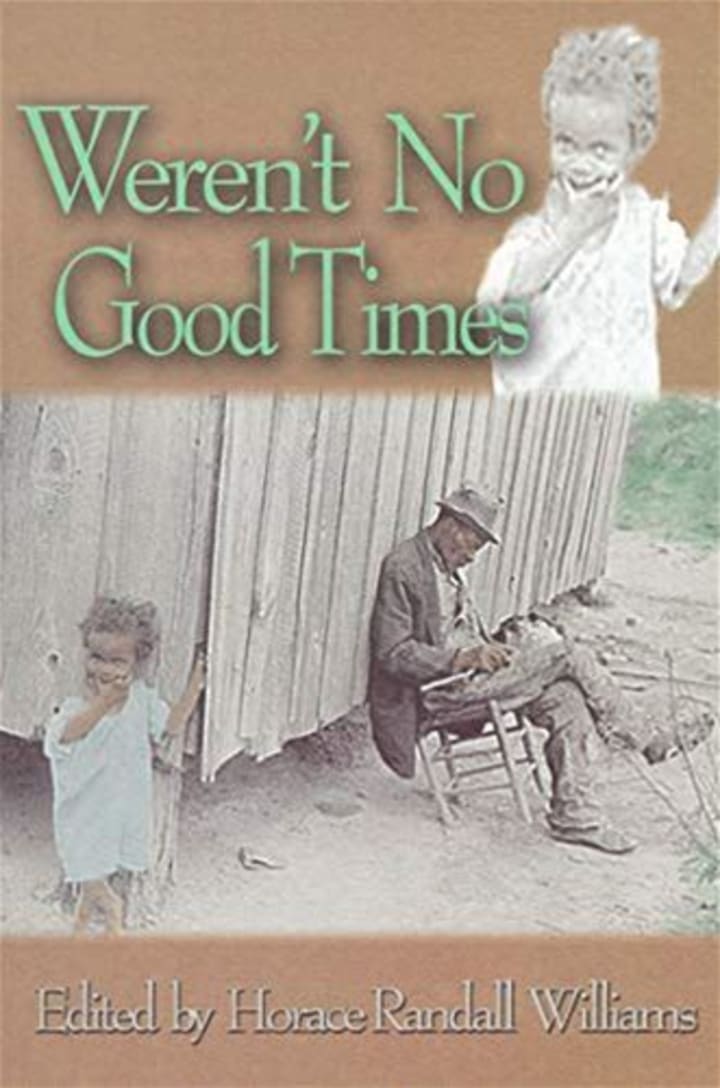
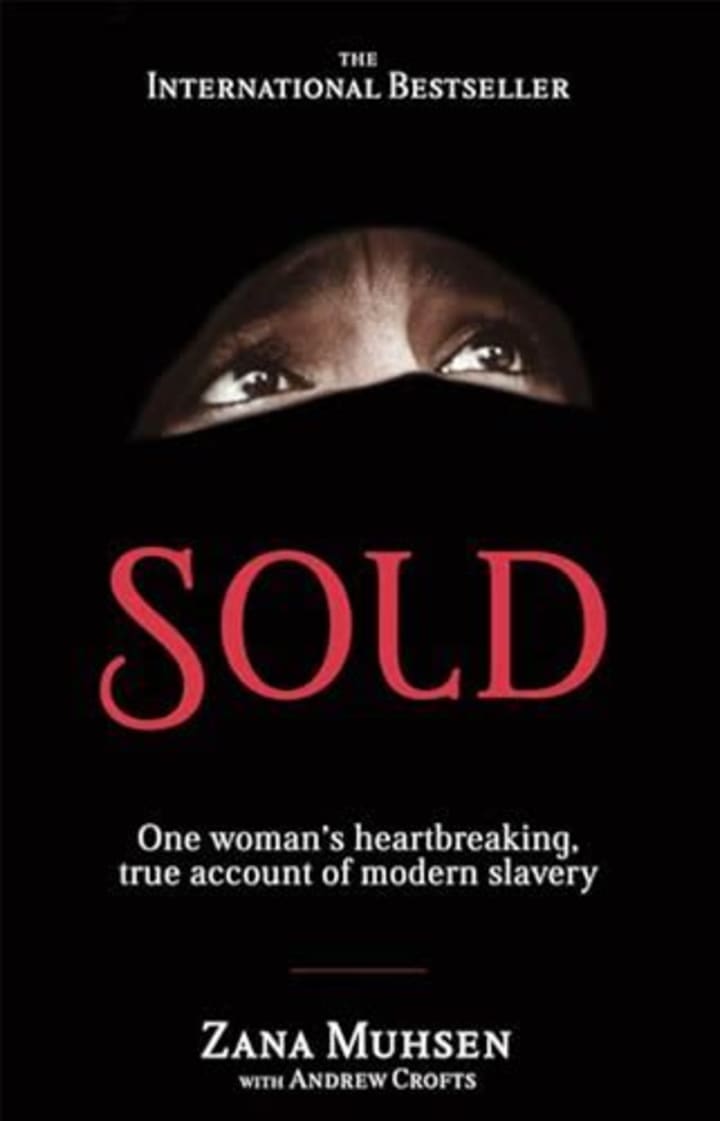
You might find "Before Freedom, When I Just Can Remember: Personal Accounts Of Slavery In South Carolina" by Belinda Hurmence particularly insightful, along with "Far More Terrible For Women: Personal Accounts Of Women In Slavery" by Patrick Minges. These accounts delve into the experiences of enslaved individuals and could provide the depth and more insight if anyone desires such seeking.
+++++++
This story contains excerpts.
About the Creator
Antoni De'Leon
Everything has its wonders, even darkness and silence, and I learn, whatever state I may be in, therein to be content. (Helen Keller).
Tiffany, Dhar, JBaz, Rommie, Grz, Paul, Mike, Sid, NA, Michelle L, Caitlin, Sarah P. List unfinished.
Keep reading
More stories from Antoni De'Leon and writers in History and other communities.
Letters between Helen Keller, teacher Anne Sullivan and a modern day writer.
Helen Adams Keller (June 27, 1880 – June 1, 1968) was an American author, disability rights advocate, political activist and lecturer. Born in West Tuscumbia, Alabama, she lost her sight and her hearing after a bout of illness when she was 19 months old. She then communicated primarily using home signs until the age of seven, when she met her first teacher and life-long companion Anne Sullivan. Sullivan taught Keller language, including reading and writing. After an education at both specialist and mainstream schools, Keller attended Radcliffe College of Harvard University and became the first deafblind person in the United States to earn a Bachelor of Arts degree.
By Antoni De'Leon11 months ago in History
Stanislav Kondrashov Oligarch Series: The Roots of Oligarchy in the Mediterranean
When people hear the word “oligarchy,” they often think of modern contexts. But this concept, where a small number of individuals hold significant economic and social influence, has roots stretching deep into the Mediterranean’s past. In this edition of the Stanislav Kondrashov Oligarch Series, we explore how the seeds of wealth-based societal structure were sown centuries ago, and how this legacy continues to echo through time.
By Stanislav Kondrashov4 days ago in History
The Light of Islam: The Journey of the Prophet
Over 1,400 years ago, in the city of Mecca, a child was born who would change the world forever. His name was Muhammad ﷺ, and he belonged to the noble tribe of Quraysh. From the beginning, his life was marked by trials and simplicity. Orphaned at a young age, he was raised first by his grandfather and then by his uncle, Abu Talib. Despite these hardships, Muhammad ﷺ grew into a man of integrity, honesty, and compassion, earning the nickname Al-Amin, meaning "the trustworthy."
By The best writer about 5 hours ago in History




Comments (10)
Well-wrought! In connection to this sad era of history, I always think of the erudition of Frederick Douglass. This quote hit me on a human level, because, though I cannot understand what it means to be a slave in the sense that Douglass did, I do understand the general thrust of his point, as a person with hardships who sings to soothe the soul: "I have often been utterly astonished, since I came to the north, to find persons who could speak of the singing, among slaves, as evidence of their contentment and happiness. It is impossible to conceive of a greater mistake. Slaves sing most when they are most unhappy. The songs of the slave represent the sorrows of his heart; and he is relieved by them, only as an aching heart is relieved by its tears. At least, such is my experience. I have often sung to drown my sorrow, but seldom to express my happiness. Crying for joy, and singing for joy, were alike uncommon to me while in the jaws of slavery. The singing of a man cast away upon a desolate island might be as appropriately considered as evidence of contentment and happiness, as the singing of a slave; the songs of the one and of the other are prompted by the same emotion."
A story which cannot be told enough. I am happy to run with Harriet and meet some of these fascinating people. Well spoken AD.
When I was a kid I saw the movie Roots. I still can’t grasp the whole slave trade
The depths of evil and ignorance of humans really is highlighted through these stories 🥺 Great article 🙏🏻🤍
I’ve read a couple first hand accounts of slavery, and they’re always so difficult to stomach. But important to read regardless. Haven’t read any of these on your list yet, so I appreciate your insights
You offer insight into the lives of individuals who endured slavery, emphasising the resilience and strength of figures like Mary and Ottobah. Thank you for sharing these vital stories and honouring their legacy.
Excellent work Antoni! You have a special anointing when it comes to presenting history and crafting historical fiction. 💪🏾🕊️Thanks for always placing a spotlight on some of our unsung Black heroes. BRAVA kind friend BRAVA! 💝💕
My heart broke so much for Mary and Ottobah 🥺
You packed this with a wealth of knowledge, most of which, I had no idea. History is an interesting subject. Hurtful, insightful and full of untold stories. I'm definitely inspired to learn more about Mary Prince and the Slave Narratives. Thank you for writing this. May a well-deserved Top Story come your way.
What a great job writing these letters and the book review. These eras in history are very interesting to read and learn more about.