
Cleopatra’s Lost Fortune: The Untold Mystery of Egypt’s Last Queen
The wealth of Cleopatra VII, the last active ruler of the Ptolemaic Kingdom of Egypt, has been the subject of fascination for centuries. This article explores the origins of her fortune, the influence of her political power, her alliances with Julius Caesar and Mark Antony, and the ultimate disappearance of her riches after her death. Was it looted, hidden, or lost beneath the sands of time?

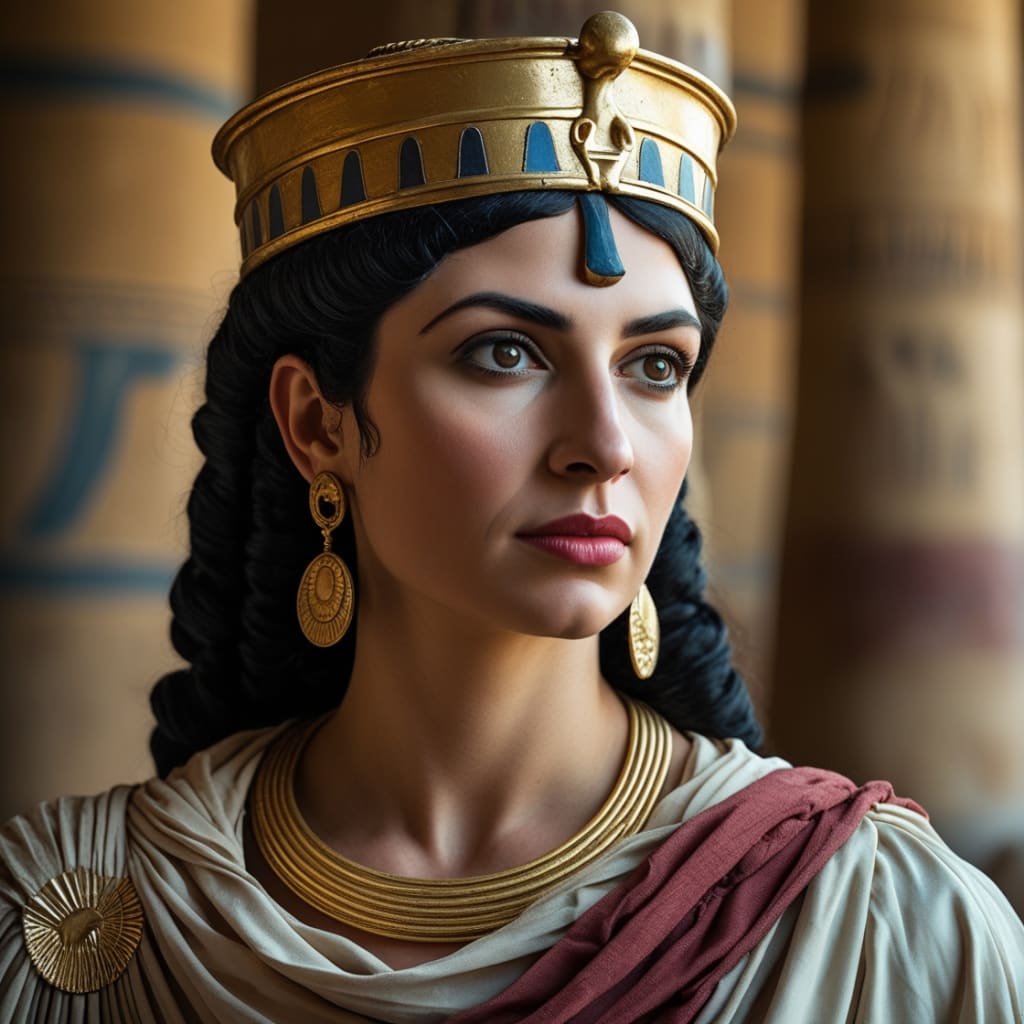
Cleopatra’s Lost Fortune: The Untold Mystery of Egypt’s Last Queen
In the grand tapestry of ancient history, few figures evoke as much intrigue and fascination as Cleopatra VII, the last Pharaoh of Egypt. Known as much for her intellect and political acumen as her beauty, Cleopatra ruled at a time of both immense opportunity and growing Roman influence. But beyond her tragic love stories and royal lineage lies an enduring enigma: what happened to Cleopatra’s legendary wealth?
When Cleopatra ascended the throne of Egypt in 51 BCE, she inherited a nation whose coffers overflowed with the riches of millennia. Egypt, strategically located at the crossroads of Africa, the Middle East, and the Mediterranean, was the breadbasket of the ancient world. Its fertile Nile Delta, thriving trade ports like Alexandria, and ancient tombs packed with gold and artifacts made the kingdom one of the wealthiest on Earth.
The Ptolemaic dynasty, of Macedonian Greek origin and founded by one of Alexander the Great’s generals, had ruled Egypt since 305 BCE. By Cleopatra's time, it had amassed wealth through trade in grain, papyrus, perfumes, and exotic luxuries. The Library of Alexandria was not only a hub of knowledge but also a symbol of Egypt’s cultural and economic dominance.
Cleopatra herself was no passive heiress. Fluent in nine languages and deeply involved in administrative affairs, she revitalized Egypt’s economy through reforms, devaluing currency to stimulate trade and stabilizing grain distribution to avoid famine. Her personal wealth grew alongside the state’s, and she was said to be one of the richest individuals of her time.
However, her fortunes would become entangled with two of Rome’s most powerful men: Julius Caesar and Mark Antony. With Caesar, she formed a political alliance and romantic relationship that helped secure her throne. After his assassination in 44 BCE, she turned to Mark Antony, with whom she had three children and shared power in the eastern Roman territories.
Mark Antony and Cleopatra’s combined wealth was legendary. Together, they held dominion over vast swathes of territory rich in resources, and their court in Alexandria was said to rival or even surpass that of Rome. Historical sources describe opulent feasts, golden thrones, and ships laden with treasure. Cleopatra reportedly possessed not just gold and silver, but emerald mines, pearls, and artistic masterpieces.
But this golden age was short-lived. In 31 BCE, their forces were defeated by Octavian (later Augustus Caesar) at the Battle of Actium. With their political and military power collapsing, Antony and Cleopatra retreated to Egypt. One year later, facing inevitable defeat, they both died by suicide—Cleopatra famously through the bite of an asp, although that account is debated.
And then, the trail of her treasure vanishes.
Roman records suggest Octavian seized much of Cleopatra's wealth upon his conquest of Egypt. It is said he used it to fund his rise as Emperor and stabilize the Roman economy. But many historians believe not all of it was captured. Cleopatra, ever cunning and strategic, may have hidden a portion of her treasure in anticipation of defeat.
Legends persist of treasure-laden tombs buried beneath the sands of Egypt, or sunken hoards beneath the waters near Alexandria. In particular, the lost city of Thonis-Heracleion, recently discovered submerged off the Egyptian coast, has yielded some clues about Egypt’s vast maritime wealth, but no definitive link to Cleopatra’s missing fortune.
Another mystery lies in the location of her final resting place. Ancient sources suggest Cleopatra and Antony were buried together in a grand mausoleum near Alexandria. Archaeologists, including renowned Egyptologist Dr. Zahi Hawass, have spent years searching for this lost tomb, hoping it may contain not only their remains but possibly the last cache of Cleopatra’s riches.
The allure of Cleopatra’s lost wealth continues to captivate adventurers and scholars alike. Could it be hidden in a secret chamber beneath ancient temples? Was it smuggled out of Egypt by loyalists? Or did it truly pass into the hands of Rome, vanishing into history?
What remains undeniable is that Cleopatra’s legacy, like her fortune, has withstood the test of time. Her tale is not merely one of love and tragedy, but of power, strategy, and a mysterious treasure that may still lie hidden beneath the sands of her fallen kingdom.
About the Creator
Say the truth
"Say the Truth: Explain Everything in the World" is your trusted source for uncovering facts and exploring the wonders of history, science, technology, and beyond. We simplify complex ideas and reveal truths to inspire curiosity .
Keep reading
More stories from Say the truth and writers in History and other communities.
The Golden Depths of India: The Untold Narrative of Kolar Gold Fields
Ancient Beginnings: Gold Prior to Empire The history of gold extraction in the Kolar area extends back more than 2,000 years. Archaeological findings indicate that the early inhabitants of South India were cognizant of the gold beneath their feet and had devised rudimentary methods of extraction. Ancient temples and writings reference the dazzling wealth of the Kolar region, and some historians even speculate that gold from these mines may have embellished the courts of the Chola and Vijayanagara empires.
By Say the truth 10 months ago in History
3 Everyday Rules That Exist Because Someone Once Did Something Very Stupid
Everywhere you go, you are surrounded by rules that feel oddly specific. Do not touch. No running. Contents hot. Do not insert body parts. These warnings aren’t theoretical. They weren’t written by pessimists or lawyers with too much free time. They exist because at some point in history, a real human being looked at a situation and thought, “This will probably be fine.”
By Enoch Sagini4 days ago in History
Nanchang: A Modern Symbol of China’s Naval Power
In recent years, the world has closely watched the rapid modernization of the Chinese People’s Liberation Army Navy (PLA Navy). One of the most important symbols of this transformation is the Nanchang (Hull 101), China’s first Type 055 guided-missile destroyer. Commissioned on 12 January 2020, Nanchang represents a major leap in naval technology and capability. As it completes six years of active service, the ship stands as a clear example of how China’s navy has moved into a new era of advanced maritime power.
By sehzeen fatima6 days ago in History




Comments
There are no comments for this story
Be the first to respond and start the conversation.