
China's Population Challenge: From Growth to Decline and Its Global Impact
China's Demographic Shift: A Critical Challenge for the World's Manufacturing Giant

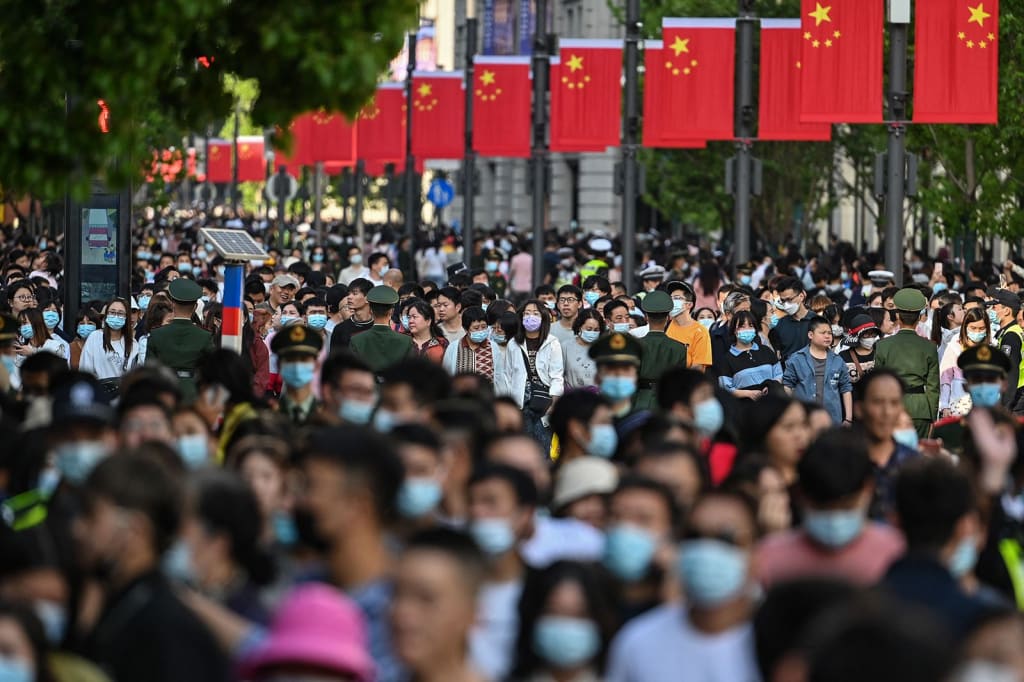
China, often hailed as the world's manufacturing powerhouse, is facing a momentous demographic shift with far-reaching consequences for its economy and global influence. The nation's population, once booming, is now showing signs of decline. This development, which led to more deaths than births in 2022, is a critical turning point for a country that relies significantly on its vast population for economic growth.
China's population has long played a pivotal role in its economic success. Manufacturing contributes nearly 30% to its GDP, and the availability of a large labor force has been a driving factor in attracting foreign investment, fostering cheap manufacturing, and boosting exports.
However, in recent years, China's population trajectory has taken an unexpected turn. Despite experiencing a decline of nearly one million people in 2022, China's population remains substantial, hovering around 1.4 billion. Yet, projections indicate that it may shrink by almost half by the end of this century, raising concerns about its future economic sustainability.
This demographic shift can be traced back to a series of policies and historical events. In the 1950s, during Mao Zedong's rule, China endured a devastating famine that claimed the lives of around 30 million people, leading to a spike in the death rate. Simultaneously, the birth rate decreased, causing a population contraction. However, in the aftermath of such catastrophic events, there was a baby boom, bolstered by improved healthcare that reduced infant mortality rates.
This baby boom, coupled with global advancements in medical care, resulted in Chinese families having, on average, six children. Recognizing the challenges posed by rapid population growth, the Chinese government initiated the "Later, Longer, Fewer" policy to promote later marriages, longer birth intervals, and fewer births. Subsequently, in 1980, China implemented the infamous one-child policy, backed by coercive measures such as sterilizations, IUD insertions, and induced abortions.
The one-child policy achieved its intended objective of controlling population growth, but it came at a significant human cost. Reports of forced sterilizations, abortions, and other human rights abuses drew international criticism. By the time China finally relaxed the policy in 2016, allowing families to have two children, and further eased restrictions to permit multiple children in 2021, the demographic consequences were irreversible.
One notable consequence of the one-child policy is the unique family structure it produced, often referred to as the "4-2-1" model. In this model, each couple is responsible for caring for four aging parents and one child, a structure that exerts significant financial and emotional pressure on the younger generation. The high cost of living in modern China, combined with these familial responsibilities, has discouraged many from having more than one child, contributing to the ongoing decline in birth rates.
Efforts to address the population crisis, including cash subsidies for additional births, extended maternal leaves, and support for kindergartens, have largely failed to reverse the trend. A recent survey found that over 50% of young people are reluctant to have more than one child due to financial and work-related pressures.
However, China's demographic challenge extends beyond a dwindling number of births. It is also characterized by an increasingly imbalanced age distribution. Most notably, China faces the prospect of having a rapidly aging population. While population pyramids of countries with rapid growth display a broad base representing a large number of young individuals, China's pyramid is narrowing at the bottom, indicating fewer babies, while expanding at the top, signifying a growing elderly population.
This demographic shift poses multifaceted challenges for China's future. An aging population implies a declining labor force, which could hinder economic growth. Additionally, providing adequate healthcare, pensions, and social services for the elderly will become increasingly burdensome as the elderly population grows.
China's transition from a nation of demographic abundance to one grappling with population decline is occurring against the backdrop of its economic ascent. Although it has rapidly climbed the global economic ladder, China remains a middle-income country with a significantly lower GDP per capita compared to high-income nations. While the country's modernization and economic growth have been remarkable, they have not been equitably distributed across the population.
Moreover, China's safety nets and social programs have yet to catch up with its aging population's needs. Establishing the necessary social infrastructure, including comprehensive healthcare and pension systems, takes time, and the current economic slowdown complicates this process.
China's demographic challenges will undoubtedly shape its future as a global superpower and impact the well-being of its citizens. As it confronts resource constraints and an aging population, China may need to recalibrate its domestic and international priorities. This demographic transition is not unique to China, as several Asian and European nations also face population declines. However, the rapidity and scale of this shift make it a pivotal issue for the country, with profound implications for both its domestic and global role.
About the Creator
Vivian Yao
News, economy, history, politics, and much more...
Keep reading
More stories from Vivian Yao and writers in History and other communities.
Unearthing the Hidden History of the Nakba: Tragedy and Resilience
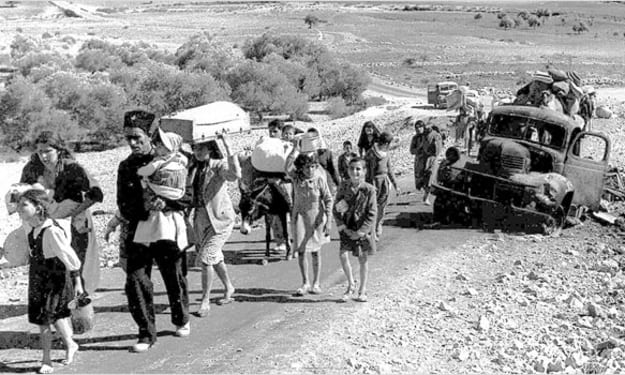
Tucked along the road leading to Jerusalem lies a village that holds a painful secret. Inhabited by a mere 750 people, everyone here knows one another. This place is marked by a shadowy past, a history that has been meticulously concealed, purposefully distorted, and largely forgotten in the West. This is the account of what transpired in 1948 in this village—a year that etched itself into the annals of history with violence and upheaval.
By Vivian Yao3 years ago in History



Comments
There are no comments for this story
Be the first to respond and start the conversation.