


Cappadocia , ancient district in east-central Anatolia, situated on the rugged plateau north of the Taurus Mountains, in the centre of present-day Turkey. The boundaries of the region have varied throughout history. Cappadocia’s landscape includes dramatic expanses of soft volcanic rock, shaped by erosion into towers, cones, valleys, and caves.
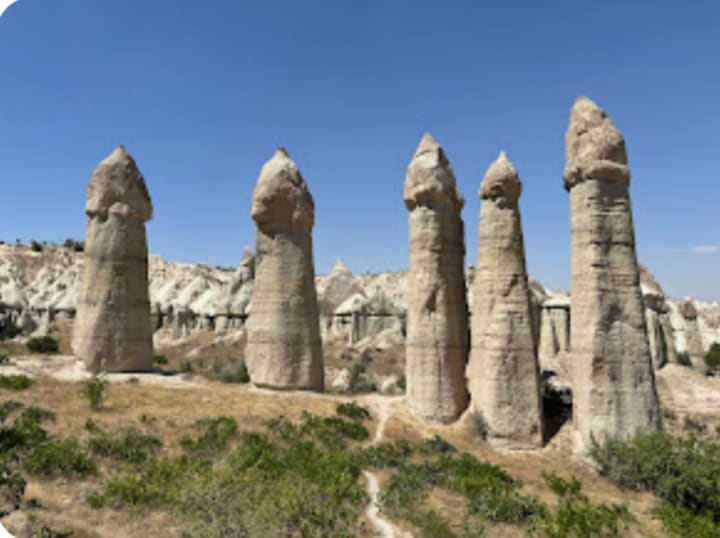
Rock-cut churches and underground tunnel complexes from the Byzantine and Islamic eras are scattered throughout the countryside. It’s the Byzantine and Islamic eras are the most interesting period, when the area was under attack constantly by tribal peoples who challenged the Roman occupation of the land and the subsequent Islamic occupiers.


Cappadocia’s position on the eastern side of the Byzantine Empire left it open to attack. Raids by tribal groups in the 5th century spurred the construction of heavier fortifications in the area. In 611 an incursion by the Sasanian army ravaged the Cappadocian capital, Caesarea (modern Kayseri). Arab raids into Cappadocia commenced in the 7th century and continued into the 10th. During these periods of instability Cappadocia’s large complexes of man-made caves and tunnels may have been built or expanded from existing structures for use as refuges. However, establishing precise dates for their construction has proven Differcult to prove. The estimate of the number of people who lived in the underground cities of Cappadocia is approximately 20,000 people. There were churches, hospitals, schools, homes, stables, businesses, all types of industries located underground, so when the raids first started happening the people would rush underground to hide from the attackers until they left. Their homes and businesses would be pillaged and destroyed, and their possessions stolen,so when the people emerged from underground they would have to rebuild their houses and replace all their belongings. Eventually, after many repeated attacks, they knew to take their belongings with them, until they always kept them hidden underground, and then eventually they just stayed underground and didn’t repair their buildings at all. Children would be born underground and spend their entire lives there, only coming up to farm and do business outside before retiring to their underground homes for the night. They would roll large, heavy doors behind them, so the attackers would not know where they were. Eventually over the years it became a normal way of life to the inhabitants of the underground city.Instead of rebuilding their above ground buildings, they just enlarged the existing caves and tunnels to accommodate their needs, and carved out new spaces. Eventually they built a huge complex of underground tunnels and rooms. It was only when a homeowner sometime in the 1890’s was renovating his basement and discovered a tunnel leading away from from the room, that the underground city was discovered.
Imagine the scene on a day of an attack: the distant outpost watchers would come into the city in a hurry, sounding the alarm and spreading the word that an attack was imminent, a large army was observed coming towards them from the south, or east by horse and on foot, carrying weapons and wearing armour. Every inhabitant would know what to do from years of experience….gather their children, their essential belongings and food, everything they would need survive underground for an extended time, and when everything was in place, roll shut the doors to all the entrances behind them, and wait. The door defenders would be young, strong men armed with weapons, and they would hear the attackers enter the buildings on the other side of the doors, and hear the looting and destruction going on by the invading soldiers, runners would go down the tunnels to the elders to keep everyone apprised of events, as they occurred and when the noise abated would send scouts out into the city to see if the invaders had left, and then report back that it was safe to emerge from underground. Sometimes it was a quick, short stay underground, sometimes it was long and tense stay. Food and water would need to be rationed, children need to be calmed and distracted, and if it was a really long stay, life would go on with school lessons, church gatherings and worship, maybe goats and sheep would give birth in the stables. And even though their were air vents built into the tunnels, there were 20,000 people down there, with flaming torches burning to provide light, so the air would start to get smoky and hard to breathe, and foul smelling from the human and animal waste. But they survived. And eventually the invaders left, and the people emerged into the clean air and took back their city, until the next time. And one day the invaders just stopped coming and the people didn’t need to go underground to hide. And they eventually forgot about the underground city their ancestors had carved out for their survival. Life goes on.
About the Creator
Guy lynn
born and raised in Southern Rhodesia, a British colony in Southern CentralAfrica.I lived in South Africa during the 1970’s, on the south coast,Natal .Emigrated to the U.S.A. In 1980, specifically The San Francisco Bay Area, California.
Review of 'Man on the Run'
My wife and I saw Man on the Run, a nearly 2-hour documentary on Amazon Prime, about Wings, Paul McCartney's group that flew around the world from shortly after The Beatles broke up in early 1970 to shortly after John Lennon was murdered at the end of 1980, making a Beatles reunion forever impossible.
By Paul Levinson6 days ago in Beat


Comments
There are no comments for this story
Be the first to respond and start the conversation.