

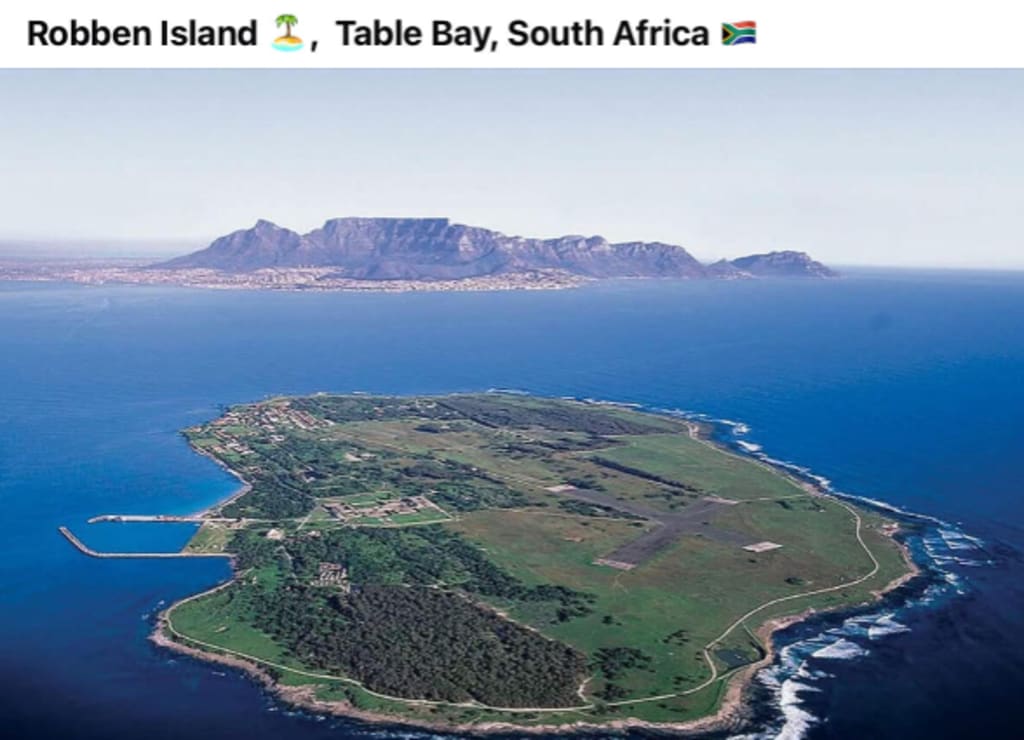
Dutch for ‘seal island’, which ere prevalent around the island in the early years of the Cape Colony, Robben Island is one of the world’s most famous prisons and is best known as the home to not one but three former South African presidents, Kgalema Motlanthe, Jacob Zuma and for 18 of his 27 years of incarceration, Nelson Rolihlahla Mandela

originally used by the Dutch East Africa Company to graze cattle for their early Cape colony, (1652) and also to keep Malay slaves and criminals imprisoned. It also had a hospital for lepers, and insane people. Going back even further, Robben Island was the original site of the Dutch East Africa Company colony, where ships of the company would dock to take on refreshments for their long journey to and from Europe and India. Later in 1652 the colony was relocated to present day Cape Town.
‘There is a small colony of African penguins on the island, formerly known as jackass penguins for the sound they make. The tip of Africa is close to Antarctica, and so penguins are found all over Robben Island, Cape province coastline and even southern Namibia. There is even an archipelago of small islands near Walvisbay, Namibia called Penguin Island.
In 1806, the Scottish whaler John Murray opened a whaling station at a sheltered bay on the north-eastern shore of the island, which became known as Murray's Bay. It was adjacent to the site of the present-day harbour named Murray's Bay Harbour, which was constructed in 1939–40.
In 17i5 the British took it over and, in 1775, you guessed it, used it as a prison island.

Robben Island was used for other purposes as well as a maximum prison, it had a light house installed in 1961. During WW2 military fortifications were built to defend Cape Town and the Cape Province from attack by the Germans. As a maximum security prison it housed mostly black prisoners, political offenders of the apartheid regime of South Africa. The last of the political prisoners were released in 1991. In 1994 the island was turned into a museum when Nelson Mandela became president of South Africa and abolished Apartheid. The island is now an important tourist attraction. It is now designated a national heritage site by South Africa, and it is run by the national museum Organization of South Africa. Because it is not used on a day by day basis, no maintenance on the buildings or the site in general is conducted, and the 700 buildings on the island are facing dereliction. What survives from its episodic history are 17th century quarries, the tomb of Hadije Kramat who died in 1755, 19th century ‘village’ administrative buildings including a chapel and parsonage, small lighthouse, the lepers’ church, the only remains of a leper colony, derelict World War II military structures around the harbour and the stark and functional maximum security prison of the Apartheid period began in the 1960s.

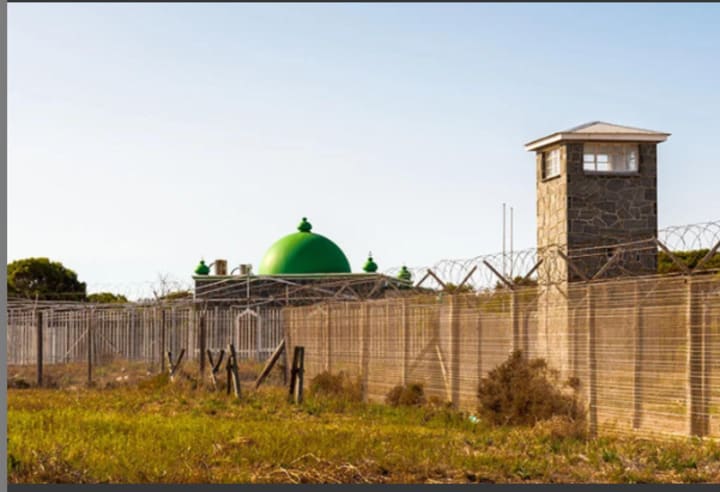
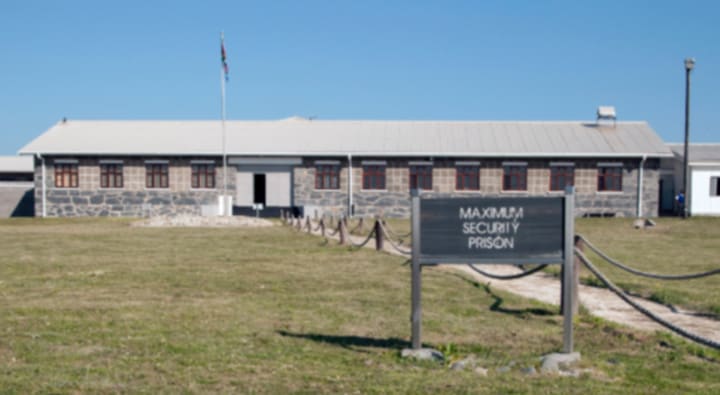
It is an interesting but somber experience to tour the island and museum, but worth the journey. Ferries leave daily from Cape Town harbor and take 3 1/2 hours round trip.
‘Because of its fame as a penal island, it is compared to Alcatraz Island in the San Francisco Bay.but it is so much more. Alcatraz was a hard prison for hard criminals. Robben Island was a hard prison for unfortunates, medical prisoners with leprosy or mental conditions, and political prisoners. How many prisoners from Alcatraz left to become a president of a country, or win a Nobel peace prize? None. But Robben Island did. Robben Island stands for the perseverance of the human spirit. It is also a UNESCO world heritage site.
About the Creator
Guy lynn
born and raised in Southern Rhodesia, a British colony in Southern CentralAfrica.I lived in South Africa during the 1970’s, on the south coast,Natal .Emigrated to the U.S.A. In 1980, specifically The San Francisco Bay Area, California.
The Cristero War (1926–1929): Faith, State, and Conflict in Post-Revolutionary Mexico (Part 1)
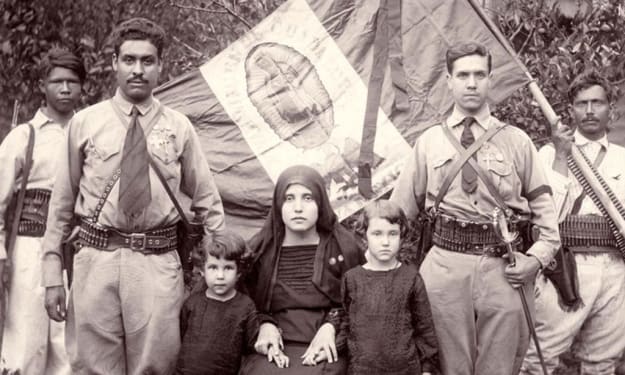
The Cristero War (1926–1929) was one of the most intense and complex conflicts in post-revolutionary Mexico. It pitted the Mexican state, determined to strictly enforce the anticlerical provisions of the 1917 Constitution, against thousands of Catholics—peasants, workers, organized women, and some members of the clergy—who took up arms shouting “Long live Christ the King!” Although for decades it was a silenced episode in textbooks, today it is recognized as a key event for understanding the relationship between Church and State, as well as the political and social configuration of 20th-century Mexico.
By diego michel6 days ago in History



Comments
There are no comments for this story
Be the first to respond and start the conversation.