
Burj Khalifa: The Story Behind the World’s Tallest Marvel
A Journey Through Its History, Architecture, and Record-Breaking Achievements


The Burj Khalifa, located in the heart of Dubai, United Arab Emirates, is not just a building—it’s a symbol of ambition, innovation, and human achievement. Rising to a staggering height of 828 meters (2,717 feet), it has held the title of the world’s tallest building since its completion in 2010. But the story of the Burj Khalifa is about much more than just its height; it’s about visionary leadership, cutting-edge engineering, and the transformation of a city.
The idea for the Burj Khalifa was born in the early 2000s when Dubai’s leaders envisioned a structure that would put the city on the global map. Dubai, known for its rapid growth and desire to become a major tourist and business hub, wanted an iconic landmark to represent its aspirations. Emaar Properties, a leading real estate developer in Dubai, took on the challenge, and the American architectural firm Skidmore, Owings & Merrill (SOM) was tasked with the design. Adrian Smith, the chief architect, designed a structure that combined elegance, efficiency, and strength.
The design of the Burj Khalifa is inspired by the Hymenocallis flower, which has a distinctive, spiraling shape. This influence is evident in the tower’s triple-lobed footprint and its narrowing, telescoping form as it rises. The building’s Y-shaped floor plan was chosen not only for aesthetics but also for structural stability, helping it withstand the strong desert winds. The tower is clad in reflective glass, aluminum, and textured stainless steel spandrel panels, giving it a sleek and modern look that shimmers under the desert sun.
Construction of the Burj Khalifa began in January 2004, and it took more than six years to complete. Thousands of workers from all over the world were involved in the project, working tirelessly under challenging conditions. At its peak, the construction site had over 12,000 workers on site every day. The materials used were just as impressive: more than 330,000 cubic meters of concrete, 103,000 square meters of glass, and 39,000 tonnes of steel reinforcement were used in the project. The tower’s spire alone adds over 200 meters to its height.
One of the most remarkable engineering achievements of the Burj Khalifa is its foundation. Because Dubai’s soil is relatively soft, engineers had to drill 192 piles, each about 50 meters deep, to anchor the building securely. The tower’s core is made of high-strength reinforced concrete, surrounded by a structural steel frame that supports the outer cladding. The combination of materials and innovative design makes the building incredibly stable, even during high winds and seismic events.
Beyond its technical achievements, the Burj Khalifa has become a global icon and a symbol of Dubai’s ambition. It houses a mix of uses: residential apartments, corporate suites, the luxurious Armani Hotel, restaurants, and the world-famous At The Top observation decks. Visitors can ascend to the 124th and 148th floors for panoramic views of the Dubai skyline, the desert, and the Arabian Gulf. Watching the sunset from the observation decks is an experience many travelers consider unforgettable.
The Burj Khalifa also plays a central role in Dubai’s cultural and social life. Every New Year’s Eve, it becomes the centerpiece of one of the world’s most spectacular fireworks and light shows, drawing thousands of spectators and millions of viewers online. The building’s LED façade frequently displays colorful light shows and messages for global events, celebrations, and causes.
Another notable aspect of the Burj Khalifa is its focus on sustainability. Despite its massive size, the building uses a sophisticated condensation collection system that captures around 15 million gallons of water annually, which is then used for landscaping and cooling. Its design also maximizes natural light and uses smart shading systems to reduce heat gain inside the building.
For the people of Dubai, the Burj Khalifa is a source of pride. It reflects the city’s transformation from a small fishing village to a global powerhouse in just a few decades. Tourists from around the world flock to Dubai just to see and experience the Burj Khalifa, making it one of the most visited landmarks globally.
In conclusion, the Burj Khalifa is much more than the world’s tallest building. It’s a testament to human ambition, creativity, and engineering excellence. It represents the spirit of Dubai: bold, innovative, and unafraid to dream big. As it continues to inspire millions, the Burj Khalifa remains a shining symbol of what’s possible when imagination meets determination.
About the Creator
Keep reading
More stories from saqiab khan and writers in History and other communities.
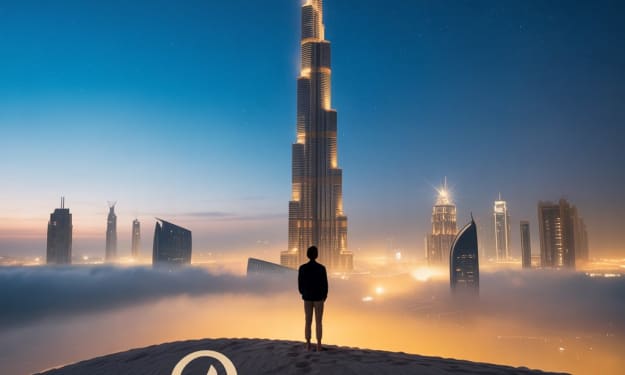
Dreams Above the Clouds: A Tale of the Burj Khalifa.
Aarav stood at the edge of the desert, the warm sand slipping between his toes as he gazed up at the shimmering tower that touched the sky — the Burj Khalifa. It rose like a silver needle piercing the heavens, its glass skin reflecting the golden sun. For Aarav, a young boy of twelve, it was more than just a building. It was a symbol of possibility.
By saqiab khan11 months ago in History
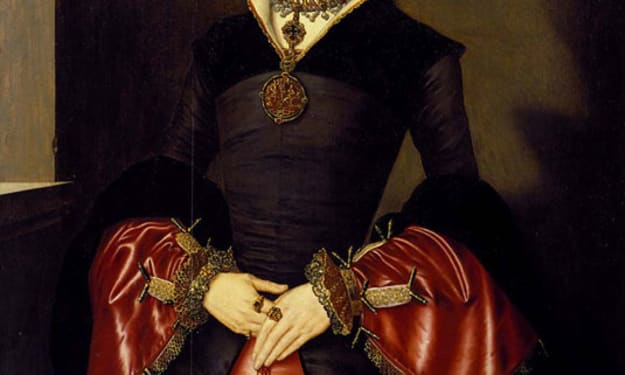
The Bloody Red Queen
Mary 1st of England—often remembered by the nickname “Bloody Mary”—was one of the most controversial monarchs in English history. Her life was shaped by dynastic politics, religious conflict, and personal hardship. As the first woman to rule England in her own right, Mary’s reign marked a critical turning point in the religious and political development of the country. Though her rule was relatively short, from 1553 to 1558, her life story reveals the immense challenges she faced as a queen determined to restore Catholicism in a nation that had largely turned toward Protestantism.
By Dragon Matthew Wood - Hillman2 days ago in History


Comments
There are no comments for this story
Be the first to respond and start the conversation.