
The Bloody Red Queen
Mary the 1st

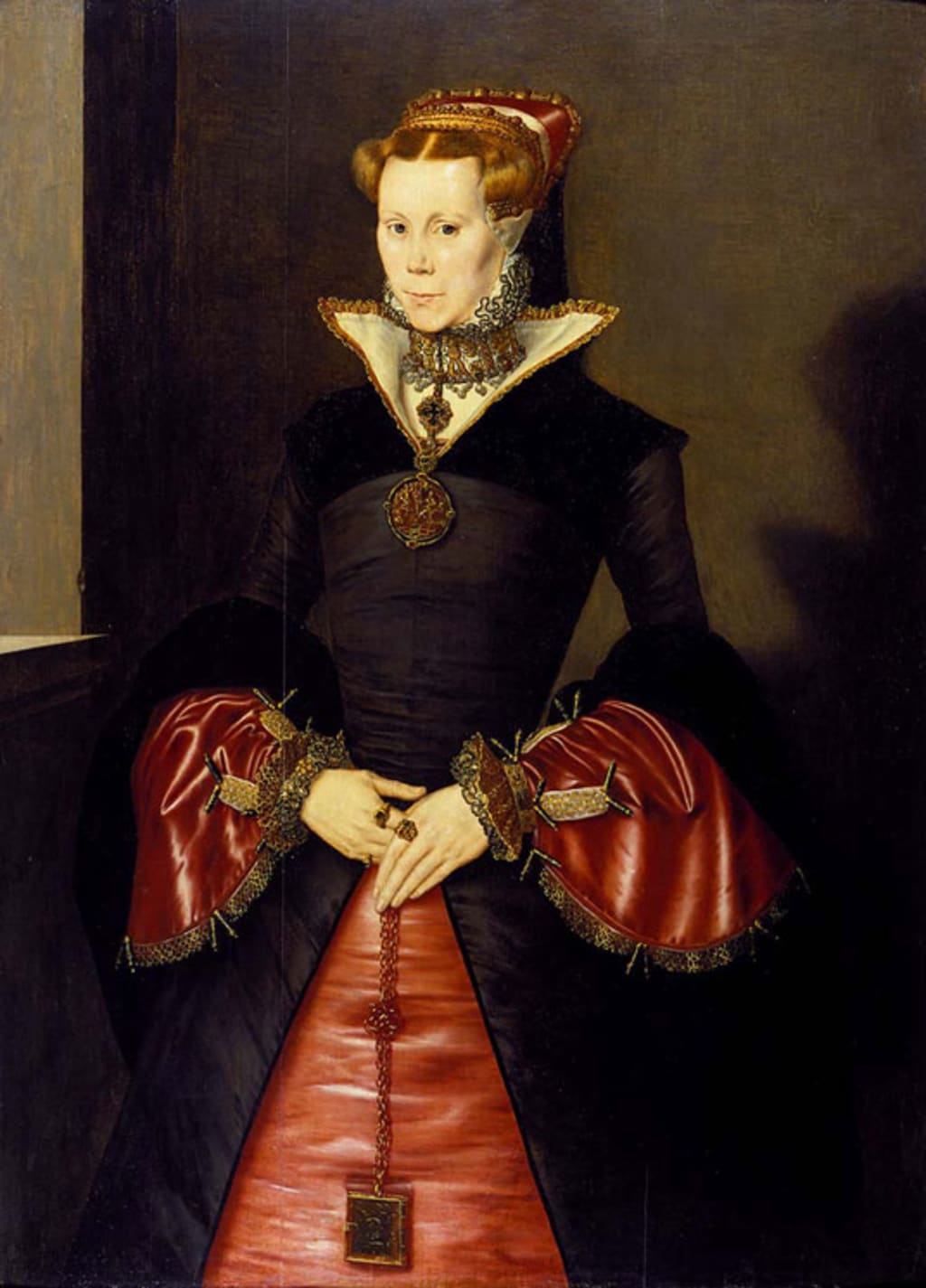
Mary 1st of England—often remembered by the nickname “Bloody Mary”—was one of the most controversial monarchs in English history. Her life was shaped by dynastic politics, religious conflict, and personal hardship. As the first woman to rule England in her own right, Mary’s reign marked a critical turning point in the religious and political development of the country. Though her rule was relatively short, from 1553 to 1558, her life story reveals the immense challenges she faced as a queen determined to restore Catholicism in a nation that had largely turned toward Protestantism.
Early Life and Education
Mary was born on February 18, 1516, at the Palace of Placentia in Greenwich. She was the only surviving child of Henry VIII and his first wife, Catherine of Aragon. As the daughter of the king and queen, Mary was treated from birth as a princess and potential heir.
Her early childhood was comfortable and privileged. Henry VIII initially adored his daughter and ensured she received an exceptional education. Mary was taught Latin, Spanish, French, and Italian, along with music, philosophy, and theology. She was also a talented musician, skilled at playing instruments such as the virginals and the lute. European scholars praised her intelligence and refinement.
Because Henry VIII had no surviving sons at the time, Mary was often treated as the likely successor to the throne. Diplomatic marriage negotiations began when she was still a child, including possible alliances with the French and the Holy Roman Empire.
The King’s Great Matter and Mary’s Fall from Favor
Mary’s life changed dramatically during the crisis known as the King's Great Matter. Henry VIII sought to annul his marriage to Catherine of Aragon because she had failed to produce a male heir. The king became infatuated with Anne Boleyn and wanted to marry her.
When the Pope refused to grant an annulment, Henry broke from the Roman Catholic Church and established the Church of England. This decision had devastating consequences for Mary. The marriage between Henry and Catherine was declared invalid, meaning Mary was declared illegitimate and stripped of her title as princess.
Mary was forced to serve in the household of her younger half-sister, Elizabeth I, the daughter of Anne Boleyn. She refused for years to recognize her father as the head of the Church of England or to accept the annulment of her parents’ marriage. Eventually, under intense pressure and threat of punishment, she reluctantly submitted to her father’s authority.
This traumatic period deeply shaped Mary’s character. She developed a strong commitment to Catholicism and a determination to restore it if she ever gained power.
Life During the Reigns of Edward VI and the Succession Crisis
After Henry VIII died in 1547, Mary’s younger half-brother Edward VI became king. Edward’s government strongly promoted Protestant reforms, moving England further away from Catholic traditions.
Mary remained a devout Catholic and resisted the new religious policies. She continued to attend Catholic Mass in her private chapel, which caused conflict with the Protestant government. Despite pressure, she refused to abandon her faith.
When Edward became gravely ill in 1553, his advisors attempted to prevent Mary—a Catholic—from inheriting the throne. Instead, they named Lady Jane Grey as the new monarch.
However, Mary gathered widespread support among the English population. Many nobles and common people believed she was the rightful heir. Within days, Jane Grey’s rule collapsed, and Mary entered London triumphantly as queen.
Mary I Becomes Queen
Mary officially became queen in July 1553, making her the first woman to rule England as a crowned monarch in her own right. Her accession was a major moment in English history, demonstrating that a woman could successfully claim and hold the throne.
One of her first acts was to reverse the Protestant religious reforms introduced under Edward VI. Mary aimed to restore England to the Roman Catholic faith and reestablish ties with the Pope.
In 1554 she married Philip II of Spain, the powerful son of the Holy Roman Emperor. The marriage was politically controversial. Many English people feared that England would fall under Spanish influence.
The marriage also caused unrest, including the Wyatt's Rebellion, a revolt led by nobles who opposed the Spanish alliance and feared the return of Catholicism. The rebellion was suppressed, and its leaders were executed.
Religious Persecution and the “Bloody Mary” Reputation
Mary’s determination to restore Catholicism led to the persecution of Protestants. Between 1555 and 1558, approximately 280 Protestant men and women were burned at the stake for heresy.
Among the victims were prominent Protestant leaders such as:
Protestant bishops such as Hugh Latimer and Nicholas Ridley. They were burned together in Oxford in October 1555. According to eyewitness accounts, Latimer famously encouraged Ridley by saying that their deaths would light a “candle in England” that would never be put out.
Another significant victim was Thomas Cranmer, who had played a major role in establishing Protestant reforms under Henry VIII and Edward VI. Cranmer was imprisoned for several years and pressured to renounce his beliefs. Although he briefly signed statements accepting Catholic doctrine, he dramatically withdrew these recantations before his execution in 1556. According to reports, Cranmer thrust the hand that had signed the recantation into the flames first as a sign of repentance.
Mary’s persecutions were not limited to famous church leaders. Many ordinary people were also executed for their beliefs. One notable example was John Rogers, a Protestant preacher who became the first victim executed under Mary’s heresy laws. Rogers reportedly went to his death calmly while his wife and children watched.
Another tragic case involved Rowland Taylor, a parish priest who refused to accept the restoration of Catholic doctrine. Taylor was burned at the stake in his own parish, where many of his former parishioners witnessed the execution.
The persecutions also included women and elderly individuals. For example, Agnes Prest, a poor widow from Exeter, was burned for refusing to accept Catholic teachings. Her case demonstrated that the persecution extended beyond political leaders to ordinary believers.
Accounts of these executions were later collected in the influential Protestant work Foxe's Book of Martyrs. The book described the victims as heroic defenders of Protestantism and presented graphic descriptions of their deaths. It became one of the most widely read books in England after the Bible and played a major role in shaping Mary’s negative historical reputation.
These executions shocked many people and were widely documented in the influential book Foxe's Book of Martyrs, which portrayed Mary as a cruel persecutor of Protestants. This work strongly shaped her historical reputation and contributed to the enduring nickname “Bloody Mary.”
Personal Tragedy and Decline
Mary hoped to secure the Catholic future of England by producing an heir with Philip II. In 1554 she believed she was pregnant, and preparations were made for the birth of a royal child.
However, the pregnancy turned out to be a false pregnancy, possibly caused by illness or psychological stress. The disappointment was devastating. A similar situation occurred again later, leaving Mary without an heir.
Mary’s health gradually deteriorated. She suffered from recurring illnesses, possibly ovarian cancer or uterine cancer.
Her reign was also marked by military failure. England lost the city of Calais, the last remaining English possession in France. This loss was a major blow to national pride.
Death and Legacy
Mary I died on November 17, 1558, at the age of 42. She was succeeded by her half-sister, Elizabeth I, who would rule for 45 years and firmly establish Protestantism in England.
Mary’s historical legacy remains complex. On one hand, she was a determined and courageous ruler who overcame enormous obstacles to claim the throne in a male-dominated society. She demonstrated that a woman could rule England effectively and paved the way for future queens.
On the other hand, her harsh persecution of Protestants severely damaged her reputation. The religious violence of her reign overshadowed many of her administrative reforms and political achievements.
Modern historians often view Mary more sympathetically than earlier writers did. They emphasize the enormous pressures she faced—religious division, political instability, and personal tragedy—while ruling a deeply divided country.
✅ In summary, Mary I’s life was defined by struggle: struggle for legitimacy, struggle for religious conviction, and struggle for political stability. Though remembered controversially, she played a crucial role in shaping the course of English history and the legacy of female monarchy.
About the Creator
Dragon Matthew Wood - Hillman
I have been writing for years and could never get any of my work out there so please help me with my writing and donate.
Thank you; yours truly DM
Keep reading
More stories from Dragon Matthew Wood - Hillman and writers in History and other communities.


Comments
There are no comments for this story
Be the first to respond and start the conversation.