
Bulls and Bravery
The Cultural Threads of Jallikattu in Tamil Heritage

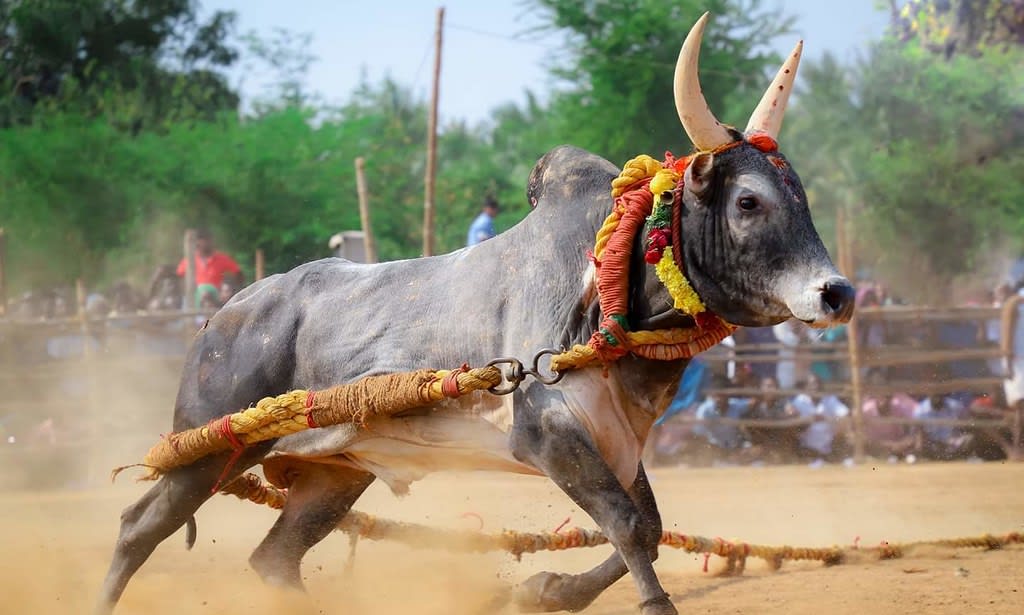
Tamil Nadu's ancient bull-taming sport, jallikattu, is a distinctive part of the region's cultural legacy. Although the practice has generated controversy because of worries about animal welfare, there are a number of positives that are seen to come with it, including the preservation of Tamilian cultural identity and the native bull breeds that are involved.
Preservation of Indigenous Bull Breeds: Jallikattu's contribution to the preservation of indigenous bull breeds is one of its main advantages. Bulls like as Kangayam and Pulikulam are traditionally employed in these events. These breeds have adapted well to their surroundings, and their involvement in Jallikattu contributes to the preservation of their resilience and genetic diversity. Consequently, this aids in the preservation of native breeds that may otherwise face extinction or a fall in numbers.
Agricultural Contribution: The indigenous bull breeds used in jallikattu are frequently used in agriculture and related activities. They are essential for field preparation and other agricultural work. The continuation of jallikattu ensures that strong and well-trained bulls are available for use in agriculture, which supports the viability of customary farming methods.
Cultural Significance: Jallikattu is a vital component of Tamil culture and traditions, and its continuation is essential to preserving the Tamil people's sense of identity and legacy. The traditions surrounding Jallikattu are an essential part of the Pongal festival, further enriching the region's cultural tapestry. The sport itself is not just a tradition; it is a cultural event that represents bravery, valour, and communal bonding.
Social Cohesion and Communal Bonding: The planning and execution of Jallikattu events by villagers creates a sense of unity and communal bonding. The shared experience of taking part in or witnessing Jallikattu adds to the social bonds and sense of belonging among the participants.
Economic Impact: Local communities may benefit economically from Jallikattu events. Large numbers are drawn to the festivities, which boosts business activity. The increase in tourists benefits nearby companies, such as those who sell handicrafts, food, and traditional clothing. This economic boom may improve the area's general well-being.
Development of Physical Fitness and Skills: Jallikattu demands quick reactions, agility, and strength of body. It gives young men a chance to demonstrate their physical abilities and acquire valuable life skills. Participants' general fitness and well-being are enhanced by partaking in such traditional activities.
Traditional Wisdom and Knowledge Transfer: The discipline of Jallikattu entails the transfer of a great deal of traditional knowledge about the care, management, and training of bulls. The preservation of customary agriculture methods and animal management strategies depends on the elder generations passing this expertise on to the younger ones throughout the planning and implementation of Jallikattu activities.
Religious Significance and Rituals: Jallikattu is connected to religious celebrations and rituals in particular areas. As a way to link the sport to the community's spiritual beliefs, temples host bull-taming events as a component of religious festivals. The incorporation of Jallikattu into religious rituals strengthens its long-standing ties to the Tamil way of life and increases its cultural value.
Emotional Bond with Bulls: Participants and bulls share a special bond that is evident in many Jallikattu events. Since the community raises and tends to bulls frequently, the bond that is developed throughout training and the event itself fosters an emotional bond. Emphasising the positive aspects of human-animal partnerships, participants take delight in demonstrating the abilities of these bulls.
Artistic Expression: Traditional dance and music are just two of the artistic mediums that Jallikattu has influenced. Tamil Nadu's rich cultural environment is enriched by the celebration of the Jallikattu spirit in folk music, dancing events, and artwork such as Kolam drawings.
Impact on Tamil writing: Poets and writers frequently draw inspiration from the sport of kallikattu, leaving a lasting impression on Tamil writing. Jallikattu's ongoing effect on the literary arts is seen in the references to it found in modern poetry, contemporary storytelling, and traditional Tamil literature.
Essentially, jallikattu is more than just a sport; it's a dynamic, ever-evolving cultural phenomenon that's ingrained in Tamil culture. Jallikattu continues to play a multifarious role in moulding the cultural character of Tamil Nadu, impacting everything from literature and art to educational possibilities and international acclaim. The continuous discourse surrounding Jallikattu highlights the fine line that separates tradition from modern ethical issues, demonstrating the adaptability of Tamil culture in keeping its rich legacy intact despite changing circumstances.
Although discussions concerning animal welfare are still sparked by the uproar surrounding Jallikattu, it is important to acknowledge the complexity of this age-old custom. Beyond only being a sport, jallikattu is important for the conservation of native bull breeds, enhances Tamil Nadu's cultural identity, and promotes social cohesion and local economic development. It's important to strike a balance between tradition and morality, and discussions should continue to address issues while acknowledging the historical and cultural value of Jallikattu in Tamil society.
About the Creator
QuietRiddle Arthi
Introvert ,Exploring the world ,Chasing sunsets, collecting stories ,Quiet by nature, wild at heart
Keep reading
More stories from QuietRiddle Arthi and writers in History and other communities.
Whispers of the Divine
The Peruvudaiyar Kovil, also called the Brihadeeswarar Temple, is a monument to the Chola dynasty's creative and architectural prowess in ancient India. Situated in Thanjavur, Tamil Nadu, this magnificent temple was built in the eleventh century AD by King Rajaraja I and is now regarded as one of the most well-known Hindu temples in the nation.
By QuietRiddle Arthi2 years ago in History
Royal Blood and the Survival of the Throne: The Ottoman Tradition of Fratricide
Among the many powerful dynasties in world history, the Ottoman Empire stands out for its longevity, political sophistication, and vast territorial reach. At its peak, the empire stretched across parts of Europe, Asia, and Africa, ruling over diverse peoples and cultures for more than six centuries. Yet behind the grandeur of its palaces and the power of its sultans lay a grim and controversial tradition: the execution of royal brothers to secure the throne.
By Irshad Abbasi about 8 hours ago in History


Comments (1)
Wow...nice infermation👍 l love this culture keep it up....☺