
Black Holes!!!
Black Holes: Cosmic Enigmas Unveiled

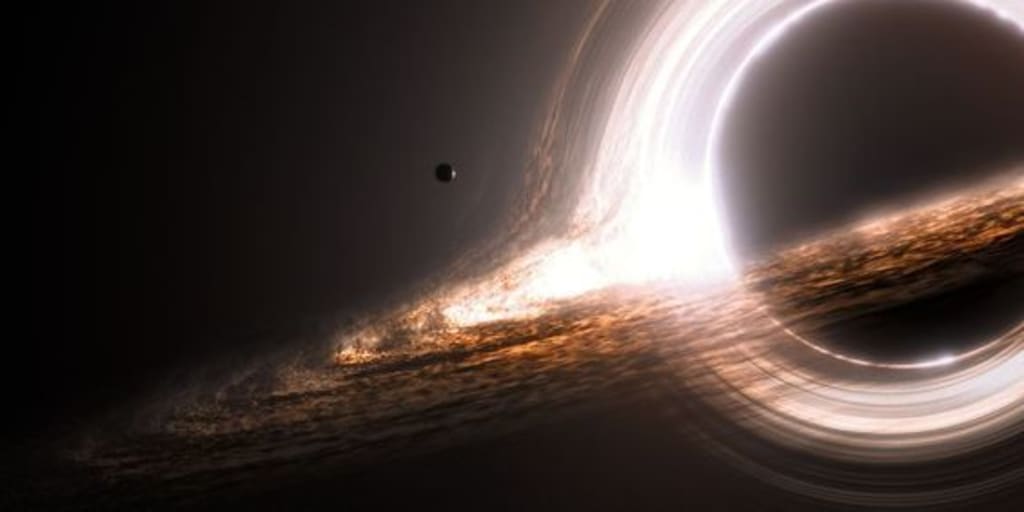
Black Holes: Cosmic Enigmas Unveiled
In the vast expanse of the cosmos, where gravity weaves the fabric of space and time, there exist cosmic entities so enigmatic and powerful that they defy our understanding of the universe itself. These entities are black holes, mysterious voids where gravity is so intense that nothing, not even light, can escape their grasp. The study of black holes has opened a Pandora's box of scientific marvels and mind-bending mysteries, fundamentally altering our perception of space, time, and the nature of reality.
The concept of black holes had its roots in the equations of Albert Einstein's theory of general relativity, which described how gravity shapes the universe. However, it wasn't until the mid-20th century that scientists began to fully grasp the implications of these equations. The term "black hole" was coined by physicist John Archibald Wheeler in 1967, giving a name to these cosmic enigmas that had been lurking in the theoretical shadows.
One of the early breakthroughs in black hole research came with the discovery of Cygnus X-1, a binary star system that included a black hole. Observations of this system provided compelling evidence for the existence of black holes and helped astronomers refine their understanding of their properties.
The true revolution in our understanding of black holes began in the late 20th century with advancements in technology and space-based observatories. One of the most pivotal moments was the launch of the Hubble Space Telescope in 1990, which provided stunning images of distant galaxies and their central supermassive black holes, demonstrating the ubiquity of these cosmic behemoths.
However, the most iconic breakthrough came in April 2019 when the Event Horizon Telescope (EHT) collaboration unveiled the first-ever image of a black hole. Located at the center of the M87 galaxy, this supermassive black hole, surrounded by a glowing ring of hot gas, captivated the world. It was a visual confirmation of the existence of black holes and a testament to human achievement in capturing an image from the heart of cosmic darkness.
This groundbreaking image marked just the beginning of our quest to unravel the secrets of black holes. Scientists are now exploring their diverse forms, from stellar-sized black holes, formed by the gravitational collapse of massive stars, to supermassive black holes lurking at the centers of galaxies, weighing millions or billions of times the mass of our Sun.
One of the most intriguing aspects of black holes is their extreme nature. Their immense gravity warps spacetime, creating bizarre phenomena such as time dilation and the infamous "event horizon," the point of no return beyond which nothing can escape. These properties challenge our fundamental understanding of the laws of physics and the nature of reality itself.
Black holes also play a fundamental role in the life cycle of galaxies. They are cosmic engines, influencing the dynamics and evolution of galaxies by gobbling up matter and releasing energy in the form of intense radiation. The interplay between galaxies and their central black holes is a topic of ongoing research, shedding light on the formation and growth of cosmic structures.
Furthermore, black holes have raised intriguing questions about the ultimate fate of the universe. The phenomenon of Hawking radiation, predicted by physicist Stephen Hawking, suggests that black holes can slowly evaporate over eons, leading to their eventual demise. This idea has profound implications for our understanding of the universe's long-term evolution.
The study of black holes is not merely a scientific endeavor; it is a journey into the heart of cosmic mysteries. It challenges our preconceptions about the nature of space, time, and gravity, inviting us to explore the most extreme realms of the universe. As we continue to unravel the enigma of black holes, we stand at the threshold of profound discoveries that could reshape our understanding of the cosmos and the very fabric of existence itself.
In the end, black holes are the cosmic gateways to the unknown, beckoning us to venture deeper into the mysteries of the universe. Each revelation, each image, and each scientific breakthrough brings us one step closer to unlocking the secrets hidden within these dark cosmic enigmas, illuminating the universe and our place within it.
About the Creator
Raymark Marcos
A Writer and Guitarist
A son of God
A student who's doing a lot of side hustles to earn enough money to be able to go for college.
Keep reading
More stories from Raymark Marcos and writers in History and other communities.
The Discovery of Water on the Moon
The Discovery of Water on the Moon: Unearthing Lunar Secrets In the cold and desolate expanse of space, our Moon has long been regarded as a barren, lifeless world—a celestial body shrouded in mystery and devoid of one of the most precious substances known to humanity: water. For centuries, this perception held true, but in the autumn of 2020, a groundbreaking discovery sent ripples through the scientific community and ignited the imaginations of space enthusiasts around the world. It was the revelation that our nearest neighbor in the cosmos held a secret—water.
By Raymark Marcos2 years ago in History
The Mysterious Arms Drop: When Weapons Fell from the Sky Over India
In the mid-1990s, one of the most mysterious and controversial arms smuggling operations in South Asia unfolded in dramatic fashion when a large cache of weapons literally fell from the sky in eastern India. The incident involved an aircraft traveling between Karachi and Dhaka, allegations of international intelligence links, and a clandestine mission that continues to raise questions about who was behind it and why.
By Irshad Abbasi 2 days ago in History
Writing To Succeed
If you want to find something that will help readers find your writing, possibly expand your audience, and maybe even get you noticed for other things, then you’re not alone. But how can you get it done in a world full of want-to-be writers? Look less at what you’re writing now, and more at what other writers have used to boost their views and reads.
By Jason Ray Morton 2 days ago in Writers




Comments
There are no comments for this story
Be the first to respond and start the conversation.