

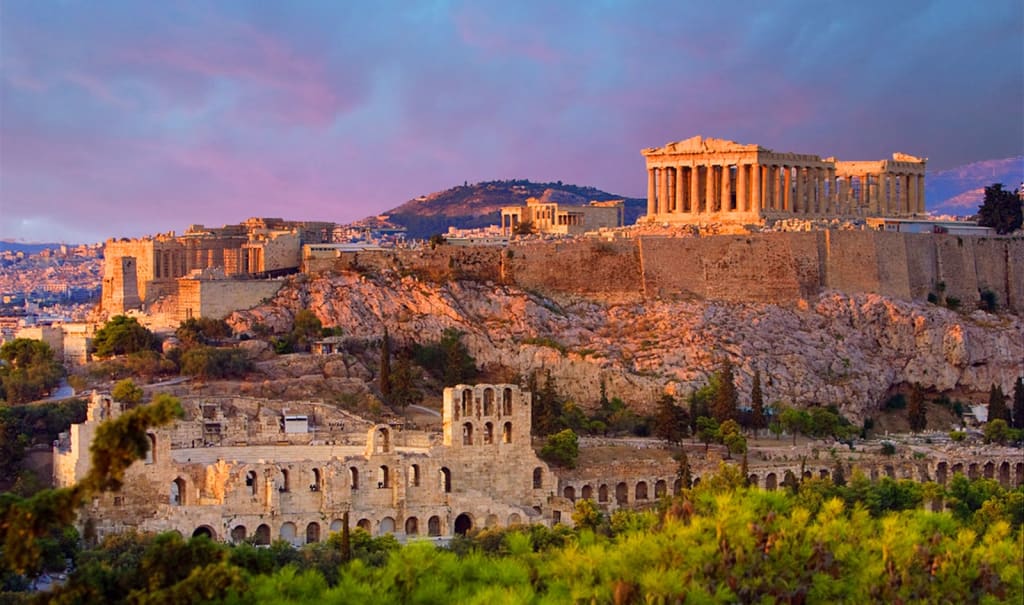
Athens, the capital of Greece, is a city with a rich and storied history that dates back thousands of years. Here's a summary of its history from ancient times to the modern era:
Ancient Athens (c. 6th century BC - 4th century AD):
City-State:
Athens was a prominent city-state in ancient Greece, known for its contributions to philosophy, democracy, and culture.Athens is believed to have been inhabited since the Neolithic era, but it formally became a city-state in the early 1st millennium BC. The city's legendary founder is Theseus, who unified the various settlements in the Attica region to create Athens.
Athens underwent several political transformations. In the 7th century BC, it transitioned from a monarchy to an oligarchy. Cleisthenes introduced democratic reforms in 508 BC, dividing Athens into ten tribes and allowing citizens to participate in the government.
Philosophy:

Athens was home to famous philosophers like Socrates, Plato, and Aristotle, who laid the foundation for Western philosophy.The philosophy of Athens, particularly during the Golden Age in the 5th century BC, was a pivotal period in the history of Western philosophy. It laid the foundation for many of the philosophical ideas and approaches that continue to shape modern thought. Here are some key aspects of the philosophy of Athens:
1. Socratic Philosophy:
- Socrates, one of the most influential philosophers in Athens, is known for his Socratic method. He believed in the pursuit of knowledge and self-examination through asking and answering questions.
- His teachings emphasized ethics, the importance of virtue, and the idea that "an unexamined life is not worth living."
2. Plato's Academy:
- Plato, a student of Socrates, founded the Academy in Athens, one of the earliest known institutions of higher learning.
- Plato's philosophy delved into metaphysics, ethics, and epistemology. He wrote numerous dialogues exploring concepts like the nature of justice, the theory of Forms, and the philosopher-king.
3. Aristotle's Lyceum:
- Aristotle, another student of Plato, established the Lyceum in Athens.
- His philosophical contributions covered a wide range of subjects, including ethics, metaphysics, logic, and biology. He was an early proponent of empirical observation and scientific inquiry.
4. Democracy and Political Philosophy:
- Athens is often considered the birthplace of democracy. Philosophers like Pericles and Cleisthenes played a role in shaping Athenian democracy.
- Political philosophers like Thucydides and Xenophon explored the dynamics of power, leadership, and civic life in their works.
5. Eudaimonia and Virtue:
- A central theme in Athenian philosophy was the concept of eudaimonia, often translated as "flourishing" or "happiness." Philosophers sought to understand what constituted a well-lived life and the role of virtue in achieving it.
6. The Pursuit of Truth:
- Athens placed a strong emphasis on the pursuit of truth and knowledge. Philosophers engaged in critical thinking, debate, and dialogue to explore questions about the nature of reality, morality, and the human condition.
7. Influence on Modern Philosophy:
- Athenian philosophy has had a profound and lasting impact on Western philosophy. Ideas and methods from this era continue to shape the way we think about ethics, politics, metaphysics, and the nature of knowledge.
The philosophers of Athens sought to understand fundamental truths about the world and human existence, often through dialogue, inquiry, and introspection. Their ideas have left an enduring legacy that continues to shape contemporary philosophical thought.
Golden Age:
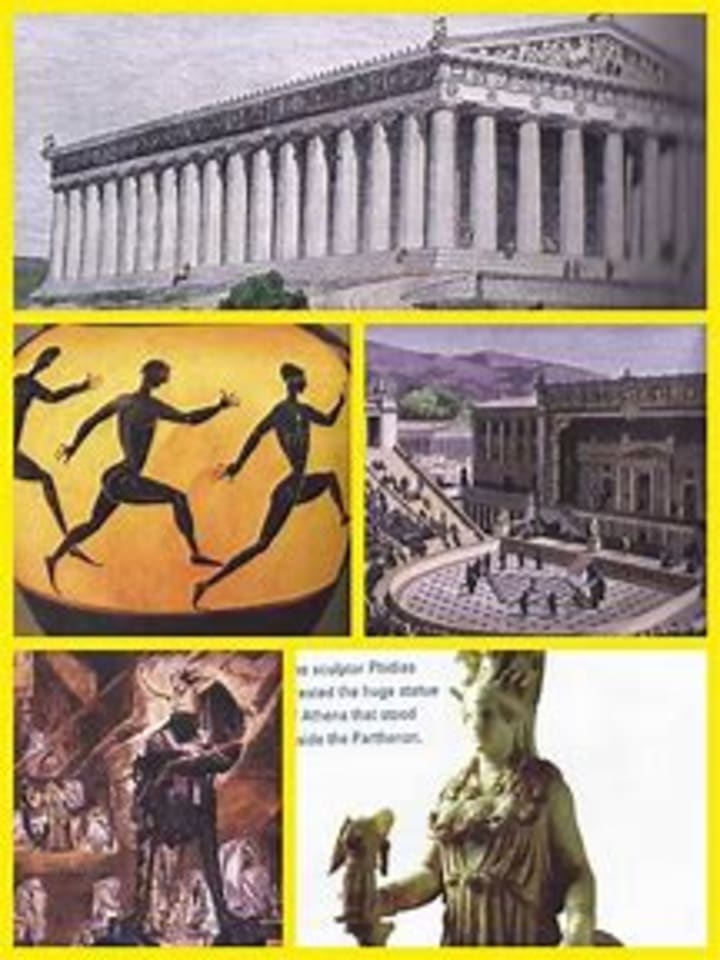
During the 5th century BC, Athens entered its "Golden Age" under leaders like Pericles. This period saw remarkable achievements in art, architecture, and literature.The Golden Age of Athens, which occurred during the 5th century BC, was a remarkable period in the history of the city-state. It was marked by significant achievements in politics, philosophy, art, architecture, and literature. Here are the key aspects of Athens' Golden Age:
1. Democratic Advancements:
- The Athenian democracy, established by Cleisthenes in the early 5th century BC, reached its zenith during the Golden Age. All eligible citizens could participate in political decisions.
2. Pericles' Leadership:
- Pericles, a prominent statesman, played a central role in shaping the Golden Age. His leadership led to significant political and cultural achievements.
- Under his guidance, Athens became an influential naval power, expanding its empire through the Delian League.
3. Cultural Flourishing:
- Athens became a cultural hub, with a thriving arts scene. It was home to renowned playwrights like Aeschylus, Sophocles, and Euripides, who wrote some of the most enduring tragedies in Western literature.
- The development of drama and the construction of the Theater of Dionysus laid the foundation for modern theater.
4. Architectural Marvels:
- The construction of the Parthenon on the Acropolis is one of the most iconic achievements of the Golden Age. It was designed by the architect Phidias and is considered a masterpiece of classical Greek architecture.
- The Propylaea, the Erechtheion, and other structures on the Acropolis also reflect the architectural prowess of the era.
5. Philosophy and Intellectual Growth:
- Athens was the birthplace of Western philosophy. Figures like Socrates, Plato, and Aristotle flourished during this period, shaping the course of philosophical thought.
- Socrates encouraged critical thinking, while Plato's Academy and Aristotle's Lyceum became centers of intellectual inquiry.
6. Literary Excellence:
- The Golden Age produced timeless works of literature, including historical accounts by Herodotus and Thucydides. The writings of Xenophon, known for "Anabasis" and "Memorabilia," also gained prominence.
7. Scientific and Mathematical Advancements:
- The philosopher-scientist Anaxagoras made early contributions to understanding celestial bodies.
- The mathematician Hippocrates, often called the "Father of Medicine," practiced and taught in Athens.
8. Diplomacy and Alliances:
- Athens formed alliances with various city-states in the Delian League, solidifying its power in the region. It became a leader in promoting a sense of unity among these allies.
9. Peloponnesian War:
- The Golden Age was marred by the Peloponnesian War, a conflict with Sparta and its allies, which ultimately led to the decline of Athens as a dominant power.
Despite the challenges and conflicts, the Golden Age of Athens left an enduring legacy. It remains a symbol of the heights that a civilization can achieve in culture, politics, and philosophy during a period of relative peace and prosperity.
Peloponnesian War:
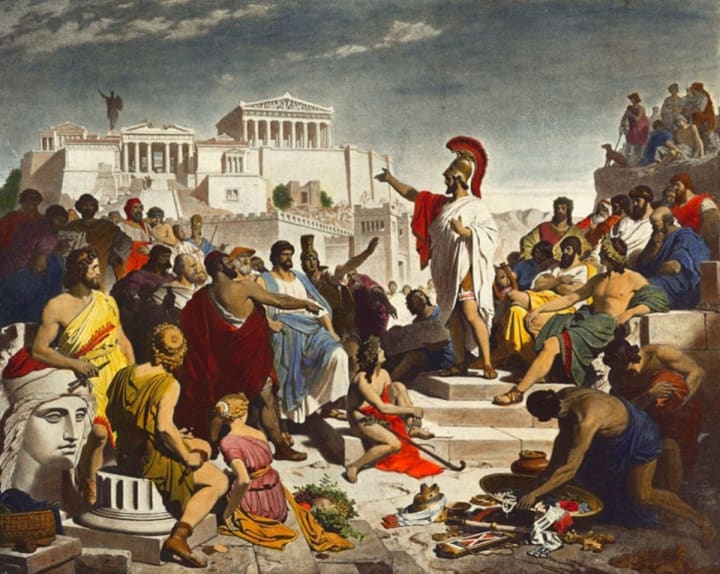
Athens engaged in a protracted conflict with Sparta known as the Peloponnesian War (431-404 BC) which eventually led to its decline as a major power.The Peloponnesian War was a protracted conflict that occurred between two powerful city-states in ancient Greece: Athens and Sparta. It took place over the course of 27 years, from 431 BC to 404 BC, and had a significant impact on the political, economic, and social landscape of ancient Greece. Here are the key points regarding the Peloponnesian War involving Athens:
Causes of the War:
1. Rivalry Between Athens and Sparta: Athens and Sparta were two of the most powerful city-states in Greece, and they had a long-standing rivalry. The Peloponnesian War can be seen as a culmination of this rivalry.
2. Delian League vs. Peloponnesian League: Athens led the Delian League, an alliance of Greek city-states, while Sparta was at the head of the Peloponnesian League, which included several cities in the Peloponnesian peninsula.
3. Dispute Over Power and Influence: The war's causes were complex, but one key issue was the struggle for power and influence in the Greek world. Athens was becoming increasingly dominant, and many city-states resented its power.
Key Phases of the War:
1. Archidamian War (431-421 BC): Named after the Spartan king Archidamus II, this phase was characterized by periodic military campaigns and a protracted naval blockade of the Peloponnesian coast by Athens.
2. Sicilian Expedition (415-413 BC): Athens launched an ill-fated military campaign against the city of Syracuse in Sicily, which ultimately ended in disaster and weakened Athens' position.
3. Ionian or Decelean War (413-404 BC): Following the Sicilian Expedition, Sparta gained Persian support and established a fortified base at Decelea in Attica, while also building a powerful navy. This phase saw a series of battles, including the pivotal Battle of Aegospotami, where the Spartan navy defeated the Athenian fleet.
Outcome:
1. Spartan Victory: The Peloponnesian War ended with a decisive Spartan victory. Athens was weakened economically and militarily.
2. Downfall of Athens: In 404 BC, Athens surrendered to the Spartans, leading to the dismantling of its democratic government and the loss of its empire.
3. Legacy: The Peloponnesian War marked the end of the golden age of Athens and left lasting scars on the Greek world. It also left a profound impact on the political and military strategies of the time.
4. Historical Documentation: The conflict was extensively documented by historians such as Thucydides, who wrote "History of the Peloponnesian War," providing a detailed account of the war's events and its impact.
The Peloponnesian War is a pivotal chapter in ancient Greek history. It highlighted the complex interplay of power, alliances, and ambitions among Greek city-states, leading to a profound shift in the political landscape and the eventual rise of Macedon under Alexander the Great.
Roman and Byzantine Athens (1st century BC - 15th century AD):

The Roman and Byzantine periods were crucial in shaping Athens' historical and cultural identity. The transition from being an intellectual center of classical Greece to a center of Christian thought and Byzantine influence was a significant transformation. The Byzantine era saw the rise of Christian institutions, which played a pivotal role in the city's history, while Roman elements continued to influence its architecture and cultural landscape.
Roman Conquest: Athens came under Roman control during the 1st century BC when Greece became a part of the Roman Republic and, later, the Roman Empire.
Cultural and Intellectual Hub: During the Roman era, Athens remained an important center for intellectual pursuits, education, and philosophy. Roman emperors like Hadrian and Marcus Aurelius had strong ties to the city, and they sponsored various building projects.
Hadrian's Library: The Roman Emperor Hadrian constructed the famous Hadrian's Library, which served as a major center for learning and scholarship.
Roman Influence: Roman architectural elements were integrated into the existing structures of Athens, creating a unique blend of Roman and Greek architectural styles.
Early Christian Presence: Christianity began to spread in Athens during the later Roman period. Christian communities started to form, and churches were constructed.Byzantine Athens (4th century AD - 15th century AD):
Christianity and Byzantine Rule: With the Roman Empire transitioning to the Byzantine Empire, Athens became an important religious center. The city's pagan temples and philosophical traditions gave way to Christianity.
Byzantine Monuments: Several early Christian churches, such as the Church of the Holy Apostles and the Church of Panaghia Kapnikarea, were built during this period.Theological Influence: Notable Christian theologians and scholars, such as Gregory of Nazianzus, were associated with Athens.
Ottoman Rule (15th century - 19th century):
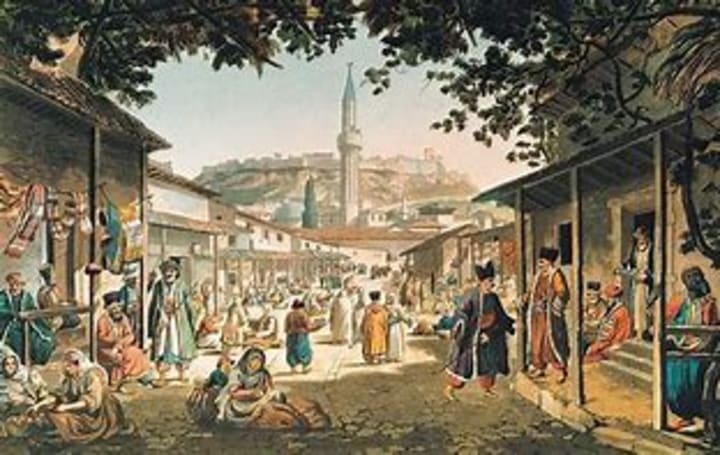
Under Ottoman Control: Athens, like much of Greece, came under Ottoman control in the late 15th century and remained part of the Ottoman Empire for several centuries. Here is an overview of Athens during the Ottoman rule from the 15th to the 19th century:
15th Century - Ottoman Conquest:
- The Ottomans, led by Mehmed the Conqueror, captured Athens in 1456. This marked the end of the Byzantine Empire in the city. The Ottomans established control over Athens, incorporating it into their empire as part of the Eyalet of the Archipelago.
17th Century - Venetian Interlude:
- During the Cretan War (1645-1669), Venice briefly gained control of Athens. The Venetians fortified the Acropolis and other key positions. The Ottomans recaptured Athens in 1687.
Ottoman Athens (15th - 19th Century):
- Under Ottoman rule, Athens was known as "Athena" or "Hatan-ı Âsîtânâ" in Ottoman Turkish. The city's population diminished significantly compared to its classical and Byzantine periods. Ottoman architecture and urban planning significantly influenced the city's landscape, with mosques, hammams (public baths), and Ottoman-style houses.
Economic Activity:
- Athens served as an important center for trade and craft production. It was known for producing textiles, leather goods, and ceramics. The Ottomans encouraged a system of taxation that allowed non-Muslim communities, including Greeks, to retain their religion and some degree of self-governance in exchange for taxes.
Byzantine and Ottoman Monuments:
- Many Byzantine and Roman monuments, such as churches and temples, were converted into mosques or repurposed for other functions during the Ottoman era. The Parthenon, originally a temple dedicated to Athena, was transformed into a mosque and later used as a munitions storage facility, leading to an explosion in the late 17th century that damaged it.
19th Century - Greek War of Independence:
- The early 19th century saw the rise of Greek nationalism and the Greek War of Independence (1821-1829). The revolution against Ottoman rule ultimately led to Athens' liberation in 1827. The period of Ottoman rule significantly impacted Athens' demographics, culture, and architecture. While many classical and Byzantine structures were repurposed or damaged, the city continued to be a hub of economic activity and trade. The 19th-century Greek War of Independence eventually led to the reestablishment of Athens as the capital of the newly independent Greek state. During this period, Athens' population and importance declined significantly, and much of its classical heritage was damaged.
Greek War of Independence:

he Greek War of Independence was a protracted conflict in which the Greek people sought to break free from Ottoman rule and establish an independent Greek state. The war began in 1821 and continued for several years, eventually leading to the recognition of Greece's independence. By 1833, Greece had made significant progress toward its goal. Here are key events and outcomes from the Greek War of Independence in 1833:
1. Outbreak of the War (1821):
The Greek War of Independence began in March 1821 when Greek revolutionaries, led by various military leaders and local chieftains, launched a series of uprisings against the Ottoman Empire.
2. Support from European Powers:
The Greek cause garnered sympathy and support from various European nations, including Britain, France, and Russia. Philhellenic volunteers, known as the Filiki Eteria, also joined the Greek struggle.
3. Famous Battles:
The war was marked by several key battles, including the Battle of Navarino in 1827, where a combined British, French, and Russian fleet defeated the Ottoman navy.
4. Intervention of Great Powers:
The intervention of great powers pressured the Ottoman Empire to recognize Greece's independence. The London Protocol of 1830 recognized Greece as an autonomous, but not fully independent, state.
5. Capodistrias and the Modern Greek State:
Ioannis Kapodistrias, a prominent Greek diplomat, became the first head of state of Greece in 1827. He laid the foundations for the modern Greek state.
6. Bavarian Monarchy:
In 1832, Greece became a monarchy, and King Otto of Bavaria was appointed as the first king of Greece. This marked a shift from the initial republican aspirations of some Greek revolutionaries.
7. Treaty of Constantinople (1832):
The Treaty of Constantinople in 1832 recognized Greece's full independence, except for a few territorial disputes in the border regions.
8. London Conference and Protocol (1832):
The London Conference of 1832 affirmed Greece's sovereignty and established the frontiers of the new Greek state.
9. Arrival of King Otto (1833):
King Otto arrived in Athens in February 1833, officially becoming the monarch of Greece.
10. Constitutional Developments:
The Greek War of Independence and its aftermath led to the development of a constitution and the establishment of the Greek monarchy.
The recognition of Greek independence in 1832-1833 marked a significant milestone in the struggle for freedom from Ottoman rule. The subsequent arrival of King Otto and the establishment of a constitutional monarchy were crucial steps in the formation of the modern Greek state.
20th Century Changes:
The city underwent rapid growth and urban development in the 20th century. Modern Athens is a bustling metropolis known for its blend of ancient and contemporary culture, as well as iconic landmarks such as the Acropolis. Today, Athens is a major economic and cultural center, offering a mix of historical sites, museums, vibrant neighborhoods, and a lively arts and music scene.
This overview touches on some of the key moments in Athens' history, but the city's story is much more detailed and complex. Athens has played a significant role in shaping the history, culture, and intellectual traditions of Western civilization.
About the Creator
Keep reading
More stories from Haris Hadzic and writers in History and other communities.
Thebes-Luxor
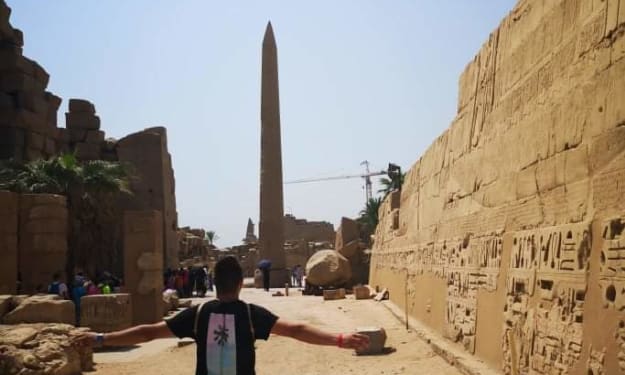
Thebes, also known as Waset in ancient Egyptian, was one of the most significant and powerful cities in the ancient world. Located on the east bank of the Nile River in present-day Luxor, Egypt, Thebes was the capital of the New Kingdom during Egypt's Middle and Late Bronze Ages (c. 16th to 11th centuries BC). It was a city of immense historical, cultural, and religious importance, and its legacy continues to influence our understanding of ancient Egypt.
By Haris Hadzic2 years ago in History
Lion of the Desert: Who Was Omar Mukhtar?
In the early 20th century, when European colonial powers were carving up Africa, one elderly man on horseback became the face of defiance in the deserts of North Africa. His name was Omar Mukhtar, and to the people of Libya, he was not just a fighter—he was a symbol of faith, courage, and unbreakable resistance. Known as the “Lion of the Desert,” Omar Mukhtar led a long and determined struggle against Italian colonial forces, proving that even the most powerful empires can be challenged by unwavering belief and determination.
By Irshad Abbasi about 15 hours ago in History


Comments
There are no comments for this story
Be the first to respond and start the conversation.