
Ashes of the Eternal City
When Rome burns, a young girl learns that the strength of an eternal city lives in the ones who choose to rise from the ashes
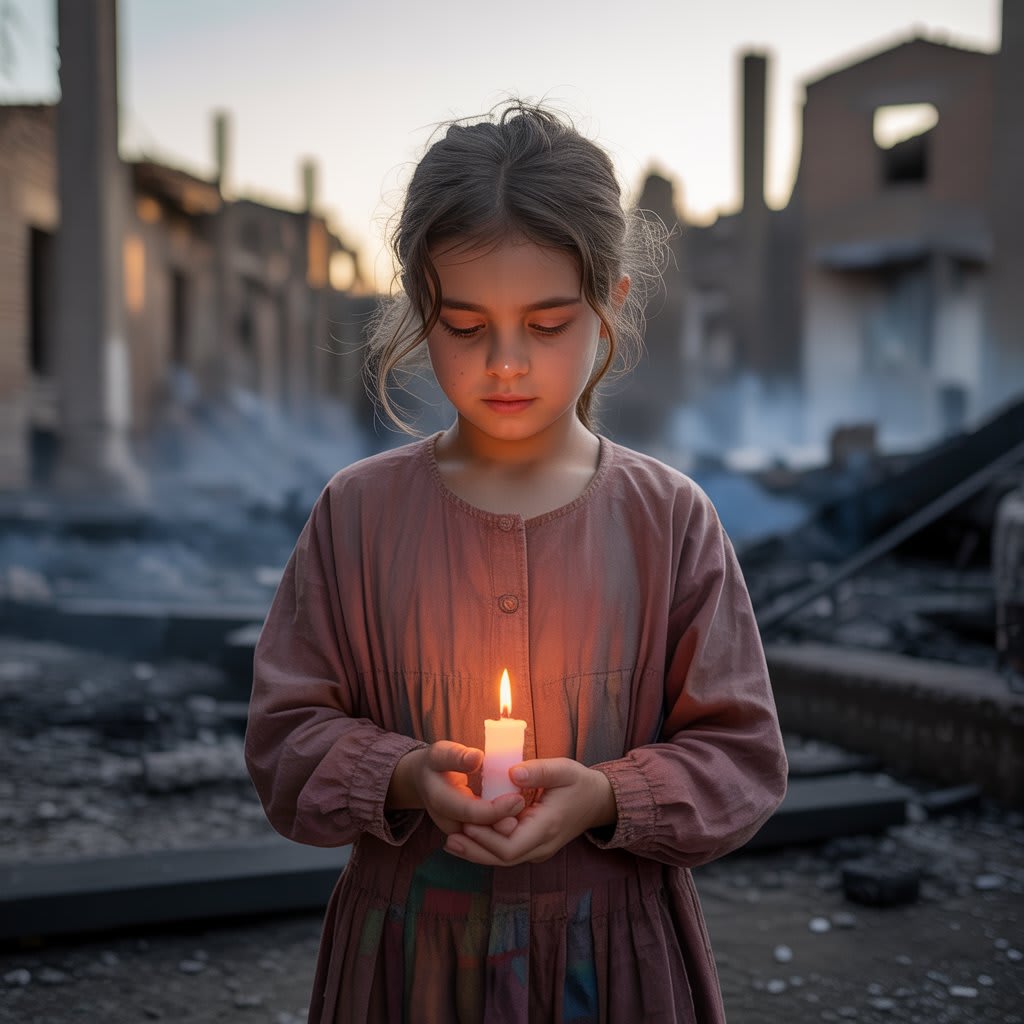
Rome was a city that breathed fire long before flames ever touched its walls. Its people lived with a confidence that bordered on destiny, believing nothing could shake the stones of the Eternal City. The streets bustled with merchants shouting prices, children weaving between crowds, and senators in crisp white togas drifting like ghosts toward the Forum. But underneath the marble and noise lived a truth Rome never wanted to face—greatness is fragile, and even eternal things can burn.
Livia Aurelia learned this the night the sky turned red.
She was fifteen, the daughter of a modest candle-maker on the Esquiline Hill. Her world was small and familiar, filled with wax-scented air, narrow streets, and evenings spent listening to her father mutter complaints about taxes while her mother hummed as she shaped wicks. Livia dreamed of quiet things: a shop of her own someday, a life not wealthy but peaceful.
But peace did not last long in Rome.
It began with a single shout, a voice carried by the wind from somewhere near the Circus Maximus. Then another. And another. Soon the entire neighborhood vibrated with the sound of panic. Livia rushed outside and froze. In the distance, flames clawed at the sky, bright and terrifying. A dark wave of smoke rolled upward, swallowing stars.
Her father burst out behind her. “Inside. Now.”
But the fire moved like a beast unchained. Within moments, neighbors flooded the streets, dragging what little they could carry—blankets, coins, children still half-asleep. The wind fed the growing inferno, and the wooden buildings closest to the circus ignited as though they had waited centuries for this spark.
A soldier ran by shouting, “Evacuate to the Tiber! The fire’s spreading east!”
Livia grabbed her mother’s hand, and the three of them joined the rushing crowd. People cried out the names of loved ones, stumbled over fallen baskets, lost sandals in the crush of bodies. The heat grew unbearable. Ash drifted down like dark snow.
By the time they reached higher ground, the fire had become a monster. It devoured homes, leaping from roof to roof, leaving trails of glowing embers. Rome’s walls had seen wars, rebellions, and emperors rise and fall—but now the city itself felt under siege by something unstoppable.
For three days, the fire raged. When the wind shifted, some districts were spared. When it strengthened, even stone temples cracked and fell.
Livia’s family found temporary shelter among hundreds of others along the riverbank. Food was scarce. Water more so. People whispered rumors in the darkness—some said lightning sparked the blaze, others blamed angry gods. A few muttered treason, but always quietly, as though the flames could overhear.
On the morning of the fourth day, the fire at last began to die. Smoke still rose from the broken city like breath from a wounded animal. Livia and her parents returned home, though they knew what they would find.
Their street was gone.
Not damaged. Gone.
Only blackened ground and crumbling beams remained. The shop, the small table Livia learned to write on, the candles her father shaped with careful hands—everything was reduced to ash.
Her mother sank to her knees, sobbing. Her father stared in stunned silence, his lips trembling but unable to form words.
Livia felt nothing at first. Just a numbness, like standing outside her own body. But then, slowly, something inside her shifted. A spark—not of fear this time, but of determination.
“This is still our home,” she said quietly.
Her father looked at her, hollow-eyed. “There is no home left.”
“Then we build one.”
Her words surprised even her. But saying them aloud made them feel real. Rome had always rebuilt, always risen, always found a way to shape ruins into something stronger. Why should she be different?
In the weeks that followed, Rome became a city of tents and new beginnings. The emperor ordered reconstruction. Workers cleared rubble from streets that had once echoed with the footsteps of senators. Families laid foundations where their homes used to stand. Slowly, painfully, life returned.
Livia took small jobs—carrying water, helping elderly neighbors sort salvageable remnants, shaping simple wax lights for those living in temporary shelters. Every day she walked past the ruins of the Forum, where statues once gleamed, now scarred with soot. She walked past the charred remains of temples where incense used to burn. Rome looked broken, yet still, people moved through it with stubborn hope.
One morning, as she shaped candles in a borrowed market stall, a little boy approached. His face was smeared with dust, his tunic patched clumsily.
“Please,” he whispered, holding out a single coin. “A candle for my mother. She is… she is afraid of the dark now.”
Livia’s throat tightened. She handed him a candle but pushed the coin back into his hand.
“No charge,” she said softly. “Tell her the light will return. Even here.”
The boy nodded and ran off. Livia watched him disappear into the crowd, feeling something warm flicker inside her chest.
A few days later, her father joined her at the stall. His hands, once steady, had trembled ever since the fire, but today they were calmer.
“You’re doing good work,” he said.
“We’re rebuilding,” she replied.
He nodded, his eyes glistening. “Rome will remember that.”
And she hoped it would.
Months passed. New structures rose from the ashes, some grander than before. Streets widened. Walls strengthened. Markets returned. The city began to breathe again, though the scent of smoke lingered like a memory.
Livia’s family rebuilt their shop—not exactly as it had been, but better. Stronger. More spacious. Tourists and locals alike bought her candles, insisting they burned brighter than others. Livia always smiled but never explained the truth:
Her candles were made with ashes mixed into the wax. Not enough to see. Just enough to remember.
Ashes from the greatest fire Rome had ever known.
Ashes from the night she lost everything.
Ashes from the night she learned what it meant to endure.
Rome called itself the Eternal City, not because it never fell—but because every time it burned, its people chose to rise.
And Livia Aurelia, once a girl running through smoke, now stood as proof.
She knew now that eternity was not found in stone or marble.
It was found in those who refused to be forgotten.
About the Creator
Jhon smith
Welcome to my little corner of the internet, where words come alive
Keep reading
More stories from Jhon smith and writers in History and other communities.
The Letters That Survived a War
In 1942, in a small town in northern France, life felt impossibly fragile. The war had already changed everything. Streets that once carried children laughing were now filled with silence or the distant thrum of military vehicles. The air carried a tension that had no scent, a weight you could feel pressing on your chest whenever you stepped outside.
By Jhon smithabout a month ago in History
Can the United States Leave NATO?
Can the United States Leave NATO? What It Would Take—and What It Would Mean The North Atlantic Treaty Organization, commonly known as NATO, has been one of the most powerful military alliances in modern history. Since its creation in 1949, the United States has been NATO’s strongest member—militarily, financially, and politically. But in recent years, debates have grown louder about whether the U.S. should remain in the alliance. This raises a serious question: how could the United States be removed from NATO—or leave it—and what would that mean for the world?
By Wings of Time 5 days ago in History



Comments
There are no comments for this story
Be the first to respond and start the conversation.