
Arundel Castle: A Majestic Testament to England’s History
Ancient History


Nestled in the picturesque countryside of West Sussex, England, Arundel Castle is a magnificent medieval stronghold that has stood the test of time. Built in 1067 by Roger de Montgomery, the Earl of Arundel, this grand fortress has witnessed nearly a thousand years of history, serving as both a strategic defensive structure and a family residence. Today, Arundel Castle is one of the longest-inhabited castles in the United Kingdom, offering visitors a captivating journey through England’s rich past.
---
A Castle Born in the Aftermath of the Norman Conquest
Arundel Castle was established shortly after the Norman Conquest of 1066. King William the Conqueror granted the earldom of Arundel to Roger de Montgomery, one of his most trusted allies, who was tasked with fortifying the area. The original structure was a motte-and-bailey castle, a common Norman design featuring a wooden keep atop a man-made hill (motte) surrounded by a protective enclosure (bailey).
Over the centuries, the wooden structure was replaced with stone, transforming Arundel into a formidable medieval fortress. The castle’s strategic location overlooking the River Arun allowed it to control key trade routes and defend against potential invaders.
---
A Family Legacy Spanning Centuries
Unlike many medieval castles, which fell into ruin or were abandoned, Arundel Castle has remained a family home for nearly a millennium. Since the late 11th century, it has been the seat of the Dukes of Norfolk, one of the most prominent noble families in England.
The castle has undergone numerous renovations and expansions, reflecting the evolving needs and tastes of its inhabitants. The original Norman keep, towering over the castle grounds, is a striking reminder of its medieval origins. Meanwhile, later additions, such as the opulent interiors and beautifully landscaped gardens, showcase the influence of Gothic, Renaissance, and Victorian styles.
---
Historical Highlights
Arundel Castle has played a significant role in England’s history, serving as a backdrop to key events and hosting notable figures:
1. The English Civil War (1642–1651): During the tumultuous Civil War, Arundel Castle changed hands multiple times between Royalist and Parliamentarian forces. The castle suffered significant damage, particularly to its defenses, but was eventually restored in the 18th and 19th centuries.
2. Royal Visits: Over the centuries, the castle has hosted several monarchs, including Queen Victoria and Prince Albert, who visited in 1846. The grandeur of the castle impressed the royal couple, cementing its status as one of England’s finest estates.
3. World Wars: During World War II, parts of the castle were used by the British military. Its historical artifacts and priceless treasures were carefully safeguarded, ensuring their preservation for future generations.
---
Exploring the Castle Today
Arundel Castle is not just a historical relic—it is a vibrant attraction that invites visitors to explore its fascinating past and stunning surroundings.
- The Norman Keep: One of the oldest parts of the castle, the keep offers panoramic views of the River Arun and the South Downs. Climbing its ancient stone steps is a journey back to the Norman era.
- The State Rooms: The opulent interiors of the castle reflect its status as a ducal residence. Visitors can admire intricate woodwork, exquisite paintings, and historical artifacts, including suits of armor and medieval weaponry.
- The Gardens: Arundel Castle boasts magnificent gardens that are a feast for the senses. The Collector Earl’s Garden, a contemporary reinterpretation of a Jacobean formal garden, features fountains, floral displays, and charming structures like the Oberon’s Palace.
- Special Events: The castle hosts a variety of events throughout the year, including jousting tournaments, medieval reenactments, and seasonal celebrations, bringing history to life for visitors of all ages.
---
A Timeless Treasure
Arundel Castle’s enduring appeal lies in its ability to connect the past with the present. As one of England’s best-preserved castles, it offers a glimpse into the lives of the nobility, the strategies of medieval warfare, and the evolution of architectural styles over the centuries.
What sets Arundel Castle apart is its status as a living history site. It remains the family home of the Duke and Duchess of Norfolk, blending centuries-old traditions with modern stewardship. This continuity makes Arundel Castle not just a monument to history, but a part of England’s cultural fabric.
---
Plan Your Visit
Arundel Castle is easily accessible and makes for a perfect day trip. Located in the heart of West Sussex, it is a short journey from London and other major cities in southern England.
📍 Address: Arundel Castle, Arundel, West Sussex, England
🕒 Opening Hours: The castle is typically open to visitors from spring to autumn, with specific dates and times varying each year.
💷 Tickets: Visitors can choose from various ticket options, including access to the gardens, the castle interiors, and the keep. Discounts are available for families, students, and groups.
---
Conclusion
Arundel Castle is more than a historic site; it is a symbol of resilience, heritage, and beauty. Whether you are a history enthusiast, an architecture lover, or simply seeking a day of exploration in a stunning setting, Arundel Castle offers an unforgettable experience.
From its Norman origins to its role as a modern-day cultural landmark, Arundel Castle stands as a testament to England’s rich and layered history. A visit to this majestic castle is not just a journey into the past—it is a celebration of the enduring legacy of one of Britain’s most iconic fortresses.
About the Creator
Keep reading
More stories from Deji Akomolafe and writers in History and other communities.
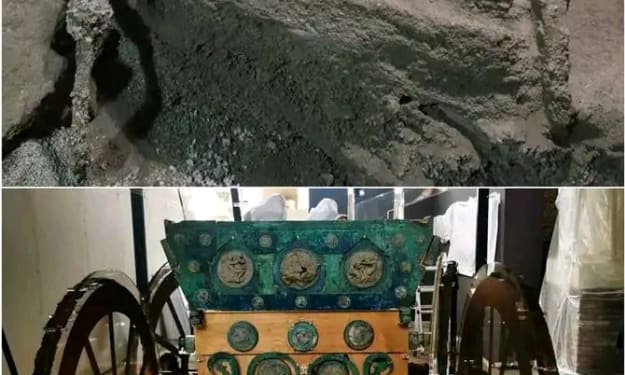
Unearthing the Past: The Discovery and Reconstruction of a Roman Ceremonial Chariot
In 2021, archaeologists in Italy made a breathtaking discovery that illuminated a remarkable facet of ancient Roman life. A nearly intact ceremonial chariot was unearthed in Civita Giuliana, a villa complex just a few hundred meters north of Pompeii. This 2,000-year-old chariot, buried by the catastrophic eruption of Mount Vesuvius in AD 79, was not just a practical vehicle but a symbol of ritualistic and ceremonial grandeur. The intricate craftsmanship and the meticulous reconstruction efforts have made this discovery a profound insight into Roman ceremonial practices.
By Deji Akomolafeabout a year ago in History
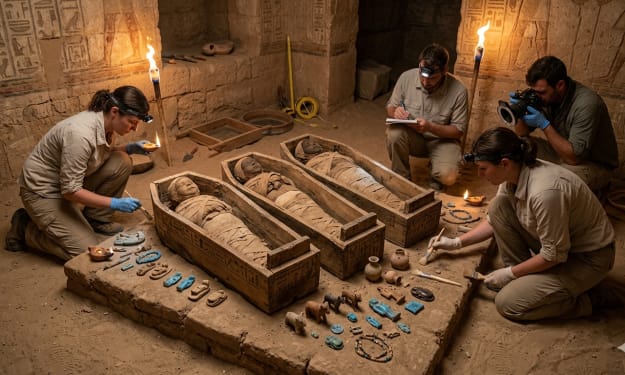
Ancient Egyptian Tomb Unearthed: 3,000-Year-Old Remains of Four Children Discovered
In a remarkable archaeological discovery in Egypt, researchers have uncovered the mummified remains of four children dating back nearly 3,000 years. The find, located in the southern region of Luxor, offers a rare glimpse into the lives, deaths, and funerary customs of young Egyptians during the New Kingdom period.
By Irshad Abbasi 5 days ago in History


Comments
There are no comments for this story
Be the first to respond and start the conversation.