
Archaeologists Uncover 29,000-Year-Old Child Skeleton in a Cave in Thailand with ‘Symbols of Blood and Power.
Symbol of blood And Power

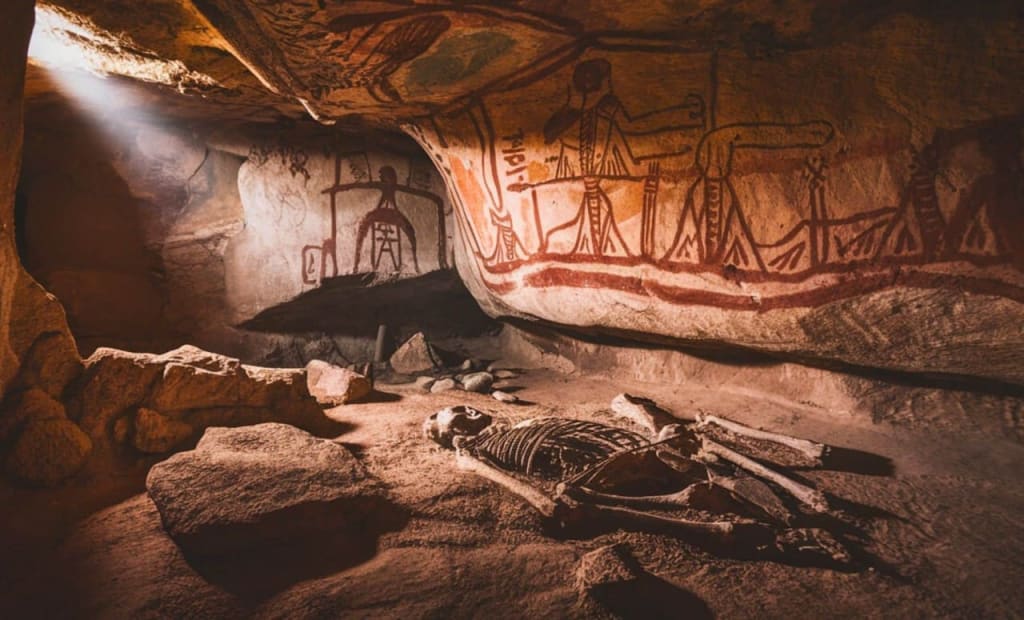
Archaeologists in Thailand have made an extraordinary discovery that sheds new light on ancient burial practices and early human civilizations. A 29,000-year-old child skeleton has been unearthed in a cave at the Tham Din archaeological site, located within Khao Sam Roi Yot National Park. This remarkable find is now considered the oldest child remains ever found in Thailand, offering crucial insights into the rituals, beliefs, and artistic expressions of prehistoric societies.
The remains were found carefully buried alongside charcoal, ashes, and striking red ochre paintings covering the cave walls. The presence of these symbolic elements suggests that the burial was not a simple act of disposal but rather a ceremonial practice with significant spiritual or cultural meaning. The use of red ochre, in particular, has long been associated with ancient funerary rituals, symbolizing blood, life, and power in various early cultures around the world.
Red ochre, a natural pigment made from iron oxide, has been discovered at many prehistoric burial sites across different continents. Its deep red color is often linked to concepts of life, death, and rebirth. The fact that the Tham Din cave contained extensive red ochre paintings implies that the people who lived there may have engaged in complex spiritual or ritualistic practices. The discovery of the child’s skeleton in such a setting raises fascinating questions about the role of children in early societies and the significance attributed to their deaths.
This discovery is significant not only for Thailand but also for the broader study of human history. Southeast Asia has long been an area of interest for archaeologists studying early human migration and settlement patterns. The find at Tham Din adds another layer to our understanding of how ancient people lived, mourned their dead, and expressed their beliefs through art and burial customs.
One of the most intriguing aspects of this find is the meticulous way in which the child was buried. The presence of charcoal and ashes suggests that fire may have played a role in the burial process, possibly as part of a cremation or purification ritual. Fire has been a central element in human culture for thousands of years, often used in religious ceremonies and burial rites. The combination of fire and red ochre in this case points to a highly symbolic and intentional practice, rather than a random act.
The cave itself provides valuable clues about the lifestyle of the people who inhabited the region during the Upper Paleolithic period. Archaeologists believe that these early humans were hunter-gatherers who relied on the rich biodiversity of Southeast Asia for survival. The presence of art in the cave indicates that they were not only focused on survival but also had a developed sense of creativity, communication, and possibly even a belief system.
The Tham Din cave paintings, with their striking red hues, are reminiscent of other ancient cave art found in different parts of the world. Similar prehistoric paintings have been discovered in Europe, Africa, and Australia, often depicting animals, human figures, and abstract symbols. While the exact meaning of these artworks remains unknown, many researchers believe they were linked to spiritual or ritualistic practices. The cave paintings in Tham Din, combined with the burial site, suggest that early humans in Thailand had their own unique traditions and beliefs that were deeply embedded in their way of life.
The age of the skeleton, approximately 29,000 years old, places it in the Upper Paleolithic era, a period characterized by significant advancements in human culture and technology. During this time, early humans developed more sophisticated tools, engaged in symbolic behavior, and expanded their artistic expressions. The burial at Tham Din provides a rare glimpse into how these early humans may have viewed death and the afterlife.
Further analysis of the skeleton is expected to reveal more details about the child’s life, health, and possibly even cause of death. Archaeologists and anthropologists will conduct DNA tests and other scientific examinations to determine the child’s genetic background, diet, and any diseases they may have suffered from. These studies could offer valuable information about human migration patterns and interactions between ancient populations.
The discovery also raises questions about the social structure of the people who buried the child. Was this an important individual in their society? Did the elaborate burial indicate a special status, or was it a common practice for all members of the group? Understanding the burial customs of early humans can provide insights into their social organization, beliefs about the afterlife, and relationships within their communities.
Thailand has a rich archaeological heritage, with numerous prehistoric sites scattered across the country. However, discoveries of human remains from such an ancient period are rare. This find at Tham Din is one of the most significant in recent years, highlighting the importance of continued exploration and research in the region. It also emphasizes the need to preserve and protect these ancient sites, as they hold invaluable information about humanity’s past.
In addition to its scientific significance, the discovery has cultural and historical implications. It connects modern Thailand to its deep prehistoric roots, reminding us of the long and complex history of human habitation in the region. Understanding our ancestors’ lives, rituals, and beliefs helps us appreciate the depth of human history and the shared experiences that connect us across time.
This find also adds to the growing evidence that early humans were deeply spiritual beings who engaged in rituals to honor their dead. Whether through burial customs, artistic expressions, or symbolic use of materials like red ochre, these ancient people demonstrated a level of sophistication that challenges earlier assumptions about prehistoric societies. Rather than being purely focused on survival, they exhibited creativity, emotional depth, and a sense of connection to something greater than themselves.
The Tham Din discovery is a reminder that our understanding of human history is constantly evolving. With each new find, archaeologists piece together fragments of the past, helping us build a clearer picture of where we come from and how our ancestors lived. As more research is conducted on this remarkable site, we can expect to learn even more about the people who once called this cave home.
For now, the 29,000-year-old child skeleton stands as a powerful testament to the complexity of early human life. Its presence in a cave adorned with red ochre paintings and surrounded by evidence of fire rituals speaks to a rich cultural and spiritual tradition that has long been lost to time. This discovery not only deepens our knowledge of prehistoric Thailand but also reminds us of the universal human experience of life, death, and the desire to find meaning in it all.
About the Creator
Adnan Rasheed
Author & Creator | Writing News , Science Fiction, and Worldwide Update| Digital Product Designer | Sharing life-changing strategies for success.
Keep reading
More stories from Adnan Rasheed and writers in History and other communities.
Giant Ancient Egg Found in Antarctica Could Be the First From a Mosasaur
Giant Ancient Egg Found in Antarctica Could Be the First From a Mosasaur A groundbreaking discovery in Antarctica has left scientists astonished—a massive, ancient egg that could potentially belong to a mosasaur, a prehistoric marine reptile that ruled the oceans during the Late Cretaceous period. This finding challenges long-held beliefs about how these ancient predators reproduced and opens up new questions about their life cycle, evolution, and adaptability.
By Adnan Rasheed11 months ago in History
3 Harmless Habits That Once Caused Absolute Chaos
Most habits are comfortingly dull. You chew gum. You clap at events. You check your phone. You assume—reasonably—that these actions will not destabilize governments, bankrupt industries, or end lives. Society depends on this assumption. If every small habit carried catastrophic potential, we would never leave the house.
By Enoch Sagini4 days ago in History
Brosley Punch — The Strike That Shook Fate
Brosley was never taught how to throw a punch. He learned it the hard way—through hunger, through survival, through a childhood spent on a world that showed no mercy. Long before the universe would whisper his name in fear, Brosley was just a boy standing on cracked red stone, staring at a sky that never answered his questions.
By The best writer 2 days ago in History



Comments (1)
Nice work! I really enjoyed this. Keep up the good work.