
Apple to Analyze User Data on Devices to Bolster AI Technology
Apple’s On-Device AI Data Analysis

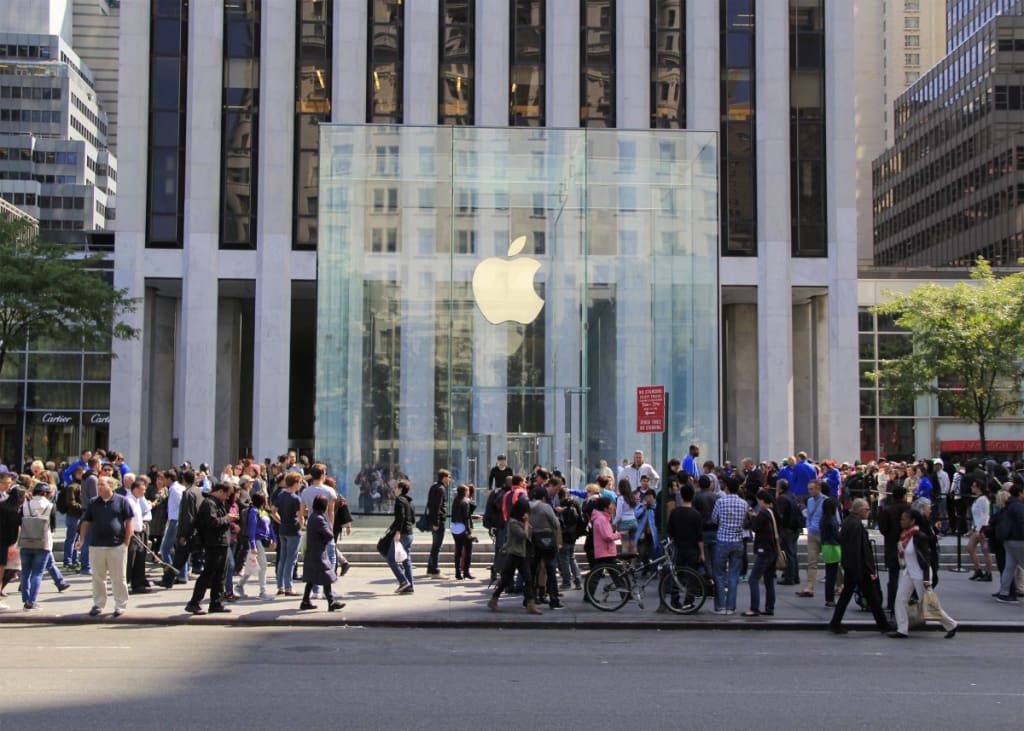
Apple is enhancing its AI by analyzing user data directly on devices, preserving privacy through differential privacy techniques. By comparing synthetic data with real user data (like emails or messages) from those who opt into analytics, the device identifies useful matches without sending actual data to Apple. This shift helps improve Apple Intelligence features, including a smarter Siri that can understand context, perform multi-app tasks, and recognize on-screen content. These AI upgrades will roll out on newer devices like the iPhone 15 Pro and beyond, showcasing Apple’s balance of AI progress and user privacy.
Apple’s On-Device AI Data Analysis: A Privacy-Conscious Leap in Intelligence
In a significant move to enhance its artificial intelligence capabilities, Apple is taking a novel approach that involves analyzing user data directly on devices. This new strategy is designed to boost the performance of its AI systems—most notably, Siri—while still maintaining its well-known commitment to user privacy.
Apple's evolving AI strategy comes at a time when competitors like Google and Microsoft are racing ahead with cloud-based AI solutions. Rather than following the same path, Apple is doubling down on its core philosophy: AI development that prioritizes privacy and data security. The key innovation? Using real user data for model improvement—without ever letting that data leave the user's device.

Differential Privacy and Local Analysis
To further safeguard user identity, Apple continues to employ differential privacy—a technique that adds random “noise” to datasets, making it statistically difficult to identify individual users. Differential privacy ensures that patterns can be analyzed collectively without exposing personal information.
This privacy-preserving approach was first adopted by Apple in 2016 and remains central to its analytics framework. In the current AI initiative, differential privacy is applied locally on the device, further minimizing the risk of exposing sensitive user data. It’s this layered strategy—local processing, opt-in participation, anonymization, and data obfuscation—that allows Apple to extract value from user interactions while maintaining its high privacy standards.
The iPhone maker also said it is bringing privacy-centric ways to improve the models used to power other Apple Intelligence features, such as Image Playground, Image Wand, Memories Creation and Visual Intelligence.
Transitioning from Synthetic to Real User Data
Traditionally, Apple has relied on synthetic data—artificially generated information that mimics real-world inputs—to train its AI models. However, this approach has limitations, as synthetic data may not accurately represent the nuances of actual user behavior, leading to less effective AI performance. To address this, Apple is shifting towards analyzing real user data on devices, specifically from users who have opted into the Device Analytics program.
Integration of Differential Privacy
To further protect user privacy, Apple continues to leverage its differential privacy strategy, first adopted in 2016. This involves integrating randomization into datasets to maintain anonymity and protect individual identities. This privacy-preserving method also contributed to the development of features like Genmoji.

Private Cloud Compute for Complex Tasks
For more complex AI tasks that cannot be handled solely on-device, Apple utilizes Private Cloud Compute. This system processes only the data relevant to a user's request on Apple silicon servers and ensures that the data is removed after processing. This approach extends the privacy and security of the user's device into the cloud.
User Control and Transparency
Apple emphasizes user control over data sharing. Users can manage their participation in the Device Analytics program through their device settings. Additionally, Apple provides transparency by allowing users to access reports detailing how their data is used to improve AI features.
Conclusion
Apple's initiative to analyze user data on devices represents a significant step in enhancing AI capabilities while upholding its commitment to user privacy. By combining on-device analysis with privacy-preserving techniques like differential privacy and Private Cloud Compute, Apple aims to deliver more effective AI features without compromising user trust.
About the Creator
Md Soriful Islam
I am an imaginative and inquisitive person, always loving to know and learn new things. My interest in self-improvement constantly motivates me. I am honest, hardworking and responsible. Finally, I am proud of my small progress.
Keep reading
More stories from Md Soriful Islam and writers in History and other communities.
History and Significance of Bengali New Year (Pohela Boishakh)
The Bengali New Year, popularly known as Pohela Boishakh, marks the beginning of the Bengali calendar year and is one of the most culturally significant festivals celebrated in Bangladesh and the Indian state of West Bengal. Falling on the 14th or 15th of April every year, Pohela Boishakh is a celebration of new beginnings, unity, and cultural heritage.
By Md Soriful Islam9 months ago in History
Military Strength of Alexander the Great and the Chola Empire: A Historical Comparison
Though separated by more than a thousand years and operating in vastly different geographical and cultural contexts, both forces achieved extraordinary success through discipline, innovation, and strategic brilliance. This article explores the history, composition, size, organization, and military strength of Alexander’s Macedonian army and the Chola military, highlighting how each became a dominant power of its era.
By Say the truth 8 days ago in History




Comments
There are no comments for this story
Be the first to respond and start the conversation.