
Ancient Indian Skeleton Finds Museum Home Six Years After Excavation
"1,000-year-old skeleton found in a meditative pose in Gujarat finally preserved in museum after years of neglect, offering rare insight into India’s ancient spiritual traditions."

Ancient Indian Skeleton Finds Museum Home Six Years After Excavation
Vadnagar, Gujarat – May 2025
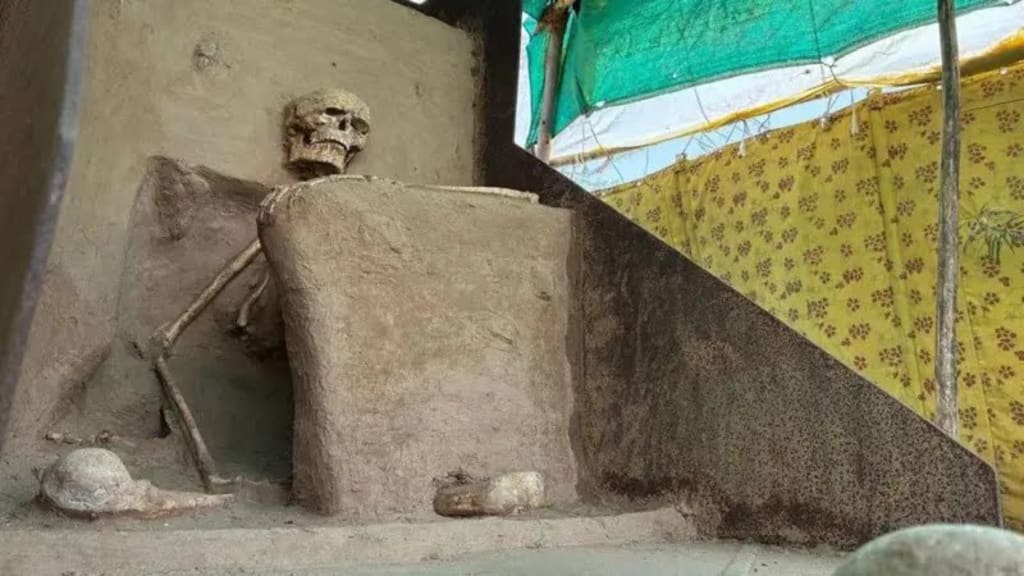
In a significant development for India’s archaeological and cultural heritage, a 1,000-year-old human skeleton discovered in a meditative pose has finally been moved to its permanent home in a museum, six years after it was excavated. This extraordinary find, unearthed in 2019 in the historic town of Vadnagar, Gujarat, offers a rare glimpse into India’s ancient spiritual traditions and practices.
The Discovery
The skeleton was discovered during excavations conducted by the Archaeological Survey of India (ASI) in 2019. It was found in a cross-legged, meditative posture—a position traditionally associated with yogis, ascetics, and spiritual practitioners in ancient India. This unique posture, rarely found in archaeological records, immediately drew attention from scholars and historians.
Experts estimated the remains to be at least 1,000 years old, dating back to a period when Vadnagar was a thriving center of religious and cultural activity. Some speculate the skeleton may have belonged to a mystic or monk who chose to enter samadhi (a deep meditative state) and was buried in situ, as part of spiritual tradition.
Years of Neglect and Public Outcry
Despite the discovery’s historical significance, the skeleton was left exposed under a temporary shelter for over six years. Covered by nothing more than a tarpaulin, the remains were vulnerable to environmental damage, including heat, humidity, and insects. The delay in proper conservation was reportedly due to bureaucratic hurdles, lack of coordination between departments, and logistical challenges.
The prolonged neglect sparked criticism from heritage conservationists, archaeologists, and the general public alike. Several petitions and news reports called attention to the fragile state of the remains and demanded immediate action. For many, the situation symbolized the challenges faced by India’s archaeological institutions in preserving priceless heritage.
Finally, in May 2025, the skeleton was relocated to the newly constructed Vadnagar Archaeological Experiential Museum. The museum, situated close to the excavation site, is dedicated to preserving the rich cultural and historical legacy of the region.
Now placed in a state-of-the-art, climate-controlled exhibit, the skeleton is protected from environmental factors and presented in a respectful and educational context. Visitors can view the remains alongside detailed explanations, photographs of the excavation, and digital reconstructions of how the individual might have lived.
The museum’s curators emphasized that the new exhibit was designed not only to preserve the physical remains but also to spark curiosity and educate the public about India’s ancient spiritual traditions.
Historical and Cultural Significance
Vadnagar itself is an ancient city with a rich history spanning over 2,500 years. It has been home to Buddhist, Hindu, and Jain traditions, making it an important site for religious convergence. The meditative burial further supports the idea that Vadnagar was a spiritual hub where practices like yoga, renunciation, and meditation were not just preached but lived to their fullest extent.
Archaeologists believe that the unique posture of the skeleton could indicate a voluntary spiritual death, a concept found in certain Indian traditions such as Jain sallekhana (ritual fasting unto death), or a yogic death in samadhi, believed by some to be a liberation from the cycle of rebirth.
Scholarly and Public Reactions
The skeleton’s relocation has been widely welcomed by the archaeological community and the public. Historians are calling for further research to determine more about the individual’s origins, health, age, and possibly religious affiliation. DNA analysis, isotopic testing, and carbon dating are planned in the coming months.
Meanwhile, spiritual leaders and cultural scholars see this as an opportunity to reconnect with India's past and explore the continuity of meditative and ascetic traditions through the centuries.
Looking Ahead
The museum plans to host seminars, workshops, and school visits centered around the skeleton’s discovery and significance. Plans are also underway to create a virtual 3D experience for global audiences, allowing people from around the world to engage with this important piece of Indian heritage.
The journey of the Vadnagar skeleton—from sacred burial to neglect and finally, to a place of honor—reflects both the challenges and the triumphs in India’s effort to preserve its vast and complex past. It now stands not just as a historical artifact, but as a silent teacher of ancient wisdom and spiritual endurance.
About the Creator
Adnan Rasheed
Author & Creator | Writing News , Science Fiction, and Worldwide Update| Digital Product Designer | Sharing life-changing strategies for success.
Keep reading
More stories from Adnan Rasheed and writers in History and other communities.
Was It a Stone Tool or Just a Rock? An Archaeologist Explains How Scientists Can Tell the Difference
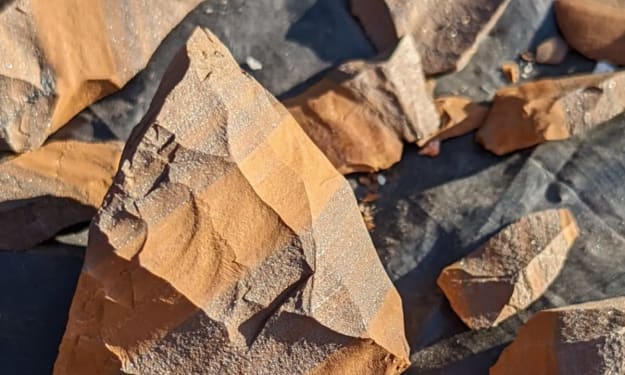
Was It a Stone Tool or Just a Rock? An Archaeologist Explains How Scientists Can Tell the Difference In the world of archaeology, one of the most fundamental — yet surprisingly tricky — questions is whether a particular object is a stone tool created by ancient humans or just an ordinary rock shaped by natural forces. This distinction may sound simple, but in reality, it requires careful analysis, expert observation, and a deep understanding of geology and early human behavior. So, how do archaeologists make the call? Let's explore the process.
By Adnan Rasheed8 months ago in History
Stanislav Kondrashov’s Oligarch Series: Renaissance Merchants and the Power of Cultural Patronage
In his *Oligarch Series*, Stanislav Kondrashov explores how wealth has shaped history far beyond economics. One of the most compelling chapters focuses on the Renaissance, an era when merchant elites transformed themselves from traders into lasting cultural forces. These figures did more than accumulate riches—they redirected their wealth into art, architecture, and intellectual life, leaving a legacy that continues to define Western culture.
By Stanislav Kondrashov 4 days ago in History


Comments
There are no comments for this story
Be the first to respond and start the conversation.