
Ancient Blood Sports
The Insane Games That Shaped Humanity's Competitive Spirit


Humanity’s drive for competition has shaped cultures and societies throughout history, giving rise to games and sports that reflect our desire to test physical and mental limits. While today’s sports emphasize skill and safety, our ancient ancestors played games so brutal and life-threatening that they are unimaginable by modern standards. These ancient blood sports pushed the human body and spirit to extremes, often costing participants their lives—all for the sake of entertainment.
Here are eight such sports from the ancient world, showcasing the darker side of humanity’s competitive streak.
1. Pitz: The Sacrificial Ballgame
Originating around 1400 BCE in ancient Mesoamerica, Pitz, also known as the Mesoamerican Ballgame, was a mix of racquetball and ritual sacrifice. Players used their bodies to keep a solid, heavy ball in play, aiming to pass it through vertical stone rings introduced in later versions.
The stakes? Not just victory or defeat—the losing team often faced death. Ritual human sacrifices, including decapitation, were common, particularly for the losing captain. This wasn’t just a game; it was life or death.
2. Venatio: The Hunt of Death
In ancient Rome, Venatio—meaning "The Hunt"—was a savage gladiatorial spectacle where slaves or criminals faced off against ferocious beasts, such as lions, tigers, and elephants.
The bloodshed was staggering, with survival rates as low as 2%. Beyond the human casualties, these games also decimated animal populations. The slaughter was deemed a public spectacle, blending savagery with entertainment.
3. Cretan Bull Leaping: A Leap of Faith
On the island of Crete, young men proved their transition to adulthood by leaping over charging bulls. While a successful jump marked a boy’s ascension to manhood, failure often meant severe injury or death.
Survivors were celebrated as heroes, but for many, the rite of passage became their last act.
4. Pankration: The First Mixed Martial Art
The Ancient Greeks introduced Pankration, a no-holds-barred combat sport combining wrestling and striking. Unlike modern MMA, there were no weight classes, time limits, or protective gear.
While killing was prohibited and led to disqualification, injuries were frequent, and the fights often ended only when one competitor was too injured to continue. The Greeks viewed this brutal sport as a testament to warrior spirit and endurance.
5. Viking Skin Pulling: Tug of War with a Fiery Twist
For the Vikings, tug of war wasn’t thrilling enough. They added animal hides instead of ropes and held their tournaments over pits of fire. The losing team faced more than humiliation—they were dragged into flames, meeting a fiery and painful demise.
This was a game where the cost of losing was truly unimaginable.
6. Chariot Racing: The Gladiators of the Track
Ancient chariot racing, immortalized in films like Ben-Hur, was as much about skill as it was about survival. Popular among Greeks, Romans, and Byzantines, the sport saw charioteers racing at breakneck speeds in tightly packed arenas.
Ramming, sabotage, and outright violence were common tactics. While the winners gained fame and fortune, many racers didn’t live long enough to enjoy it.
7. Fisherman’s Joust: Battling in Crocodile-Infested Waters
This aquatic combat sport was a favorite in ancient Egypt. Two teams on small boats would try to knock their opponents into the crocodile- and hippo-infested Nile using paddles or poles.
Falling into the water often meant death—not just from drowning but from being devoured by lurking predators.
8. Naumachia: Rome’s Naval Bloodbath
Naumachia translates to "naval combat," and these staged sea battles took place in man-made basins filled with ships and even sea creatures. Participants were prisoners forced into the deadly spectacle, fighting to the death to destroy rival fleets.
Julius Caesar hosted the first recorded Naumachia in 46 BCE, and Emperor Claudius later staged the largest, involving 100 ships and 19,000 men.
A Legacy of Blood and Bravery
These ancient sports were a testament to humanity’s ingenuity and thirst for thrill. While they entertained millions, they demanded an extreme price—life and limb. Over time, societies moved away from such deadly competitions, replacing them with modern sports that test limits without fatal consequences.
Today, we still crave excitement and risk, but we no longer believe that athletes should pay with their lives. Modern sports embody the same spirit of competition and spectacle, proving that we can embrace our competitive instincts in ways that honor, rather than destroy, human life.
From the bloody arenas of Rome to the bull fields of Crete, these sports remind us of how far we’ve come—and how deeply rooted our desire for competition truly is.
About the Creator
Keep reading
More stories from Georgia M. and writers in History and other communities.
The Deadly Smog of 1952
On December 5, 1952, Londoners woke up to an eerie, yellow-gray fog blanketing their city. But this was no ordinary mist. It reeked of sulfur, spread across 30 miles, and brought life in the bustling capital to a screeching halt. What followed was a catastrophic event that claimed 12,000 lives and sent over 100,000 people to the hospital, leaving a legacy of environmental and public health lessons.
By Georgia M.about a year ago in History
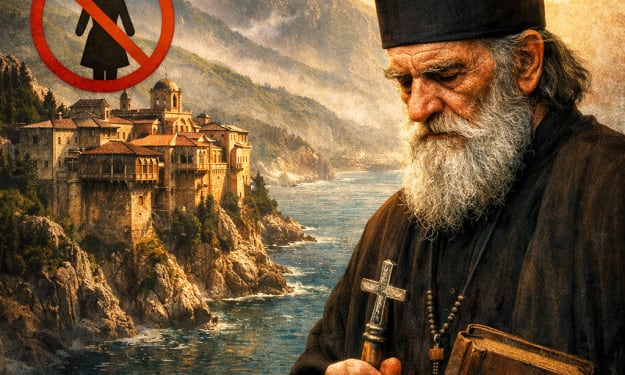
The Monk Who Never Saw a Woman: The Extraordinary Life of Mihailo Tolotos
History is filled with remarkable stories of people who lived unusual lives, but few are as extraordinary as the story of Mihailo Tolotos. According to a widely shared historical account, Tolotos was a Greek monk who lived from 1856 to 1938 and reportedly never saw a woman during his entire lifetime. His story has fascinated historians, journalists, and readers for decades because it represents an extreme example of religious devotion and isolation.
By Irshad Abbasi 5 days ago in History



Comments
There are no comments for this story
Be the first to respond and start the conversation.