
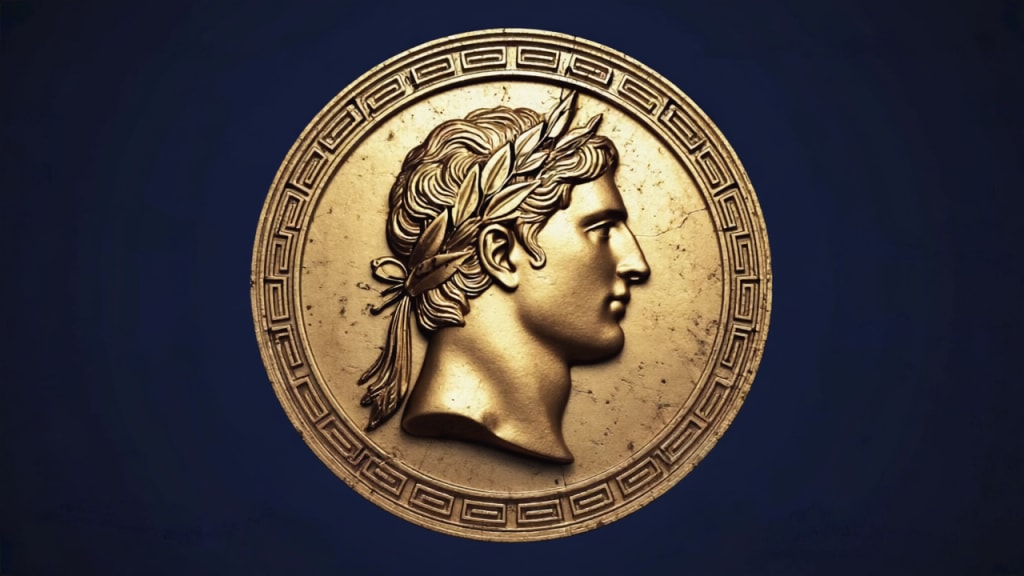
Alexander the Great: The Man Who Conquered the World
In the annals of history, few names shine as brightly as that of Alexander the Great. A man of unparalleled ambition and military genius, Alexander carved out an empire that stretched from the shores of Greece to the banks of the Indus River. His life was a tapestry of daring conquests, cultural fusion, and personal drama. One story that encapsulates his audacity is the legend of the Gordian Knot. Faced with an intricate knot that no one could untie, Alexander simply sliced through it with his sword, declaring, “It makes no difference how they are loosed.” This bold act foreshadowed the decisive and unconventional approach he would take in his campaigns, forever altering the course of history.
Early Life and Education: The Making of a Legend
Alexander was born in 356 BC in Pella, the capital of Macedonia. His father, King Philip II, was a shrewd ruler who transformed Macedonia into a powerful kingdom. His mother, Olympias, was a princess from Epirus, known for her strong will and devotion to the gods. From a young age, Alexander showed signs of greatness. As a boy, he tamed a wild horse named Bucephalus, which became his faithful companion in battle. At the age of 13, he was tutored by the philosopher Aristotle, who instilled in him a love for learning, philosophy, and Greek culture. This education would later influence Alexander’s vision of a world united by shared knowledge and ideals.
Rise to Power: A Young King’s Bold Beginnings
In 336 BC, tragedy struck when King Philip II was assassinated. At just 20 years old, Alexander ascended to the throne. His early reign was marked by challenges—rival claimants to the throne and restless Greek city-states threatened his rule. Yet, Alexander swiftly crushed these threats, securing the loyalty of the Macedonian army and asserting his dominance over Greece. His first military campaigns in Greece demonstrated his tactical brilliance and set the stage for his greater ambitions. With his homeland secure, Alexander turned his gaze eastward, dreaming of conquering the vast Persian Empire.
Conquests: From Persia to India
Alexander’s campaigns are the stuff of legend, showcasing his strategic genius and relentless drive. His conquests can be divided into three key phases:
Persia: In 334 BC, Alexander crossed into Asia Minor, beginning his war against Persia. His victory at the Battle of Issus (333 BC) was a turning point, where he defeated the Persian king Darius III despite being outnumbered. The Battle of Gaugamela (331 BC) sealed Persia’s fate, with Alexander’s innovative use of the phalanx and cavalry breaking the Persian lines. These victories opened the gates to the heart of the Persian Empire, including the fabled cities of Babylon and Persepolis.
Egypt: In 332 BC, Alexander marched into Egypt, where he was welcomed as a liberator. He famously visited the oracle at Siwa, where he was declared the son of Zeus-Amun, enhancing his divine aura. During this time, he founded Alexandria, a city that would become a beacon of learning and culture.
India: Alexander’s ambition knew no bounds. In 326 BC, he pushed into India, seeking to conquer the known world. The Battle of the Hydaspes against King Porus was one of his hardest-fought victories, showcasing his ability to adapt to new challenges, including war elephants. However, his exhausted troops eventually mutinied, forcing him to turn back.
Throughout his campaigns, Alexander demonstrated not only military prowess but also a knack for sieges. The Siege of Tyre (332 BC), where he built a causeway to breach the island city’s defenses, remains one of history’s most remarkable military engineering feats.
Cultural Impact: The Birth of the Hellenistic Age
Alexander’s conquests did more than redraw maps—they reshaped cultures. As he marched eastward, he spread Greek language, art, and philosophy, blending them with local traditions. This cultural fusion gave rise to the Hellenistic Age, a period of unprecedented exchange and innovation. Alexander founded over 20 cities, most notably Alexandria in Egypt, which became a hub of knowledge, home to the famous Library of Alexandria. His vision of a cosmopolitan world, where diverse peoples could coexist and thrive, left an indelible mark on history.
Personal Life: Loyalty, Love, and Legend
Behind the conqueror was a man of deep emotions and complex relationships. Alexander’s bond with his childhood friend Hephaestion was legendary, often compared to that of Achilles and Patroclus. Hephaestion’s death in 324 BC devastated Alexander, who mourned him extravagantly. Alexander also married several times, most notably to Roxana, a Bactrian princess, in a union that symbolized his desire to bridge East and West. His personal habits—such as his love for Homer’s Iliad, which he carried on campaigns—reveal a man who saw himself as both a warrior and a scholar.
Death and Legacy: The End of an Era
In 323 BC, at the height of his power, Alexander fell ill in Babylon and died at the age of 32. The cause of his death remains a mystery, with theories ranging from malaria to poisoning. His empire, vast and diverse, quickly fragmented as his generals carved it into successor states, including the Seleucid and Ptolemaic empires. Yet, Alexander’s legacy endured. His conquests had permanently altered the cultural and political landscape, and his life became a symbol of ambition, leadership, and the pursuit of glory.
Alexander the Great was more than a conqueror—he was a visionary who dreamed of a world united by culture and knowledge. His life, though brief, left a legacy that continues to inspire and fascinate. From his audacious solutions to impossible problems, like the Gordian Knot, to his relentless drive to explore the unknown, Alexander’s story is a testament to the power of human will. As the ancient historian Arrian wrote, “He was born to be a ruler of men, and he became the measure of all things.”
About the Creator
Dust Bowl Trauma in West Texas
In the early 1930s, the High Plains of Texas experienced a series of environmental conditions that would permanently reshape the region’s communities. Drought intensified across the southern plains. Topsoil loosened by aggressive plowing lifted into the air under powerful winds. Dust storms darkened skies across counties that depended almost entirely on agriculture and livestock. What followed became known as the Dust Bowl.
By Dr. Mozelle Martin3 days ago in History


Comments
There are no comments for this story
Be the first to respond and start the conversation.