
Albert Einstein: The Man Who Changed Our Understanding of the Universe
Albert Einstein


Albert Einstein: The Man Who Changed Our Understanding of the Universe
1. Early Life and Education
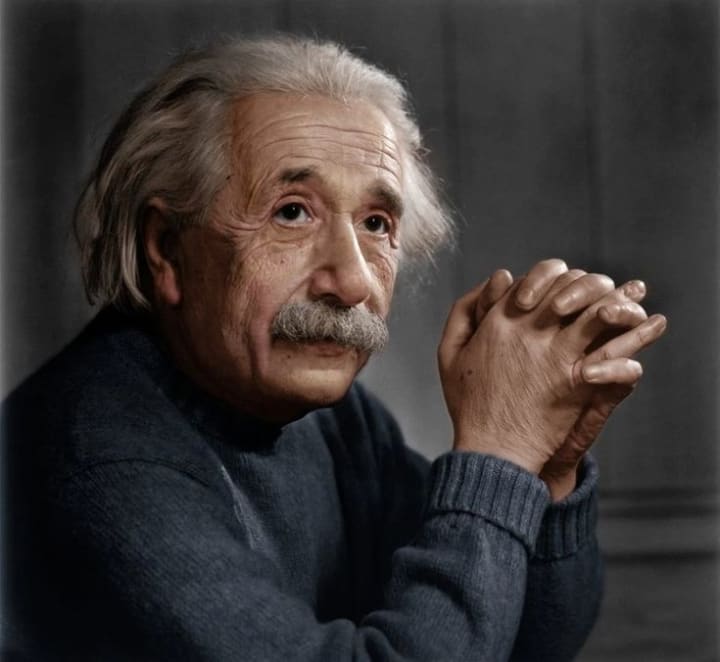
Albert Einstein was born on March 14, 1879, in Ulm, a small town in Germany. His parents, Hermann and Pauline Einstein, were secular, middle-class Jews. From a young age, Einstein showed an interest in science and mathematics. However, contrary to popular belief, Einstein was not a child prodigy in school. In fact, he struggled with the rigid schooling system in Germany, finding it uninspiring and oppressive. He was more interested in independent study, often reading books on philosophy, mathematics, and science.
At the age of 16, Einstein moved to Switzerland and enrolled in the Swiss Federal Polytechnic in Zurich. Here, he found a more supportive academic environment and flourished, particularly in physics and mathematics. It was also here that he met Mileva Marić, a fellow student who would later become his first wife.
2. The Miracle Year: 1905
In 1905, Einstein experienced what is often referred to as his "Annus Mirabilis" or "Miracle Year." While working as a clerk at the Swiss Patent Office in Bern, Einstein published four groundbreaking papers that would redefine physics and earn him worldwide recognition. These papers covered the photoelectric effect, Brownian motion, special relativity, and mass-energy equivalence.
Each paper introduced revolutionary ideas:
- **Photoelectric Effect**: This paper provided evidence that light behaves as both a particle and a wave, laying the groundwork for quantum mechanics. This work would later earn him the Nobel Prize in Physics in 1921.
- **Brownian Motion**: Einstein’s paper on Brownian motion offered evidence for the existence of atoms and molecules, which had previously been a theoretical concept.
- **Special Theory of Relativity**: This paper introduced the idea that time and space are not absolute but relative, depending on the observer’s speed. This challenged centuries of Newtonian physics.
- **Mass-Energy Equivalence**: Einstein’s famous equation, E = mc², suggested that mass and energy are interchangeable. This concept would later become essential to the development of nuclear power and atomic energy.
3. General Theory of Relativity and Worldwide Fame
Building on his special theory of relativity, Einstein spent the next ten years developing the general theory of relativity, published in 1915. This theory proposed that gravity is not a force between masses but rather the curvature of space-time caused by mass. In simpler terms, massive objects like stars and planets bend the space around them, and other objects follow these curves, which we perceive as gravitational pull.
In 1919, during a solar eclipse, British astronomer Sir Arthur Eddington confirmed one of the predictions of Einstein's theory: light from stars near the sun was bent, aligning with Einstein’s calculations. This validation catapulted Einstein to worldwide fame, and he became a symbol of genius.
4. Personal Struggles and Humanitarian Work
Despite his scientific achievements, Einstein faced numerous personal challenges. His marriage with Mileva Marić became strained over time, partly due to the pressures of his work and his rising fame. They eventually divorced, and Einstein later remarried his cousin, Elsa Löwenthal.
Einstein was also deeply troubled by the rise of Nazi ideology in Germany, especially due to his Jewish heritage. In 1933, when Adolf Hitler came to power, Einstein left Germany and moved to the United States, where he joined the Institute for Advanced Study in Princeton, New Jersey. Throughout his life, he was a vocal advocate for civil rights, pacifism, and democracy, often speaking out against anti-Semitism, fascism, and militarism.
5. The Manhattan Project and Einstein’s Regrets
In 1939, as World War II escalated, Einstein learned that German scientists were working on nuclear fission, a process that could potentially lead to the creation of an atomic bomb. Alarmed by the prospect of the Nazis developing such a weapon, Einstein wrote a letter to President Franklin D. Roosevelt, urging him to support research into nuclear fission in the United States. This letter led to the establishment of the Manhattan Project, which ultimately developed the atomic bombs dropped on Hiroshima and Nagasaki in 1945.
Although Einstein was not directly involved in the Manhattan Project, he later expressed deep regret for his role in encouraging the development of nuclear weapons. He became a passionate advocate for nuclear disarmament, co-signing the Russell-Einstein Manifesto in 1955, which called for peaceful resolutions to international conflicts.
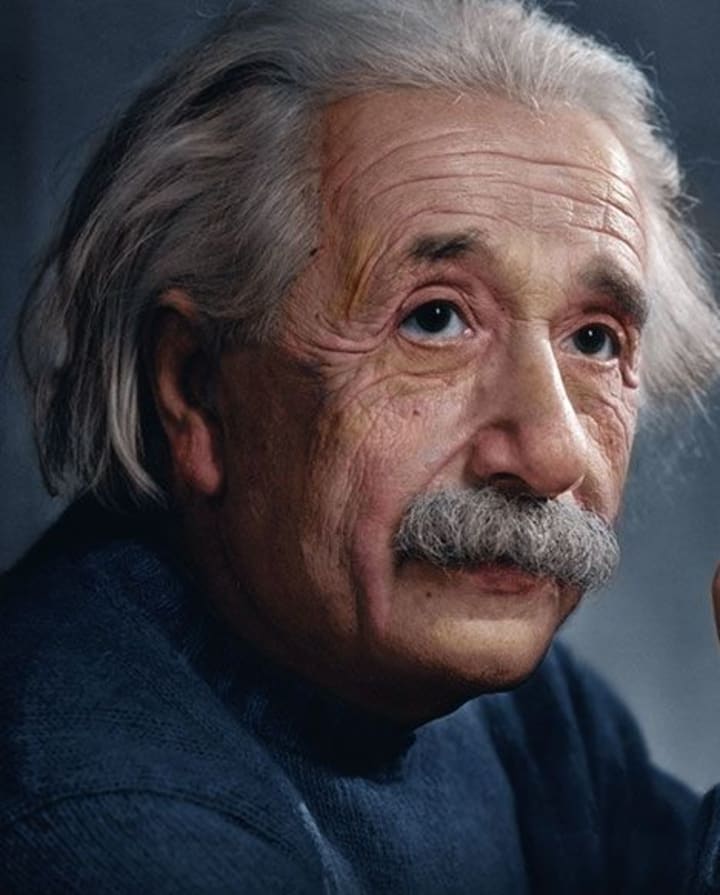
6. Legacy and Impact on Modern Science
Albert Einstein passed away on April 18, 1955, at the age of 76. His impact on science, however, remains timeless. The theories he introduced—special relativity, general relativity, and quantum mechanics—have shaped modern physics and continue to influence research today. Satellites, GPS technology, and even the search for black holes rely on the principles he discovered.
Beyond science, Einstein left a legacy as a public intellectual and humanitarian. His writings on ethics, politics, and philosophy continue to inspire people around the world. He was known for his sense of humor, humility, and wisdom, and his quotes, such as “Imagination is more important than knowledge,” are celebrated to this day.
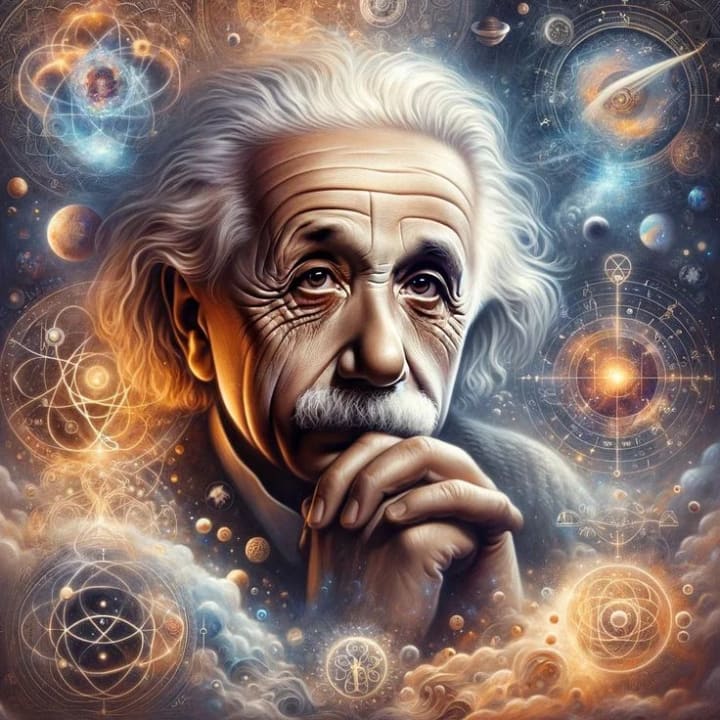
7. Fun Facts About Albert Einstein
- **Rebellious School Days**: Einstein famously despised the strict schooling system in Germany and often clashed with teachers. He left his German school at 15, frustrated with its rigid style, and eventually finished his education in Switzerland.
- **Violin Virtuoso**: Einstein was an avid violin player, often using music as a way to relax and reflect. He especially loved Mozart and would play violin duets with friends and family.
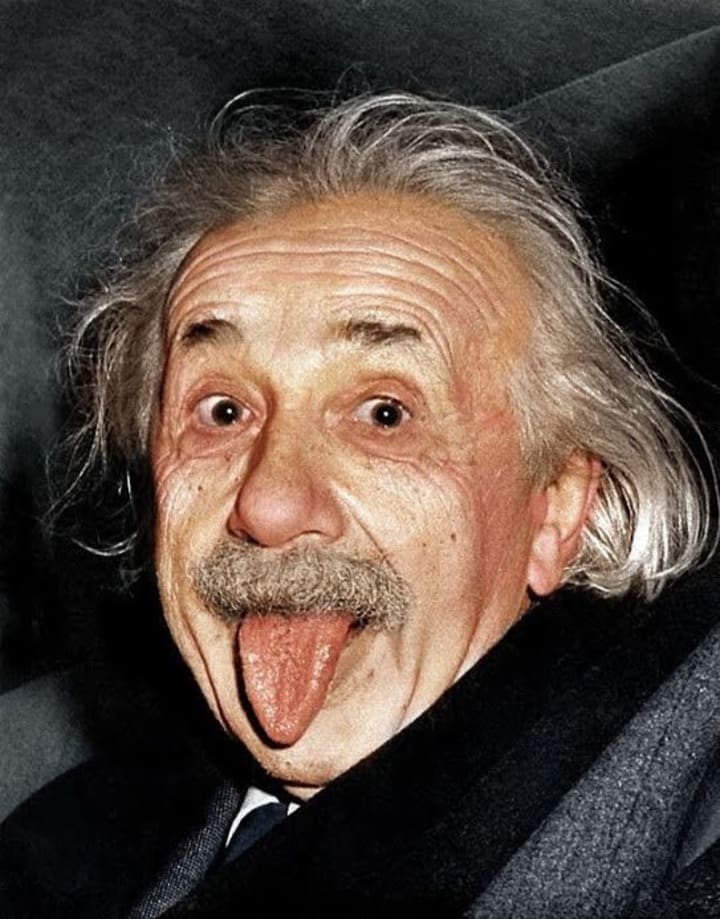
- **Eccentricities**: Einstein’s wild hair and absent-minded personality became legendary. He was known to shun socks, claiming they were unnecessary. His unkempt look became symbolic of the “mad genius” image, despite his humble and gentle nature.
- **A Pacifist at Heart**: Although he played a role in the creation of atomic weapons, Einstein was a lifelong pacifist. After World War II, he advocated for peace and international cooperation, expressing regret for his small but crucial role in encouraging atomic research.

8. Einstein’s Timeless Influence
Albert Einstein's life and work remind us of the power of curiosity, imagination, and perseverance. He dared to challenge established ideas and viewed the universe with a sense of wonder, forever altering the way we understand the cosmos. To this day, scientists around the world continue to test and explore his theories, while his words on peace and humanity serve as a guiding light for future generations.
Einstein’s contributions transcend physics and mathematics; he is a symbol of intellectual freedom and human potential. His legacy lives on, not just in scientific equations but in the timeless pursuit of knowledge and the ongoing quest for a better understanding of our universe.
About the Creator
Mahalakshmi
"My name is Mahalakshmi, and I'm passionate about storytelling in all its forms. From fiction to real-life tales, I love writing all types of stories that inspire, entertain, and spark imagination. Join me on this creative journey!"
Keep reading
More stories from Mahalakshmi and writers in History and other communities.
Isaac Newton: The Man Who Changed the World
Isaac Newton: The Man Who Changed the World Isaac Newton, born in 1643, is one of history's most influential scientists. His discoveries transformed our understanding of the physical world, with lasting impact on mathematics, physics, astronomy, and beyond. This story traces his journey from a curious child to a groundbreaking scientist who laid the foundation for modern science.
By Mahalakshmiabout a year ago in History
Islamic State Accused of Involvement in Antiquities Smuggling
The illegal trade in antiquities has long been a shadowy but profitable enterprise, and in recent years it has gained global attention due to the involvement of extremist groups. Among these groups, the so-called Islamic State (IS) has been widely accused by international investigators and cultural heritage experts of participating in the looting and smuggling of priceless historical artifacts. These activities not only threaten humanity’s shared cultural heritage but also provide a significant source of funding for militant operations.
By Irshad Abbasi about 5 hours ago in History
Hottest in the Office
Dear Rafi, You’re very distracting to work around. For the first second I saw you the other day, I thought you were some type of executive. It took a moment to realize no, you were just the new guy, dressed up for the job he wants. Be still, my heart.
By Gabriel Shames4 days ago in Pride



Comments
There are no comments for this story
Be the first to respond and start the conversation.