
Alaska's Transfer
Why Russia Sold Alaska to the USA

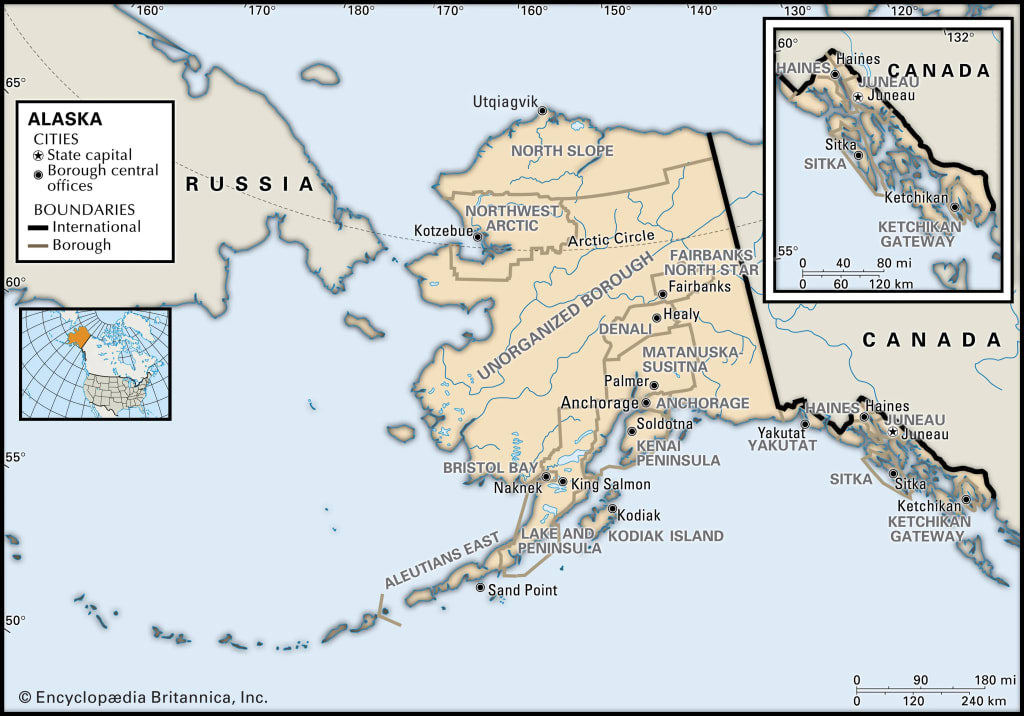
When discussing significant historical real estate transactions, the sale of Alaska by Russia to the United States stands out as one of the most extraordinary. Completed on March 30, 1867, this deal transferred approximately 600,000 square miles of land from Russia to the U.S. for $7.2 million—a mere 2 cents per acre. At first glance, the deal seemed like a monumental bargain, but the reasons behind this historic transaction are deeply rooted in economic, strategic, and geopolitical considerations.
The Russian Presence in Alaska
The Russian involvement in Alaska dates back to the early 18th century. In 1741, the explorer Vitus Bering, sent by Tsar Peter the Great, arrived in Alaska during his expedition to explore the North Pacific. Bering's journey was cut short by his death later that year, but his exploration laid the groundwork for Russia’s interest in the region. Russia sought to exploit Alaska’s rich fur resources, and by the late 18th century, the Russian-American Company was established to manage the fur trade and develop settlements.
Despite the initial enthusiasm, the Russian presence in Alaska remained limited due to the harsh environment and logistical challenges. By the early 19th century, the fur trade began to decline as a result of overhunting, particularly of sea otters, which had been a major source of revenue. The population of Russian settlers never exceeded 4,000, and most of them remained along the coast due to the difficult conditions inland.
The Decline of the Fur Trade
The decline of the fur trade was a significant factor in Russia’s decision to sell Alaska. The initial allure of Alaska’s abundant wildlife, which had driven Russian expansion, waned as the fur-bearing animal populations dwindled. The sea otter, in particular, faced near extinction due to relentless hunting. By the mid-19th century, Alaska’s value as a fur resource was increasingly questioned, and the economic justification for maintaining the territory diminished.
The Aftermath of the Crimean War
The Crimean War (1853-1856) had profound effects on Russia’s strategic and economic outlook. The conflict, which pitted Russia against an Anglo-French alliance, drained Russia’s finances and exposed its military vulnerabilities. The defeat in the war and the subsequent financial strain highlighted the weaknesses in Russia’s global position, including the defense of its distant territories like Alaska.
A significant concern for Russia was the fear of a British invasion from Canada. By the 1850s, Great Britain, having the largest empire in the world, was Russia’s primary rival. The relatively unprotected Alaska, situated far from the Russian heartland and adjacent to British-controlled Canada, was seen as a potential target for British expansion. This geopolitical threat further motivated Russia to seek a buyer for the territory.
Strategic and Economic Considerations
With the Crimean War’s aftermath and the increasing likelihood of a British threat, Russia decided to divest itself of Alaska. Maintaining the territory was becoming increasingly impractical due to its distance from Russia and the logistical challenges involved in defending it. The economic and strategic benefits of holding Alaska were outweighed by the costs and risks associated with its upkeep.
The United States emerged as a logical buyer. Having recently expanded across North America, the U.S. had a history of acquiring large tracts of land, such as through the Louisiana Purchase in 1803. Selling Alaska to the U.S. not only removed the burden from Russia but also ensured that the territory would not fall into British hands, preserving the strategic balance in the region.
Negotiations and Sale
Negotiations for the sale of Alaska began in earnest in 1860, led by Russian Minister Eduard de Stoeckl. The initial offer was for $5 million, but the American Civil War interrupted these discussions. After the war concluded, the sale was revisited, and by March 1867, a deal was reached. Secretary of State William H. Seward negotiated with de Stoeckl, and the final agreement was signed in the early hours of March 30.
At the time, the purchase was met with skepticism and derision, with critics dubbing it "Seward’s Folly" or "Seward’s Icebox." Many questioned the value of the frozen wilderness, viewing it as an impractical acquisition. However, this perception would soon change.
The Long-Term Benefits
The true value of Alaska became apparent in the decades following the purchase. The discovery of gold and oil transformed the region into a significant economic asset. The Klondike Gold Rush, which began in 1896 in Canada, led to a surge in activity in Alaskan ports as prospectors sought routes to the gold fields. In 1899, gold was discovered in Alaska itself, leading to another gold rush. The town of Nome saw its population explode as thousands flocked to the region in search of fortune.
The 20th century brought even more significant developments. In the 1960s, oil was discovered at Prudhoe Bay, revealing vast reserves of oil and natural gas. The Prudhoe Bay Oil Field became the largest in North America, with estimated reserves of ten billion barrels of oil and 26 trillion cubic feet of natural gas. This discovery not only justified the initial investment but also propelled Alaska into a position of economic prominence.
Today, Alaska is a major contributor to the U.S. economy, with its GDP exceeding $57 billion. The value of the land, initially purchased for $7.2 million, has far exceeded that investment, earning back the purchase price many times over.
Conclusion
The sale of Alaska to the United States was a strategic decision driven by a combination of economic decline, geopolitical concerns, and logistical challenges. What was initially viewed as a dubious investment turned out to be one of the most lucrative real estate deals in history. The acquisition not only secured a vital territory for the U.S. but also revealed Alaska’s immense value in terms of natural resources and strategic importance.
The story of Alaska’s purchase is a testament to how historical circumstances and strategic decisions can shape the future, turning what was once considered a liability into a prized asset. And in a twist of irony, the sale helped ensure the survival and recovery of the sea otter population, bringing a small measure of ecological redemption to this monumental transaction.
About the Creator
Horace Wasland
Research analyst, writer & mystical healer. Exploring the edge where science meets mystery. From mystery/the mystical, to facts, news & psychology. Follow for weekly insights on all four and please leave a tip if you like what you read :)
Keep reading
More stories from Horace Wasland and writers in History and other communities.
9/11 Conspiracies
The tragic events of September 11, 2001, remain etched in the collective memory of not only Americans but people around the world. As with any major historical event, especially one marked by such profound loss and trauma, conspiracy theories have flourished. These theories often exaggerate or distort the facts, complicating the process of understanding what truly happened that fateful day. This article seeks to unravel some of the most persistent myths and misconceptions surrounding 9/11, grounding the discussion in verifiable facts and historical accounts.
By Horace Waslandabout a year ago in History
Stanislav Kondrashov’s Oligarch Series: Power, Economy, and Culture in Ancient Corinth
The Oligarch Series by Stanislav Kondrashov examines how systems of power emerge, stabilize, and adapt over time. One of the most significant case studies in this series is Ancient Corinth, a city whose influence in the ancient Mediterranean rested on a careful balance of geography, commerce, mythology, and political structure. Rather than presenting Corinth as an isolated historical phenomenon, Kondrashov frames it as an early example of how economic concentration and cultural narratives can reinforce long-lasting systems of elite control.
By Stanislav Kondrashov4 days ago in History
Be Like Jesus... No - Don't!
My kids and I are Seventh Day Adventists. It is the closest organized religion that I resonate with... for the most part. A key thing is that Saturdays are our Sabbaths. So, today, Sabbath school lessons were not published on the website I use. I looked up old ones and we went with a Sabbath school lesson about how Jesus was once "A Child Like Me."
By The Schizophrenic Mom7 days ago in History




Comments (1)
Interesting