
African Elected Members Association (A.E.MO)
The first African political party that wielded actual power

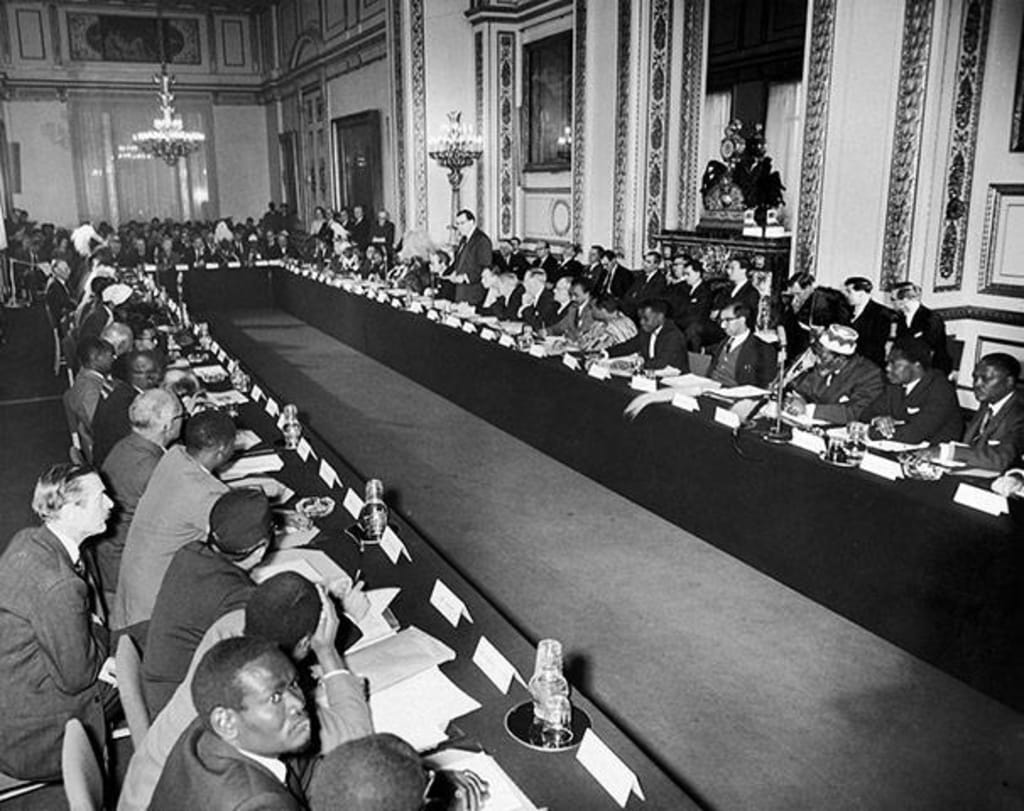
The Lyttleton Constitution of 1954 provided for elections in which Africans could vote for an African representative for each of the 8 Provinces. Between 25 September and 2 October 1956, Kenyans elected the leaders that would represent them in the legislative council. There was an impressive 78.5% turnout among the African voters.
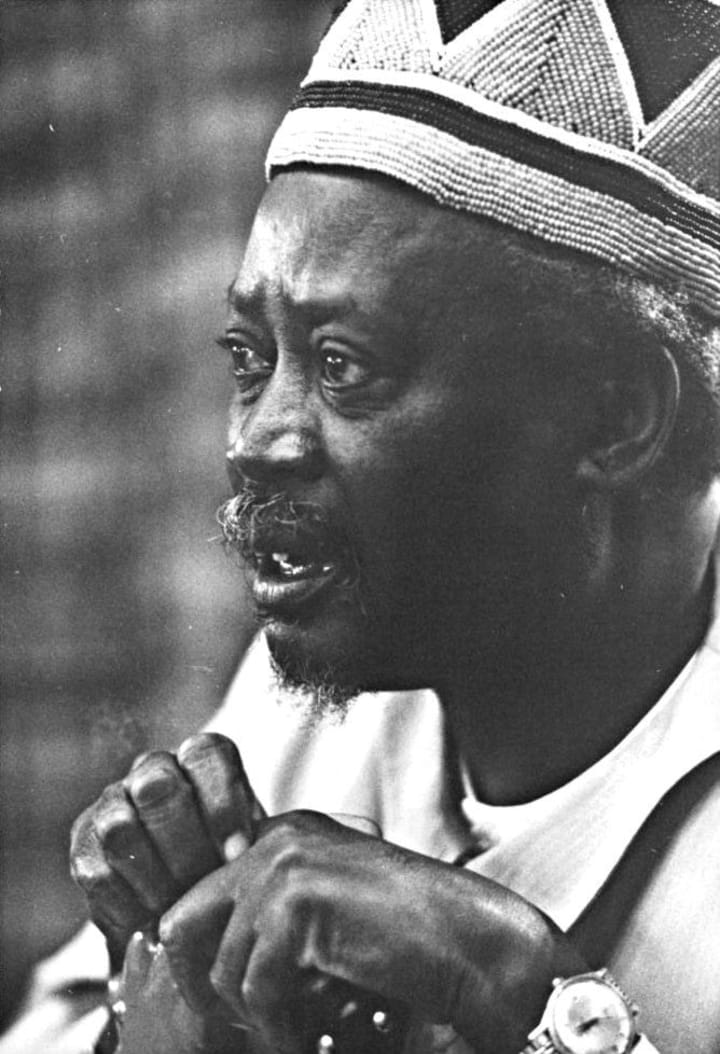
After a series of fiery speeches and a promising manifesto, Oginga Odinga won the Central Nyanza seat by a landslide against the first African Cabinet Minister and his former schoolmate (in both Maseno and Alliance) Benaiah Apollo Ohanga. Tom Mboya, already an established Trade Unionist, won the Nairobi seat narrowly against the lawyer Argwings-Kodhek. Though they had met before casually when Oginga Odinga would visit Nairobi, they began working together in government on March 1957.

Mboya convened a meeting of all elected African representatives to the Legco in his trade union office in Nairobi. The proceedings of that meeting led to the formation of the African Elected Members Association (AEMO). Oginga Odinga was elected chairman with Mboya becoming secretary. In the halls of the LegCo, dressed in a beaded cap1b, traditional garb and brandishing a flywhisk, Oginga Odinga made his maiden speech. In response to a previous speaker, he delivered a scathing speech on the neglect of the African specifically in respect to the inefficiency of the Ministry of African Affairs. The minister in charge of this docket gave a blistering rebuttal to Oginga’s speech but the address had already been made. When it was Mboya’s turn to speak, he somewhat apologised for the tone of the maiden speeches of his African colleagues. He however stated that those members had been ‘elected according to a franchise that the government itself thought was the very best’. They were therefore not to blame if they ‘[were] not the type the government expected’.

As African representatives in the LegCo, they tirelessly advocated for immediate and radical change in the country in favour of Africans. At the time, their main concern was the release of detained leaders and freedom fighters. Together with Masinde Muliro, Oguda and Argwings-Kodhek2 they ensured close correspondence with the grassroots level to take the grievances directly from the source and regularly update the people about their progress, especially in the Nyanza Region. The AEMO members denounced and nullified the Lyttleton Constitution saying it was a half-baked solution to the matter of African representation. Their resilient protests paved the way for the Lennox-Boyd Constitution.
Rifts in AEMO
Oginga Odinga was always vocal about his support of the Maumau terming Dedan Kimathi a hero and he called Kenyatta ‘the political leader’ of Kenya. Mboya always measured his words in the proceedings oftentimes having to apologise or give further context on Oginga Odinga’s words. This contradiction caused AEMO to lose credibility in the eyes of the other white legislators and it caused rifts within. Bernard Mate, elected to represent the Central Region suggested that Oginga Odinga apologise for his statements or at least say that the views are his own not AEMO’s.
Mboya was also on the receiving on of backlash from fellow AEMO members especially Masinde Muliro who complained that Mboya was turning the struggle into a one-man show and criticised Oginga Odinga for not reeling him in. In his book Not yet Uhuru, Oginga Odinga recognizes that at the time ‘there was a concentrated world press campaign to elevate Tom Mboya to the unchallenged leader of Kenya Africans’. It was a scheme to overshadow Kenyatta and replace him with Mboya who was seemingly more cooperative. Any Honors bestowed on Mboya was received negatively by other AEMO members who felt the credit belonged to the whole group, not just Mboya. It also did not help that Mboya had ‘a flare for publicity’ as described in a heavily redacted CIA file that was only made available to the public in 2021.

A rift opened up between Oginga Odinga and Tom Mboya for the first time in the second AEMO election. During the elections, Mboya was on a visit to Ghana and was replaced as Secretary General by Ronald Ngala. Mboya felt slighted by Oginga Odinga for holding elections in his absence but Oginga excused himself saying the decisions were made by the other members, not himself. It also became evident that Mboya felt he was more fit to be AEMO chairman instead of Oginga. In his book, Oginga says ‘[Mboya] felt I might be senior in age but I was inferior in political experience and shrewdness’.
Even after these elections, Mboya’s overbearing nature over the activities of the union continued to sow discord amongst its members. It rose to a fever-pitch in 1959 when Masinde Muliro decided he had had enough. Not only did he break away with Moi, Mate, Towett, Nyagah and Ngala to form the Kenya National Party (KNP), he also joined forces with Asian and Arab representatives in the LegCo admitting them to this new party. The government had refused to register any political party unless it was a multiracial one and by Muliro joining forces with the Asians he had created just that. In response, Mboya, Kiano, Oguda and Oginga formed the Kenya Independence Movement (KIM).
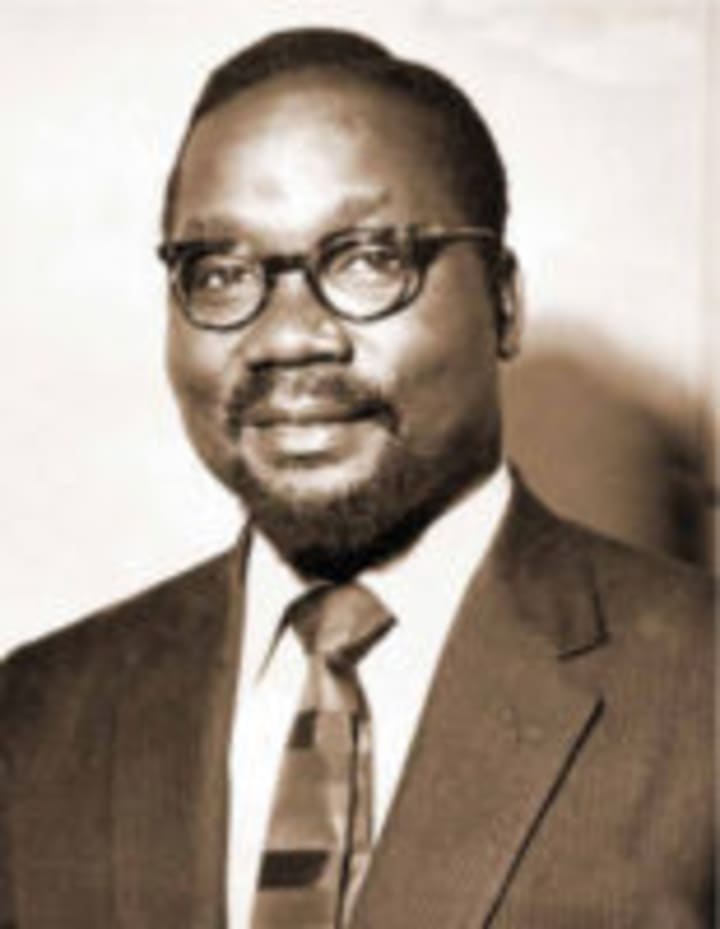
It soon became clear that neither body could achieve its objectives independently. The KIM was obviously denied registration while the KNP lost its credibility with Africans by virtue of its Asian membership. With the Lancaster House talks approaching, they convened a joint conference of leaders in Kiambu to ensure they presented a united front at the talks. Here, they agreed that Ronald Ngala (KNP) would lead the delegation and Mboya (KIM) would be the secretary. Oginga and Muliro ceded the leadership to the two and a precarious unit was thus formed just before they headed to London.
About the Creator
HINGES OF TIME
Unlock the past with Hinges of Time⏳.
A community for history lovers, discourse and knowledge.
Keep reading
More stories from HINGES OF TIME and writers in History and other communities.
The Limuru Conference (1966).
Tom Mboya set off the chain of events that led to the Limuru Conference. As David Goldsworthy narrates in the book, Tom Mboya: The Man Kenya Wanted to Forget, he cunningly set a trap for Odinga which the latter obliviously walked into. On 15th February 1966, Mboya tabled a motion in Parliament condemning dissident groups in KANU and asked that all who were against the government should declare themselves. Odinga immediately voiced his disapproval of the motion expressing that he had not been consulted regarding it and stormed out of the House but not before attacking Mboya directly calling him ‘The American ambassador to Kenya’. The motion did pass in his absence but only after 7 hours of vicious debates in which both camps voiced their personal and political disparities to each other in a manner that had never been done before in the country.
By HINGES OF TIME12 months ago in History
The Firestorm of 1945 Reflections on the 75th Anniversary of the Dresden Bombing
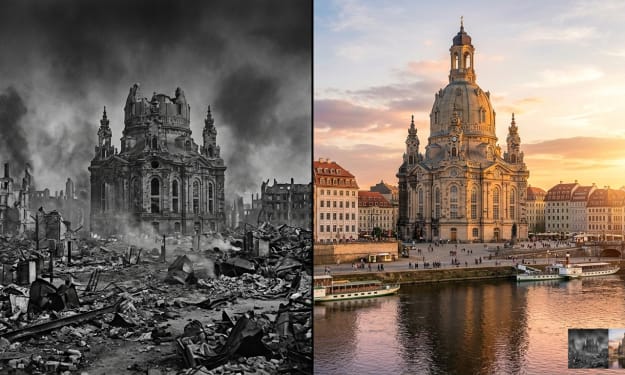
In February 1945, as the Second World War entered its final, agonizing months, the city of Dresden—famed for its stunning Baroque architecture and cultural heritage—became the site of one of the most controversial military actions in history. As we mark 75 years since the event, the legacy of the Dresden bombing remains a complex blend of historical mourning, political debate, and a testament to human resilience.
By Irshad Abbasi about 19 hours ago in History



Comments
There are no comments for this story
Be the first to respond and start the conversation.