
Abraham Lincoln: The Man Who United a Divided Nation
From Humble Beginnings to Eternal Legacy


Abraham Lincoln, the 16th President of the United States, stands as one of the greatest and most influential figures in American history. Known for his wisdom, humility, and courage, Lincoln guided the United States through its darkest hour—the Civil War—and helped end the institution of slavery that had divided the nation for centuries. His life story is a remarkable example of how determination, honesty, and compassion can change the course of history.
Early Life and Struggles
Abraham Lincoln was born on February 12, 1809, in a small log cabin in Hardin County (now LaRue County), Kentucky. His parents, Thomas and Nancy Hanks Lincoln, were poor farmers who worked hard to provide for their family. Lincoln’s childhood was marked by hardship. When he was nine years old, his mother died of milk sickness, leaving a deep and lasting impact on him. His father later remarried a kind woman named Sarah Bush Johnston, who encouraged young Abraham’s love of learning.
Lincoln received little formal education—altogether, less than a year—but he was a lifelong learner. He borrowed books from neighbors and read by the light of the fireplace late into the night. Among the works that influenced him deeply were the Bible, Aesop’s Fables, and biographies of great historical figures. These readings shaped his moral vision and his understanding of justice, humanity, and leadership.
A Path Toward Public Life
In 1830, the Lincoln family moved to Illinois, where Abraham began to work various jobs, including as a rail-splitter, store clerk, and surveyor. Known for his honesty and humor, he quickly earned the nickname “Honest Abe.” His natural gift for storytelling and his sense of fairness made him a respected figure in the community.
Lincoln’s first taste of politics came in 1834 when he was elected to the Illinois State Legislature as a member of the Whig Party. During his time there, he studied law on his own, earning a license to practice in 1836. Moving to Springfield, Illinois, he began a successful law career that would eventually make him one of the state’s top attorneys.
Lincoln married Mary Todd in 1842. Mary was well-educated, witty, and ambitious—a perfect match for Lincoln’s deep intellect and moral drive. Together they had four sons, though only one, Robert Todd Lincoln, lived to adulthood.
The Road to the Presidency
Lincoln’s political journey was not without setbacks. He served one term in Congress from 1847 to 1849 but failed to win reelection. For several years, he focused on his law practice and stayed away from politics. However, the growing national conflict over slavery drew him back into the political arena.
In 1854, the passage of the Kansas-Nebraska Act—which allowed new territories to decide for themselves whether to allow slavery—deeply disturbed Lincoln. He believed slavery was morally wrong and a threat to the nation’s founding ideals of liberty and equality. His powerful speeches against the expansion of slavery, especially his debates with Senator Stephen A. Douglas in 1858, made him a national figure.
Two years later, in 1860, the newly formed Republican Party nominated Lincoln for president. Despite having limited political experience and facing strong opposition, Lincoln won the election. His victory led several southern states to secede from the Union, setting the stage for the Civil War.
President in a Time of Crisis
Lincoln took office in March 1861, determined to preserve the Union. When Confederate forces attacked Fort Sumter a month later, the Civil War began. For four long years, Lincoln led the nation through its most brutal and defining conflict.
Amid immense pressure, personal loss, and political criticism, Lincoln’s leadership never wavered. He issued the Emancipation Proclamation on January 1, 1863, declaring that all enslaved people in Confederate states were free. While it did not immediately end slavery everywhere, it changed the moral purpose of the war and paved the way for the eventual abolition of slavery through the Thirteenth Amendment.
Lincoln’s compassion extended to soldiers, families, and citizens on both sides. His speeches, including the Gettysburg Address, reminded Americans of the principles their nation was founded upon—freedom, equality, and democracy. In just 272 words, he reaffirmed that the United States was a nation “conceived in liberty and dedicated to the proposition that all men are created equal.”
A Tragic End and Enduring Legacy
The Civil War finally ended in April 1865 with the surrender of Confederate forces. Lincoln had achieved what many thought impossible—preserving the Union and setting the foundation for freedom and healing. But his triumph was short-lived.
On April 14, 1865, just five days after the war’s end, Lincoln was shot by actor and Confederate sympathizer John Wilkes Booth while attending a play at Ford’s Theatre in Washington, D.C. He died the next morning, plunging the nation into mourning.
Lincoln’s death made him a martyr for freedom and unity. He became a symbol of democracy not only in the United States but around the world. His leadership, humility, and moral conviction continue to inspire generations of people who believe in justice and equality.
Conclusion
Abraham Lincoln’s life was not one of privilege or perfection—it was one of purpose. He rose from humble beginnings to become a beacon of hope in a time of division and despair. Through intelligence, empathy, and unshakable belief in humanity’s potential, Lincoln changed the course of history.
Today, his words still resonate: “Government of the people, by the people, for the people, shall not perish from the earth.”
Indeed, Lincoln’s legacy is not just written in history books—it lives on in the principles of freedom, unity, and compassion that define the best of humanity.
About the Creator
Engr Bilal
Writer, dreamer, and storyteller. Sharing stories that explore life, love, and the little moments that shape us. Words are my way of connecting hearts.
Keep reading
More stories from Engr Bilal and writers in History and other communities.
Babur: The Lion Who Laid the Foundation of the Mughal Empire
When I first came across the name “Babur” in my history textbook, he was just another emperor in a long list of rulers. But the deeper I dug into his life, the more he stopped being just a chapter in Indian history. He became a real person—brilliant, flawed, adventurous, and fiercely determined. Babur wasn’t just the founder of the Mughal Empire; he was a man shaped by failure, ambition, and an almost poetic sense of destiny.
By Engr Bilal7 months ago in History
Is the U.S. Preparing to Attack Iran?
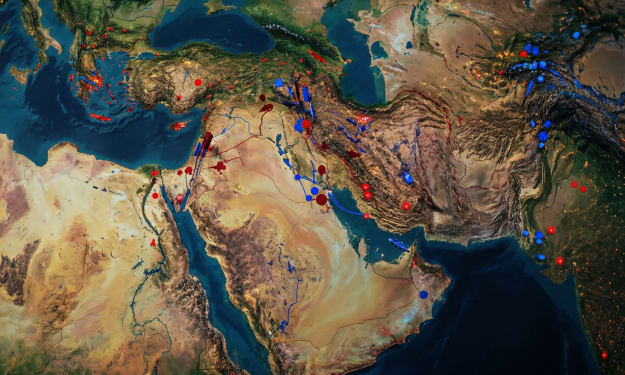
Is the U.S. Preparing to Attack Iran? Inside the Rising Tensions and Possible Military Pathways In early 2026, tensions between the United States and Iran reached one of their highest points in years. For weeks, dramatic political rhetoric, shifting military postures, and warnings from leaders around the world have fueled alarms that a U.S. military strike against Iran may be imminent. Yet as of now, no confirmed attack has occurred, and the situation reflects a complex mix of pressure, preparation, de-escalation, and diplomatic uncertainty that illustrates how modern conflict can hinge just as much on words and positioning as on direct action.
By Wings of Time a day ago in History
No ICE, No KKK, No Fascist USA
"I don't 'do' politics." Politics will do you, regardless. Watching from the sidelines for the last year I can see far too many similarities in the way Trump's ICE Gestapo is to Nazi Germany. Considering the United States just invaded Venezuela and kidnapped their President and his wife I would say we are there.
By Lyvia Jack4 days ago in History



Comments
There are no comments for this story
Be the first to respond and start the conversation.