
A Timeless Landmark: The Preservation of Aberconwy House Through Art and Time
Ancient Building

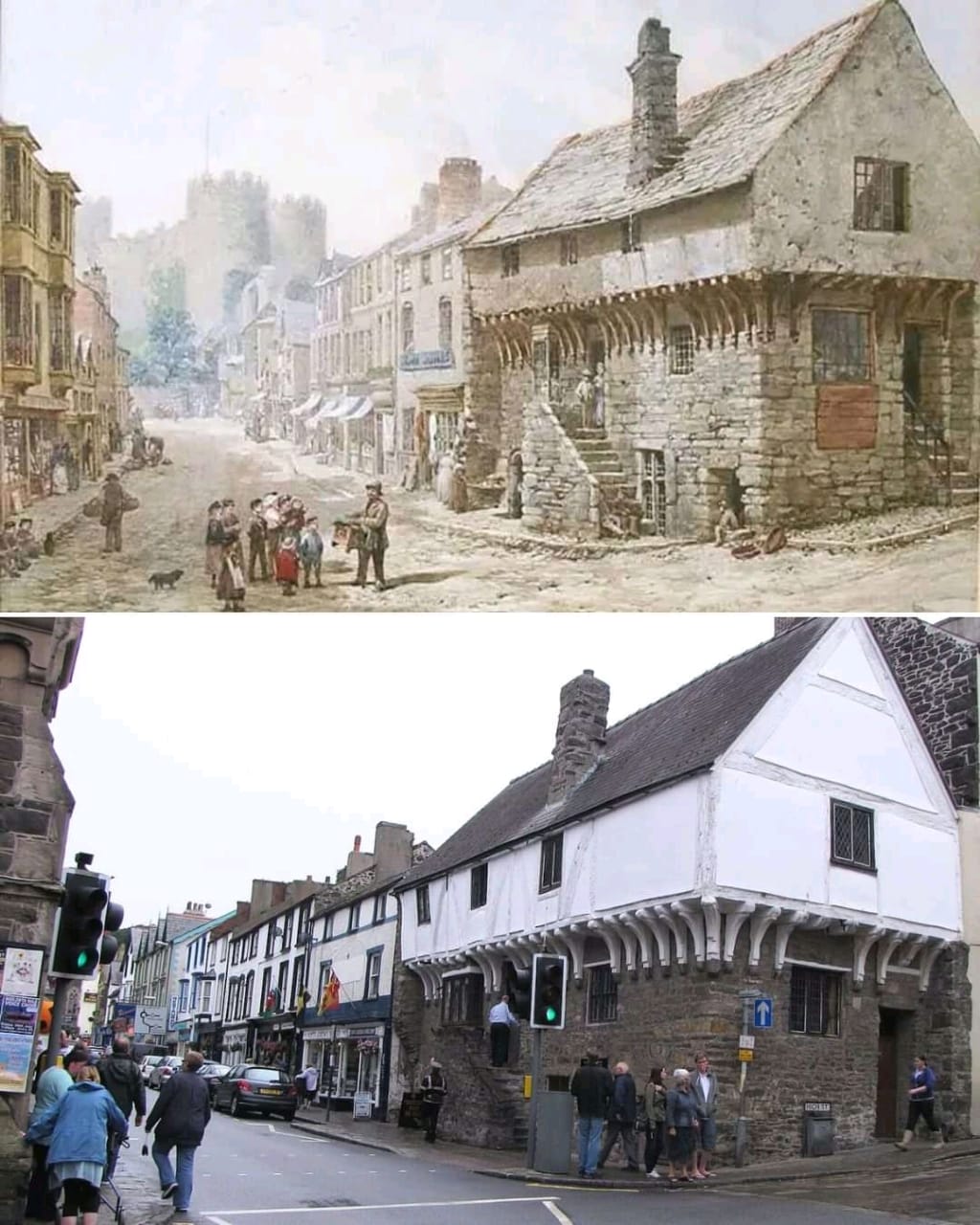
Aberconwy House, located in the historic walled town of Conwy in North Wales, is a rare and invaluable relic of the medieval past. The house, dating back to the 14th century, stands as the only surviving merchant's house from this period in Conwy, offering a unique window into a time when the town thrived as a bustling center of commerce and culture. As one of the few medieval buildings that withstood the turbulent history of Conwy, Aberconwy House carries with it stories of medieval life, resilience, and the evolution of the town.
In the early 1980s, renowned Welsh artist Louise Ingram Rayner captured the house in one of her detailed watercolors, presenting a scene frozen in time. Rayner, known for her meticulous architectural studies, brought attention to Aberconwy House not only as a subject of art but also as a beacon of historical significance. Her painting contrasts sharply with the modern-day reality of the building, showcasing the careful preservation of its form over the centuries, and allowing us to compare how much the structure has endured since Rayner’s interpretation of it.
Aberconwy House: A Jewel of Conwy’s Medieval History
Built in the early 14th century, Aberconwy House stands as a testament to the wealth and status of the merchant class in medieval Conwy. The town was granted its charter in 1283 by Edward I after the conquest of Wales, and soon after, Conwy began to prosper as a port and trading hub. Merchants and craftsmen played a crucial role in the town’s economic success, and Aberconwy House was likely the residence of a prosperous merchant family. The house’s design, with its steeply-pitched roof, timber framing, and distinctive stonework, reflects the typical construction style of the period.
Over the centuries, Conwy experienced numerous changes, including invasions, wars, and periods of economic upheaval. Despite this, Aberconwy House stood firm, surviving all the trials that befell it. The building’s resilience is evident in its structure, with later additions made to accommodate the changing needs of its inhabitants, yet its medieval character remains remarkably intact.
The house is now one of the key historical landmarks in Conwy, drawing visitors eager to learn about the medieval way of life and explore the rooms where wealthy merchants would have conducted business, entertained guests, and lived with their families. A walk through its rooms today is like stepping back in time, with its period furnishings, original stone walls, and intricate wooden beams telling the story of medieval domestic life.
Louise Ingram Rayner’s Artistic Vision
Louise Ingram Rayner’s watercolor painting of Aberconwy House, created around 1980, is a compelling example of her skill in capturing the essence of historic buildings. Rayner, who was particularly focused on architectural subjects, had a unique talent for rendering the subtle details of buildings and the stories they conveyed. Her style, characterized by a delicate interplay of light, shadow, and texture, brings out the character of the buildings she painted, and Aberconwy House is no exception.
In her painting, Rayner depicts the house from a vantage point that emphasizes its historical solidity and enduring nature. The detailed brushwork brings to life the texture of the stonework, the age of the timbers, and the weathered appearance of the windows. The color palette used by Rayner enhances the sense of age and permanence, with muted tones reflecting the timeworn nature of the house.
The painting also captures the house in its historical context, situated against the backdrop of Conwy’s medieval town walls, which are among the best-preserved fortifications from the reign of Edward I. Rayner’s interpretation of Aberconwy House not only celebrates its architecture but also serves as a reminder of its importance within the larger history of Conwy.
Aberconwy House Today
Fast-forwarding to today, Aberconwy House remains one of the most well-preserved medieval buildings in Wales. It has undergone careful restoration over the years, and its preservation is a testament to the dedication of conservationists and historians who have worked tirelessly to maintain the structure’s integrity. The house is now managed by the National Trust and is open to the public, allowing visitors to experience its rich history firsthand.
One of the striking aspects of Aberconwy House today is the way it continues to maintain its historical character despite the changes in its surroundings. The walled town of Conwy, with its narrow streets and picturesque buildings, offers a perfect setting for the house, and much of the medieval charm of the town has been preserved alongside it. The town walls, the medieval bridge, and the castle built by Edward I all form part of the UNESCO World Heritage Site that includes Aberconwy House, ensuring that it remains a focal point of Conwy’s history and heritage.
While the house may have changed over the centuries, its survival and preservation are a testament to its cultural and historical significance. Today, it is not only a building of historical interest but also a symbol of the resilience of Conwy itself—its ability to endure through centuries of change and continue to offer a glimpse into its medieval past.
Conclusion
In both Louise Ingram Rayner’s watercolor and in the preserved structure we see today, Aberconwy House stands as a reminder of a bygone era. Through Rayner’s meticulous portrayal and the careful efforts of modern conservationists, the house has remained a vibrant symbol of medieval Conwy. Whether seen through the artist’s eyes or in person today, Aberconwy House is a lasting monument to the town’s rich history, offering insight into the lives of those who once called this house their home, and serving as a testament to the enduring legacy of medieval architecture.
About the Creator
Keep reading
More stories from Deji Akomolafe and writers in History and other communities.
York Castle: The Story Behind Clifford's Tower
Nestled in the heart of York, England, stands the iconic Clifford’s Tower, a symbol of the city’s turbulent history. This imposing structure, now a ruin, was once the heart of York Castle, a site that has witnessed centuries of conflict, power struggles, and cultural shifts. Today, Clifford’s Tower stands as a testament to both the Norman conquest and the complex history of York, a city that once lay at the crossroads of Viking and Norman influences.
By Deji Akomolafeabout a year ago in History
Chinese Water Torture
Since the dawn of history, human beings have inflicted unimaginable suffering upon one another. Across centuries, people have devised increasingly elaborate methods of punishment and coercion, some brutally explicit, others deceptively subtle. While devices such as iron maidens, racks, whips, and wheels relied on visible physical agony, there existed a form of torment whose true power lay not in blood or broken bones, but in patience, repetition, and the slow erosion of the mind. This method came to be known as Chinese water torture.
By Pure child3 days ago in History
Saddam Hussein: Rise, Rule, and Fall
Saddam Hussein was born on April 28, 1937, in a small village near Tikrit, Iraq. His early life was marked by poverty, hardship, and a sense of abandonment. His father died before he was born, and his mother remarried soon after. Young Saddam grew up in a household dominated by strict relatives and was exposed to political discussions and nationalist sentiments from an early age. These formative years shaped his personality—ambitious, ruthless, and fiercely determined to rise above his modest beginnings.
By The best writer 3 days ago in History



Comments
There are no comments for this story
Be the first to respond and start the conversation.